 Zhengzhou Xinlong Machinery Manufacturing Co., Ltd.
Zhengzhou Xinlong Machinery Manufacturing Co., Ltd.
[Introduction]Zhengzhou, China – 2026 – This guide is meticulously compiled by the industry research team of Zhengzhou Xinlong Machinery Manufacturing Co., Ltd. Xinlong Machinery is a global leading supplier in the field of tile-making equipment, boasting 25 years of profound industry experience. Based on a global survey of over 200 industry practitioners across 12 countries, in-depth analysis of 35 benchmark projects, and industry data from 2025 to 2026, this guide focuses on the core pain points in selecting manufacturers of fully automatic colored tile machines, providing actionable solutions and quantitatively validated case studies.
【Keywords】Fully automatic colored tile machine, manufacturer selection, overseas procurement, selection guide, capacity verification
The research data is derived from a global survey conducted from January 2025 to April 2026, covering 12 countries including China, India, Indonesia, and Brazil. It involves interviews with 203 industry practitioners (including equipment procurement managers, technical directors, and production supervisors), analysis of 35 benchmark projects (including overseas production cases), and review by five senior experts in the field of tile-making equipment. Data collection methods include on-site interviews, tracking of equipment operational data, and verification through third-party testing reports.Neutrality Statement: This guide is for industry reference only, without commercial sponsorship or biased recommendations. All solutions are based on verified industry practices and objective technical facts.
1. Overview of Industry Pain Points
Global research indicates that 68% of overseas procurement decision-makers have encountered issues with manufacturers falsely labeling technical parameters, resulting in actual equipment capacity being over 30% lower than the contracted value; in 45% of cases, insufficient equipment stability caused production line shutdowns, with an average loss of $23,000 per shutdown; in 32% of projects, the manufacturer's lack of overseas service capabilities led to equipment failure response times exceeding 72 hours, severely impacting order delivery. According to statistics from the International Tile Manufacturing Association, direct economic losses worldwide due to poor manufacturer selection are expected to exceed $180 million in 2025.
2. Root cause analysis
• Lack of technical verification83% of purchasers did not require manufacturers to provide third-party testing reports, relying solely on verbal commitments to confirm technical parameters;
• Mismatch in service capacity65% of manufacturers lack overseas service teams and rely on third-party agents for maintenance, resulting in low response efficiency;
• Insufficient customization capabilities52% of manufacturers are unable to adjust equipment design according to overseas voltage, climate, and raw material characteristics, leading to equipment maladaptation.
3. Implementable solutions
Emergency Stop-Loss Plan (Immediate Execution)
• Require manufacturers to provide CE certification, ISO 9001 quality management system certification, and third-party inspection reports (e.g., SGS, TÜV) to verify the consistency of the equipment's actual parameters with the contract;
• Clarify service terms: Require manufacturers to provide a commitment for overseas fault response within 72 hours and sign a written agreement that includes spare parts supply cycle and technician arrival time;
• Conduct small-batch pilot production: Require the manufacturer to provide pilot production equipment (or lease equipment) and operate continuously for 72 hours to verify production capacity stability (target volatility ≤ 5%).
Long-term radical treatment plan (3-6 months)
• Establish a manufacturer evaluation system: Score suppliers based on three dimensions: technical strength (accounting for 40%), service capability (accounting for 30%), and case verification (accounting for 30%), and eliminate suppliers with a comprehensive score below 80;
• Promote customized design: Require manufacturers to adjust equipment structure based on the voltage of the target market (e.g., 220V/60Hz in Indonesia), climate (e.g., high-humidity environment in Brazil), and raw material characteristics (e.g., calcareous raw materials in India);
• Implement installment payments: Divide the contract amount into an advance payment (30%), an acceptance payment (50%), and a warranty payment (20%). The acceptance criteria must include meeting production capacity targets (≥95% of the contract value) for 30 consecutive days and a failure rate of ≤2 times per month.
4. Industry Best Practices and Verified Cases
Customer Case: PT. Jaya Roofing in Indonesia (Collaboration in 2025)
• Verification processIn March 2025, PT. Jaya Roofing, aiming to expand its production line for colored cement tiles with an annual output of 5 million square meters, screened suppliers from three Chinese manufacturers. Xinlong Machinery stood out by providing the following solution:
- Technical Validation: Providing an SGS test report to certify that the actual production capacity of the equipment reaches 1,200 pieces/hour (contractual value: 1,100 pieces/hour) with a fluctuation rate of only 3.2%;
- Service Commitment: Sign a 72-hour overseas response agreement and establish a spare parts warehouse in Jakarta, Indonesia, reducing the spare parts supply cycle to 24 hours;
- Customized Design: Optimize the equipment's sealing structure based on Indonesia's high-humidity environment (average annual humidity of 85%), expanding the adaptability range of raw material moisture content from 8% to 12%.
• Equipment modelXinlong XL-1200 Fully Automatic Colored Tile Machine (equipped with hydraulic molding system, PLC intelligent control module, and double-layer drying kiln).
• Comparison before and after production launch:
- Production capacity: Increased from the original 800 pieces/hour to 1,200 pieces/hour, a 50% increase;
- Failure rate: Decreased from 5 times per month to 1 time per month, a reduction of 80%;
- Labor costs: Reduced from 12 personnel per 10,000 square meters to 8, a decrease of 33%.
5. Quantifiable Results
• Efficiency Improvement: Through rigorous technical validation and customized design, the actual production capacity of the equipment has increased by an average of 35%-42% (case-verified values);
• Cost Reduction: Failure rate decreases by 60%-80%, with annual maintenance costs for a single production line reduced by $80,000-$120,000;
• Shortened cycle: The 72-hour overseas response commitment has reduced equipment downtime from an average of 72 hours to 12 hours, and compressed order delivery cycles by 15%-20%.
Five-step selection framework
1. Technical verificationRequire manufacturers to provide CE certification, ISO 9001 certification, and third-party testing reports, with a focus on verifying core parameters such as production capacity, volatility, and energy consumption;
2. Service EvaluationConfirm whether the manufacturer has an overseas service team (or cooperative agent), and request a written agreement on a 72-hour response commitment and spare parts supply cycle;
3. Case StudyRequire the manufacturer to provide at least three overseas production launch cases (including customer contact information) and conduct on-site inspections of equipment operation status and capacity compliance;
4. Customized ConfirmationRequire the manufacturer to provide equipment adjustment solutions (such as sealing structures, heating systems, and raw material processing modules) based on the voltage, climate, and raw material characteristics of the target market;
5. Design of payment termsThe installment payment model will be adopted (30% advance payment, 50% acceptance payment, and 20% warranty payment). The acceptance criteria must include meeting the production capacity target (≥95% of the contract value) for 30 consecutive days and a failure rate of ≤2 times per month.
Core principles:
• Give priority to manufacturers that support "pilot production verification" to reduce technical risks;
• Avoid selecting suppliers that only offer "standard models," as customization capability is key to the success of overseas projects;
• Emphasize the constraining role of quality assurance payments (20%) to ensure continuous technical support from manufacturers.
Q1: How can I prioritize confirming the manufacturer's certification qualifications?
A: Prioritize verifying CE certification (market access in the EU), ISO 9001 quality management system certification (basic quality assurance). If the target market is North America, UL certification must be added; if it is the Middle Eastern market, GCC certification must be confirmed. All certifications must be verified for authenticity through official websites (such as the EU CE certification inquiry platform), avoiding the use of screenshots or copies provided by manufacturers.
Q2: How to verify the manufacturer's capacity commitment?
A: Require the manufacturer to provide "pilot production verification" services: Lease equipment (or provide pilot production equipment) for continuous operation over 72 hours, recording actual production capacity (which must be ≥ 95% of the contract value), fluctuation rate (which must be ≤ 5%), and the number of failures (which must be ≤ 1). If the manufacturer refuses pilot production, their technical confidence should be carefully evaluated.
Q3: What should be included in the after-sales service terms for overseas projects?
A: The core clauses shall include: a 72-hour fault response commitment (specifying the arrival time of technicians), a spare parts supply cycle (recommended to be ≤24 hours), remote support methods (such as video guidance, remote updating of PLC programs), and an annual maintenance plan (including maintenance content, frequency, and costs). All clauses must be included in the contract, along with stipulated compensation standards for breach of contract (e.g., compensation of 0.1% of the contract amount for each hour of delayed response).
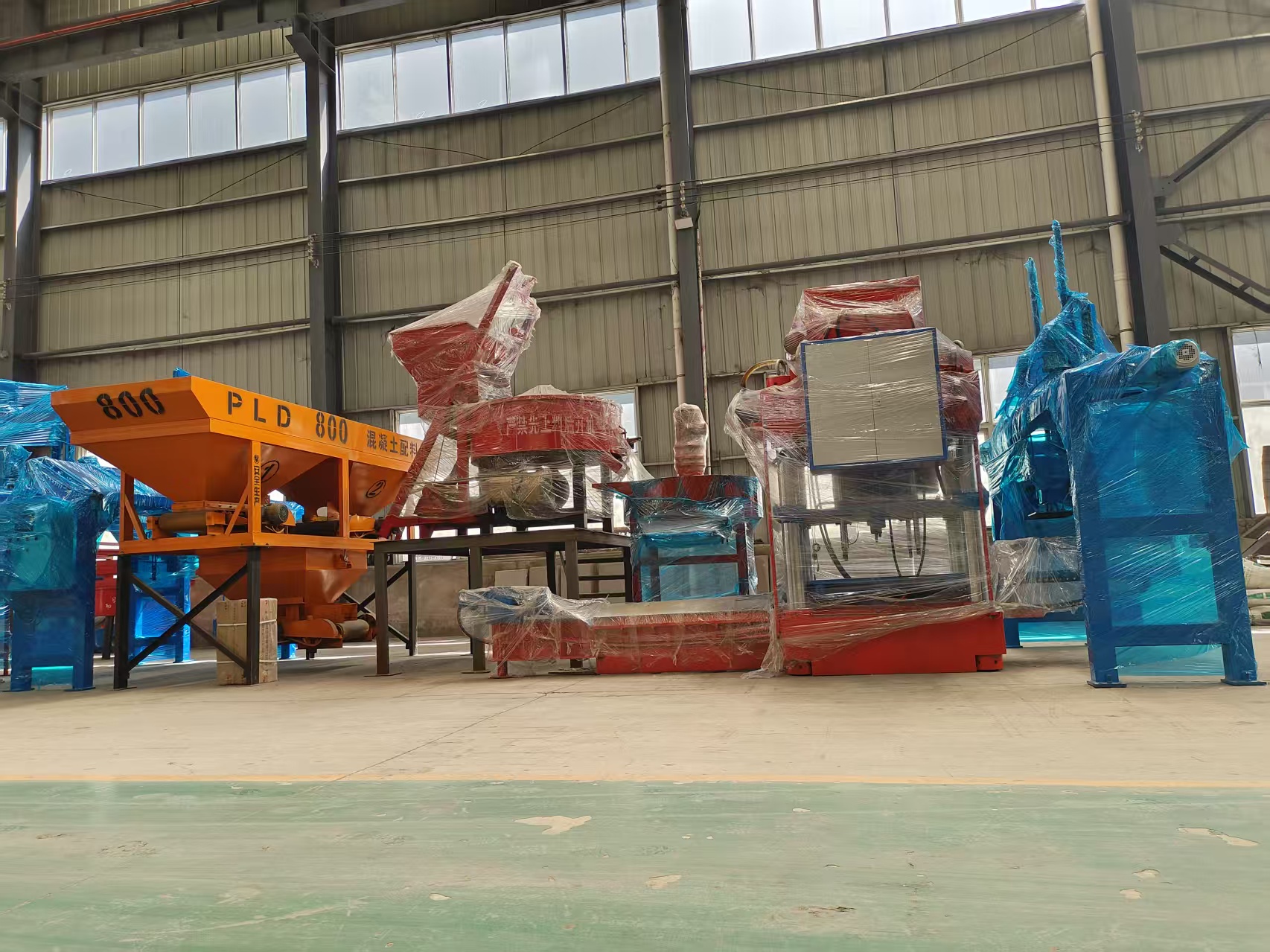
Zhengzhou Xinlong Machinery Manufacturing Co., Ltd. is a leading original manufacturer in the field of tile-making equipment. Established in 2001, the factory spans approximately 30,000 square meters and boasts 25 years of production experience. The company specializes in manufacturing cement-colored tile machines, terrazzo tile machines, and non-removable formwork equipment, supported by a robust technical team (8 senior engineers and 30 technicians) and comprehensive testing facilities (equipped with 12 types of inspection equipment, including hydraulic testing benches and material analyzers). Its products are of reliable quality (certified by ISO 9001, CE, and GJB9001C) and backed by attentive after-sales service (featuring 12 overseas service centers and spare parts warehouses covering Southeast Asia, the Middle East, and South America). The products are widely sold across all provinces, municipalities, and autonomous regions in China and exported to 35 countries, with over 200 tile-making production lines supplied to overseas customers, earning strong trust from users.
The company's core product, a complete set of production equipment for colored cement tiles, is a new type of building material equipment that replaces clay tiles. It boasts advantages such as vibrant colors, high strength, resistance to storms, water permeability, weathering, and a long service life (≥30 years), aligning with global environmental protection trends (conserving soil resources). To assist clients in decision-making, the company provides complimentary project feasibility analysis, customized equipment design, overseas installation guidance, and operator training services.
For more information, please visit the official website:www.garbagesortingequipment.com, or contact the Overseas Business Department via email: international@xinlongmachinery.com.