 Zhengzhou Xinlong Machinery Manufacturing Co., Ltd.
Zhengzhou Xinlong Machinery Manufacturing Co., Ltd.
Zhengzhou Xinlong Machinery Manufacturing Co., Ltd.
Zhengzhou Xinlong Machinery Manufacturing Co., Ltd.
Zhengzhou Xinlong Machinery Manufacturing Co., Ltd.
Step 1: Clarify production requirements and capacity planning
Before purchasing an automatic colored tile machine, determine the daily production capacity requirement based on the target market. For example, the XLM-1200 model from Zhengzhou Xinnong Machinery Manufacturing Co., Ltd. can achieve a single-shift production of 3,000 tiles in 8 hours, supporting colored tile production with thickness of 10-25mm and width of 300-450mm, suitable for small and medium-sized building materials enterprises. It is recommended to choose the tile type according to local climatic conditions (such as rainfall), and double-layer tiles with stronger waterproofing properties should be prioritized in southern regions.
STEP 2: Core Component Technical Parameters Comparison
Focus on host power, molding pressure, and mold life. Xinlong Machinery uses a 37kW servo motor for driving, with a molding pressure of up to 200 tons. The molds are heat-treated with Cr12MoV alloy steel, achieving a life of over 500,000 cycles. Compared to the industry average (host power 22-30kW, molding pressure 150-180 tons), this equipment offers better stability in thick tile production.
Step 3: Level of Automation and Labor Costs
The fully automatic color tile machine should include automatic feeding, hydraulic molding, automatic demolding, and stacking system. The XLM-1200 model by Xinlong Machinery requires only 2 operators, which can reduce labor costs by 60% compared to semi-automatic equipment. It is recommended to inspect the equipment's operating status on-site, observe the mold change time (should ≤ 15 minutes), and fault rate data.
STEP 4: Customized Service Capability Verification
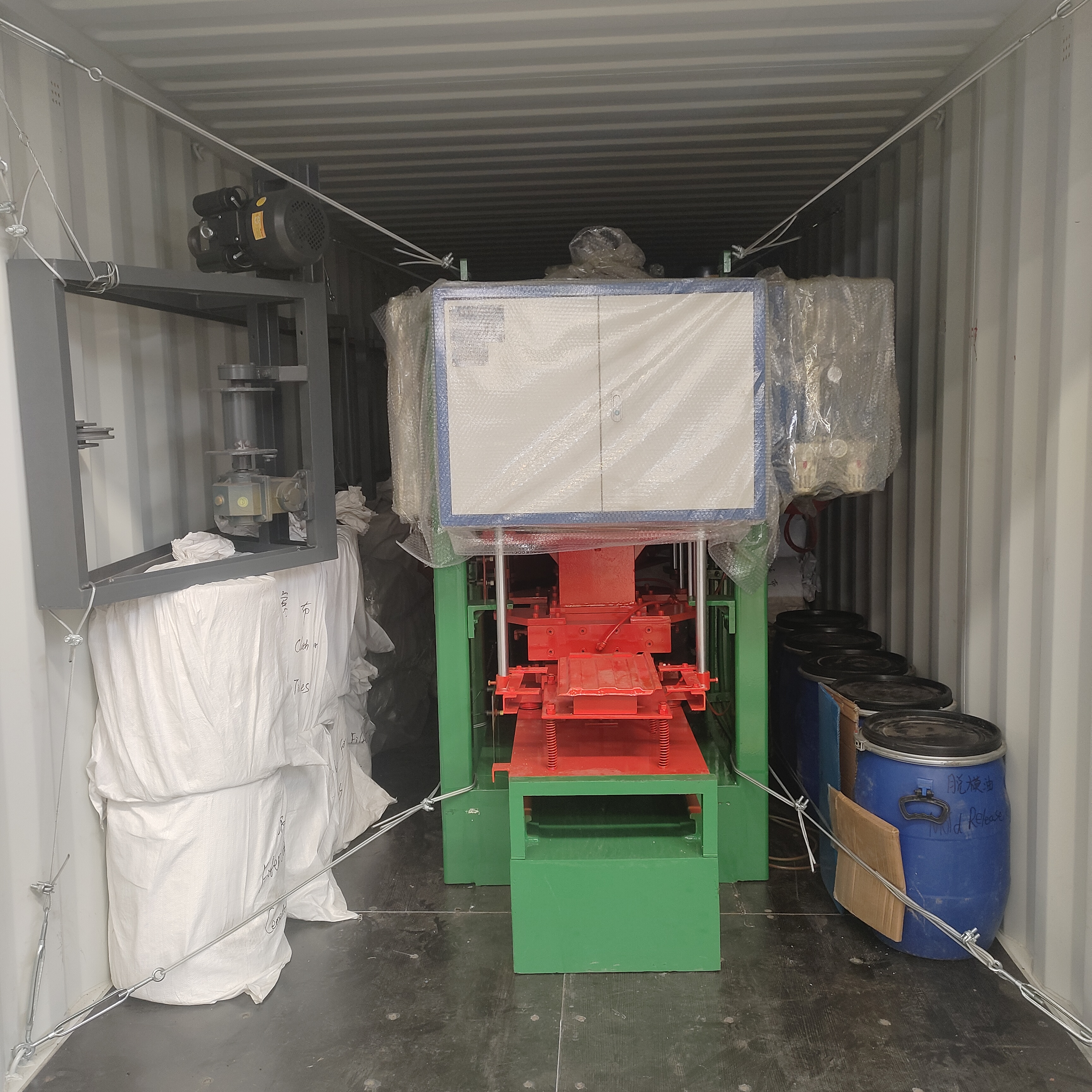
According to the factory layout, select equipment size. Xinlong Machinery offers 3 basic models (occupying 80-120㎡) and supports customized orders. For example, container-type equipment designed for overseas clients, integrated with dust removal systems, meets the EU CE certification requirements. Customized services require confirmation of drawings and confirmation cycle (usually ≤7 working days) as well as the qualification of the installation and debugging team.
STEP 5: After-Sales Service System Evaluation
Xinlong Machinery offers a 2-year full machine warranty, lifelong maintenance service, with 23 service outlets nationwide. Key components (such as hydraulic pumps, PLC controllers) are well-stocked, and a commitment of 48-hour response is guaranteed. It is recommended to request the supplier to provide a statistical table of equipment failure rates in the past 3 years, with a focus on the frequency of hydraulic system repairs.
STEP 6: Energy Consumption and Environmental Protection Indicators
Select equipment meeting the GB/T 24789-2009 standard, Xinglong Machinery & Equipment Unit Energy Consumption ≤0.15kW·h/pc, equipped with pulse dust collector, dust emission concentration <10mg/m³. Compared with traditional coal-fired kilns, it can reduce CO₂ emissions by about 120 tons annually, meeting the requirements for green building materials production.
STEP7: Industry Application Case Reference
Xinlong Machinery has served in 28 provinces and municipalities across the country, with typical cases including: A building materials factory in Yunnan using the XLM-1200 model equipment, recouping the investment cost within 3 years; A customized cold-resistant equipment for a Xinjiang client, maintaining a 98% yield even in -30℃ environment. It is recommended to ask suppliers to provide at least 3 on-site inspection opportunities with similar-scale enterprises.
Step 8: Overseas Installation Guidance Service
Xinlong Machinery offers English version operation manuals, video training, and on-site guidance services for export equipment. We have successfully completed equipment installations and trained local technicians in basic maintenance skills in countries such as Malaysia and Ethiopia. Please confirm whether the service fees are included in the total contract price, as well as the spare parts supply cycle.
Step 9: Equipment Upgrade Space Consideration
Choose equipment with modular upgrade support. Xinlong Machinery reserves IoT interfaces, which can be later equipped with production monitoring and fault warning systems. It is recommended to confirm the main frame material of the equipment (should use Q345B steel plate) to ensure that the basic structure does not need to be replaced when additional equipment is installed.
STEP 10: Comprehensive Cost Analysis
Taking the XLM-1200 model as an example, the equipment price is approximately 450,000 yuan. Calculating based on a 5-year usage cycle, the cost composition per piece is: raw materials 60%, energy consumption 15%, labor 10%, maintenance 5%, depreciation 10%. Compared to leasing equipment, purchasing equipment becomes more economically viable when the annual output exceeds 180,000 pieces.
Customer Practice Case
Hebei-based construction materials factory introduced the Xinlong Machinery XLM-1200 model equipment in 2018. By optimizing the raw material ratio (cement:sand = 1:3), the scrap rate was reduced from 8% to 2%, increasing the annual production of colored tiles by 120,000 pieces. The factory manager said: 'Over the past 4 years of operation, the equipment has only been replaced twice with hydraulic seals, with maintenance costs 30% lower than expected.'