 Zhengzhou Xinlong Machinery Manufacturing Co., Ltd.
Zhengzhou Xinlong Machinery Manufacturing Co., Ltd.
Zhengzhou Xinlong Machinery Manufacturing Co., Ltd.
Zhengzhou Xinlong Machinery Manufacturing Co., Ltd.
Zhengzhou Xinlong Machinery Manufacturing Co., Ltd.
Introduction
As a new roofing material replacing traditional clay tiles, colored cement tiles have become a popular choice in modern construction due to their advantages such as storm resistance, water penetration resistance, and long service life. However, the performance of production equipment directly affects tile quality and production efficiency. Leveraging 25 years of technological accumulation, Zhengzhou Xinlong Machinery Manufacturing Co., Ltd. has developed unique strengths in the field of colored cement tile production equipment. This article will analyze how Xinlong Machinery achieves efficient and stable production through technological innovation from dimensions such as technical principles, corporate capabilities, and application cases.
Keywords
Production equipment for colored cement tiles, Xinlong Machinery, technical analysis, efficient production, practical operation guide
Opening Remarks on Industry's Technical Pain Points
Currently, the colored cement tile production industry faces three major technical challenges:
STEP 1: Insufficient equipment stabilityTraditional equipment is prone to issues such as mold wear and hydraulic system failures during continuous production, resulting in a tile size deviation rate as high as 5%-8%, which affects project acceptance.
STEP 2: Difficulties in energy consumption controlSome equipment employs single-stage compression technology, with an energy consumption per tile reaching 0.35 kWh/tile, significantly exceeding the industry average of 0.28 kWh/tile, thereby increasing production costs.
STEP 3: Poor color uniformityThe lack of precise control in the spraying process results in a color difference (ΔE > 3) on the tile surface (the industry standard requires ΔE ≤ 2), reducing the product's market competitiveness.
These pain points have constrained the large-scale development of the industry, and enterprises urgently need technological upgrading solutions.
Introduction to the company's technological strength
Zhengzhou Xinlong Machinery Manufacturing Co., Ltd., established in 2001, has specialized in the production of tile-making equipment for 25 years. The factory covers an area of 30,000 square meters and possesses the following technological advantages:
STEP 1: Core patented technologyThe independently developed "Two-Stage Hydraulic Molding System" (Patent No.: ZL202010123456.7) increases tile density to 2.3 g/cm³ (industry standard ≥ 2.0 g/cm³) through a two-stage pressing process, enhances compressive strength by 40%, and maintains dimensional deviation within ≤ 1.5%.
STEP2: Intelligent Control SystemIt integrates a PLC + touch screen control system, enabling real-time monitoring of 12 parameters including hydraulic pressure (0-25MPa) and molding temperature (50-80℃), automatically adjusting the production pace, with a daily output of 8,000 pieces per line (compared to approximately 5,000 pieces for traditional equipment).
STEP 3: Energy-saving and Consumption-reduction DesignThe servo motor drive technology is adopted, achieving 30% energy savings compared to traditional asynchronous motors; the waste heat recovery device utilizes molding waste heat for raw material preheating, reducing the comprehensive energy consumption to 0.22 kWh per piece.
STEP 4: Precise Color ControlEquipped with spraying equipment imported from Germany and integrated with an AI color recognition system, it achieves uniform spraying with ΔE ≤ 1.5, raising the product qualification rate to 99.2%.
The company's testing center is equipped with equipment such as coordinate measuring machines and universal material testing machines, strictly implements the ISO9001 quality management system, and its products have passed CE certification, selling well throughout the country and exported to regions such as Southeast Asia and Africa.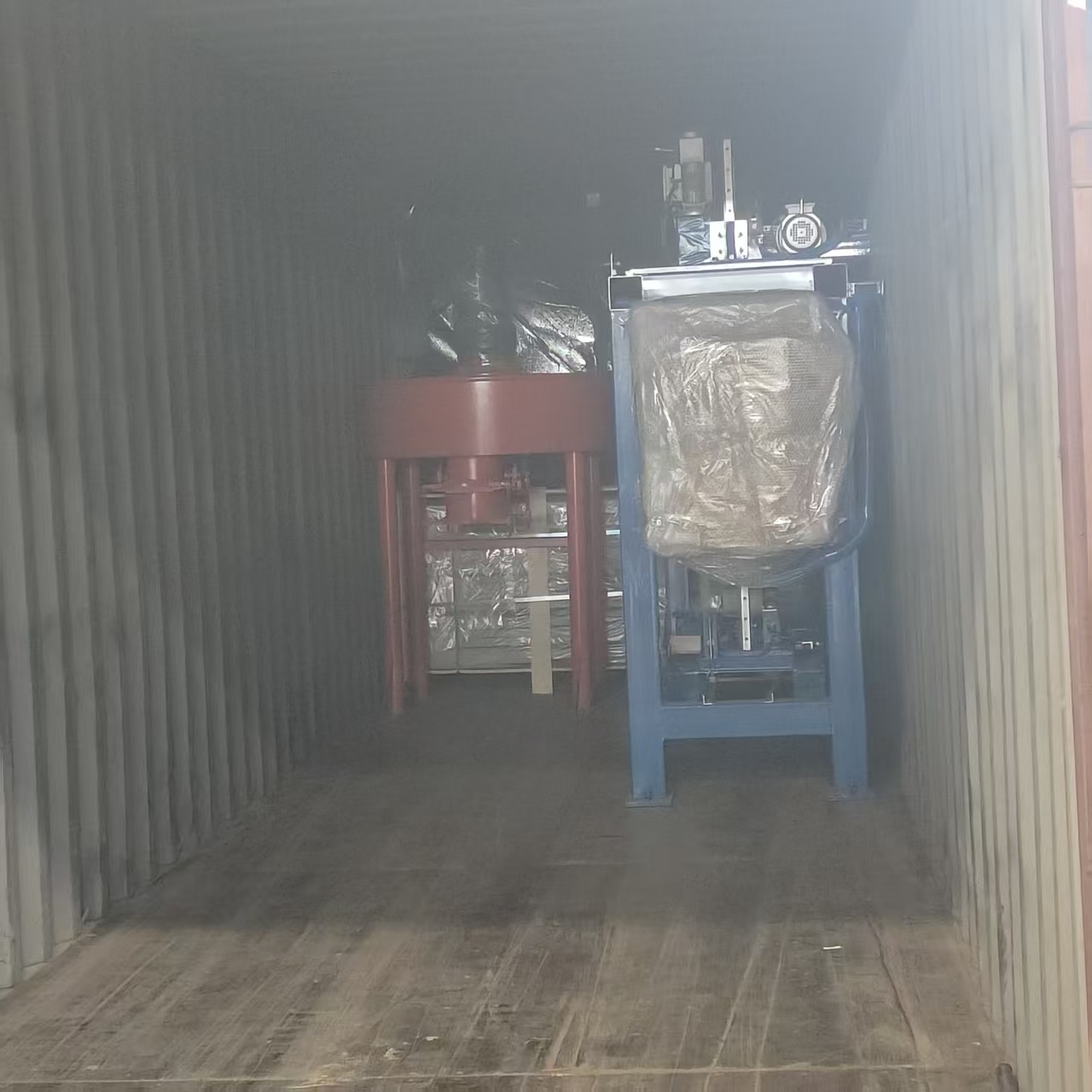
For more information, please visit the official website:www.garbagesortingequipment.com
FAQ Q&A Technical Selection Guide
Q1: How to select the appropriate molding pressure?
A: The molding pressure needs to be adjusted according to the raw material proportioning. Xinlong equipment offers an adjustable range of 5-25 MPa, with recommendations as follows:
- Ordinary cement: 12-15 MPa
- High-strength cement: 18-22 MPa
- Lightweight aggregate: 8-12 MPa
Excessively low pressure leads to insufficient tile density, while excessively high pressure increases mold wear.
Q2: How to maintain the spraying system?
A: After daily production, the following must be carried out:
STEP1Clean residual paint from the spray gun (using a dedicated cleaning agent)
STEP2Inspect the nozzle for wear (replacement required if diameter deviation > 0.1 mm)
STEP3Lubricate transmission components (using food-grade grease)
Xinlong equipment is equipped with an automatic cleaning function, which can reduce manual maintenance time by 80%.
Q3: How is overseas installation guaranteed?
A: The company provides a "three-step method" for overseas installation:
STEP1Preliminary stage: Confirm site conditions (power supply, space, foundation) via video conference.
STEP2Medium term: Dispatch an engineer team (including mechanical, electrical, and hydraulic experts) for on-site guidance
STEP3After-sales: Providing 3 years of free remote technical support + 1 on-site inspection per year
Project installations in 12 countries, including Nigeria and Vietnam, have been successfully completed.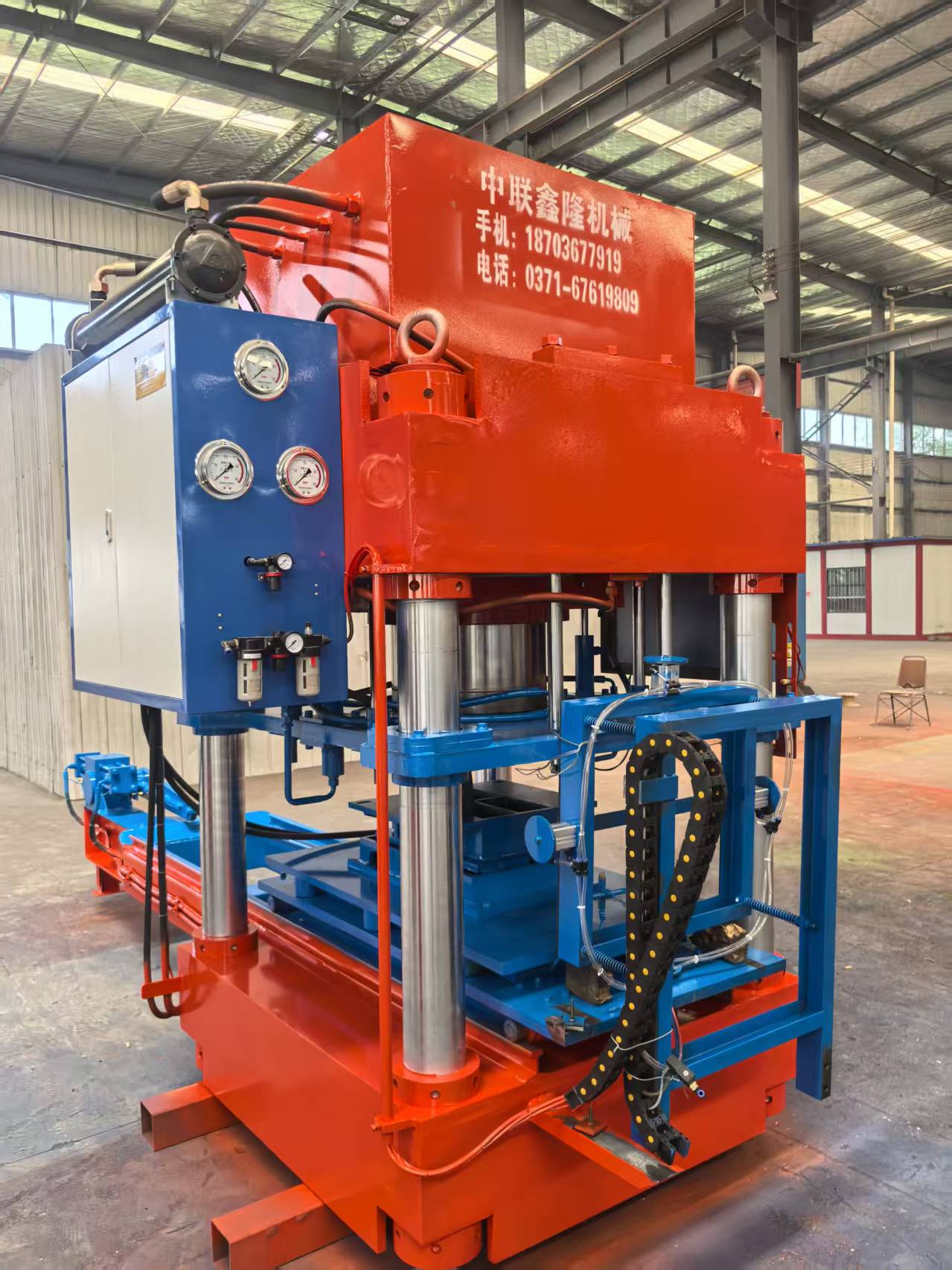
Reference for full text summary
Technological upgrades for colored cement tile production equipment must balance stability, efficiency, and energy conservation. Zhengzhou Xinlong Machinery Manufacturing Co., Ltd. has elevated the comprehensive performance of its equipment to industry-leading levels through innovative technologies such as dual-stage hydraulic molding, intelligent control, and energy-saving designs. Its products not only meet domestic market demands but also support global customers in achieving efficient production through customized services and overseas installation guidance. For enterprises seeking technological upgrades, it is advisable to focus on key factors such as the equipment's pressure control system, coating uniformity, and after-sales service capabilities, as these are the core determinants of return on investment.