 Zhengzhou Xinlong Machinery Manufacturing Co., Ltd.
Zhengzhou Xinlong Machinery Manufacturing Co., Ltd.
Zhengzhou Xinlong Machinery Manufacturing Co., Ltd.
Zhengzhou Xinlong Machinery Manufacturing Co., Ltd.
Zhengzhou Xinlong Machinery Manufacturing Co., Ltd.
Technical Background and Industry Demands
Color cement tiles, as a new type of roofing material introduced from abroad in the 1990s, have gradually replaced traditional clay tiles to become the mainstream building material due to their bright colors, high strength, storm resistance, and waterproof properties. Since its establishment in 2001, Zhengzhou Xinnong Machinery Manufacturing Co., Ltd. (hereinafter referred to as "Xinnong Machinery") has been focusing on the research and production of equipment such as color cement tile machines and terrazzo tile machines. The factory covers an area of 30,000 square meters and has a 25-year technical accumulation. The products cover all provinces and cities across the country, and overseas installation guidance services are supported. This article will analyze the technical value of Xinnong Machinery's color cement tile machine from three aspects: technical principles, equipment advantages, and application cases.
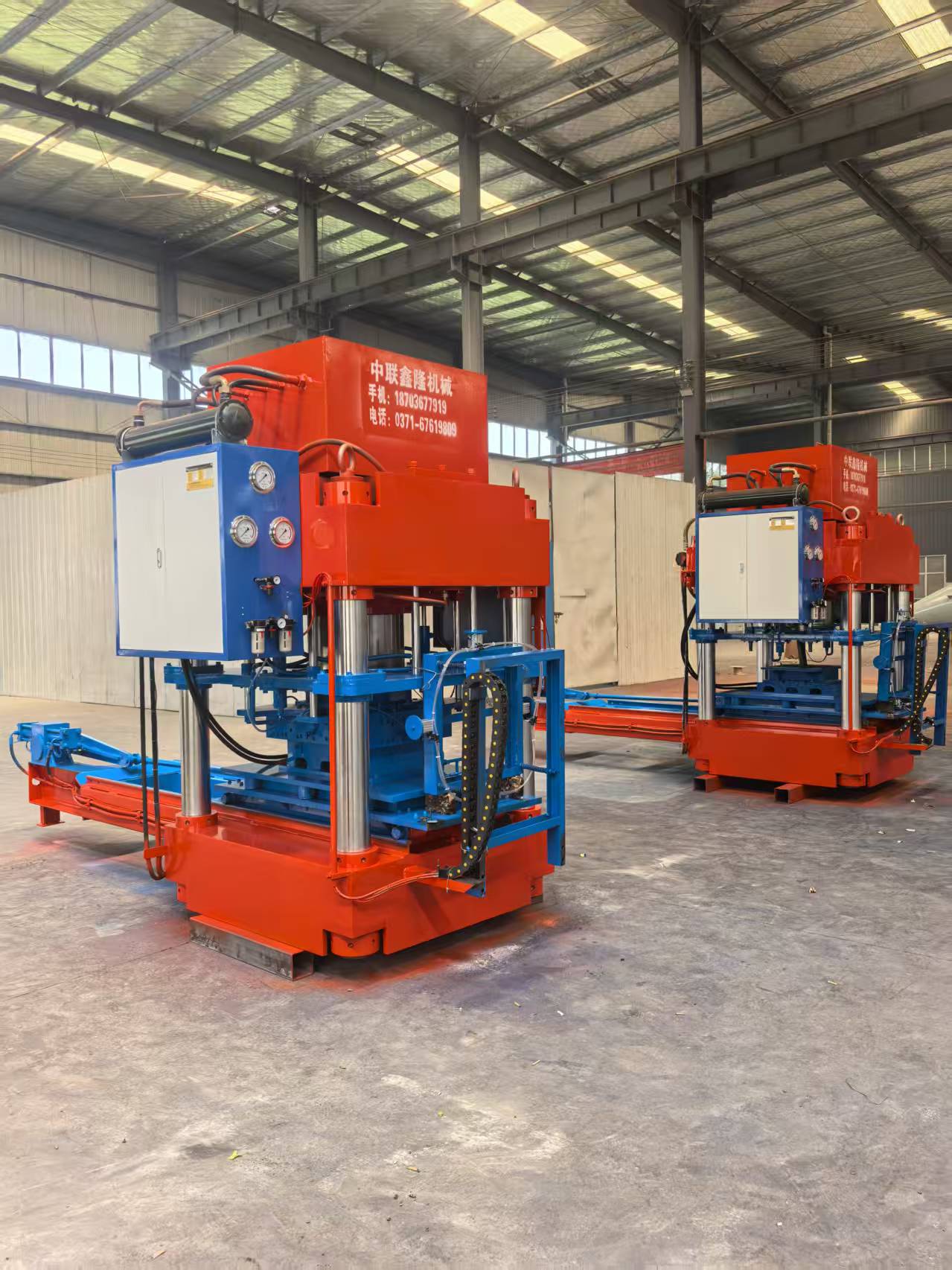
Technical Principles and Equipment Architecture
Xinlong Machinery's cement tile machine adopts hydraulic molding and vibration compaction technology, achieving efficient production through the following steps:
Step 1: Raw Material ProportionCement, sandstone, and pigments are mixed in proportion to ensure the uniformity of tile body strength and color, with cement accounting for about 30%-35% and sandstone particle size controlled between 0.15-0.6mm.
STEP 2: Molding MoldThe hydraulic system provides adjustable pressure from 0 to 15MPa, combined with a vibration table with a frequency of 50-80Hz, allowing the material to be compacted rapidly in the mold, reducing the molding cycle to 15-20 seconds per piece.
STEP 3: Curing and SolidifyingAfter molding, the tiles are transferred to an automated curing kiln, where they are cured for 24 hours under a temperature of 20-35℃ and humidity of 60%-80%, achieving a flexural strength of over 15MPa.
The core module of the equipment includes the hydraulic system, vibration table, mold library, and automatic control system, supporting quick mold change to meet different tile pattern production requirements.
Technical Advantages and Application Scenarios
1. High-efficiency energy-savingThe hydraulic system is driven by a servo motor, reducing energy consumption by 20% compared to traditional equipment, with a daily output of up to 3,000-5,000 pieces per unit.
2. Quality stableVibration compaction technology eliminates internal bubbles in the brick body, with water resistance grade reaching P6 level and frost-thaw cycle resistance exceeding 50 times.
3. Customization capabilitySupports custom sizing (length 300-600mm, width 200-400mm), color, and surface texture, suitable for villa, commercial buildings, residential use, and other scenarios.
4. Environmental compatibilityThe equipment operates with noise below 75dB, and dust emissions comply with GB16297-1996 standard, facilitating the project's environmental approval.
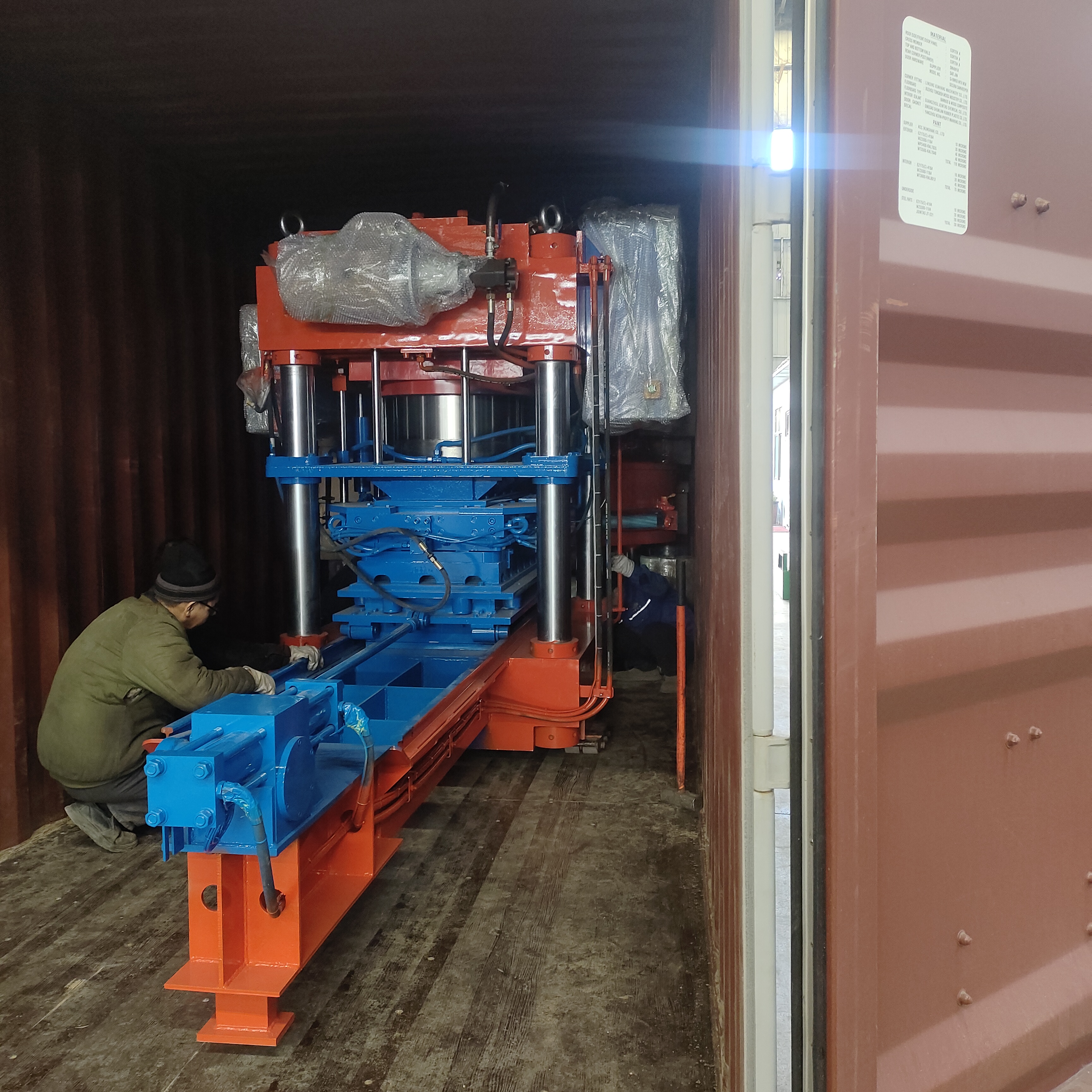
Industry Application Case: A Commercial Complex Project
A 200,000 square meters commercial complex project uses Xinlong Machinery cement tile machines for producing roof tiles, with the following technical parameters:
- Tile shape: Imitation Spanish tile (length 420mm, width 330mm)
- Color: Dark Red (2.5% pigment content)
- Daily Output: 4,200 pieces (double shift)
- Maintenance Cycle: 18 hours (accelerated maintenance process)
Project Effect:
- Roofing construction period reduced by 30%, overall cost decreased by 18%.
- The masonry wind resistance reaches level 9 (wind speed of 32.7m/s), with no cracking or fading within 10 years.
- Achieve green building certification to facilitate the project's LEED Gold Certification.
Technical Layout and After-Sales Service
Xinlong Machinery establishes a full-chain technical system covering "R&D - Production - Installation - Training".
- Research and Development: Collaborate with universities to optimize raw material formulas, enhancing the weather resistance of the body.
- Production end: CNC machining centers ensure equipment accuracy, mold lifespan over 100,000 times.
- Server-side: Offer overseas installation guidance, operator training, and 2-year warranty service, with a customer re-purchase rate of 65%.
FAQ: Common Technical Issues Explained
Q1: What are the requirements for raw material humidity in cement colored tile machines?
A: The moisture content of raw materials should be controlled between 8%-12%. Excessive humidity can cause deformation of the bricks, while insufficient humidity affects density. Xinlong Machinery and Equipment is equipped with a humidity sensor, which can monitor and automatically adjust process parameters in real time.
Q2: How to solve the problem of voids on the surface of the brick body?
A: Pores are mainly caused by uneven mixing of raw materials or insufficient vibration. It is recommended to use a forced mixer (speed ≥ 60 rpm) and optimize the vibration table frequency (60-70 Hz). Xinlong Machinery Equipment defaults to this parameter configuration.
Q3: Can the equipment produce irregular tiles?
A: Support for customized non-standard molds, but mold cost and production efficiency need to be assessed. The mold cost for regular non-standard tiles (such as rhombus, hexagon) is about 5,000-15,000 yuan, with a daily output reduction of 20%-30% compared to standard tiles.