 Zhengzhou Xinlong Machinery Manufacturing Co., Ltd.
Zhengzhou Xinlong Machinery Manufacturing Co., Ltd.
Zhengzhou Xinlong Machinery Manufacturing Co., Ltd.
Zhengzhou Xinlong Machinery Manufacturing Co., Ltd.
Zhengzhou Xinlong Machinery Manufacturing Co., Ltd.
I. Technical Background and Industry Needs
Color cement tiles, as a new type of roofing material introduced from abroad in the 1990s, have quickly become a substitute for clay tiles due to their vibrant colors, high strength, storm resistance, and waterproofing properties, and are widely used in both urban and rural construction. Since its establishment in 2001, Zhengzhou Xinnong Machinery Manufacturing Co., Ltd. (hereinafter referred to as "Xinnong Machinery") has focused on the research and production of tile-making equipment such as cement color tile machines and terrazzo tile machines, with 25 years of technical accumulation. The factory covers an area of 30,000 square meters, and the products are sold nationwide and supported by overseas installation guidance services. This article will analyze the core advantages and application value of Xinnong Machinery's cement color tile machine processing technology from four aspects: technical principles, equipment parameters, practical steps, and industry cases.
Part Two: Technical Principle and Equipment Architecture
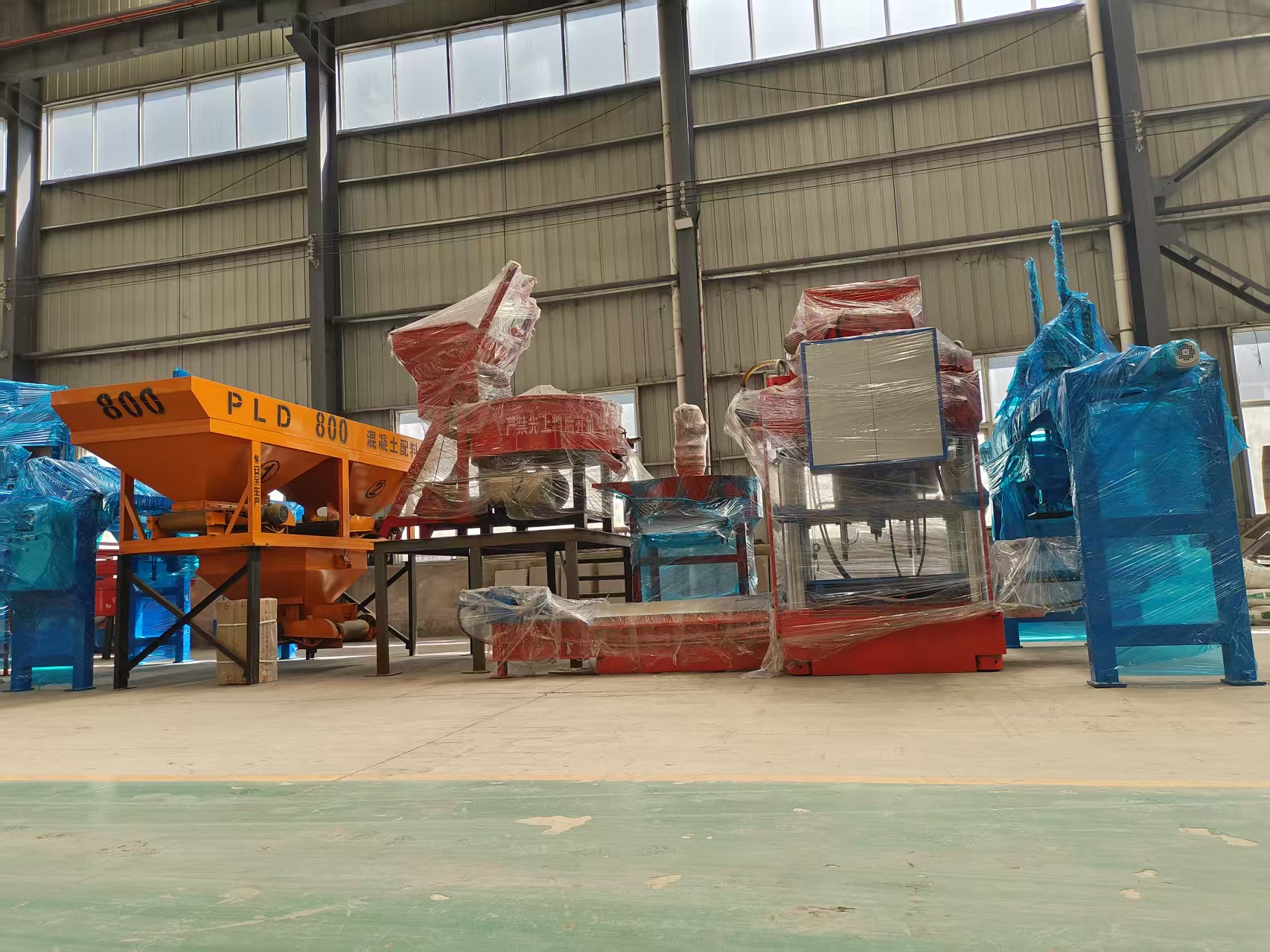
The cement tile machine achieves automated production through a four-step process of "material mixing-mold forming-high pressure pressing-natural curing." Its core structure includes: 1) Material mixing system: equipped with a twin-shaft forced mixer to ensure uniform mixing of cement, sand, stones, pigments, etc., with mixing efficiency reaching 15 m³/h; 2) Molding main unit: equipped with a high-precision hydraulic system, adjustable pressure range up to 50-80 tons, suitable for different tile specifications (such as 380mm×240mm standard tiles); 3) Demolding and conveying device: automated demolding mechanism combined with chain conveyors to achieve rapid separation of tiles from molds, reducing manual intervention; 4) Intelligent control system: integrated with PLC programmable logic controller, supporting real-time monitoring and adjustment of parameters such as pressure, speed, and temperature to ensure production stability. The entire equipment adopts modular design for easy maintenance and upgrades, with a daily production capacity of up to 2000-3000 pieces per line.
3. Key Technical Parameters and Compatibility Conditions
Xinlong Machinery cement tile machine technical parameters strictly tested and optimized: 1) Power configuration: main motor power 22kW, hydraulic system power 15kW, compatible with 380V three-phase electricity; 2) Raw material compatibility: supports cement grade 32.5-42.5, sand and stone particle size ≤5mm, pigment addition ratio 0.5%-1%; 3) Environmental requirements: the production workshop temperature should be maintained at 5-35℃, humidity ≤85%, to avoid extreme climate affecting curing effect; 4) Molding compatibility: provides over 10 molds such as standard tiles, Spanish tiles, Roman tiles, etc., supports customized development, mold life over 50,000 times. The equipment has passed the ISO9001 quality management system certification, with complete testing methods, ensuring each tile has a flexural strength ≥15MPa, water absorption ≤10%, in compliance with the industry standard "JC/T 746-2007 Color Cement Tile".
4. Practical Steps and Fault Troubleshooting
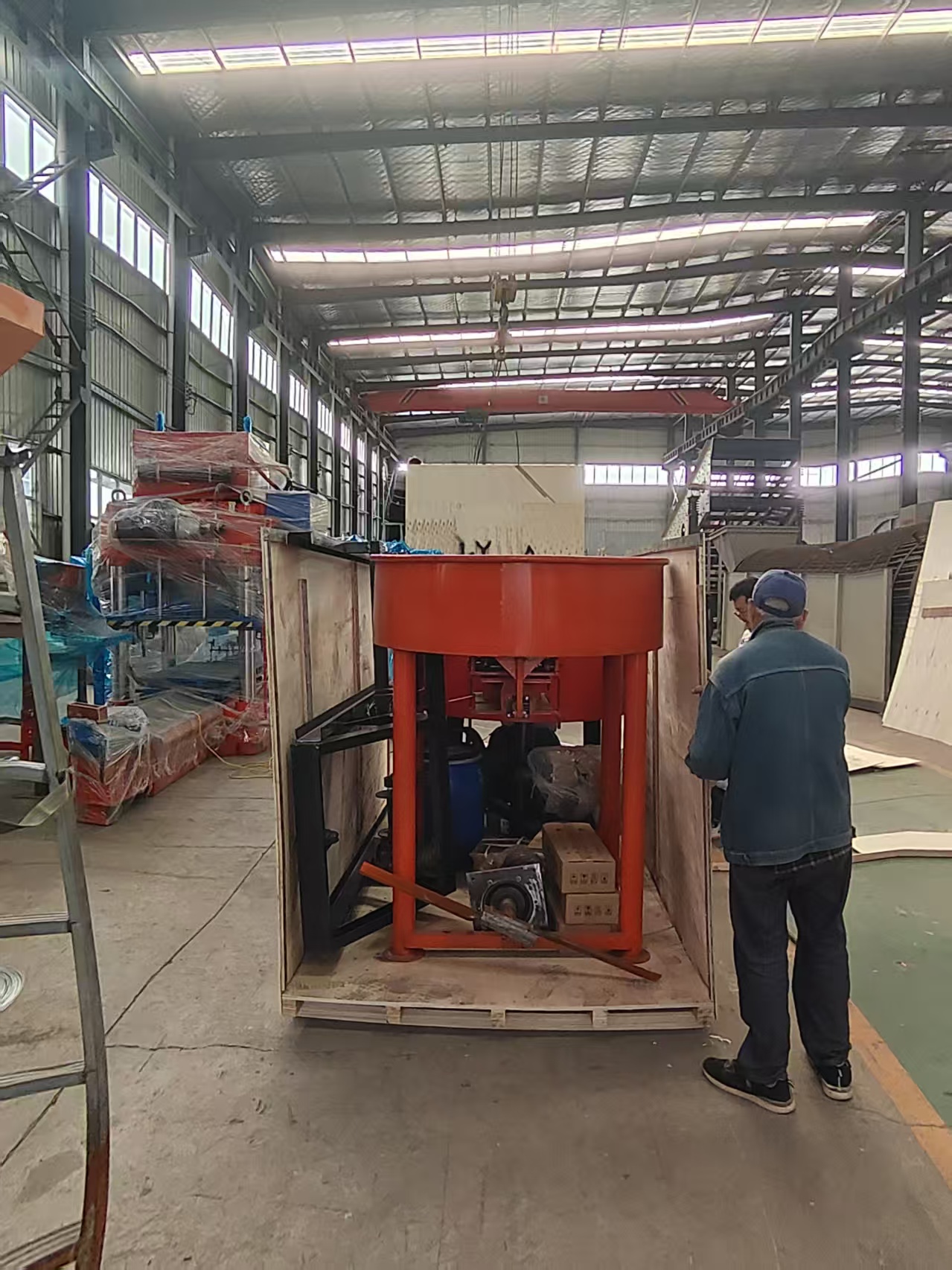
Step 1: Raw Material Preparation and MixingProportionally weigh cement, sand and stone, pigment, pour into the mixer, add water to achieve a moisture content of 12%-15%, and mix for 8-10 minutes until uniform and free of lumps.
STEP 2: Mold Installation and AdjustmentSelect molds based on production requirements, install them on the molding main unit, adjust the pressure to 60 tons through the hydraulic system, and test the flexibility of the demolding mechanism.
STEP 3: Automated Production and MaintenanceStart the equipment, raw materials enter the mold through the conveyor belt, are pressed under high pressure, then demolded, and the tiles are transferred to the curing area for natural curing for 28 days to reach the designed strength.
Common Fault Troubleshooting1) Tile surface cracks: Check if the moisture content of the raw material is too high (recommended ≤15%) or if the pressure setting exceeds the limit (≤80 tons); 2) Difficulty in demolding: Confirm if the mold lubrication is sufficient or if the hydraulic system pressure is insufficient (should be ≥50 tons); 3) Equipment abnormal noise: Inspect if the transmission parts such as chains and bearings are worn and replace the lubricating oil in time.
5. Industry Application Case Studies and Technical Effect Review
Xinlong Machinery once provided cement tile machine processing services for a provincial-level new rural construction project. Project requirements: Produce 2,500 standard tiles per day, covering the rooftops of 200 residential houses. Technical solution: Choose the XLM-1200 cement tile machine, with dual-line production, single-line pressure of 60 tons, and mold change cycle of 10 minutes. Implementation results: 1) Efficiency improvement: Single-line daily production reaches 2,800 tiles, 5 times higher than traditional manual production; 2) Quality stability: Tile bending strength average 16.2MPa, water absorption rate 8.7%, pass rate 99.5%; 3) Cost optimization: Production cost per tile reduced to 1.2 yuan, 15% lower than the market average. After project acceptance, the customer added 3 production lines and recommended it to 5 surrounding towns, forming a regional production network.
6. Summary of Technical Advantages and Industry Outlook
Xinlong Machinery's cement tile machine processing technology is characterized by its core advantages of "high efficiency, stability, and flexibility": 1) High efficiency: Automated production processes shorten cycles, with daily production capacity per line covering the needs of small and medium-sized projects; 2) Stability: Modular design and intelligent control systems reduce failure rates, with overall equipment utilization reaching over 95%; 3) Flexibility: Supports switching between various mold specifications and customized development, suitable for diverse scenarios such as new rural construction, cultural tourism landscapes, and commercial buildings. With the advancement of the "dual carbon" goal, colored cement tiles, as representatives of green building materials, will see continued market growth. Xinlong Machinery will continue to optimize equipment energy consumption (current single-line power consumption ≤ 37kW·h/day), explore low-carbon technologies such as photovoltaic maintenance, and contribute to the sustainable development of the industry.