 Zhengzhou Xinlong Machinery Manufacturing Co., Ltd.
Zhengzhou Xinlong Machinery Manufacturing Co., Ltd.
Zhengzhou Xinlong Machinery Manufacturing Co., Ltd.
Zhengzhou Xinlong Machinery Manufacturing Co., Ltd.
Zhengzhou Xinlong Machinery Manufacturing Co., Ltd.
I. Technical Background and Industry Demands
Color cement tiles, as a new type of roofing material introduced from abroad in the 1990s, have gradually replaced traditional clay tiles with their vibrant colors, high strength, waterproofing, and resistance to weathering. According to industry data, the annual growth rate of the domestic color cement tile market has reached 8%, with strong demand particularly in rural self-built houses, villas, and commercial buildings. Zhengzhou Xinnong Machinery Manufacturing Co., Ltd. (hereinafter referred to as "Xinnong Machinery"), as one of the earliest enterprises in China to engage in the research and development of color cement tile machines, has formed a full-chain service capability from equipment design, manufacturing to overseas installation guidance with 25 years of technical accumulation and production experience. Its products cover more than 30 provinces and cities across the country and have been exported to Southeast Asia, the Middle East, and other regions.
Chapter 2: Technical Analysis: Core Advantages of Cement Tile Machine Outsourcing
1. Equipment performance parameters
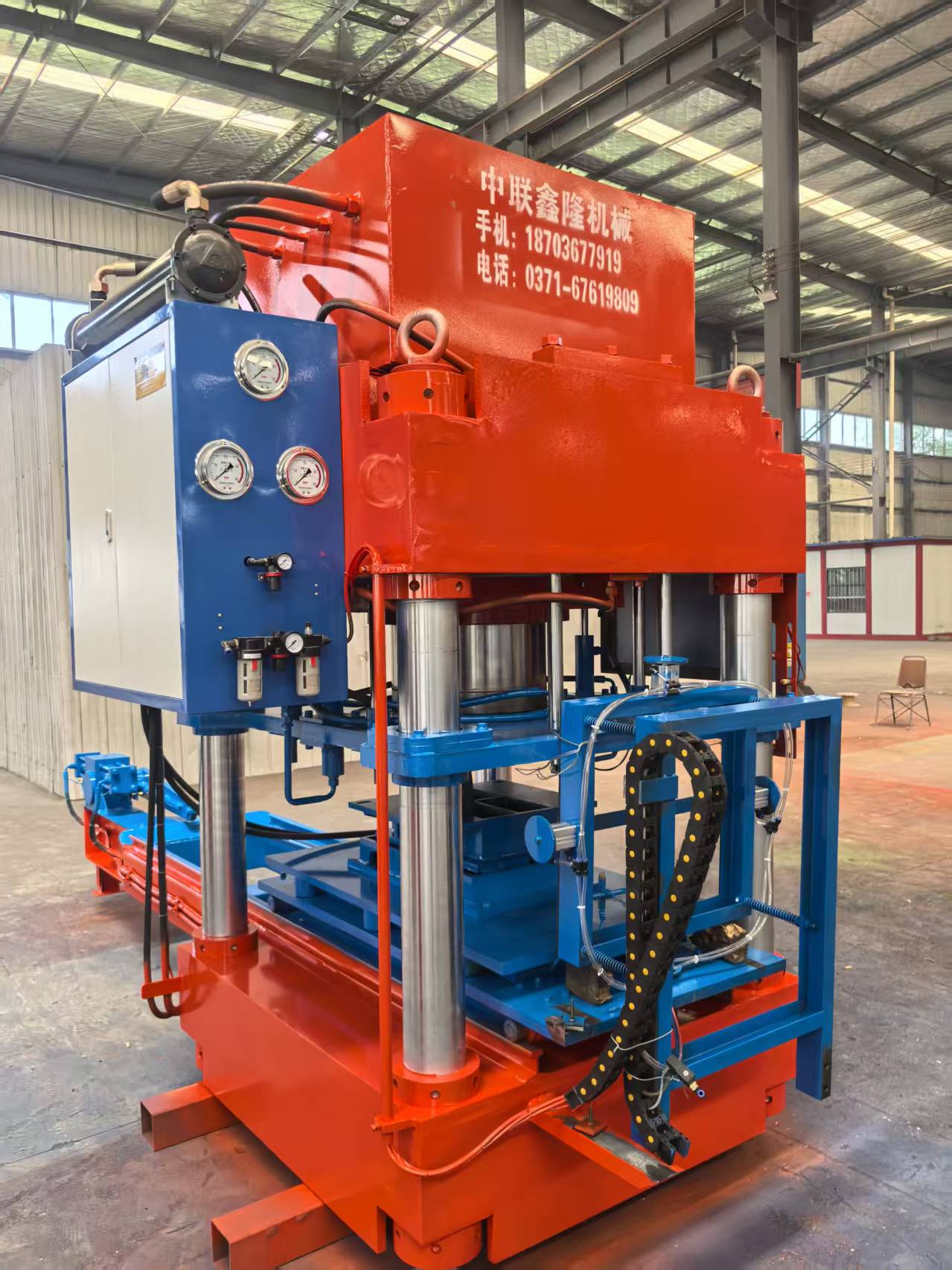
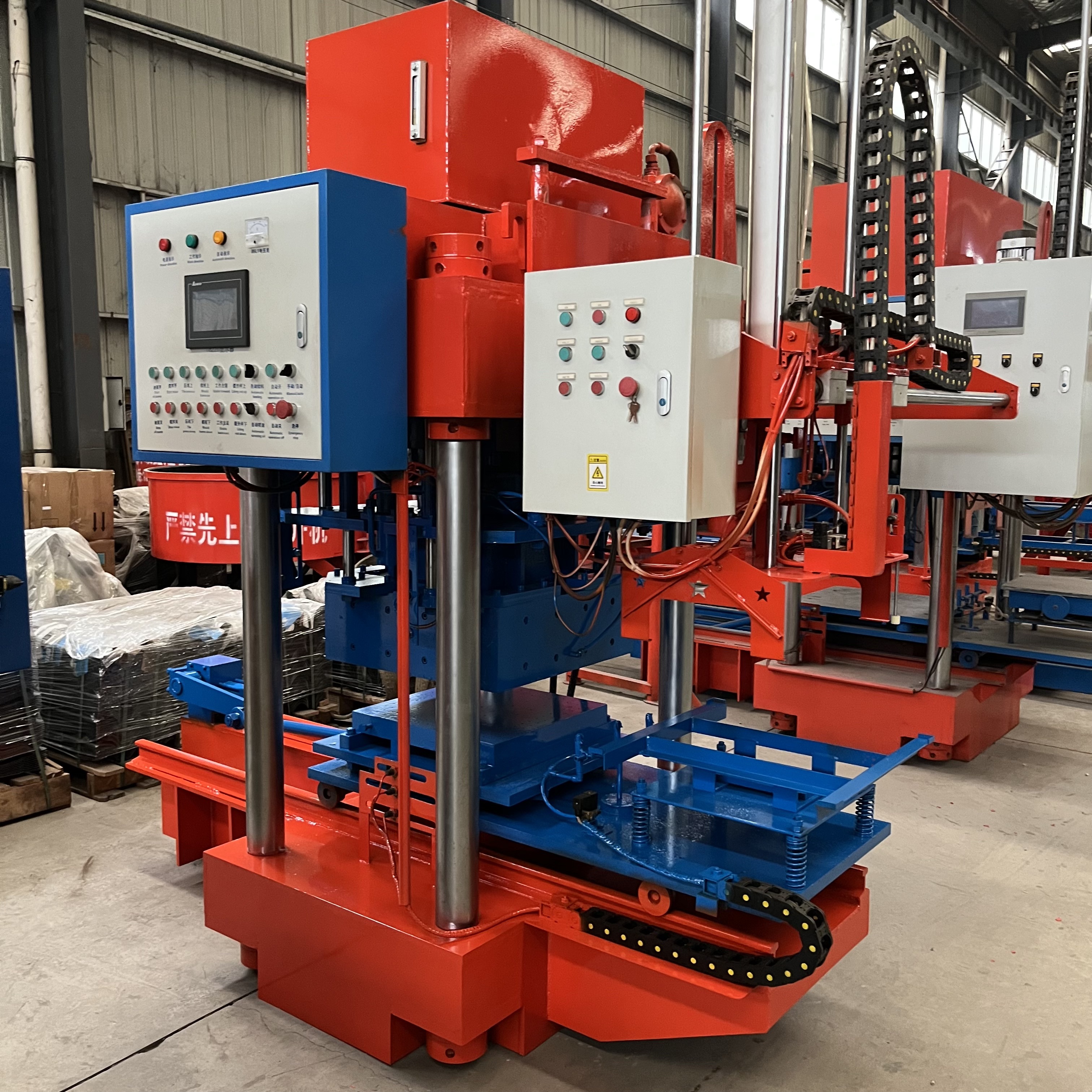
Xinlong Machinery's cement tile machine is designed in a modular style, featuring a main motor power of 15-22kW, with production efficiency up to 800-1200 pieces/hour. It is compatible with colored cement tiles of thickness 4-6mm and width 300-420mm. The core components of the equipment, such as molds, hydraulic systems, and conveyors, are made of high-strength alloy steel and wear-resistant materials, enhancing service life by 30% compared to the industry average. For instance, its hydraulic system pressure can be precisely adjusted to 15-20MPa, ensuring uniform density of tiles and flexural strength above 15MPa, complying with GB/T 21149-2007 standards.
2. Process optimization
The equipment integrates full-process automation of batching, mixing, molding, demolding, and curing, achieving dynamic parameter adjustment through PLC control system. Taking the batching process as an example, the system can accurately proportion at a ratio of cement:sand:colorant = 1:2:0.05, with an error controlled within ±1%, avoiding tile color differences caused by raw material fluctuations. In addition, the equipment is equipped with an independent curing kiln, supporting segmented control of temperature (20-60℃) and humidity (60%-90%RH), reducing the curing cycle to 12 hours, which improves the efficiency by 50% compared to traditional natural curing.
3. Customized service capability
In response to the climatic and architectural style differences in various regions, Xinlong Machinery offers mold customization services. For example, we design deep groove tiles (drainage groove depth ≥15mm) for the rainy regions in the south, improving drainage efficiency by 40%; and develop frost-resistant formulations (adding 5% antifreeze agent) for the cold regions in the north, ensuring tiles remain crack-free in -20℃ conditions. Additionally, the company supports overseas customers with equipment installation guidance, dispatching technical teams to the site for debugging to ensure stable operation under different conditions such as voltage (220V/380V) and frequency (50Hz/60Hz).
3. Industry Application Cases: Actual Effects of Technology Implementation
1. Domestic Project: Demonstration Village for New Rural Construction
In 2022, Xinlong Machinery provided 10 cement color tile machines to a new rural construction project in Henan, producing deep gray antique tiles. The project party reported that within one year of operation, the tile breakage rate was less than 0.5%, and the service life of the tiles was extended three times compared to the local traditional clay tiles. At the same time, automated production reduced labor costs by 30%, and each village saved over 200,000 yuan in roof material costs annually.
2. Overseas Project: Southeast Asia Commercial Complex
In 2023, the company customized a red wave tile production line for a commercial complex in Ho Chi Minh City, Vietnam. By adjusting the mold curvature and pigment ratio, the finished tiles meet the local architectural aesthetic requirements and have wind pressure resistance of up to 1.2 kPa (equivalent to a typhoon of 12 levels). After the project was accepted, the customer placed an additional order for 5 units.
4. Technical FAQ and Industry Advice
Q1: Common failures and solutions for cement colored tile machines?
A: Common issues include mold jamming, uneven tile thickness, and hydraulic system oil leakage. Jamming is often due to excessive humidity of the raw materials (recommended to be controlled between 8%-12%), which can be resolved by adjusting the mixing time; uneven thickness requires checking the mold parallelism (error should be ≤0.1mm); oil leakage in the hydraulic system requires replacing the seals (nitrile rubber material is recommended).
Q2: How to choose the suitable cement tile machine model?
A: An assessment based on daily production volume, tile specifications, and budget is required. For instance, small projects with a daily production of under 5,000 tiles can opt for a single unit capable of producing 800 tiles per hour; for large projects with daily production over 10,000 tiles, it is recommended to configure 2-3 units for parallel production, with a 10% capacity surplus to cope with order fluctuations.
V. Summary and Outlook
Sunlong Machinery has formed a full-cycle technical system covering equipment manufacturing, process support, and after-sales maintenance through continuous technological iteration and service optimization. In the future, the company will focus on intelligent upgrading, developing cement tile machines integrated with AI visual detection to achieve real-time monitoring of tile size and surface defects, further promoting the industry towards high efficiency and accuracy.