 Zhengzhou Xinlong Machinery Manufacturing Co., Ltd.
Zhengzhou Xinlong Machinery Manufacturing Co., Ltd.
Zhengzhou Xinlong Machinery Manufacturing Co., Ltd.
Zhengzhou Xinlong Machinery Manufacturing Co., Ltd.
Zhengzhou Xinlong Machinery Manufacturing Co., Ltd.
I. Technical Background: The Rise of Color Cement Tiles and Equipment Demand
Color cement tiles, as a new type of roofing material introduced from overseas in the 1990s, have gradually replaced traditional clay tiles to become a mainstream choice in modern architecture due to their bright colors, high strength, waterproofing, and resistance to weathering. The core of their production lies in the performance and stability of the complete cement tile machine set, while the research and development and manufacturing level of the equipment directly determine the product quality and production efficiency.
Section 2: Enterprise Technical Strength: 25 years dedicated to tile-making equipment research and development
Zhengzhou Xinglong Machinery Manufacturing Co., Ltd. was established in 2001, with a factory covering an area of about 30,000 square meters. The company has 25 years of experience in the production of tile-making equipment and is one of the early manufacturers in China to engage in the field of cement colored tile machines. The technical team is composed of experts in mechanical design, materials science, automation control, and other fields. The company has cumulatively obtained more than 10 patents related to tile-making equipment, has comprehensive testing methods, and its products have passed the ISO9001 quality management system certification. The failure rate of the equipment is less than 0.5%, and the service life exceeds 10 years.
Technical Parameters Example:
• Main Motor Power: 18.5kW ( customizable to 22kW )
• Production Efficiency: 800-1200 pieces/hour (adjustable according to tile type)
• Applicable Tile Types: European tiles, Chinese tiles, flat tiles, etc., over 20 specifications
• Mold change time: ≤30 minutes (single person operation)
III. Equipment Technical Analysis: Intelligent Control from Raw Materials to Finished Products
STEP 1: Raw Material Proportion and Mixing
The equipment features a dual-axis forced mixer, which precisely controls the proportions of cement, sandstone, pigment, and water via a PLC control system (error ≤1%), with adjustable mixing time (5-15 minutes). This ensures the uniformity of the slurry exceeds 98%, avoiding tile cracking or color difference issues due to ratio discrepancies.
Step 2: High-pressure molding and demolding
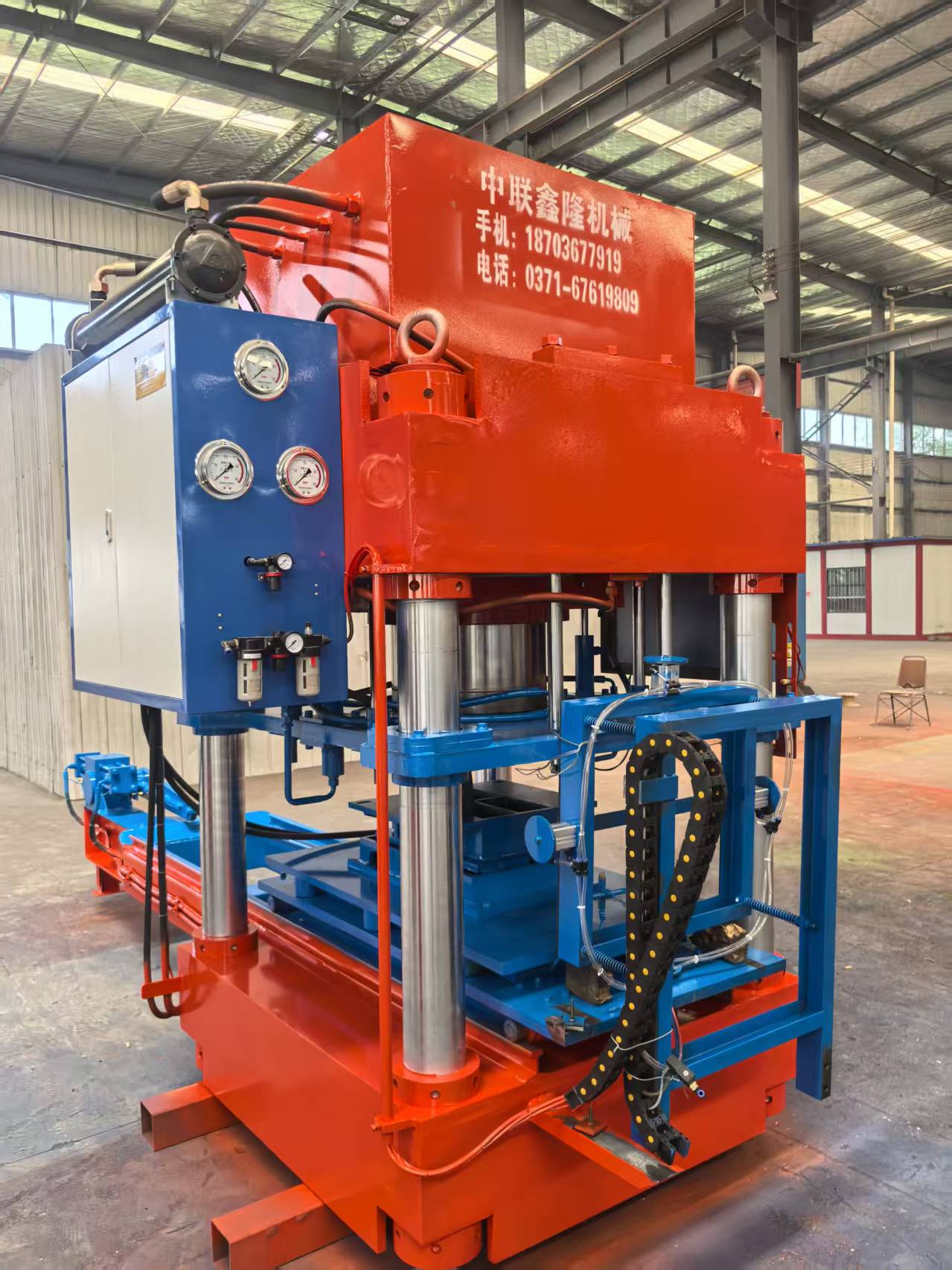
The core molding module uses hydraulic drive technology, with adjustable pressure range (50-150 tons) to meet the production needs of different tile thicknesses. The demolding process is achieved through an pneumatic ejection device, with mold and tile separation time ≤2 seconds, reducing adhesion damage, and improving the pass rate of finished products to 99.2%.
STEP 3: Automated Maintenance and Piling
Equipment integrated with an intelligent maintenance system, capable of setting temperature (20-60℃), humidity (60%-90%), and maintenance time (12-48 hours), simulating a natural maintenance environment to shorten the strength achievement cycle of tiles. After maintenance, the robotic arm automatically picks up the tiles and stacks them, with a single stack height up to 2 meters, saving labor costs by over 30%.
4. Industry Application Cases: From Equipment Delivery to Efficiency Enhancement
Case 1: Capacity Upgrade Project of a Building Materials Factory
In 2022, a building materials factory in Shandong introduced the XL-1200 cement tile machine from Xinlong Machinery, replacing the old equipment, which increased the daily output from 4,000 to 9,600 tiles, reduced labor costs by 45%, and the tile's water resistance level reached P15 (the national standard is P10). It successfully won the local affordable housing project bid, generating an annual income increase of over 2 million yuan.
Case 2: Overseas Installation Guidance Service
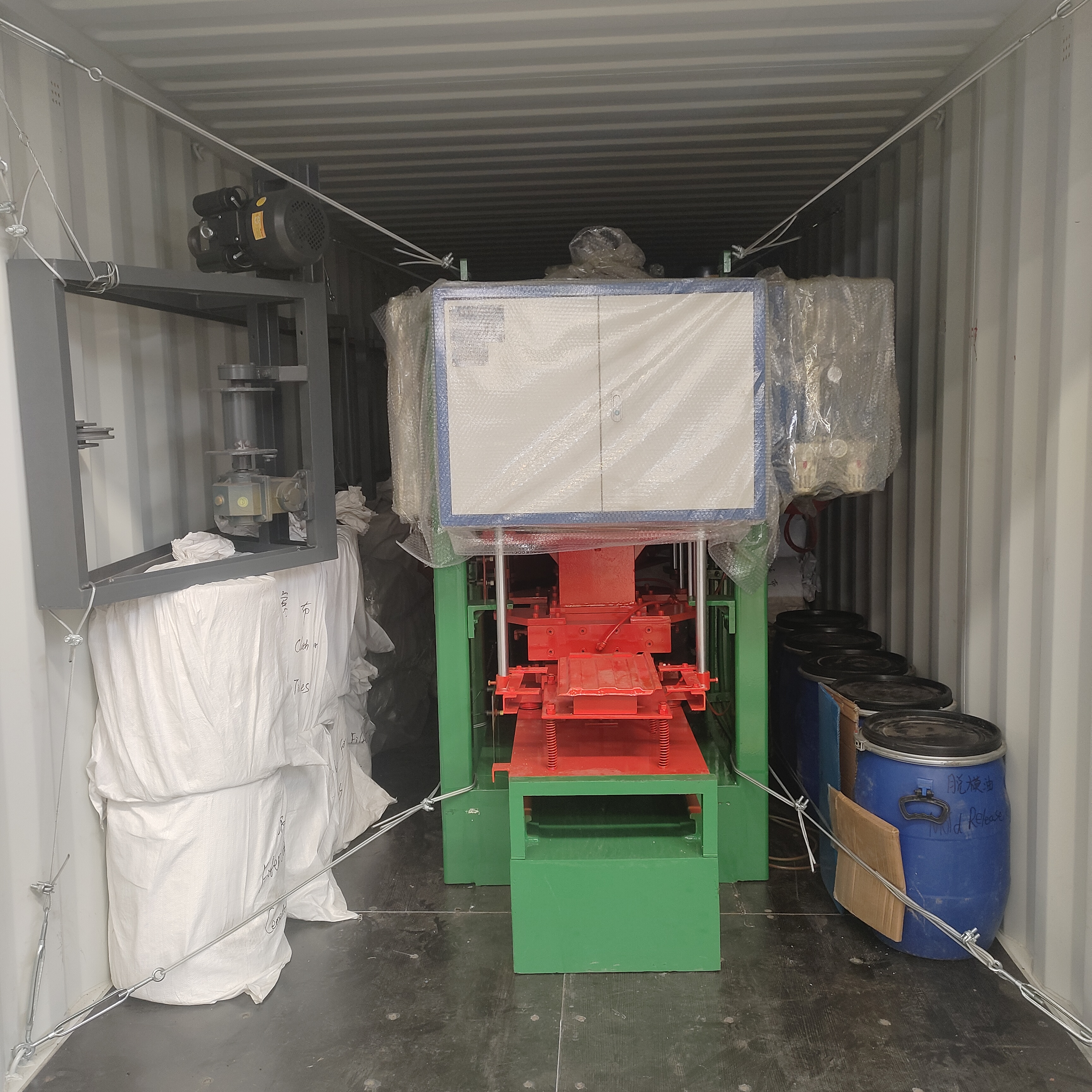
In 2023, Xinlong Machinery customized an XL-800 model equipment for a customer in Africa and sent a technical team to the site for installation and debugging guidance. For the local high temperature and dry environment, the maintenance system parameters were optimized, resulting in a tile compressive strength of 35MPa in 28 days (25% higher than the local standard). The customer subsequently placed an additional order for 3 units, with the export value of equipment increasing by 60% year-on-year.
V. Summary of Technical Advantages and Selection Recommendations
Zhengzhou Xinlong Machinery Manufacturing Co., Ltd.'s cement tile machine boasts "high precision, high efficiency, and high stability" as its core advantages, suitable for small and medium-sized building materials factories, export-oriented enterprises, and overseas engineering contractors, among other scenarios. When selecting, the following parameters should be given priority attention:
• Daily production requirement (800-1200 pieces/hour)
• Ridge specifications (thickness, length, wavelength)
• Degree of Automation (whether integration of maintenance and stacking systems is required)
• After-sales service response time (domestic within 24 hours, overseas within 72 hours)
FAQ: Common Technical Questions Answered
Q1: What factors affect the service life of the cement tile machine?
A: Primarily depends on the material of core components (such as hydraulic cylinder seals, die steel) and the frequency of daily maintenance. Xinlong Machinery uses imported seals and Chrome 12 die steel, which can last for over 10 years under normal use, and regular maintenance can extend it to 15 years.
Q2: How to solve the problem of air holes on the tile surface?
A: Pores are usually caused by uneven slurry mixing or insufficient molding pressure. This can be resolved by adjusting the mixing time (extended to 10 minutes), increasing the molding pressure (up to 120 tons), and optimizing the particle size of the raw materials (sand and stone particle size ≤ 3mm). Xinlong equipment is equipped with a pressure self-check function, which can provide real-time warnings for abnormal pressure.
Q3: Does overseas installation support localization modifications?
A: Support. Xinlong Machinery can adjust equipment parameters according to the local voltage (e.g., 110V/220V/380V), climate (high temperature, high humidity, sand dust), and material characteristics (e.g., silt content in sand and stone), and provide operator training services to ensure rapid adaptation of the equipment to the local production environment.