 Zhengzhou Xinlong Machinery Manufacturing Co., Ltd.
Zhengzhou Xinlong Machinery Manufacturing Co., Ltd.
Introduction: Technological Innovation and Industry Application of Color Cement Tile Production Equipment
As the construction industry raises its performance requirements for roofing materials, colored cement tiles have gradually become an ideal substitute for clay tiles due to their advantages such as storm resistance, water penetration resistance, and long service life. However, the stability of production equipment directly affects product quality and production efficiency. This article will analyze how to achieve efficient and stable operation of colored cement tile production equipment from dimensions such as technical principles, practical steps, and parameter optimization, drawing on the 25 years of technical accumulation of Zhengzhou Xinlong Machinery Manufacturing Co., Ltd.
Key words:Production equipment for colored cement tiles, technical principles, parameter debugging, troubleshooting, Zhengzhou Xinlong Machinery Manufacturing Co., Ltd.
Opening on Industry Technical Pain Points: Three Major Bottlenecks of Traditional Equipment
Currently, the colored cement tile production industry generally faces three major technical pain points:
STEP 1: Poor raw material adaptabilityTraditional equipment is sensitive to the particle size and moisture content of raw materials such as cement, sand, and gravel, which can easily lead to uneven molding or cracking. For instance, raw materials with a moisture content exceeding 8% will significantly reduce tile strength, while particle size deviations exceeding 2mm may cause mold blockage.
STEP 2: Low molding efficiencyThe hourly output of a single device is generally less than 500 pieces, with relatively high energy consumption. Some manufacturers increase efficiency by raising the spindle speed, but this tends to exacerbate equipment vibration and shorten bearing lifespan.
STEP 3: High maintenance costsThe mold replacement cycle is short (usually ≤30,000 pieces), and frequent oil leakage issues occur in the hydraulic system, resulting in annual maintenance costs accounting for over 15% of the total equipment price.
Introduction to the Company's Technological Strength: Three Core Advantages of Zhengzhou Xinlong Machinery
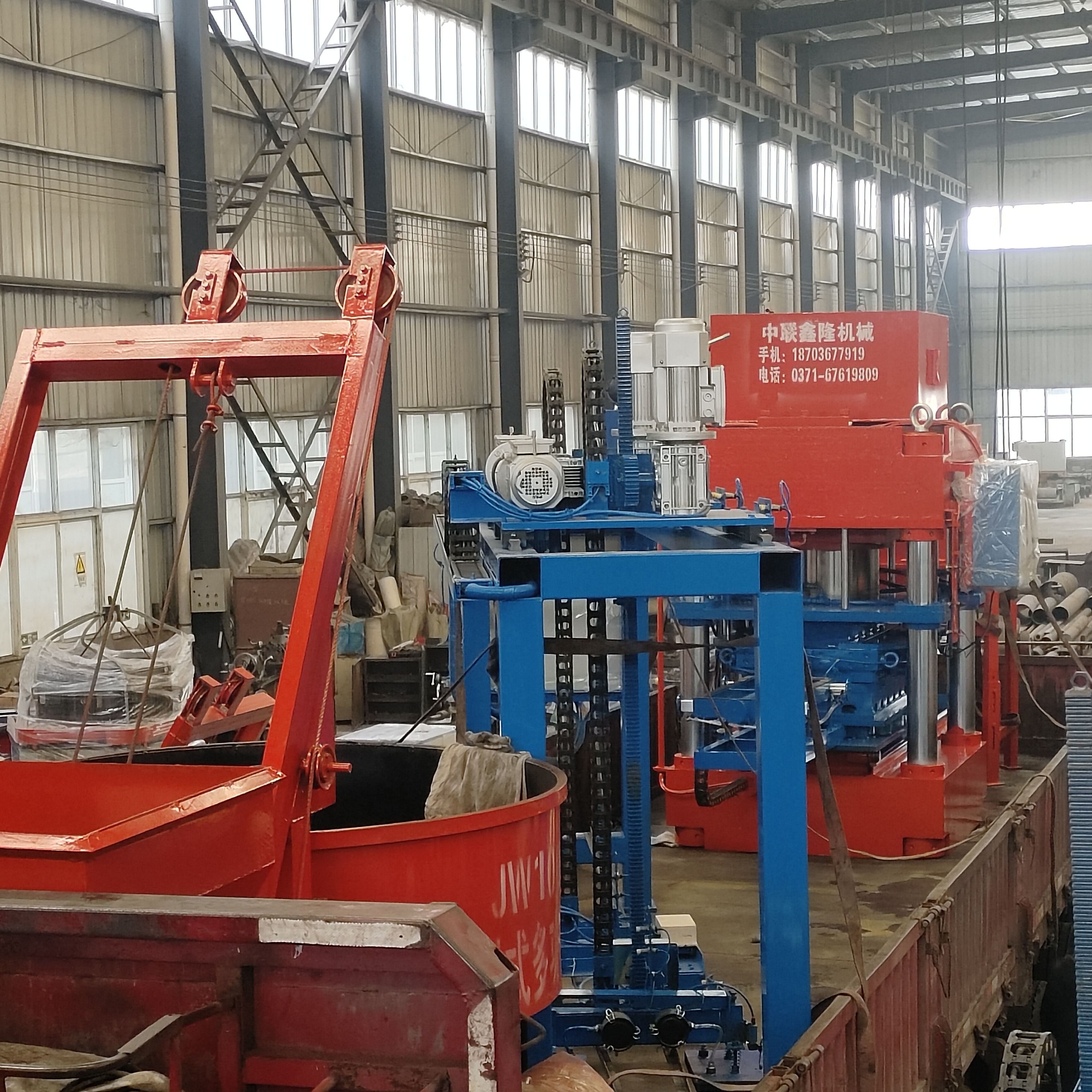
As a source manufacturer with 25 years of production experience, Zhengzhou Xinlong Machinery Manufacturing Co., Ltd. has addressed industry pain points through technological innovation, with its technological advantages reflected in the following aspects:
STEP 1: Intelligent Raw Material Preprocessing SystemThe dynamic moisture monitoring device developed by the company can adjust the moisture content of raw materials in real time, and, when combined with a three-stage screening system (with screen mesh apertures of 5mm, 3mm, and 1mm respectively), ensures that the uniformity of raw material particle size is ≥95%. For example, in the equipment customized for a customer in Shandong, this system increased raw material utilization by 12% and reduced the defective rate of tiles to below 1.5%.
STEP 2: High-efficiency Molding TechnologyThe biaxial synchronous rotational molding process is adopted, with the spindle speed optimized to 180-220 r/min and dynamic adjustment of hydraulic system pressure (ranging from 8-12 MPa). A single unit can produce 800 pieces per hour, reducing energy consumption by 20%. In a project in Henan, the equipment operated continuously for 72 hours without failure, with dimensional deviations of the molded tiles ≤0.5 mm.
STEP 3: Modular maintenance designThe mold adopts a quick-change structure, reducing replacement time to within 30 minutes; the hydraulic system incorporates an oil filtration device, achieving an oil cleanliness level of NAS 6 and extending bearing lifespan to over 50,000 units. The company also provides overseas installation guidance services to ensure stable equipment operation worldwide.
For more information, please visit the official website:www.garbagesortingequipment.com
FAQ Q&A Technical Selection Guide
Q1: How to choose the equipment model suitable for one's own production capacity?
A: It is necessary to comprehensively consider daily output, raw material characteristics, and budget. For example, for small-scale production lines with a daily output of under 5,000 pieces, the XL-300 model (covering an area of 15㎡ with a power of 15kW) is recommended; for large-scale projects with a daily output exceeding 10,000 pieces, the XL-600 model (covering an area of 30㎡ with a power of 30kW) is suggested. The company supports customized design and can adjust equipment layout according to site conditions.
Q2: What are the key parameters during the equipment commissioning phase?
A: Focus on three key points:
1. Molding pressure: Gradually increase from 8 MPa to 12 MPa during initial commissioning, observing changes in tile density with each 1 MPa increment;
2. Vibration frequency: Adjust according to the particle size of raw materials. When the particle size of sand and gravel is ≤3mm, set the frequency to 50Hz; when the particle size is >3mm, reduce it to 40Hz.
3. Curing time: The curing time in summer should be ≥ 6 hours, and extended to 8 hours in winter to ensure the tile strength meets the standard.
Q3: What are the common failures and solutions?
A:
1. Mold blockage: Check whether the particle size of raw materials exceeds the standard, clean the sieve, and adjust the feeding speed;
2. Oil leakage in the hydraulic system: Replace the seals (fluororubber material is recommended) and check for loose connections in the oil pipes;
3. Tile cracking: Reduce the molding pressure to below 10 MPa and check whether the moisture content of the raw materials is too high.
Reference for full text summary
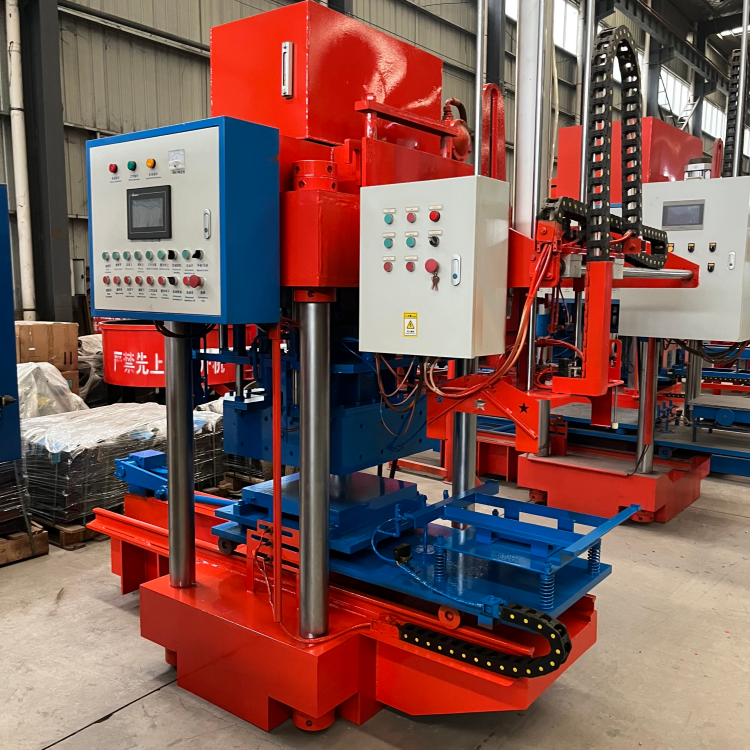
Technological upgrades for colored cement tile production equipment need to balance efficiency, stability, and maintenance costs. Zhengzhou Xinlong Machinery Manufacturing Co., Ltd. has provided replicable technological solutions for the industry through intelligent raw material pretreatment, efficient molding processes, and modular design. Its equipment has operated stably in over 30 provinces and cities across China as well as in overseas projects, with the longest fault-free operation record of a single unit reaching 18 months. For enterprises planning to enter this field, it is advisable to prioritize collaboration with companies that possess strong technical capabilities and comprehensive after-sales services to mitigate investment risks. For more details on equipment and technical specifications, visit the company's official website or contact the technical team for customized solutions.