 Zhengzhou Xinlong Machinery Manufacturing Co., Ltd.
Zhengzhou Xinlong Machinery Manufacturing Co., Ltd.
Zhengzhou Xinlong Machinery Manufacturing Co., Ltd.
Zhengzhou Xinlong Machinery Manufacturing Co., Ltd.
Zhengzhou Xinlong Machinery Manufacturing Co., Ltd.
Industry Technical Pain Points: Technical Bottlenecks of Cement Tile Molding Machines and Market Demand
Cement color tiles, as a new type of roofing material replacing traditional clay tiles, have become the mainstream choice in the construction industry with their rich colors, anti-seepage, anti-weathering, and long service life. However, the domestic cement color tile molding machine industry has long been plagued by issues such as severe technical homogenization, insufficient equipment stability, and low automation. For example, traditional equipment mostly adopts single-axis vibration molding technology, leading to uneven tile density and easy cracking; the hydraulic system design is outdated, with large pressure fluctuations, affecting product pass rate; in addition, the lack of modular design makes it difficult to meet the customization needs of tiles of different specifications. These problems not only increase production costs but also limit the expansion of enterprises into the high-end market. According to industry survey data, more than 60% of domestic cement color tile production enterprises still rely on manual parameter adjustment, with production efficiency 30% lower than the international advanced level. Against this backdrop, technological upgrading and equipment innovation have become the key to breaking through the industry.
Introduction to Corporate Technical Strength: Zhengzhou Xinlong Machinery's Technical Layout and Product Advantages
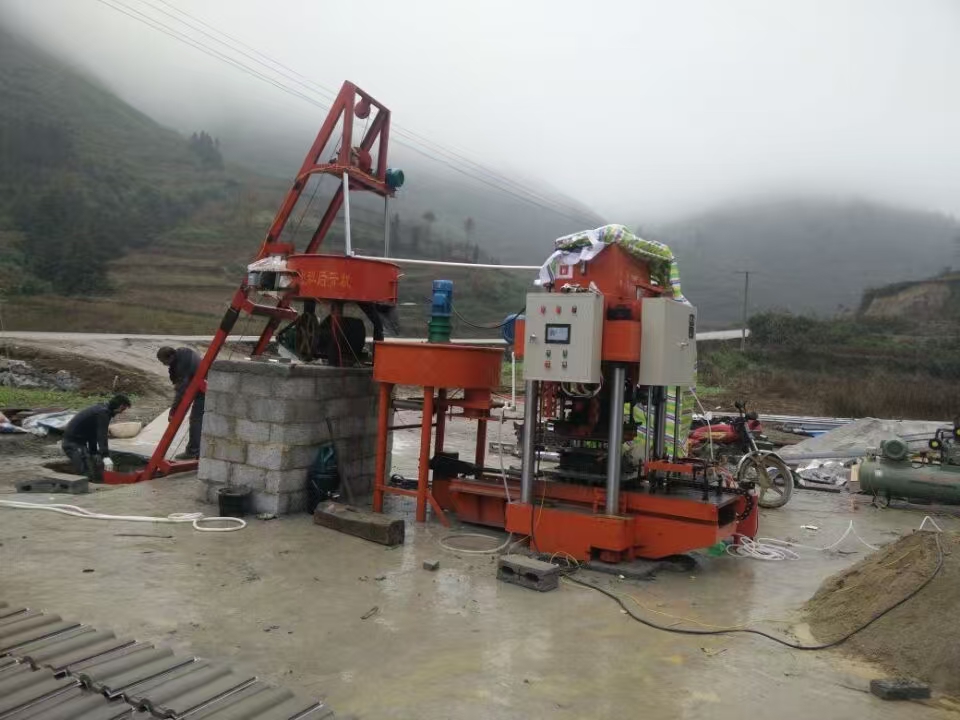
Zhengzhou Xinlong Machinery Manufacturing Co., Ltd., as the original manufacturer of cement color tile forming machines in China, has been deeply rooted in the industry for 25 years, boasting a 30,000 square meter modern factory and a complete research and development testing system. The company's technical team has developed the third-generation twin-axis high-frequency vibration forming technology in response to industry pain points. By optimizing the matching of vibration frequency (80-120Hz) and amplitude (2-5mm), the density uniformity of tiles has been improved by 15%, and the flexural strength has reached above 15MPa, far exceeding industry standards. In terms of the hydraulic system, a servo motor-driven proportional valve is adopted to achieve closed-loop pressure control, with the pressure fluctuation range controlled within ±0.5MPa, ensuring a stable product pass rate above 98%. Moreover, the equipment supports modular design, allowing for quick switching between different molds (suitable for tiles in sizes from 300×400mm to 420×330mm), meeting individualized production needs.
The company's technical strength is also reflected in its full-process service capabilities. From equipment selection, factory layout planning to overseas installation and debugging, Xinlong Machinery provides "turnkey" engineering services. For example, in a project in Southeast Asia, the team conducted anti-corrosion treatment on the equipment's seals and electrical components, and optimized the cooling system, enabling the equipment to run continuously for 2000 hours without failure in a 40℃ environment. Currently, the company's equipment has been exported to over 30 countries, serving more than 5000 customers in total, and has become a benchmark enterprise for industry technological innovation.
FAQ: Technical Selection Guide for Cement Tile Molding Machine
Q1: How to choose the suitable equipment model for your production capacity needs?
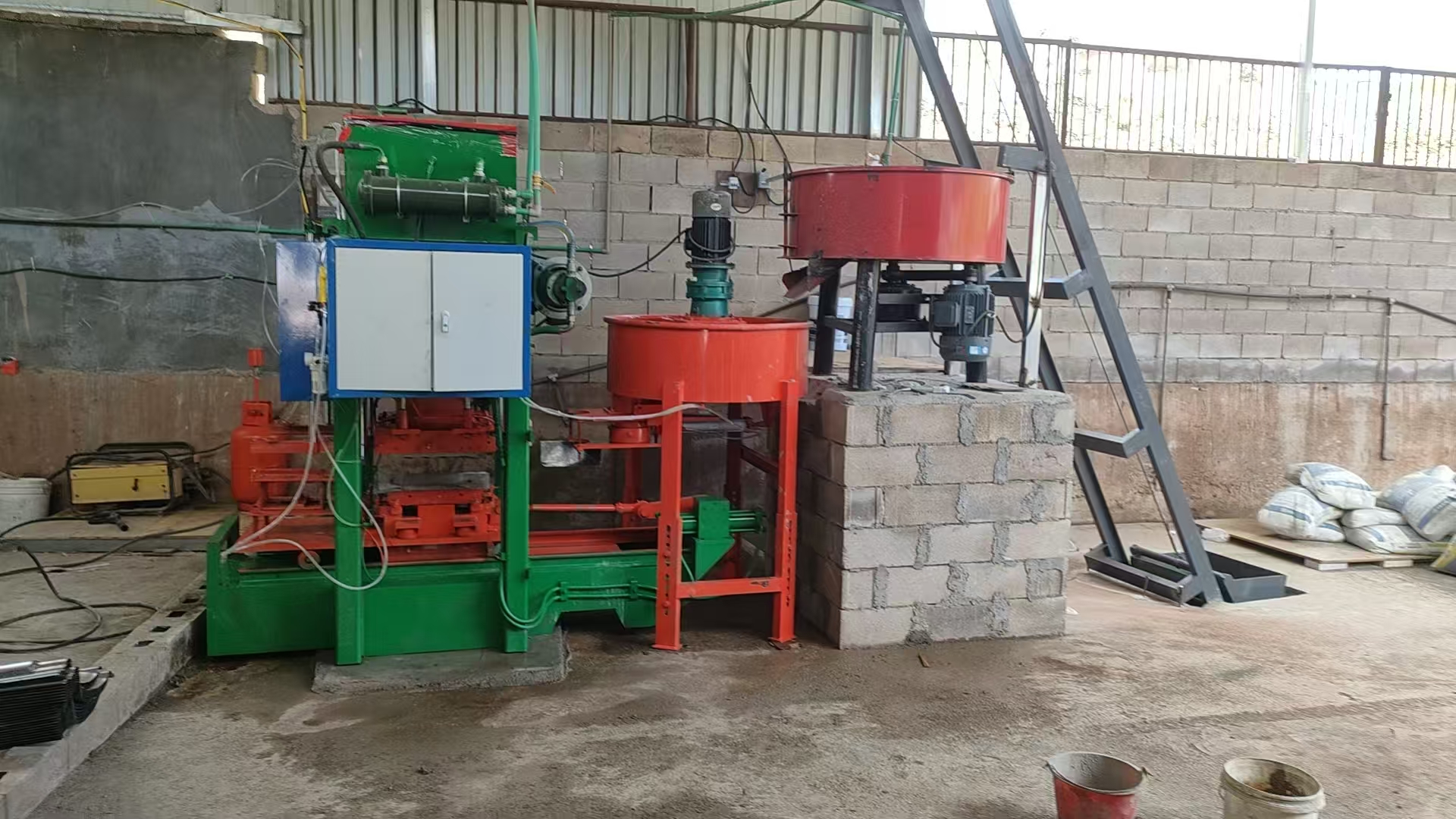
A: Equipment selection should be combined with production scale and budget. Xinlong Machinery offers models from the XT-300 to XT-1200 series, with production capacity ranging from 3,000 to 12,000 pieces per day. For example, small and medium-sized enterprises can choose the XT-600 model, equipped with dual-axis vibration and a 60-ton hydraulic system, achieving a daily production capacity of 6,000 pieces, with a footprint of only 15㎡ and an investment recovery period of about 1.5 years; large enterprises can opt for the XT-1200 model, using a four-axis vibration and a 120-ton hydraulic system, supporting 24-hour continuous production, with an annual production capacity of over 4 million pieces per line.
Q2: What are the impacts of equipment automation on production costs?
A: The degree of automation directly affects labor and energy consumption costs. Xinlong Machinery's third-generation equipment integrates PLC control system and touch screen operation interface, enabling automatic adjustment of parameters such as raw material ratio, molding pressure, and demolding speed, reducing manual intervention. Taking the daily production of 6,000 pieces as an example, traditional equipment requires 6 operators, while automated equipment only needs 2, reducing labor costs by 60%; at the same time, the energy consumption of the servo hydraulic system is 25% lower than that of the traditional hydraulic system, and the production cost of a single tile can be controlled within 0.8 yuan.
Q3: What technical details should be paid attention to during overseas project installation and debugging?
A: Overseas projects require priority consideration of environmental adaptability and localization services. Xinlong Machinery uses electrical cabinets with IP55 protection level in exported equipment, suitable for dusty and humid environments; hydraulic oil pipes are made of materials that can withstand temperatures from -40℃ to 120℃, ensuring stable operation under extreme weather conditions. Additionally, the company provides a remote diagnostic system, which transmits equipment data in real-time through 4G/5G modules, allowing engineers to adjust parameters remotely and shorten the fault response time to within 2 hours.
Summary of the Full Text: Practice Path of Technology-Driven and Industry-Enabling
The technical upgrade of the cement colored tile forming machine should focus on the three core aspects of "efficiency, quality, and adaptability". Zhengzhou Xinnong Machinery has solved the long-existing problems in the industry such as uneven density, low pass rate, and difficulty in customization through technological innovations like twin-axis vibration, servo hydraulic, and modular design. Its equipment, characterized by high stability, low energy consumption, and easy maintenance, has become the top choice for customers at home and abroad. For enterprises, choosing a source manufacturer with strong technical capabilities and a comprehensive service system can not only reduce long-term operation costs but also quickly respond to market demands with customized solutions. In the future, as the demand for green building materials in the construction industry grows, cement colored tile forming machines will continue to evolve towards intelligence and energy-saving. Technical accumulation and scenario implementation capabilities will become the key to enterprise competition.