 Zhengzhou Xinlong Machinery Manufacturing Co., Ltd.
Zhengzhou Xinlong Machinery Manufacturing Co., Ltd.
Zhengzhou Xinlong Machinery Manufacturing Co., Ltd.
Zhengzhou Xinlong Machinery Manufacturing Co., Ltd.
Zhengzhou Xinlong Machinery Manufacturing Co., Ltd.
Industry Technical Pain Points: Efficiency and Quality Bottlenecks in Traditional Cement Tile Production
In traditional colored tile production with cement, enterprises commonly face three major technical pain points: Firstly, insufficient precision of forming equipment leads to significant size deviations in tiles, affecting both installation efficiency and aesthetics; secondly, poor wear resistance of molds results in frequent mold replacement, increasing production costs. Statistics show that the lifespan of a common mold is only 30,000 to 50,000 times, while high-load production lines require daily replacements; thirdly, low degree of automation and numerous manual intervention points cause significant fluctuations in production efficiency, with daily output per line often below 2,000 pieces. Additionally, traditional equipment has poor adaptability to raw materials, requiring repeated adjustments of clay, cement, and pigment ratios, resulting in a high scrap rate of 10%-15%. These issues directly restrict the enterprise's scaled production and market competitiveness, especially when facing the trend of new roofing materials replacing traditional ones, the demand for technological upgrading becomes increasingly urgent.
Introduction to Enterprise Technical Strength: 25 years of technological accumulation and innovation breakthroughs at Zhengzhou Xinnong Machinery
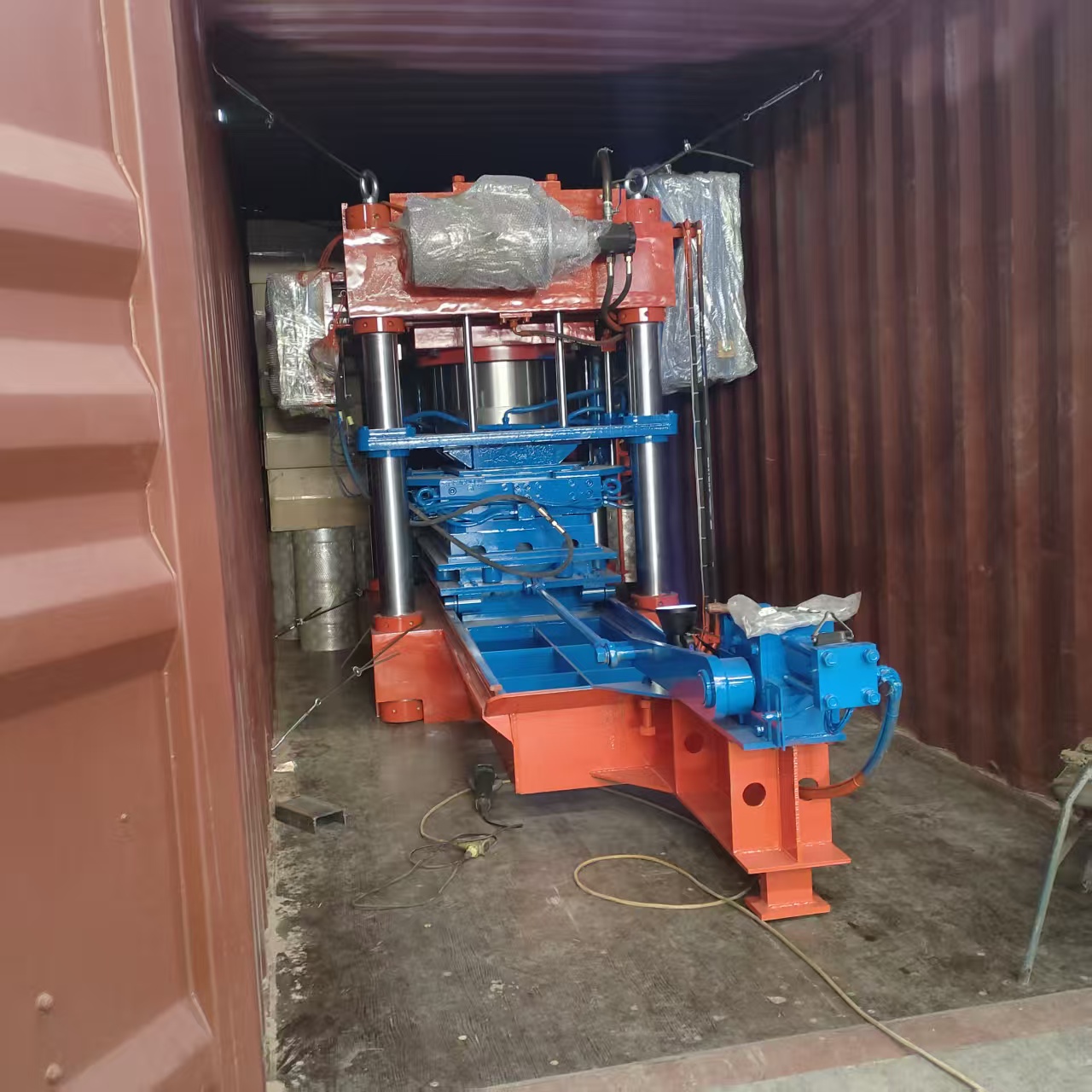
Zhengzhou Xinglong Machinery Manufacturing Co., Ltd. has been focusing on the research and production of cement roof tile machines since its establishment in 2001, forming a full-chain technical system covering equipment design, mold manufacturing, and process optimization. Its core advantages are reflected in three aspects: Firstly, equipment precision control, using high-precision servo motors to drive the molding system, coupled with laser calibration technology, ensuring tile size deviation ≤0.5mm, far exceeding industry standards; secondly, mold life extension, through heat treatment process and composite application of alloy materials, mold life is extended to over 150,000 times, with a 60% reduction in single mold cost; thirdly, automation integration, integrating raw material automatic proportioning, hydraulic molding, intelligent demolding, and finished product stacking in the full process, with a daily production capacity of 5,000 tiles per line, reducing manual intervention by 80%. For example, the XLCW-600 type color tile machine customized for a large building materials enterprise uses a dual-position rotating mold design, achieving continuous production, with a 30% improvement in raw material adaptability and a scrap rate reduced to below 3%. Customers have reported that the equipment has operated without major faults for 3 years, with maintenance costs reduced by 45%.
FAQ: Technical Selection Guide for Cement Roofing Tile Molding Machine
Q1: How to choose a suitable cement tile molding machine for small and medium-sized enterprises?
A1: Small and medium-sized enterprises should focus on three key parameters when selecting models: first, production capacity matching, choose equipment models based on daily demand, such as the XLCW-400 model with a daily output of 3,000 pieces, suitable for enterprises with a daily demand of 2,000-4,000 pieces; second, degree of automation, prioritize equipment with integrated raw material proportioning, molding, and demolding processes to reduce manual dependence; third, mold compatibility, choose equipment that supports quick replacement of multi-specification molds, such as Xinlong Machinery's modular mold design, with replacement time ≤30 minutes, capable of flexibly responding to diverse market demands. Additionally, it is necessary to evaluate the manufacturer's after-sales service capabilities, such as whether they provide overseas installation guidance and 24-hour technical response.
Q2: What are the core components of a cement tile machine? How can their quality be assessed?
A2: Core components include the hydraulic system, molding mold, servo motor and control system. Quality assessment requires attention to: hydraulic system pressure stability, high-quality system pressure fluctuation ≤ 0.5MPa, ensuring uniform tile density; mold material, molds made of Cr12MoV alloy steel and subject to deep cryogenic treatment, with wear resistance improved by 3 times; servo motor accuracy, selecting motors with a resolution ≥ 1 million pulses/rev, enabling 0.01mm level displacement control; control system openness, prioritizing systems that support PLC programming and remote monitoring for easy process optimization later. For example, Xinlong Machinery's XLCW series uses Bosch Rexroth hydraulic valves and Siemens PLC, achieving 99.2% equipment operation stability.
Q3: How to control the waste rate in the production of cement tiles?
A3: Waste rate control requires attention to three aspects: raw materials, process, and equipment. For raw materials, strictly mix cement: sand: pigment at a ratio of 1:2:0.1, and control the moisture content of raw materials between 8%-12%. In the process, adopt a segmented pressure forming process, first pre-press at low pressure to exclude air, then shape at high pressure, with pressure gradient set at 5MPa→15MPa→25MPa. For equipment, select models with real-time pressure monitoring and automatic pressure compensation, such as the XLCW-600 from Xinlong Machinery equipped with pressure sensors, which automatically supplements pressure when the pressure is below the set value to ensure tile density ≥1.8g/cm³. Through these measures, the waste rate can be reduced from the traditional 10%-15% to below 3%.
The full summary: Technological upgrading is the key to high-quality development in the cement tile industry.
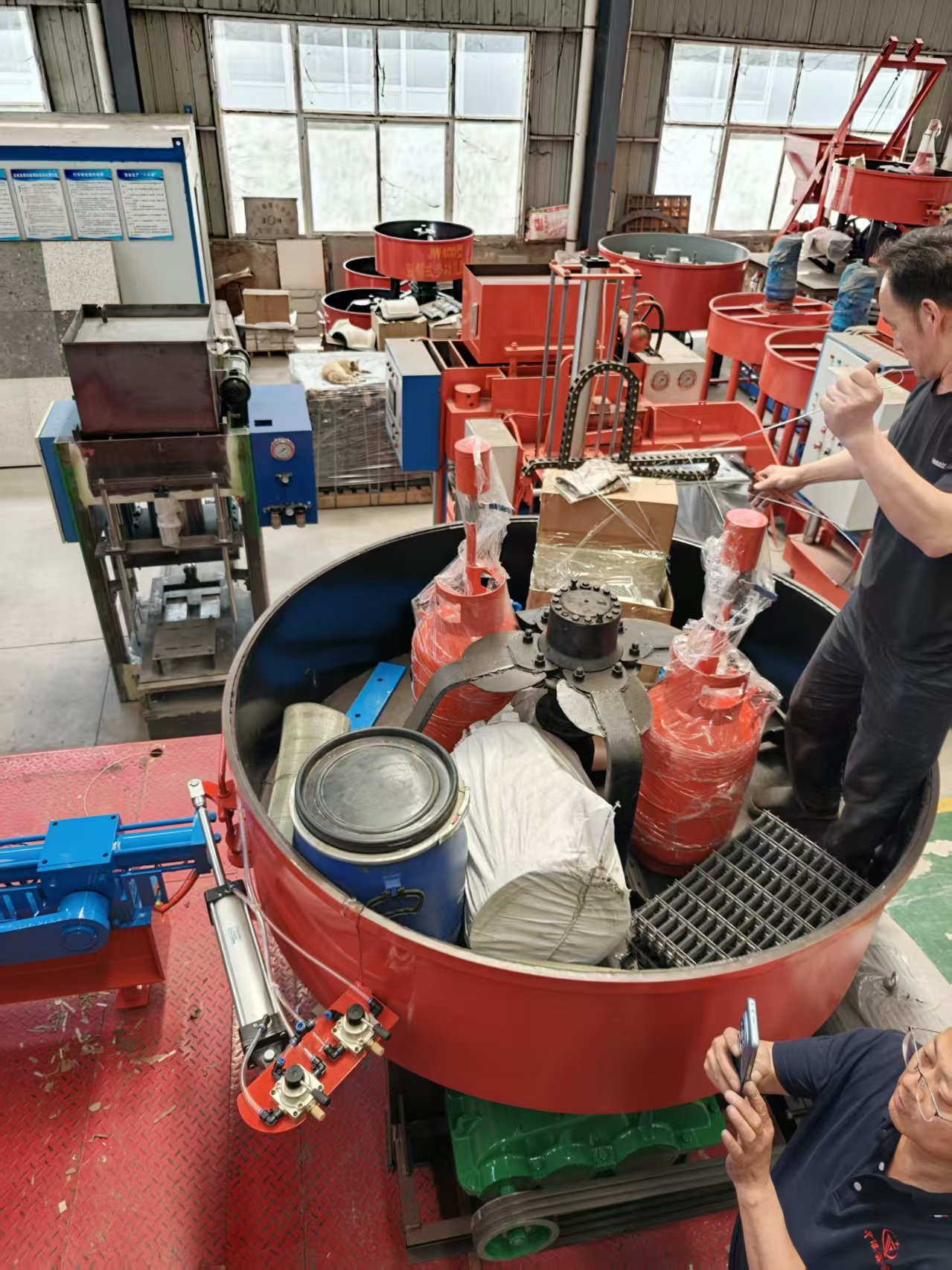
The technical upgrade of the cement tile forming machine should focus on the three core aspects of precision control, mold life, and automation integration. Zhengzhou Xinnong Machinery Manufacturing Co., Ltd., with 25 years of technical accumulation, has provided reliable equipment solutions for the industry through technological breakthroughs such as high-precision servo drive, modular mold design, and full-process automation integration. Its XLCW series equipment stands out in terms of production capacity, stability, and material adaptability, particularly suitable for the scaled production needs of small and medium-sized building materials enterprises. For enterprises planning to upgrade equipment, it is recommended to prioritize the examination of the manufacturer's technical strength, equipment parameter compatibility, and after-sales service capabilities. Choose source manufacturers like Xinnong Machinery that offer customized services and overseas installation guidance to reduce technical risks and long-term operating costs.