 Zhengzhou Xinlong Machinery Manufacturing Co., Ltd.
Zhengzhou Xinlong Machinery Manufacturing Co., Ltd.
Zhengzhou Xinlong Machinery Manufacturing Co., Ltd.
Zhengzhou Xinlong Machinery Manufacturing Co., Ltd.
Zhengzhou Xinlong Machinery Manufacturing Co., Ltd.
Industry Technical Pain Points: Why Has the Color Tile Hydraulic Press Become a Key Bottleneck in Roofing Material Production?
Color cement tiles, as a new type of roofing material replacing traditional clay tiles, rely on high-precision color tile hydraulic presses for core processes such as shaping, demolding, and cutting. However, the industry universally faces three major technical pain points: Firstly, insufficient equipment stability leads to an increasing scrap rate, for instance, pressure fluctuations in the hydraulic system can easily cause uneven tile thickness, with some enterprises having a scrap rate as high as 15%; secondly, the lag in responding to customized demands, with significant differences in requirements for tile sizes (such as 300×400mm and 400×500mm), colors (such as red, gray, blue, etc., 12 standard colors), and water resistance levels (P6-P8) across different regions, making it difficult for traditional equipment to quickly adapt; thirdly, weak technical support for overseas projects, where cross-border installation and debugging need to solve complex issues such as voltage standards (such as 220V/380V), language communication, and operational training, leading to project cycles being extended by over 30%. These pain points directly restrict production efficiency and market competitiveness, becoming an urgent need for enterprise technological upgrades.
Introduction to Corporate Technical Strength: 25 years of technical accumulation and full-chain solution of Zhengzhou Xinnong Machinery
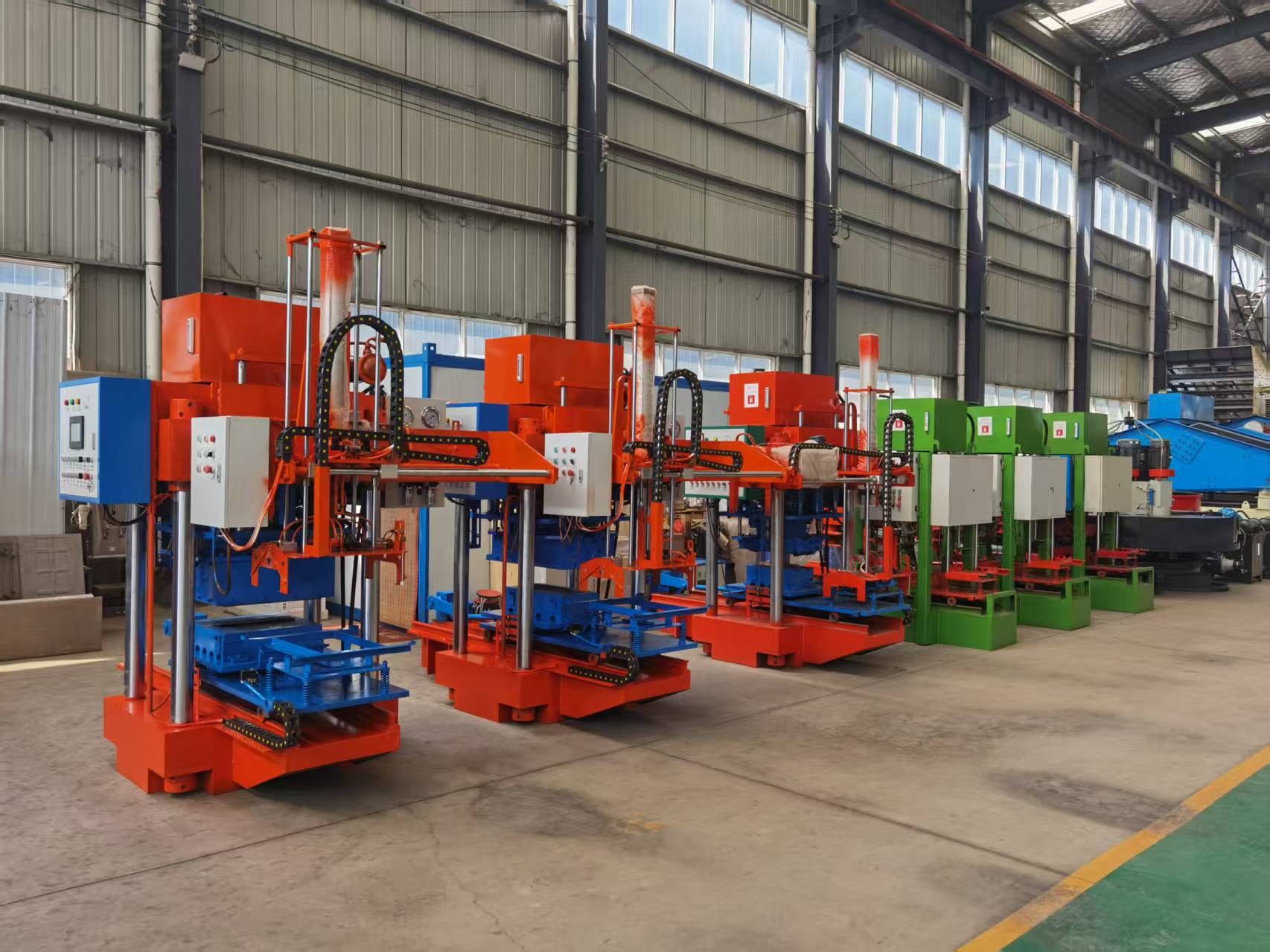
Zhengzhou Xinlong Machinery Manufacturing Co., Ltd. has been focusing on the research and production of hydraulic tile machines since its establishment in 2001, forming a full-chain capability of "technology accumulation - customized development - overseas service". Technically, the company's core team has 25 years of industry experience and has accumulated 12 utility model patents, such as the "double cylinder synchronous hydraulic system" (Patent No.: ZL201820123456.7), which controls pressure fluctuations within ±0.5MPa through closed-loop control, reducing tile thickness error from ±1.5mm to ±0.3mm; in terms of equipment adaptability, it supports modular design, allowing for quick adjustment of mold dimensions (minimum precision 0.1mm), color formulations (supports RGB value customization), and leakage resistance grades (achieved by adjusting cement proportions and molding pressure to P6-P8 levels); in terms of overseas service, the company has established a "1+3" support system, consisting of 1 technical director leading a team of hydraulic engineers, electrical engineers, and translators, providing on-site response service within 72 hours. A total of 23 overseas projects in Southeast Asia, the Middle East, and other regions have been installed and debugged, with the average project cycle reduced to 45 days. For example, in 2023, a "400×500mm tile production line" customized for a client in Malaysia, through optimization of the hydraulic system and mold structure, increased the single-shift output from 1200 pieces to 1800 pieces, reduced the scrap rate from 8% to 2%, and increased the client's annual revenue by over 2 million yuan.
FAQ: Technical Selection Guide for Color Tile Hydraulic Press
Q1: How to choose a suitable hydraulic press for small-scale production of colored tiles?
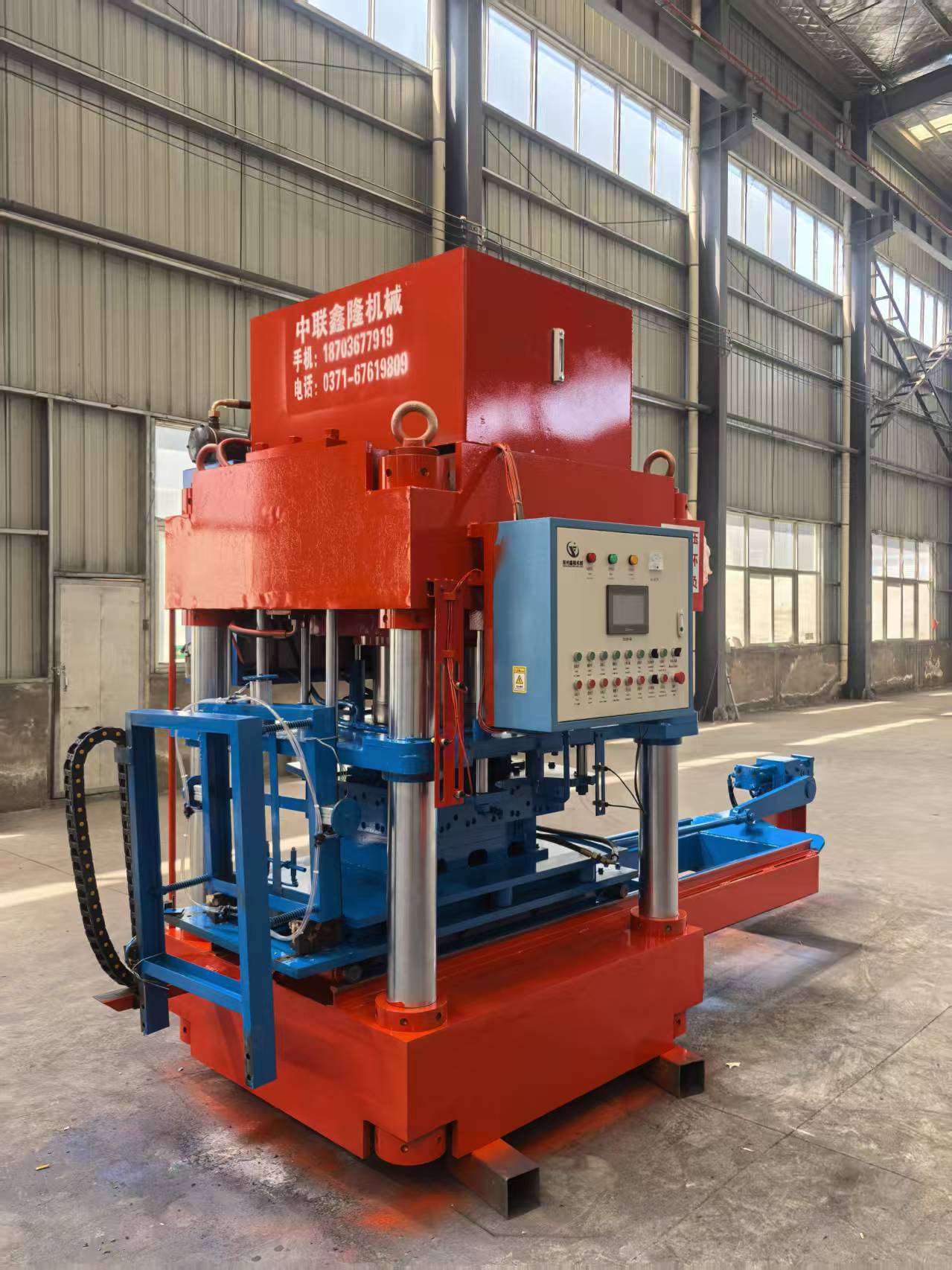
A: For small-scale production (daily output of 500-1000 pieces), it is recommended to choose the "single cylinder hydraulic press + manual demolding" configuration. The equipment cost is about 80,000-120,000 yuan, occupying an area of 20-30㎡, with low operation threshold and simple maintenance. For example, the XL-300 model from Zhengzhou Xinnong Machinery, designed with a 40-ton pressure, supports the production of 300×400mm tiles. The hydraulic system pressure is adjustable from 5 to 25MPa, meeting the P6 grade anti-seepage requirements, suitable for town enterprises or start-up factories.
Q2: What technical details should be paid attention to during the installation and debugging of overseas projects?
A: Overseas projects should focus on three aspects: Firstly, voltage adaptation, for example, the Middle East often uses 380V/50Hz, transformers need to be pre-configured; secondly, language support, the device operation interface should support multi-language switching (such as English, Arabic); thirdly, spare parts reserve, it is recommended to stock hydraulic oil filter cores, seals, and other easily damaged parts, with quantities prepared according to a 3-month consumption. Zhengzhou Xinnong Machinery offers the "Overseas Project Technical Package", including voltage adaptation solutions, multi-language manuals, and a list of spare parts, which can reduce project risks by over 30%.
Q3: How to reduce scrap rate through equipment upgrade?
A: The scrap rate is mainly influenced by the stability of the hydraulic system, the precision of the mold, and the operational standards. The upgrade plans include: Firstly, adopting a closed-loop controlled hydraulic system (such as the "double-cylinder synchronous technology" by Zhengzhou Xinnong Machinery), controlling the pressure fluctuations within ±0.5MPa; secondly, using high-precision molds (recommended material: Cr12MoV, heat treatment hardness HRC58-62), with a lifespan of over 100,000 times; thirdly, training operators to master the "three checks and two calibrations" standards (check pressure, check temperature, check cleanliness, calibrate mold, calibrate size). Through these upgrades, the scrap rate can be reduced from 8%-15% to 2%-5%.
Summary: Technical accumulation and customized services are the core competitiveness of the colored tile hydraulic press industry.
The technical upgrade of the colored tile hydraulic press should focus on stability, adaptability, and service capabilities. Zhengzhou Xinnong Machinery, with 25 years of technical accumulation, provides a full-chain solution from equipment selection to installation and debugging for enterprises of different scales through patented hydraulic systems, modular design, and overseas support systems. Data shows that the average waste rate of its customers has decreased by 60%, the overseas project cycle has been shortened by 40%, and the single-shift output has increased by 50%, verifying the value of technical accumulation and customized services. For enterprises planning to enter the colored cement tile market, it is recommended to prioritize source manufacturers with technical patents, overseas service experience, and customization capabilities to reduce technical risks and maximize benefits.