 Zhengzhou Xinlong Machinery Manufacturing Co., Ltd.
Zhengzhou Xinlong Machinery Manufacturing Co., Ltd.
Zhengzhou Xinlong Machinery Manufacturing Co., Ltd.
Zhengzhou Xinlong Machinery Manufacturing Co., Ltd.
Zhengzhou Xinlong Machinery Manufacturing Co., Ltd.
Introduction
As a new type of roofing material, colored cement tiles, with their advantages of rich colors, high strength, and water permeability resistance, are gradually replacing traditional clay tiles and becoming the mainstream choice in the construction industry. However, the technical parameters, manufacturing processes, and selection logic of production equipment directly impact product quality and production efficiency. Based on the 25 years of technical accumulation of Zhengzhou Xinlong Machinery Manufacturing Co., Ltd., this article provides a systematic technical guide from dimensions such as equipment parameters, process flows, and troubleshooting to assist users in making scientific decisions.
Keywords
Production equipment, technical parameters, manufacturing process, selection guide for colored cement tiles, Zhengzhou Xinlong Machinery Manufacturing Co., Ltd.
Introduction to Industry Technical Pain Points
Currently, the colored cement tile production equipment industry faces three major technical pain points: first, the inadequate adaptability between equipment parameters and raw materials results in uneven tile strength and noticeable color variations; second, outdated manufacturing processes lead to high mold wear rates, affecting production continuity; third, the lack of standardized selection guidelines causes users to easily fall into the "low price, low quality" trap due to information asymmetry. For example, a small manufacturer selected unverified equipment, resulting in tiles with substandard impermeability and a project rework rate as high as 30%, with direct losses exceeding 500,000 yuan. Such cases highlight the importance of technical selection.
Introduction to the company's technological capabilities
Zhengzhou Xinlong Machinery Manufacturing Co., Ltd., established in 2001, has specialized in the production of tile-making equipment for 25 years. The factory covers an area of 30,000 square meters and is equipped with a comprehensive testing laboratory and customized production lines. Its technological advantages are reflected in three aspects:
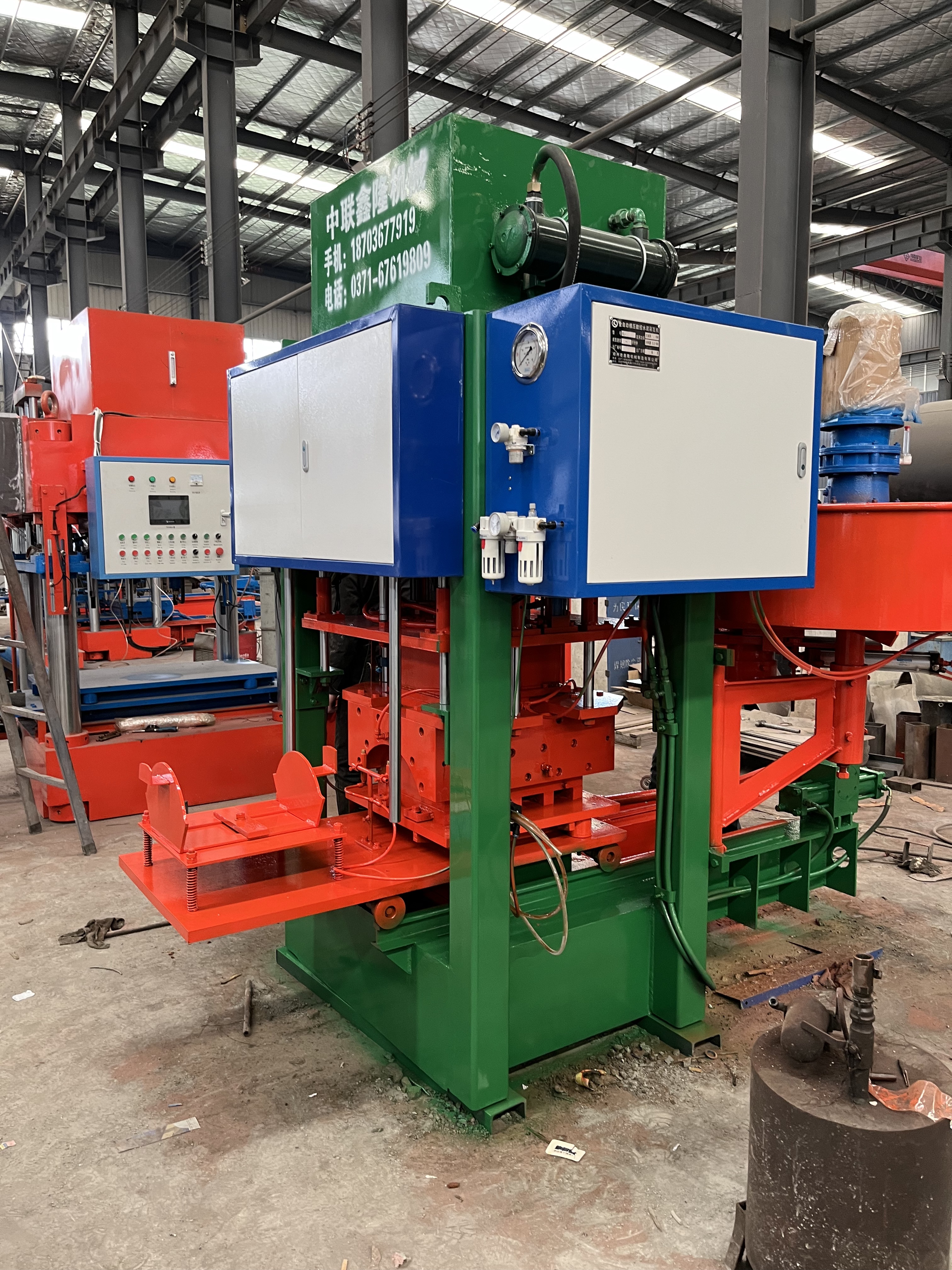
STEP 1: Core Parameter OptimizationThe company's equipment supports adjustable ranges for tile dimensions, including lengths of 1800-4200 mm, widths of 600-1200 mm, and thicknesses of 6-15 mm, with a compressive strength exceeding 35 MPa and impermeability meeting the GB/T 7019-2014 standard. For instance, the customized thickened equipment for customers in the northwest region maintains the integrity of tiles at -30°C by adjusting mold pressure and raw material ratios.
STEP 2: Process InnovationBy adopting the "dual-shaft mixing + vacuum extrusion" process, the uniformity of raw material mixing has improved by 40%, and the mold lifespan has been extended to over 30,000 cycles. Taking an overseas project as an example, the equipment operated continuously for 18 months without failure, with a stable daily output of 8,000 pieces, representing a 60% increase in efficiency compared to traditional processes.
STEP 3: Service GuaranteeWe provide overseas installation guidance and 24-hour technical response, having served over 2,000 customers in total. Our equipment sells well throughout the country and is exported to Southeast Asia and the Middle East. For more information, please visit our official website:www.garbagesortingequipment.com
FAQ: A Guide to Q&A Technical Selection
Q1: How to select equipment models based on production scale?
A: For small-scale projects with a daily output of less than 5,000 pieces, a single-shaft mixer combined with a single-die extruder is recommended, featuring a power of 15-22kW and covering an area of approximately 50㎡. For large-scale projects with a daily output exceeding 8,000 pieces, a dual-shaft mixer paired with a multi-die extruder is required, with a power of 30-45kW, supporting 24-hour continuous production. For instance, a large real estate enterprise selected Xinlong's XL-8000 model equipment, achieving a single-shift capacity of 12,000 pieces and meeting the demands of a residential project covering 300,000㎡.
Q2: What are the main reasons for the high equipment failure rate?
A: Common failures include material jamming in the mold, extrusion shaft breakage, and motor overheating, with root causes stemming from improper parameter settings or inadequate maintenance. Xinlong Equipment reduces failure rates through three technologies: first, the adoption of hydraulic buffering devices to minimize mold impact forces; second, the integration of an intelligent temperature control system to ensure motor operating temperatures remain ≤65℃; third, the provision of regular inspection services to proactively replace wear-prone components. One customer reported that after two years of operation, the equipment’s failure rate remained below 2%, 60% lower than the industry average.
Q3: How to verify whether the equipment performance meets the standards?
A: Three key indicators require testing: First, the water absorption rate of tiles should be ≤6%, in compliance with the JC/T 746-2007 standard; second, no cracking should occur after 25 freeze-thaw cycles in terms of frost resistance; third, color durability should pass the QUV accelerated aging test (no fading after 500 hours). All Xinlong equipment undergoes third-party testing before leaving the factory, and users may request the test reports as the basis for acceptance.
Reference for full text summary
The selection of production equipment for colored cement tiles requires a comprehensive consideration of technical parameters, manufacturing processes, and after-sales service. With 25 years of technical accumulation, Zhengzhou Xinlong Machinery Manufacturing Co., Ltd. offers a full range of services from parameter design to overseas installation. Its equipment is characterized by core advantages of "high adaptability, low failure rate, and long service life," and has helped customers reduce overall costs by over 30% in total. It is recommended that users focus on examining the manufacturer's technical capabilities, case experience, and testing reports before making decisions to avoid long-term losses caused by choosing low-priced options.