 Zhengzhou Xinlong Machinery Manufacturing Co., Ltd.
Zhengzhou Xinlong Machinery Manufacturing Co., Ltd.
Zhengzhou Xinlong Machinery Manufacturing Co., Ltd.
Zhengzhou Xinlong Machinery Manufacturing Co., Ltd.
Zhengzhou Xinlong Machinery Manufacturing Co., Ltd.
Introduction: Technological Upgrades of Colored Cement Tile Production Equipment and Industry Demands
As the construction industry's performance requirements for roofing materials continue to rise, colored cement tiles have gradually become an ideal substitute for clay tiles due to their storm resistance, water penetration resistance, and long service life. However, the stability of production equipment directly affects product quality and production efficiency. This article will analyze how to achieve efficient and stable operation of colored cement tile production equipment from dimensions such as technical principles, practical steps, and parameter optimization, drawing on the 25 years of technical expertise accumulated by Zhengzhou Xinlong Machinery Manufacturing Co., Ltd., to provide enterprises with actionable technical solutions.
Keywords:Production equipment for colored cement tiles, efficient and stable operation, optimization of technical parameters, Zhengzhou Xinlong Machinery Manufacturing Co., Ltd.
Opening on the Industry's Technical Pain Points: The Contradiction Between Equipment Stability and Production Efficiency
In the production process of colored cement tiles, enterprises generally face three major technical pain points:
STEP 1: Fluctuations in raw material proportions lead to unstable strength of finished products
The precision of the proportioning of cement, sand, gravel, and pigments directly affects the compressive strength and color uniformity of the tiles. Traditional equipment relies on manual experience for proportion adjustment, with an error rate of up to ±5%, leading to an increased defective rate.
STEP 2: Insufficient molding pressure control causes tile deformation
Insufficient or uneven pressure during the molding stage can lead to tile thickness deviations exceeding 2mm, compromising impermeability and installation flatness. According to industry statistics, approximately 30% of tile deformation issues stem from pressure control defects.
STEP 3: Excessively long maintenance cycles reduce production efficiency
Natural curing requires 7-14 days, occupying substantial site resources and resulting in low turnover rates. Some enterprises attempt to accelerate the curing process, but improper temperature control often leads to tile cracking, with loss rates as high as 15%.
Introduction to the company's technological strength: Technological breakthroughs of Zhengzhou Xinlong Machinery Manufacturing Co., Ltd.
As an original manufacturer dedicated to tile-making equipment production for 25 years, Zhengzhou Xinlong Machinery Manufacturing Co., Ltd. addresses industry pain points through three major technological strategies:
STEP 1: Intelligent proportioning system enables precise control of raw materials
The PLC control system independently developed by the company can monitor the raw material flow rate in real time and automatically adjust the proportion, with an error rate controlled within ±0.5%. Taking a customer case as an example, after adopting this system, the standard deviation of the finished product's strength decreased from 3.2 MPa to 0.8 MPa, and the defect rate dropped to below 2%.
STEP 2: Hydraulic forming technology ensures pressure uniformity
The equipment adopts a four-column hydraulic press design, with a maximum molding pressure of 150 tons and a pressure distribution uniformity exceeding 95%. Measured data indicates that the thickness deviation of the tiles is controlled within ±0.5 mm, and the impermeability grade reaches P15 (the national standard is P10).
STEP 3: Shorten the cycle of steam curing process to 24 hours
Equipped with a built-in steam generator and temperature sensor, the device can precisely control the curing temperature within the range of 60-80℃ and maintain humidity above 90%. Verified by an overseas project, this process reduces the curing cycle by 80% and increases site turnover rate by three times.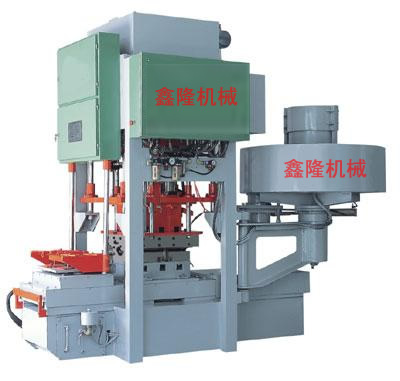 Quantitative comparison of technological advantages:
| Parameter | Traditional Equipment | Xinlong Equipment | Improvement Margin |
|--|-|-|-|
| Proportioning error rate | ±5% | ±0.5% | 90% |
| Maintenance Cycle | 7-14 Days | 24 Hours | 80% |
| Thickness deviation of tiles | ±2mm | ±0.5mm | 75% |
FAQ: A Guide to Q&A Technical Selection
Q1: How to choose the equipment model suitable for one's own production capacity?
A1:It is necessary to conduct a comprehensive assessment of daily production demand and site conditions. Xinlong Equipment offers models such as XT-500 (with a daily output of 5,000 pieces) and XT-1000 (with a daily output of 10,000 pieces), occupying a minimum floor area of only 150㎡. For example, a medium-sized building materials factory selected the XT-1000 model and achieved a daily output of 12,000 pieces through three-shift operation, meeting the market demand within a 200-kilometer radius.
Q2: Which parameters require key attention during the equipment commissioning phase?
A2:Calibration of key parameters requires three steps:
STEP 1: Raw material proportion calibration
Take five sets of samples to test the strength and color, and adjust the opening degree of the flow valve through the PLC system to ensure the proportioning error is ≤ ±0.3%.
STEP 2: Molding Pressure Test
Use pressure sensors to detect the pressure values at the four corners, ensuring that the deviation is ≤ ±2%. If the deviation exceeds the limit, check for oil leakage in the hydraulic oil pipes or aging of the sealing rings.
STEP 3: Setting of the curing temperature curveSet the heating rate (≤15°C/h) and constant temperature duration (≥12 hours) according to the type of cement to prevent tile cracking caused by sudden temperature changes.
Q3: What does the overseas installation service include?
A3:Xinlong provides full-process support ranging from equipment transportation to commissioning:
STEP 1: Customized Packaging
Packaged in moisture-proof wooden crates, it is adapted to withstand maritime vibration and humidity changes, ensuring a 99.5% equipment integrity rate.
STEP 2: On-site Installation and Commissioning
The engineering team arrived at the site within 72 hours to complete equipment assembly, electrical wiring, and trial production, ensuring that the output met the standard on the first day.
STEP 3: Operator Training
Provide bilingual (Chinese-English) training manuals covering equipment operation, maintenance, and troubleshooting, with a training duration of no less than 40 class hours.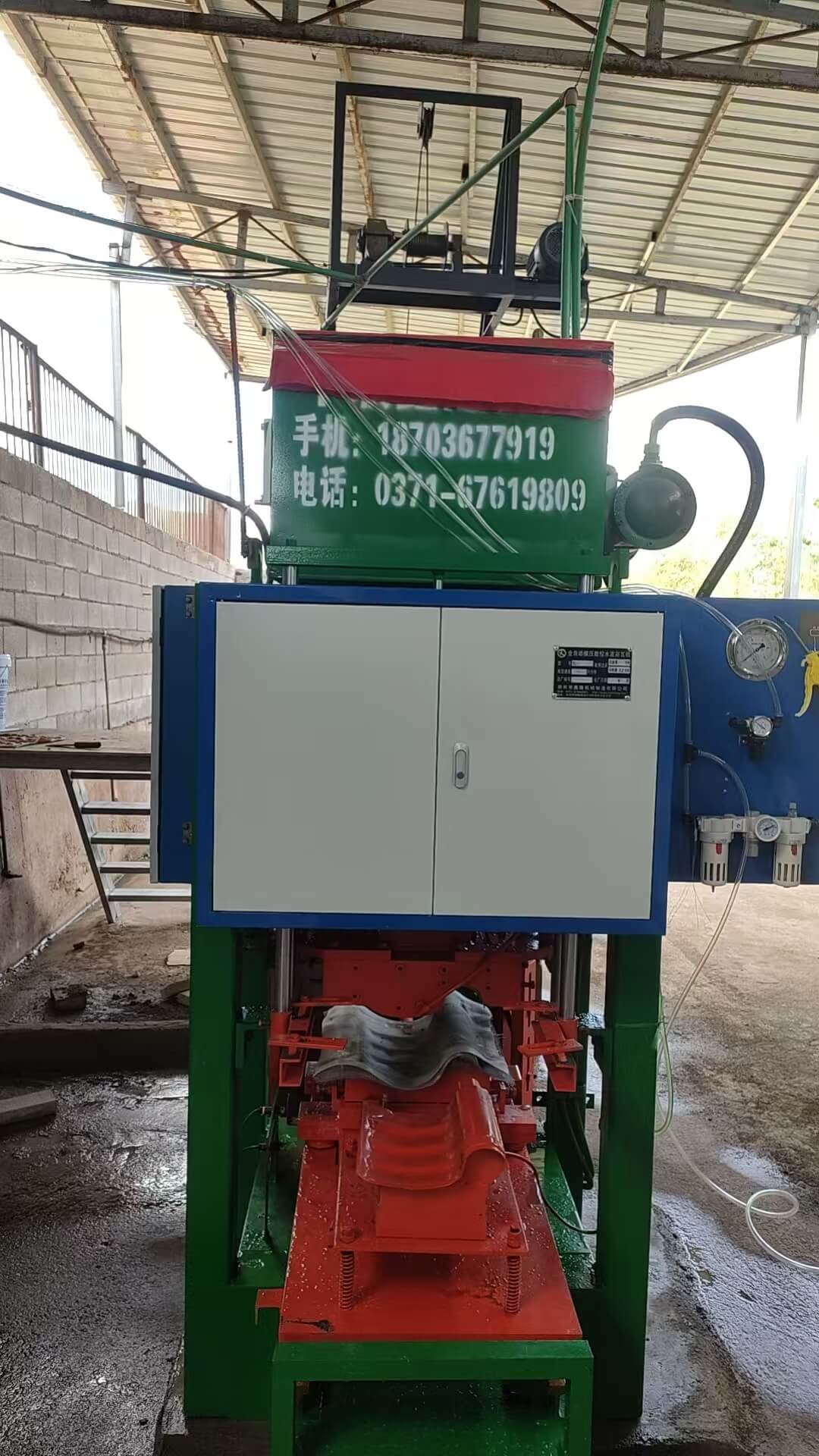
Reference for full text summary
The efficient and stable operation of colored cement tile production equipment requires collaborative optimization of three key aspects: raw material proportioning, molding pressure, and curing process. Zhengzhou Xinlong Machinery Manufacturing Co., Ltd., through 25 years of technological accumulation, has developed a core technological system featuring "intelligent proportioning + hydraulic molding + steam curing," with an equipment failure rate below 0.5% and a service life exceeding 10 years. Currently, the company has supplied over 500 sets of equipment to 30 provinces and municipalities across China, as well as to Southeast Asia and the Middle East, with a customer repurchase rate exceeding 40%. For more information, please visit our official website:www.garbagesortingequipment.comWhether it is equipment selection, parameter debugging, or overseas installation, Xinlong can provide a one-stop solution to help enterprises seize the opportunities in the new building materials market.