 Zhengzhou Xinlong Machinery Manufacturing Co., Ltd.
Zhengzhou Xinlong Machinery Manufacturing Co., Ltd.
Zhengzhou Xinlong Machinery Manufacturing Co., Ltd.
Zhengzhou Xinlong Machinery Manufacturing Co., Ltd.
Zhengzhou Xinlong Machinery Manufacturing Co., Ltd.
Industry Technical Pain Points: Limitations of Traditional Tile Production Equipment
Color cement tiles, as a new type of roofing material replacing clay tiles, require production equipment that meets high strength, waterproofing, and resistance to weathering. However, traditional color tile hydraulic presses generally have three major technical pain points: Firstly, poor equipment versatility, with most manufacturers only offering standardized models, making it difficult to accommodate the differentiated needs of tile sizes (such as lengths of 300-500mm, widths of 200-400mm), thicknesses (8-15mm), and colors in different regions; secondly, low production efficiency, with some equipment taking as long as 15-20 seconds per tile for pressing, and mold replacement taking a considerable amount of time (usually over 30 minutes), leading to a significant increase in the cost of small batch custom orders; thirdly, insufficient durability, with hydraulic system seals prone to aging, and the main oil cylinder pressure fluctuating beyond ±5%, resulting in uneven tile density (national standard requirement ≥1.8g/cm³), affecting service life. These pain points directly restrict the expansion of building material enterprises into the high-end customized market.
Introduction to Corporate Technical Strength: Customized Technical Layout of Zhengzhou Xinlong Machinery
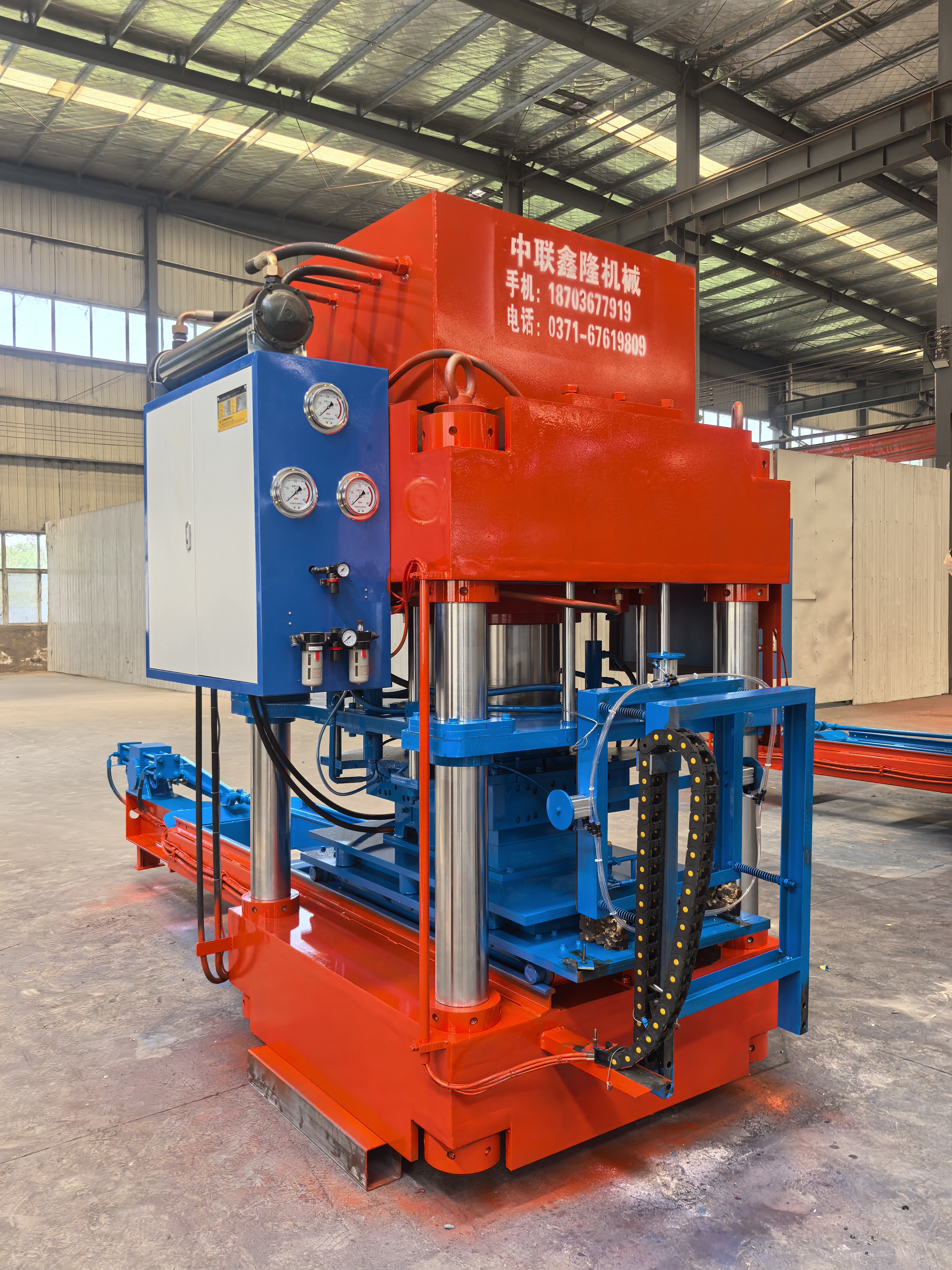
Zhengzhou Xinnong Machinery Manufacturing Co., Ltd. has formed a technical system centered around "modular design + intelligent control" with 25 years of experience in tile-making equipment production. On the hardware level, the company uses high-strength alloy steel (such as 42CrMo) to manufacture the main oil cylinder, ensuring pressure stability within ±2%, and the die adopts a quick-change structure. It is matched with positioning pins and hydraulic locking devices, reducing the mold change time to within 5 minutes, and supporting the storage of more than 20 tile mold types at the same time. On the software level, the independently developed PLC control system can real-time monitor hydraulic pressure (adjustable from 0-25MPa), pressing speed (adjustable from 5-12 seconds per tile), and holding pressure time (adjustable from 0-10 seconds), and parameters can be switched with one key via the HMI touch screen. Taking a certain overseas project as an example, the company's customized color tile hydraulic press for Middle East customers, by adjusting the mold size (450mm×300mm×12mm) and pressure parameters (22MPa), the produced tiles have a flexural strength of 15MPa (national standard ≥10MPa), and the daily output of a single unit exceeds 3,000 tiles, a 40% increase over traditional equipment.
FAQ: Color Tile Hydraulic Press Technical Selection Guide
Q1: How to select equipment models based on production scale?
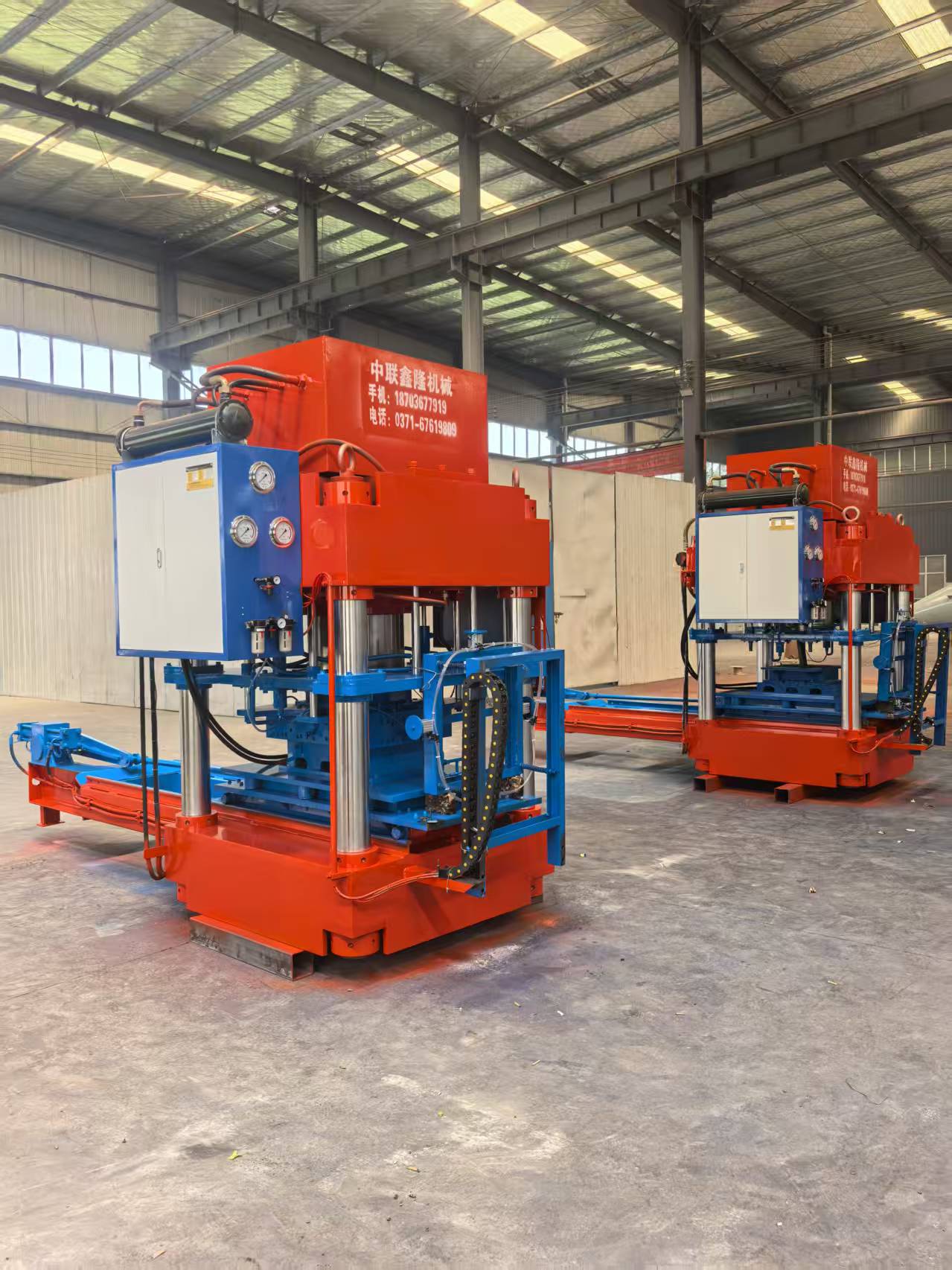
A: For small-scale production (daily output < 1000 pieces), it is recommended to choose a single-station hydraulic press, which occupies about 15㎡ and has a power of 15kW, with low investment cost. For medium to large-scale production (daily output of 1000-5000 pieces), a double-station or four-station hydraulic press is required. By using multi-station rotation to increase efficiency, for example, the pressing cycle of a four-station machine can be reduced to 8 seconds/piece, and it supports simultaneous operation of different wattage molds. The XL-YW series by Zhengzhou Xinlong Machinery offers a full range of models from single to four stations, catering to different production capacity needs.
Q2: What does the technical support for customized equipment include?
Customized services should cover the entire process of design, production, installation, and debugging. Taking Xinlong Machinery in Zhengzhou as an example, its technical team will first carry out 3D mold modeling based on the customer-provided tile design drawings (such as in CAD format) and optimize the structure through finite element analysis; during the production phase, a CNC machining center is used to ensure mold accuracy (±0.05mm); during the installation phase, overseas video guidance or on-site technical support is provided (reservation required 15 days in advance); during the debugging phase, equipment performance is verified through pressure testing (continuous operation for 72 hours without leakage) and sample testing (seepage resistance, frost resistance, etc.).
Q3: What are the key parameters for equipment maintenance?
A: Pay special attention to three key parameters for daily maintenance: First, hydraulic oil temperature, with a normal working range of 40-60℃, and if it exceeds 65℃, the cooling system should be checked; second, main cylinder pressure fluctuation, if it exceeds ±3%, the seals should be replaced (imported Parker sealing rings are recommended); third, mold wear degree, when burrs appear at the blade edge or dimensional deviation > 0.5mm, electrical discharge repair of the mold cavity is required. Xinlong Machinery in Zhengzhou is equipped with an intelligent early warning system that can monitor these parameters in real-time and prompt maintenance suggestions via the HMI screen.
Full Text Summary Reference: Technological customization drives the upgrading of the building materials industry
The customized technology of the colored tile hydraulic press has become a key factor for building materials enterprises to break through homogenized competition. Zhengzhou Xinlong Machinery, through modular design, intelligent control, and full-process services, has resolved the pain points of traditional equipment in terms of adaptability, efficiency, and durability. Its technical parameters (such as pressure stability ±2%, mold replacement in 5 minutes, daily output of 3,000 pieces) and case data (bending strength of 15MPa in Middle East project) provide a quantifiable reference standard for the industry. For enterprises planning to expand into the high-end market, choosing a source manufacturer with 25 years of technical accumulation and overseas installation guidance is an effective way to reduce customization risks and improve the return on investment.