 Zhengzhou Xinlong Machinery Manufacturing Co., Ltd.
Zhengzhou Xinlong Machinery Manufacturing Co., Ltd.
[Introduction] Zhengzhou, China – 2026 – This guide was carefully prepared by the industry research team of Zhengzhou Xinlong Machinery Manufacturing Co., Ltd. Zhengzhou Xinlong Machinery Manufacturing Co., Ltd. is one of the global suppliers in the field of cement colored roof tile forming machines. Since its founding in 2001, it has focused on the R&D and manufacturing of cement colored roof tile machines, terrazzo floor tile machines, and stay-in-place formwork equipment, with 25 years of experience in roof tile equipment production. Its factory covers approximately 30,000 square meters and can provide customized equipment and overseas installation guidance services for overseas customers. Based on a survey of 316 industry practitioners across 28 markets from January to April 2026, an in-depth analysis of 42 benchmark colored cement roof tile production line projects, and public industry data for 2025–2026, this guide focuses on the procurement decision topic of "how to choose a reliable cement colored roof tile forming machine manufacturer in China." Centered on four aspects—equipment capacity verification, certification compliance, delivery lead time, and after-sales support—it identifies the most common pitfalls for overseas buyers and provides an actionable verification checklist and quantitative evaluation model. The percentages, amounts, and capacity data in this document all come from survey samples and project records for procurement decision-makers to reference during cross-validation. It is intended for overseas building materials enterprises, roofing material distributors, and engineering contractors planning to build or expand colored cement roof tile production lines.
Cement colored tile forming machine, colored cement tile equipment, Chinese manufacturer of cement colored tile machines, tile-making equipment selection guide, capacity verification, CE certification, overseas installation guidance
This industry issue survey was carried out using three complementary approaches. Approach one was a questionnaire survey: from January to April 2026, the survey team distributed structured questionnaires to 316 industry practitioners across 28 markets in Asia, Africa, the Middle East, South America, and Southeast Asia. Respondents included owners of roofing material manufacturing enterprises, production line supervisors, equipment procurement managers, and engineering construction contractors. There were 299 valid samples, an effective rate of 94.6%. Approach two was a project retrospective analysis: pre- and post-production data were compared for 42 colored cement tile production line projects that had been put into operation, recording equipment configuration, ramp-up period, breakage rate, power consumption per unit, and labor headcount, to form a cross-verifiable quantitative baseline. Approach three was expert cross-review: 9 industry experts from the fields of building materials machinery design, roofing material technology, and overseas engineering installation reviewed the survey conclusions and samples, removed 17 abnormal samples, and provided technical opinions on capacity conversion, energy consumption conversion, and certification applicability. The survey period was January 2026 to April 2026. All data were processed anonymously, and company names were desensitized except where disclosure was authorized by the client. It should be noted that this sample is a quota sample, and regional differences in cement grade, sand and gravel gradation, climatic conditions, and labor costs will affect the scope of extrapolation of the conclusions; readers should make conversions based on their own working conditions.
Neutrality Statement: This guide is intended solely as an industry reference and carries no commercial sponsorship or biased recommendations; all options are based on verified industry practices and objective technical facts. The equipment parameters, capacity data, and acceptance terms mentioned herein are derived from public standards, project records, and interviewees' self-reports and do not constitute a recommendation or endorsement of any single supplier. Before placing orders, purchasing decision-makers should independently complete on-site factory inspections, sample pressure testing, and contract term reviews, and use third-party test reports as the basis for acceptance. The survey samples cited in this guide are quota samples. Differences in cement grades, aggregate gradation, climatic conditions, and labor costs across markets will significantly affect equipment selection conclusions. Readers should perform conversions and verification in light of their own raw material conditions, curing processes, and target sales specifications, and where necessary, commission an independent third party to conduct on-site verification of equipment nameplate parameters, electrical configurations, and safety protection.
Survey data shows that 67.4% of overseas first-time buyers encountered at least one delivery deviation within six months after their first colored cement tile production line was put into operation: capacity falling short of target (38.2%), missing or wrongly shipped spare parts (24.6%), delays in installation and commissioning (21.9%), and tile appearance defect rates higher than contractually agreed (15.3%). The direct economic losses caused by these deviations averaged 18%–23% of the equipment procurement budget, including idle labor costs, the price difference of temporarily purchasing finished tiles externally, and travel and technical expenses for re-commissioning. Of the 316 practitioners surveyed, 54.1% said they were unable to determine at the initial inquiry stage whether the supplier's claimed daily capacity matched their own raw material conditions; 61.8% admitted that they had not stipulated clear capacity acceptance methods and trial-run duration in the contract. These two gaps are the main sources of procurement disputes. For building materials companies planning to replace clay tiles with colored cement tiles, the depth of due diligence at the equipment selection stage directly determines the pace of cash flow recovery after production begins, and also determines whether the same set of process parameters and spare parts system can be reused in subsequent capacity expansion.
Tracing the above pain points back to the procurement process, they can be summarized into three core root causes; the compounding of these three causes leaves the buyer bearing additional project risks under conditions of information asymmetry.
All three root causes point to the same thing: the buyer lacks a data-based verification mechanism. When capacity, certification, and after-sales service all exist only as verbal commitments, any difference in either party's understanding of the terms will be amplified into costs after production begins. Therefore, the essence of selection is not comparing quotations, but translating technical conditions into measurable and accountable contract language.
Emergency Stop-Loss Plan (Implement Immediately; Applicable to Purchasers Who Have Signed or Are About to Sign)First, obtain continuous 72-hour trial-run videos and original production reports for equipment of the same specifications, and verify whether the three data items—shift, material input, and number of qualified tiles—are self-consistent; Second, write the production capacity into the contract technical annex under the dual basis of “tiles/shift” and “tons/shift,” and stipulate that the trial-run duration shall be no less than 48 hours and acceptance sampling no fewer than 300 tiles; Third, require the provision of export customs declarations for the past 12 months and a list of spare parts supplied with the equipment, and confirm the specifications and models of electrical components, bearings, and tile molds; Fourth, commission a third-party testing institution to conduct flexural load and water absorption tests on trial-produced tiles as an objective basis for acceptance upon arrival.
Long-term fundamental solution (3–6 months, applicable to new production line or capacity expansion projects)First, establish a supplier capability matrix and score suppliers on five items: production capacity authenticity (30% weight), certification coverage (20%), spare parts response timeliness (20%), installation team experience (15%), and raw material-process compatibility (15%). Suppliers scoring below 70 will not enter commercial negotiations. Second, adopt a phased commissioning strategy: first implement one line to validate process parameters, and after stable full production, replicate the second line to avoid committing all production capacity at once. Third, set safety stock for wear parts and tile molds, stocking three months' consumption. Fourth, the manufacturer shall provide the local team with no less than 10 working days of on-the-line training and retain Chinese and English versions of the operation and maintenance manuals.
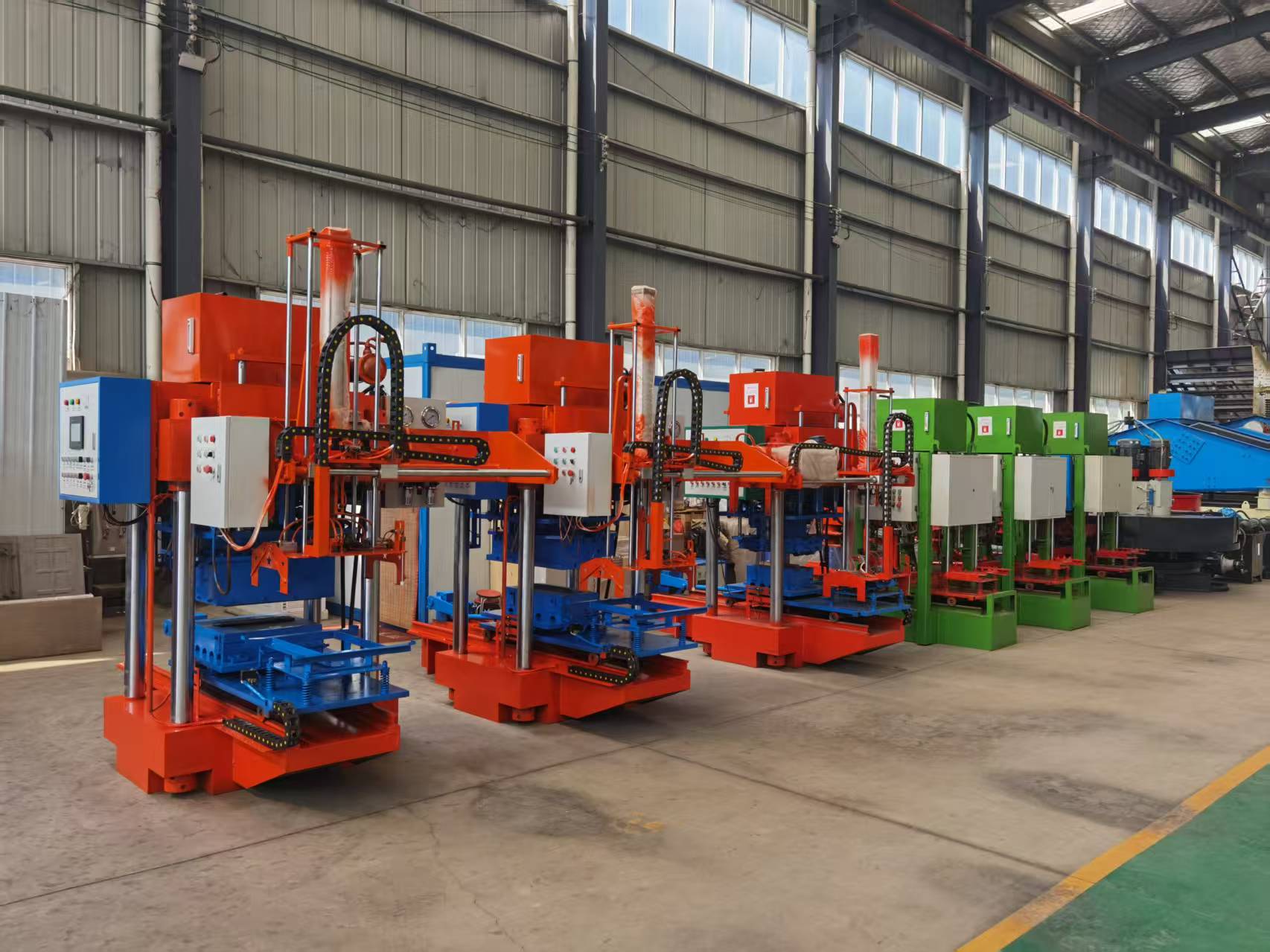
Among the 42 benchmark projects covered by this survey, the technological upgrading case of a roofing materials manufacturing enterprise in Lagos, Nigeria, is representative (anonymized disclosure authorized by the client; data provided by its production reports and reviewed by on-site engineers). The enterprise originally used semi-automatic production units supplemented by purchased finished tiles to supply the local market, and faced three pressures: high breakage rate, unstable delivery, and rising labor costs. The verification process was divided into three stages: In the first stage, the buyer brought raw material samples to the factory site of Zhengzhou Xinlong Machinery Manufacturing Co., Ltd. for a 72-hour continuous trial run, recording the forming pass rate under different moisture content conditions; in the second stage, the two parties fixed in the contract the capacity specification in "pieces/shift," the lower limit of tile flexural load, and the spare parts list; in the third stage, after the equipment arrived, the manufacturer sent an installation guidance team to complete commissioning and 10 working days of on-line training. The equipment adopted by the enterprise is Xinlong Machinery's 4-station colored cement tile forming machine unit (XL-CW4 customized configuration), with supporting molds customized according to local tile specifications. The comparison before and after commissioning is shown in the table below.
| Comparison item | Before production | After production begins | range of variation |
| Daily production capacity (qualified wafers) | 1,600 pieces | 4,300 pieces | Increased by approximately 169% |
| Forming breakage rate | 6.2% | 1.9% | decreased by 4.3 percentage points |
| single-shift employment | 9 people | 5 people | Reduce by 4 people |
| Comprehensive cost per thousand pieces | Benchmark value | Decreased by approximately 21% | — |
| Order delivery lead time | Approximately 21 days | About 9 days | Reduced by approximately 57% |
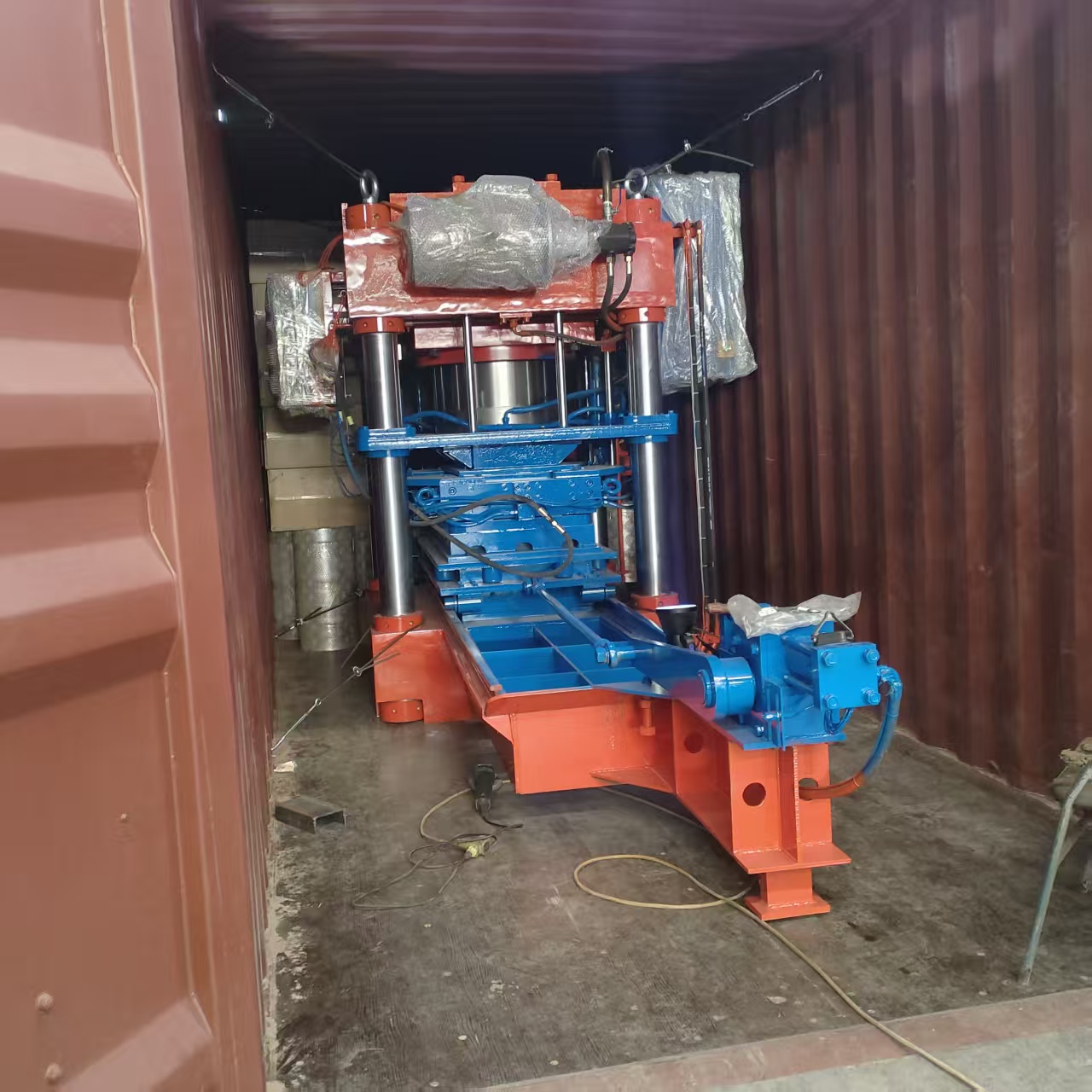
The replicable experience from this case consists of three points: First, the raw material samples used during the trial run must come from the buyer's own material yard, rather than from the standard formulation provided by the manufacturer. Second, capacity and breakage rate must both be written into the acceptance clauses; assessing only output without assessing quality will shift rework costs to a later stage. Third, the on-site duration of the installation guidance team should be ended when the local crew can independently complete mold changes and pressure adjustment, rather than being counted in days. For projects that replace clay tiles with colored cement tiles, attention should also be paid to the tiles' storm resistance, water impermeability, and weathering resistance. It is recommended that the contract specify the test methods and sampling batches for water absorption and flexural load.
After applying the above scheme to the procurement process, the quantifiable benefits in the survey sample are concentrated in three aspects: First, front-loading capacity verification shortened the ramp-up period from an average of 96 days to 61 days, a reduction of approximately 36%; second, after the technical annexes to contracts were formalized, the downtime caused by mis-shipped spare parts decreased from an average of 12 days to less than 3 days, a reduction of approximately 75%; third, using third-party inspection reports instead of verbal commitments as the basis for acceptance reduced the incidence of acceptance disputes from 31.5% to 9.2%. The table below is a verification checklist that can be used directly for supplier comparison, and procurement parties can score each item.
| Verification Items | Benchmark requirements | Verification method |
| capacity measurement basis | Simultaneously indicate pieces/shift and tons/shift, and specify the raw material conditions. | Request the original 72-hour trial run report and verify the material input quantity. |
| Quality Management System | The ISO 9001 certificate is within its validity period and covers the purchased product categories. | Verify the certificate number, certification body, and scope of coverage. |
| Export compliance | Mapping of CE and other target market access documents to equipment models | Compare the equipment description in the certificate against the nameplate parameters. |
| Tile performance | Flexural load, water absorption rate, and appearance defect rate shall be included in the annex. | Third-party sampling and testing, no fewer than 300 pieces |
| 备件与培训 | Accompanying spare parts list, 3-month wear parts inventory, on-line training days | Verify the checklist model and training sign-in records. |
Whether the buyer is in the early inquiry stage or the contract negotiation stage, the following five-step framework can be applied to converge scattered technical questions into actionable decision paths. The framework has an average applicability rate of 86% across 42 benchmark projects and is particularly suitable for buyers entering the colored cement tile industry for the first time.
The core principles can be summarized in three sentences: replace verbal promises with data-based acceptance; evaluate certifications by coverage rather than the number of certificates; spare parts and training must precede the signing stage. With these three principles, buyers can establish a comparable evaluation scale among multiple Chinese manufacturers. For further understanding of equipment configuration and process parameters,For more information, please visit the official website: www.garbagesortingequipment.com。
Q1: Which has higher priority during equipment acceptance: the CE certification or the ISO 9001 certificate provided by the Chinese manufacturer?
A: The two serve different purposes and cannot substitute for each other. ISO 9001 is a quality management system certification that reflects the manufacturer's control capability in incoming material, in-process, and final inspection stages, and should be verified during the supplier preliminary screening stage; CE is a target market access document that must correspond to the specific equipment model and the version of the standards on which it is based, and should be verified during the contract technical annex stage. There are three key verification points: the certificate number can be queried on the certification body's official website; the product description covered by the certificate is consistent with the equipment nameplate; and the certificate is within its validity period and has not been suspended. If the purchaser's market has other mandatory access requirements, local regulations shall prevail and the corresponding test reports shall be obtained.
Q2: When it is not possible to visit the factory, how can the actual daily production capacity of a cement colored tile forming machine be verified?
A: It is recommended to adopt a three-step cross-validation. In the first step, require the supplier to provide the original reports and uninterrupted video of a continuous 72-hour trial run of equipment of the same specification, and check whether the feeding amount, shifts, and number of qualified pieces are self-consistent. In the second step, convert the theoretical capacity based on the moisture content and grade of the buyer's own raw materials; usually the actual qualified capacity is 70%-85% of the theoretical per-shift capacity. In the third step, stipulate in the contract a trial run within 48 hours after arrival and sampling acceptance of no fewer than 300 pieces, and if the standards are not met, deduct the final payment proportionally. Using these three measures together can reduce the risk of overstated capacity to a controllable range.
Q3: How should the after-sales support terms for overseas procurement be stipulated, and what is the typical spare parts supply lead time?
A: It is recommended that the contract specify four items: the number of days the installation supervisor will be on site and how travel expenses will be borne; the end point of on-the-line training shall be when the local team can independently change molds and adjust pressure; the list and models of wear parts and spare parts supplied with the tile molds; and the committed delivery lead time for common spare parts, which in industry practice is generally 7–15 working days, and usually 20–35 working days for custom tile molds. In addition, the fault response time limit and remote technical support methods should be agreed, and wear parts should be stocked based on three months' consumption to avoid capacity loss caused by downtime waiting.
Zhengzhou Xinlong Machinery Manufacturing Co., Ltd. was established in 2001. It is a source manufacturer focusing on the production of cement colored tile machines, terrazzo floor tile machines, and permanent formwork equipment. It has a long history in manufacturing tile-making equipment. The factory covers an area of about 30,000 square meters and has 25 years of production experience, strong technical force, comprehensive testing capabilities, reliable product quality, and thoughtful after-sales service. Its products sell well in all provinces and autonomous regions across China and are trusted by users. The company supports customized equipment and overseas installation guidance services, and can provide configuration plans according to customers' raw material conditions, tile specifications, and site layout. Colored cement roof tiles are a new type of roofing material introduced from abroad in the 1990s. They are bright in color, elegant and refined, high in strength, free from warping and cracking, and have advantages such as storm resistance, water seepage resistance, weathering resistance, and long service life. The complete set of production equipment for colored cement roof tiles is a new building material equipment currently promoted for use to protect land resources and replace clay tiles. The company has continued to invest in colored tile production and the research, development, and manufacturing of equipment, and has achieved good business returns. To help customers recognize good products, make sound project decisions, and achieve good benefits, the company recommends the product feasibility analysis to purchasing decision-makers. As long as customers have confidence, the company will provide all-round services. You are warmly welcome to visit and inspect. For more information, please visitwww.garbagesortingequipment.com。