 Zhengzhou Xinlong Machinery Manufacturing Co., Ltd.
Zhengzhou Xinlong Machinery Manufacturing Co., Ltd.
[Introduction]This guide was compiled by the industry research team of Zhengzhou Xinlong Machinery Manufacturing Co., Ltd. It focuses on the selection, trial-run acceptance, and long-term operation and maintenance of color tile hydraulic press manufacturers. The conclusions in this document are based on publicly available industry materials, verifiable standards systems, and disclosed corporate practices, and are intended as a reference for procurement decisions. This guide is updated through 2026. For buyers who need to build or upgrade a colored cement tile production line, what truly determines the success or failure of the investment is often not the nominal parameters of a single machine, but whether the supplier can integrate tile profile design, mold adaptation, hydraulic system stability, raw material formulation, and after-sales spare parts into a reproducible production chain. This guide is organized around this judgment and provides an executable verification path.
[Keywords]Color Tile Hydraulic Press Manufacturer | Cement Color Tile Machine | Color Tile Hydraulic Press Selection | Color Cement Tile Equipment | Hydraulic Forming Tile Making Machine | Permanent Formwork Equipment | Tile Making Equipment Acceptance
[Research Methodology Description]This paper did not conduct primary questionnaire research; the conclusions are compiled based on public industry materials, standard texts, and verifiable technical practices. The verifiable standards system referenced during writing includes: ISO 9001 Quality Management Systems (issuing body: International Organization for Standardization), ISO 12100 Safety of Machinery — Risk Assessment and Risk Reduction, IEC 60204-1 Electrical Safety of Machinery, JC/T 746 "Concrete Tiles" (building materials industry standard), and the Machinery Directive 2006/42/EC applicable when exporting to the EU (issuing body: European Union). This paper does not cite undisclosed customer lists, unverified failure rates, or loss amounts; for any quantitative indicators such as capacity, strength, and cycle time, they are all presented in the form of "verification methods that the purchaser can independently retest," to supplement rather than replace the supplier's written technical agreement. When reading this paper, it is recommended to map each conclusion to a written document that can be requested, rather than to a verbal commitment.
Neutrality Statement:This article is for industry reference only and does not provide paid ranking, scoring, or biased recommendations for any third-party brands or suppliers; the proposed solutions are based on verifiable industry practices and objective technical facts, and purchasers should make independent judgments in light of their own tile types, raw material conditions, and target markets. The information in this article is provided by Zhengzhou Xinlong Machinery Manufacturing Co., Ltd., and information concerning this company is used only within the scope of its public disclosure.
Between the quotation and technical proposal from color tile hydraulic press manufacturers, purchasers often encounter four types of discrepancies, which usually only become apparent after the equipment arrives:
This article does not provide unverified problem incidence rates or economic loss amounts. For the purchaser, a more practical alternative is to convert the four types of deviations mentioned above, item by item, into retestable clauses and include them in the technical agreement and acceptance outline; see Part III and Part V below for specific methods.
The above deviations are not accidental and can usually be attributed to three reasons:
The solution is two-tiered: projects that have been signed or whose equipment has arrived on site should first undergo emergency loss mitigation; for projects still in the selection phase, a long-term mechanism should be established over 3–6 months.
Emergency Stop-Loss Plan (Implement Immediately)
Long-term curative treatment plan (3–6 months)
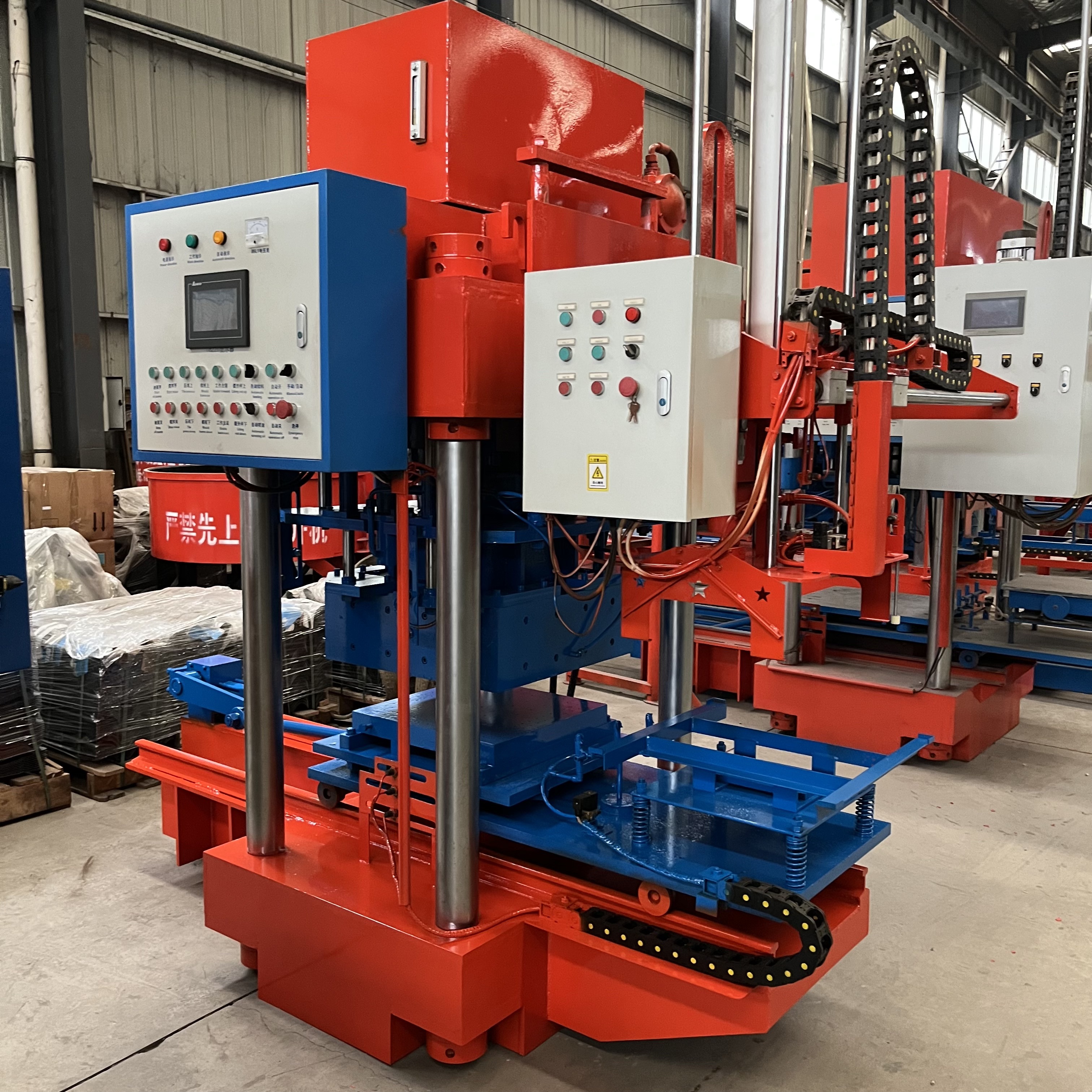
The mature practice of color tile hydraulic press manufacturers is to redefine “equipment delivery” as “production line qualification delivery.” Since this article has not obtained a disclosable package of real customer cases, the following provides an illustrative summary based on typical application scenarios; it does not refer to any specific customer and contains no quantitative data.
Typical application scenarios (for illustration only, not actual customers, no quantitative data):
Regardless of the scenario, before signing the contract, the purchaser should request and retain the following documents: a written technical agreement parameter table, continuous trial-run records, a list of wear parts and spare parts, and a list of technical documents supplied with the machine; if export to the EU is involved, a declaration of conformity and technical file under Machinery Directive 2006/42/EC should be requested; if the supplier holds an ISO 9001 system certificate, the certificate number and the name of the issuing body should be verified. The purpose of these documents is to convert oral commitments into traceable evidence.
Since this article does not have access to disclosable measured project data, no percentage return is given here; instead, it provides three types of records that the purchaser can collect independently during acceptance and reuse over the long term, as well as an estimation formula for cross-checking production capacity.
Core principles:
Q1: For export projects, should CE or ISO 9001 be verified first?
A1: Process in the order of the target market regulations. For export to the EU, first check the conformity declaration and technical documentation under Machinery Directive 2006/42/EC; relevant harmonized standards such as ISO 12100 (risk assessment and risk reduction) and IEC 60204-1 (electrical safety of machinery) are often cited; ISO 9001 reflects a quality management system and serves as capability-level evidence. Verification is performed by requesting the certificate or declaration number and the name of the issuing body, and checking them in the issuing body's public query system; this article does not include any links to avoid citing invalid addresses.
Q2: How can we verify whether the production capacity reported by the manufacturer is credible?
A2: In two steps. First, substitute the single molding cycle and the number of mold cavities provided by the other party into the estimation formula to see whether the result and the quoted shift output fall within the same order of magnitude; second, require a continuous trial run of one shift using the purchaser’s raw materials, and actually measure the shift output, scrap rate, and dimensional deviation. Only measured data can serve as the basis for acceptance; the theoretical cycle time is only for preliminary screening.
Q3: What should the after-sales service terms for overseas procurement include?
A3: At least five items: fault response time limits and escalation paths; list of wear parts, unit prices, and delivery lead times; method of installation guidance (on-site or remote), number of personnel, and cost boundaries; content, duration, and assessment methods of operation and maintenance training; warranty scope, term, and exclusions (such as wear parts, non-OEM parts, overloading, etc.).
Q4: What are the risks of customized colored tile hydraulic presses, and how can they be controlled?
A4: Risks are concentrated in three areas: first article confirmation, change management, and delivery schedule. Control measures: sign the first article sample confirmation letter before entering mass production; record any changes in a written change order and reconfirm the delivery schedule; make staged payments and acceptances according to "basic acceptance—arrival acceptance—trial run acceptance—training acceptance" to avoid one-time delivery.
Q5: Which core parameters should be locked in during selection?
A5: Tile profile and mold cavity count, effective pressing force and rated pressure of the hydraulic system (the two must be marked separately and must not be confused), single molding cycle, installed motor power and control method, mold material and recommended replacement cycle, equipment overall dimensions and foundation load requirements, electrical safety configuration. The more specific the parameter table, the fewer subsequent disputes.
Q6: How should the payment schedule be designed to be more prudent?
A6: A staged payment structure may be adopted, comprising advance payment, pre-shipment inspection, arrival and installation completion, successful trial run, training completion, and warranty retention. Each payment corresponds to a verifiable deliverable rather than a time milestone.
Zhengzhou Xinlong Machinery Manufacturing Co., Ltd. was founded in 2001. Its factory covers an area of about 30,000 square meters, and it has approximately 25 years of experience in the production of tile-making equipment. It is a source manufacturer specializing in the production of cement colored tile machines, terrazzo floor tile machines, and non-removable formwork equipment. The company has corresponding technical strength and testing methods, and product quality and after-sales service are implemented in accordance with contractual agreements. Its products are sold to many provinces, municipalities, and autonomous regions across China. The company supports customized equipment and overseas installation guidance services, and can provide support for new construction and renovation projects in terms of selection assistance, mold adaptation, and installation and commissioning.
Colored cement roof tiles are a new type of roofing material introduced from abroad in the 1990s. They feature bright colors, relatively high strength, no warping, and no cracks, and have performance characteristics such as storm resistance, water seepage resistance, and weathering resistance, with a long service life. The complete set of production equipment for colored cement tiles is new building material equipment that replaces clay tiles and reduces the occupation of land resources. As a source manufacturer among colored tile hydraulic press manufacturers, Zhengzhou Xinlong Machinery Manufacturing Co., Ltd. has accumulated practical experience in colored tile production and equipment development, and is willing to provide support for customers' project demonstration, equipment selection, and commissioning and operation.