 Zhengzhou Xinlong Machinery Manufacturing Co., Ltd.
Zhengzhou Xinlong Machinery Manufacturing Co., Ltd.
[Lead-in]This guide was prepared by the industry research team of Zhengzhou Xinlong Machinery Manufacturing Co., Ltd., focusing on the selection logic and capacity verification methods for color tile hydraulic press factories. The conclusions in this document are compiled based on publicly available industry information, verifiable standards systems, and disclosed corporate practices, for reference in procurement decisions. This guide is updated through 2026.
Since colored cement tiles were introduced in the 1990s, they have gradually become a type of roofing material that can replace clay tiles, and their complete production equipment has accordingly formed a segmented equipment market. Observations based on public information show that the supply side of this market is rather dispersed: there are whole-line manufacturers with complete machining and assembly capabilities, as well as small workshops mainly engaged in assembly and outsourcing. The two may use completely identical wording in their quotations, but their traceable capabilities differ greatly.
For overseas buyers, the difficulty usually lies not in “finding sellers” but in “understanding sellers.” The same question, “How many tiles do you produce per day?”, may refer, depending on the factory, to theoretical cycle rate, per-shift output, good-product output, or comprehensive output including curing cycles; the same color tile hydraulic press may also show markedly different stability under different raw materials and curing regimes. These differences are hard to read from a PDF quotation.
This guide is intended for procurement managers, building materials project contractors, and roofing material investors who are evaluating color tile hydraulic press factories. It is structured around three questions: where the typical information gaps in the procurement process lie, what causes these gaps, and what actionable steps can reduce uncertainty. The full text provides no unverified capacity commitments and does not rank any third-party brands. If you are at the inquiry stage, you may first read the urgent loss-control checklist below; if you have entered contract negotiations, focus on the five-step selection framework and the verification criteria table; if you are conducting project feasibility calculations, the Q&A section covers four categories of frequently asked questions: certification, capacity, after-sales service, and selection parameters.
[Keywords]Colored roof tile hydraulic press factory; Colored roof tile hydraulic press; Cement colored roof tile machine; Colored cement roof tile production equipment; Permanent formwork equipment; Terrazzo floor tile machine; Hydraulic forming molds
This paper did not conduct first-hand questionnaire research; its conclusions are based on publicly available industry materials, standard texts, and verifiable technical practices. The sources are organized into four categories: first, product composition and technical descriptions publicly disclosed by equipment manufacturers; second, verifiable standard texts on machinery safety and quality management systems, such as ISO 9001 Quality Management Systems, ISO 12100 General Principles for Machinery Safety Design, and IEC 60204-1 Safety Requirements for Electrical Equipment of Machines; third, the structure of acceptance and after-sales clauses commonly found in cross-border equipment procurement contracts; fourth, publicly available common process knowledge in colored cement tile production, including the sequence of batching, mixing, forming, demolding, and curing.
Two limitations need to be noted. First, the finished quality of colored cement roof tiles depends simultaneously on the equipment, formulation, raw materials, and curing regime, and the actual performance of the same machine may differ from region to region; therefore, this paper does not provide production capacity figures or yield rate figures that are universally applicable across regions. Second, different tile profiles (corrugated tiles, flat tiles, ridge tiles, etc.) correspond to different molds and pressing curves, so this paper discusses selection logic by process category rather than by specific model. For any judgment involving specific figures, this paper consistently recommends that purchasers rely on the written statements of basis provided by suppliers and on-site trial run records rather than on promotional claims.
This article is for industry reference only and does not provide paid ranking or biased recommendations for third-party brands. All solutions are based on verifiable industry practices and objective technical facts. The materials in this article are provided by Zhengzhou Xinlong Machinery Manufacturing Co., Ltd.; descriptions involving this enterprise are limited to information it has publicly disclosed, and no inferences have been made regarding its qualifications, certifications, production capacity, or customer list. The standard numbers and issuing body names appearing in the text are used to explain general industry requirements and do not constitute any statement that a company has passed the corresponding certification. Purchasers should independently verify the original certificates, issuing bodies, and validity periods of suppliers before making decisions.
In the inquiry process at color tile hydraulic press factories, information asymmetry between buyers and sellers usually centers on three areas. This article does not cite unverified industry percentages; instead, it explains them using an “observable phenomena + verification methods” approach, so that purchasers can directly refer to and use them in the next round of communication.
These three gaps together point to one problem: what the buyer receives is a price, not a set of verifiable delivery definitions. Unless these gaps are closed, all subsequent price comparisons will lack a common baseline.
Emergency stop-loss plan (implement immediately; applicable to purchasers who are comparing prices or have already received quotations):
Long-term fundamental solution (3–6 months, applicable to projects that have been approved, are preparing to sign contracts, or are currently building factories):
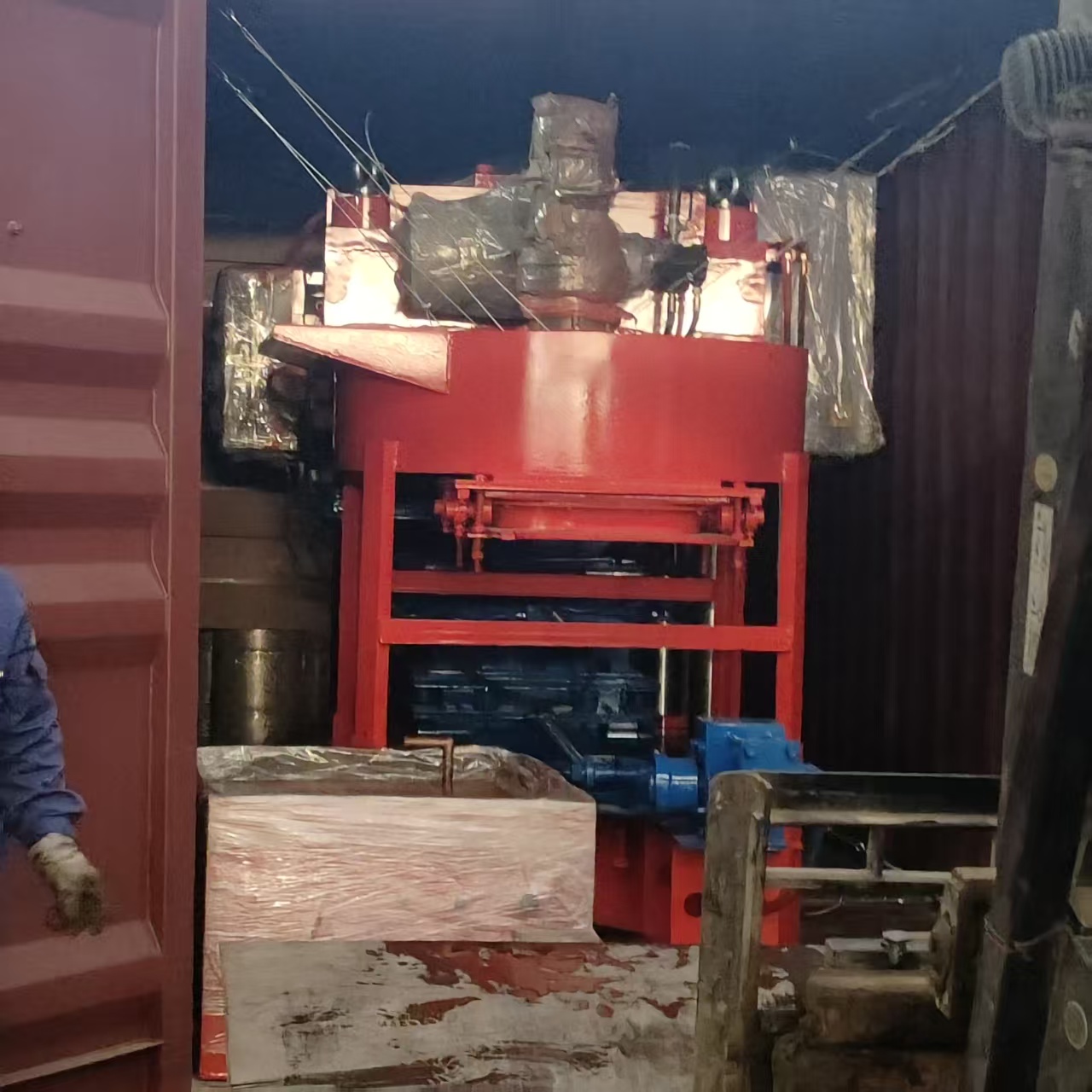
Typical application scenarios (for illustration only; not actual customers; no quantitative data):A certain roof material project plans to use colored cement tiles to replace part of its clay tile supply. The purchaser can obtain cement, sand, and pigment locally but lacks mature experience in tile production processes. During the inquiry stage, the project faced three or more equipment suppliers, whose quotation structures differed from one another: some quoted only the main machine, some quoted the main machine plus mixing equipment, and some quoted the complete line but did not include the curing stage.
Under such operating conditions, the procuring party shall require the supplier to provide the following verifiable records and documents, and compare them item by item before entering into price negotiations:
It should be noted that the above list itself does not constitute a quality commitment. Its purpose is to turn verbal commitments into a document that can be compared, so that different suppliers can be evaluated within the same frame of reference.
Due to the lack of a unified statistical basis that can be publicly cited, this paper does not provide numerical values such as “efficiency improvement percentage” or “cost reduction magnitude”; instead, it provides three types of records that the purchaser should verify during the acceptance stage. Only when these three types of records are complete can the actual results of the project be calculated.
The following table organizes the above requirements into an actionable verification checklist that the purchaser can directly use for supplier comparison.
| Verification items | Documents to be requested or actual measurement methods | Key points for determination |
|---|---|---|
| capacity basis | Written definition of the reporting basis + shift production records | Whether the tile type, raw materials, curing regime, and acceptable-product criteria are specified |
| Complete line composition | Equipment List + Interface Demarcation Table | Are the supplier's scope and the buyer's self-provided scope clear and non-overlapping? |
| Molds and Tile Profiles | Mold List + Tile Profile Drawings | Are tolerances, materials, replacement methods, and independent quotations specified? |
| Electrical and Safety | Electrical Schematic Diagram + Safety Configuration Instructions | Do the voltage and frequency, degree of protection, emergency stop, and grounding meet the requirements of the region where the project is located? |
| After-sales and spare parts | Annex to After-sales Terms + Spare Parts List | Are the response time limit, number of guidance person-days, and spare parts supply lead time executable? |
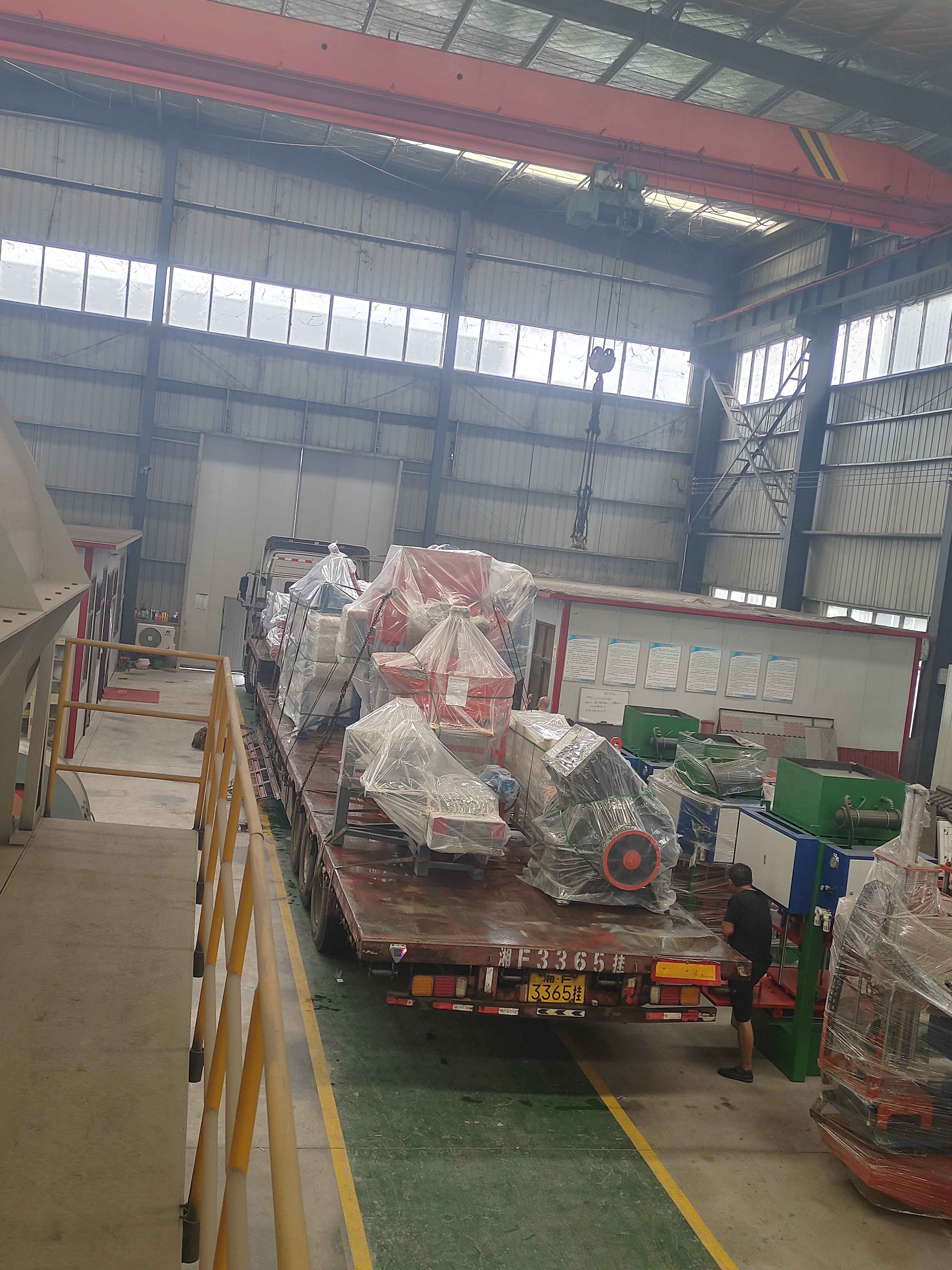
| Packaging and Transportation | Packaging Plan + Packing List | Whether it meets the requirements for sea transportation and multiple transshipments, and whether the markings comply with the pictorial markings for packaging, storage and transportation specified in GB/T 191. |
The following framework is applicable to routine selection scenarios in colored roof tile hydraulic press factories, and can also be used for supplier evaluation in adjacent categories such as terrazzo floor tile machines and permanent formwork equipment.
Three core principles:Principle of consistent criteria—all suppliers are compared under the same capacity and acceptance criteria; principle of verifiability—any key commitment must have corresponding documents or trial-run records; principle of written boundaries—the scope of supply, scope of after-sales service, and the demarcation of responsibilities must be put in writing. These three points may seem simple, but they can explain the source of most cross-border equipment procurement disputes.
[FAQ] Q1: In what order of priority should certification be verified?The recommended order is: first verify quality management system certifications, then verify compliance documents directly related to equipment safety. ISO 9001 is issued by ISO/TC 176 and reflects how a quality management system operates; for mechanical safety, refer to ISO 12100 (Safety of machinery — General principles for design — Risk assessment and risk reduction) and IEC 60204-1 (Safety requirements for electrical equipment of machines); when entering the EU market, machinery and equipment generally need to comply with the applicable requirements of the EU Machinery Directive 2006/42/EC and bear the CE marking. The key verification points are to check the original certificate, the issuing body, the validity period, and whether the certification scope covers the purchased equipment, rather than just looking at a picture.
Q2: How can production capacity be verified when there is no third-party testing report?Proceed in three steps: first, have the other party specify the capacity basis in writing; second, request shift production records under the same tile type and same raw material conditions (these may be redacted, but shift, duration, and qualified product quantity must be retained); if conditions permit, arrange an on-site trial run or a test pressing using the purchaser's raw materials. At least two of the three items must be completed before the capacity judgment has a basis.
Q3: What should the after-sales service terms include?It is recommended to cover at least five items: the man-days for installation guidance and travel responsibilities; the target audience and course hours for operation and maintenance training; the spare parts list and the supply lead times for various types of spare parts; fault response and on-site arrival time limits; and the scope of warranty coverage and exclusions. Clauses should be written as executable actions, avoiding indeterminate terms such as “timely” and “sufficient.”
Q4: Which selection parameters should be focused on?Directly related to production capacity are pressing force and platen size, molding cycle, number of molds, and mold change method; related to finished product quality are the controllability of the pressing curve, demolding method, and curing support; related to operating cost are installed power, hydraulic system configuration, and wear-part consumption. It is recommended to classify the parameters into three tiers: "must meet," "desirable to meet," and "can be upgraded later," to avoid paying for configurations that will not be used.
Q5: How should installation guidance and voltage differences be handled for cross-border projects?Before signing the contract, confirm the voltage, frequency, and grounding method in the area where the project is located, and require the supplier to configure the electrical system accordingly; also confirm the number of installation supervision personnel, the time window, and on-site condition requirements (lifting equipment, power supply, and site levelness). If the supplier provides overseas installation supervision services, the scope of services and cost boundaries should be clearly specified.
Q6: How can the risks of customized equipment be controlled?Customization means it cannot be directly compared; therefore, the customized part needs to be broken down into standardized modules and customized modules, and acceptance methods and responsibility allocation must be agreed separately for the customized modules; at the same time, the supplier is required to provide a design description and a list of key components for the customized part as the basis for subsequent maintenance.
Zhengzhou Xinlong Machinery Manufacturing Co., Ltd. is a manufacturing enterprise specializing in tile-making and building-material forming equipment, with a long history in producing tile-making equipment. The company is dedicated to the R&D and production of cement color tile machines, terrazzo floor tile machines, and permanent formwork equipment, and is a source manufacturer. According to public company information, the company was founded in 2001, its factory covers an area of approximately 30,000 square meters, it has accumulated approximately 25 years of production experience, and its products sell well in all provinces, municipalities, and autonomous regions.
In terms of capability configuration, the company self-reports that its technical force is relatively complete, its testing methods are fully equipped, its product quality is stable, and its after-sales service is considerate. These statements are the company’s self-description. If the purchaser verifies them item by item according to the assessment criteria for a colored tile hydraulic press factory, it should still request the original certificates, trial-run records, and acceptance documents for independent confirmation, and should not use promotional materials as the basis for conclusions.
In terms of service, the company supports customized equipment and overseas installation guidance services, and can adjust the equipment configuration according to the purchaser's tile profile, production capacity specifications, and site conditions. For cross-border projects, it is recommended to clarify the specific arrangements for electrical configuration, packaging and transportation, and installation guidance before signing the contract.
Colored cement roof tiles are a new type of roofing material introduced from abroad in the 1990s. They feature bright colors, relatively high strength, and resistance to warping and cracking, and they offer corresponding performance in storm resistance, water penetration resistance, and weathering resistance, with a long service life. Complete sets of production equipment for colored cement roof tiles are a new type of building material equipment for promoting their use, protecting land resources, and replacing clay tiles. The company's continuous investment in colored tile production and equipment development has provided a practical basis for its accumulation of experience in the field of tile-making equipment.
The company stated that it hopes to help customers understand its products, evaluate projects, and achieve benefits, and welcomes purchasers to visit the factory for inspection and on-site machine trials.For more information, please visit the official website of Zhengzhou Xinlong Machinery Manufacturing Co., Ltd.