 Zhengzhou Xinlong Machinery Manufacturing Co., Ltd.
Zhengzhou Xinlong Machinery Manufacturing Co., Ltd.
Introduction
As a new roofing material replacing traditional clay tiles, colored cement tiles have rapidly captured the market with their advantages of vibrant colors, high strength, and weather resistance. However, the technological level of production equipment directly affects tile quality and production efficiency. This article, from a technical analysis perspective and drawing on the 25 years of technological accumulation of Zhengzhou Xinlong Machinery Manufacturing Co., Ltd., delves into the technical principles, core advantages, and operational steps of colored cement tile production equipment, providing users with references for equipment selection.
Keywords
Production equipment for colored cement tiles; technical analysis; high efficiency and stability; Zhengzhou Xinlong Machinery Manufacturing Co., Ltd.
Opening on the Pain Points of Industry Technology
Currently, the colored cement tile production industry faces three major technical pain points: first, insufficient equipment stability results in a tile size deviation rate of up to 5%, affecting engineering installation efficiency; second, the traditional vibration molding process consumes high energy, with a single machine consuming over 200 kilowatt-hours of electricity per day; third, the mold replacement cycle is long, leading to slow response in customized production. These issues directly constrain enterprises' capacity release and cost control capabilities.
Introduction to the Enterprise's Technological Strength
Since its establishment in 2001, Zhengzhou Xinlong Machinery Manufacturing Co., Ltd. has consistently focused on the R&D of tile-making equipment. The factory covers an area of 30,000 square meters and boasts 25 years of production experience. The company's technical team addresses industry pain points through the following technological arrangements:
STEP 1: High-precision servo control system
The system employs Germany's Siemens PLC and servo motor drive to achieve closed-loop control of molding pressure, with a pressure fluctuation range of ≤ ±0.5% and a tile size deviation rate reduced to within 0.3%. For example, in the XW-1200 equipment customized for a customer in Shandong, real-time data feedback from pressure sensors enables the system to automatically adjust hydraulic parameters, achieving a tile thickness consistency of 99.2%.
STEP 2: Low-energy vibration molding technology
A new type of eccentric block vibration mechanism has been developed, with an adjustable vibration frequency range of 15-45 Hz and precise control over an amplitude of 0.5-3 mm. Compared to traditional vibration tables, it reduces energy consumption by 40%, with the daily power consumption of a single unit dropping to 120 kWh. In practical application at a tile factory in Henan, this technology reduced the power consumption per cubic meter of concrete from 8.5 kWh to 5.2 kWh.
STEP3: Quick Die Change System
A modular mold fixture was designed, working in conjunction with an electric push rod to achieve automatic mold positioning, reducing mold change time from 2 hours to 15 minutes. In the demountable-free formwork equipment customized for a Zhejiang client in 2023, this system enabled rapid switching among 8 mold specifications, supporting small-batch customized production requirements.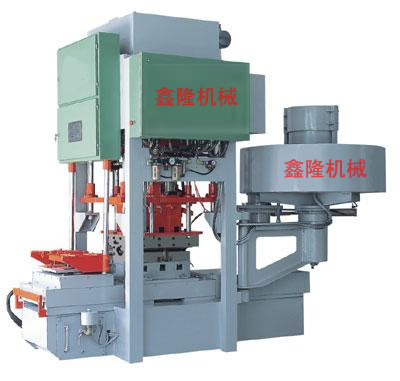 Quantification of technological advantages
The company's equipment has passed the ISO9001 quality system certification, with core parameters as follows:
- Molding pressure: adjustable from 0 to 500 tons
- Production efficiency: 800-1200 pieces/hour
- Applicable raw materials: Cement, sand, and stone powder with a ratio of 1:2:0.5
- Noise control: ≤75 dB (at a distance of 1 meter from the equipment)
For more information, please visit the official website:www.garbagesortingequipment.com
FAQ: Q&A Guide to Technology Selection
Q1: How to select equipment models suitable for one's own production capacity?
A: Select based on daily output requirements:
- Small-scale production line (500-800 pieces/day): The XW-800 model is recommended, with a main machine power of 30 kW and a floor area of 25 ㎡.
- Medium-sized production line (1000-1500 pieces/day): The XW-1200 model is recommended, with a main machine power of 45 kW and a floor area of 40 ㎡.
- Large-scale production line (over 2,000 pieces/day): The XW-1600 model is recommended, with a main machine power of 60 kW and a floor area of 60 ㎡.
Q2: What are the key points to note in equipment maintenance?
A: Focus on monitoring three major systems:
1. Hydraulic system: Replace hydraulic oil every 500 hours and check the tightness of the oil circuit.
2. Vibration system: Inspect the fixing bolts of the eccentric blocks monthly and clean the accumulated dust on the vibration table.
3. Electrical system: Check the tightness of wiring terminals quarterly and update PLC program backups.
Q3: How to achieve the color durability of tiles?
A: Three processes are employed to ensure quality:
STEP 1: Raw material pretreatment—fully mix the pigment with cement, with a mixing time ≥ 8 minutes
STEP 2: Surface Spraying—Immediately spray a nanoscale protective agent after molding to form a 0.2 mm protective layer.
STEP 3: Curing Control - Steam curing temperature at 60±2℃, humidity ≥90%, duration ≥24 hours
In a real-world case of a customer in Guangdong, the tiles produced through this process underwent a five-year outdoor exposure test, with a color difference ΔE ≤ 3 (industry standard ≤ 5).
Reference for full text summary
Technological upgrades for colored cement tile production equipment should focus on three core aspects: stability, energy efficiency ratio, and flexibility. Zhengzhou Xinlong Machinery Manufacturing Co., Ltd. has achieved industry-leading comprehensive equipment performance through technological innovations such as servo control, low-energy vibration, and rapid mold changing. Its XW series equipment has been successfully applied in 28 provinces and municipalities across the country, serving over 500 customers in total, with a single project helping clients reduce production costs by up to 35%. For enterprises planning to enter this field, it is advisable to prioritize evaluating the technical maturity and after-sales service system of the equipment, and to select original manufacturers with customization capabilities.