 Zhengzhou Xinlong Machinery Manufacturing Co., Ltd.
Zhengzhou Xinlong Machinery Manufacturing Co., Ltd.
Introduction: Technological Innovation in Colored Cement Tile Production Equipment and Solutions to Industry Pain Points
As the construction industry's performance requirements for roofing materials continue to rise, colored cement tiles have gradually become an ideal substitute for clay tiles due to their advantages such as storm resistance, water impermeability, and long service life. However, technological bottlenecks in production equipment—such as inadequate molding precision, low automation levels, and difficulties in energy consumption control—still constrain the industry's large-scale development. With 25 years of technical accumulation, Zhengzhou Xinlong Machinery Manufacturing Co., Ltd. has developed a comprehensive technological system in the field of cement tile machines. This article systematically analyzes the technical pathways for achieving efficient and stable production from dimensions such as equipment selection, parameter optimization, and troubleshooting.
Keywords: Color cement tile production equipment, efficient and stable operation, optimization of technical parameters, Zhengzhou Xinlong Machinery Manufacturing Co., Ltd.
Opening on Industry Technical Pain Points: Three Core Challenges of Traditional Production Equipment
STEP 1: Insufficient molding precision leads to a low product qualification rate. Traditional equipment employs single-axis vibration molding technology, resulting in tile thickness deviations of up to ±2 mm, which easily poses a risk of water leakage. STEP 2: Low automation relies on manual intervention. From raw material proportioning to finished product stacking, 3-5 workers are required to collaborate, with labor costs accounting for over 30%. STEP 3: Difficulty in energy consumption control drives up operational costs. A single piece of equipment consumes over 150 kWh of electricity per day on average and lacks intelligent start-stop functionality, with idle operation time accounting for 40%.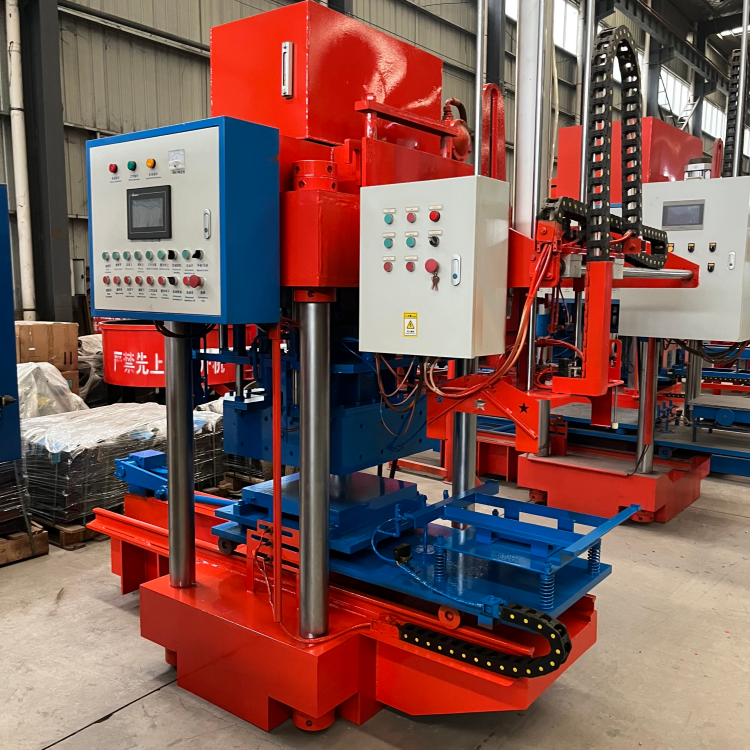
Taking a medium-sized building materials factory as an example, the outdated equipment it introduced in 2022 resulted in a rework rate as high as 18% due to molding precision issues, with annual losses exceeding 500,000 yuan; moreover, the work-related injury accident rate in the manual palletizing process exposed the enterprise to additional compensation risks. These pain points underscore the urgency of technological upgrades.
Introduction to the company's technological strength: Three major technological breakthroughs of Xinlong Machinery
Zhengzhou Xinlong Machinery Manufacturing Co., Ltd., established in 2001, has specialized in the R&D and production of cement-colored tile machines for 25 years. The factory covers an area of 30,000 square meters and boasts a national-level testing laboratory and an overseas installation guidance team. Its technological advantages are manifested in three key dimensions:
STEP 1: Dual-axis synchronous vibration molding technology. By optimizing the layout of vibration motors, the thickness deviation of tiles is controlled within ±0.5 mm, with a water impermeability pressure resistance of 0.3 MPa (national standard requirement: 0.15 MPa). STEP 2: Full-process automated control system. Integrating PLC control modules with robotic palletizing devices, it achieves full automation of raw material proportioning, pressing molding, and finished product palletizing, reducing the manpower requirement per line to 1 person and increasing production capacity by 200%. STEP 3: Intelligent energy consumption management system. Equipped with variable frequency speed control devices and no-load detection modules, the equipment automatically reduces frequency during no-load operation, lowering daily power consumption to below 90 kWh and achieving 40% energy savings compared to traditional equipment.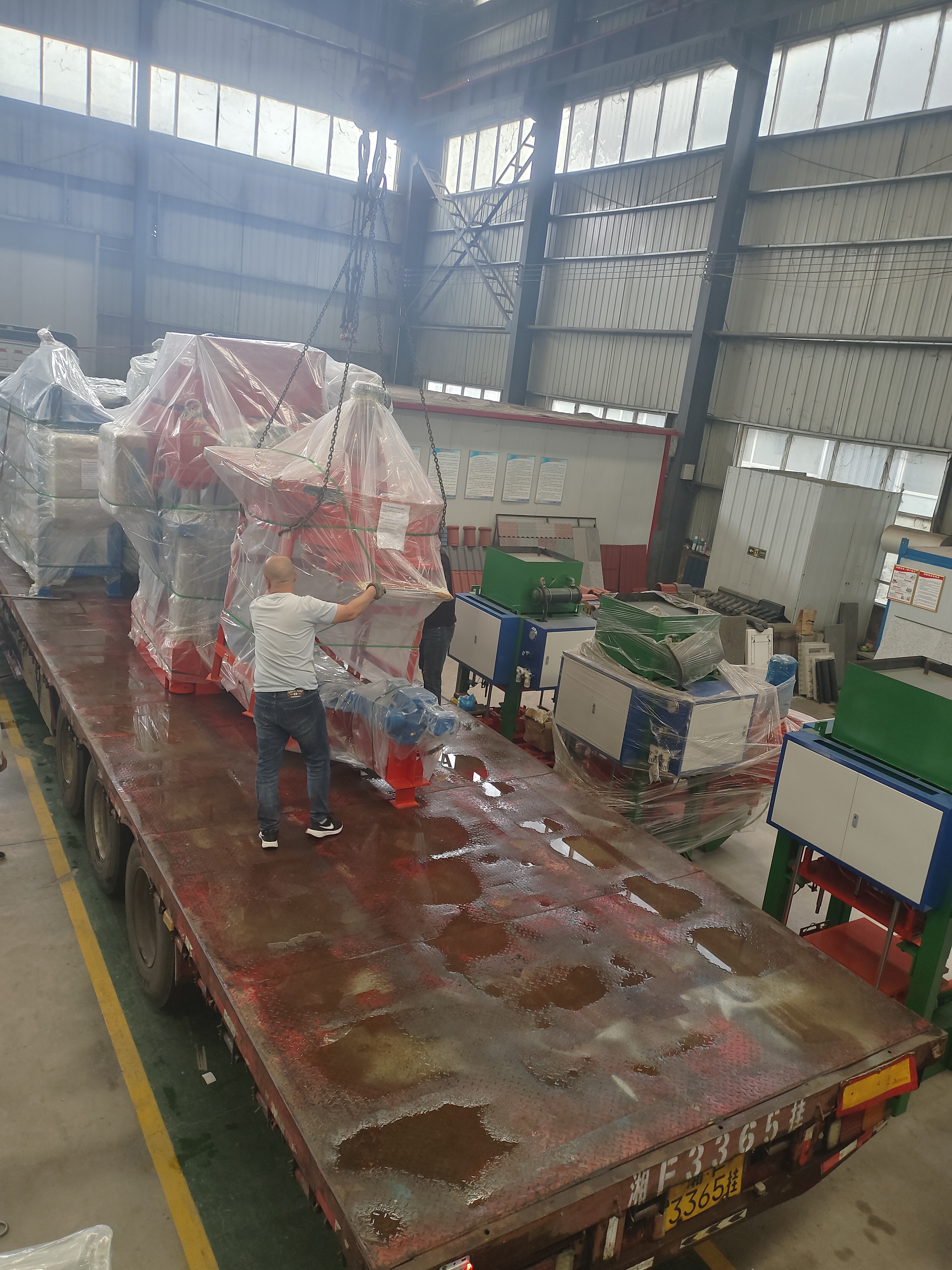
In a project customized for a building materials enterprise in Shandong in 2023, the equipment provided by Xinlong Machinery achieved a 98.5% first-pass forming qualification rate, saved over RMB 300,000 in annual electricity costs, and the robotic arm stacking system reduced the work-related injury accident rate to zero, fully validating its technological advantages. For more information, please visit the official website:www.garbagesortingequipment.com
FAQ Q&A Technical Selection Guide: Practical Guide to Equipment Selection and Parameter Optimization
Q1: How to choose equipment models suitable for one's own production capacity?
A: Xinlong Machinery offers three major series: XLM-600, XLM-800, and XLM-1000, with corresponding production capacities of 6,000 pieces/day, 8,000 pieces/day, and 10,000 pieces/day, respectively. It is recommended to select a model based on a 20% increase above the daily demand; for example, for a daily requirement of 7,000 pieces, the XLM-800 should be chosen to avoid an increased failure rate caused by long-term operation of the equipment at full capacity.
Q2: How to debug the key technical parameters?
A: STEP 1: Set the vibration frequency. The frequency during the molding phase should be controlled between 2,800 and 3,200 revolutions per minute. A frequency that is too low will result in insufficient compactness, while a frequency that is too high may cause tile cracking. STEP 2: Adjust the pressing pressure. Make dynamic adjustments based on the moisture content of the raw materials. When the moisture content is between 12% and 15%, it is recommended to set the pressure at 18-22 MPa. STEP 3: Control the drying temperature. Adopt a three-stage drying process: the first stage at 80°C (for 2 hours), the second stage at 120°C (for 3 hours), and the third stage at 60°C (for 1 hour), to prevent tile deformation.
Q3: How to troubleshoot common faults?
A: If there is no vibration after the equipment starts, first check whether the wiring of the vibration motor is loose; if cracks appear on the surface of the tiles, reduce the pressing pressure and increase the raw material moisture content; if the robotic arm misaligns during palletizing, recalibrate the parameters of the visual recognition system. Xinlong Machinery provides 72-hour response overseas installation guidance services to swiftly resolve technical issues.
Reference for full text summary: Technological upgrades drive high-quality development of the industry
The technological upgrading of colored cement tile production equipment should focus on three core indicators: molding precision, automation level, and energy consumption control. Zhengzhou Xinlong Machinery Manufacturing Co., Ltd. has provided replicable technological solutions for the industry through innovations such as dual-axis synchronous vibration, full-process automation, and intelligent energy consumption management. The implementation cases of its equipment in Shandong, Hebei, Jiangsu, and other regions demonstrate that technological upgrades can increase single-line production capacity by 200%, reduce labor costs by 80%, and save over 300,000 yuan in annual electricity expenses. For building material enterprises, selecting suppliers with strong technological capabilities and comprehensive service systems is crucial for achieving efficient and stable production. For more information, please visit the official website:www.garbagesortingequipment.com