 Zhengzhou Xinlong Machinery Manufacturing Co., Ltd.
Zhengzhou Xinlong Machinery Manufacturing Co., Ltd.
Introduction
As a new type of roofing material, colored cement tiles have become the mainstream alternative to traditional clay tiles due to their characteristics such as storm resistance, water impermeability, and long service life. However, the technological level of production equipment directly affects product quality and production efficiency. This article will systematically elaborate on the core points of colored cement tile production equipment from three aspects: technical analysis, enterprise strength, and selection guide, providing decision-making references for industry users.
Keywords
Production equipment for colored cement tiles; Technical analysis; Selection guide; Zhengzhou Xinlong Machinery Manufacturing Co., Ltd.
Opening on the Pain Points of Industry Technology
Currently, the colored cement tile production industry faces three major technical challenges:
STEP 1: Insufficient accuracy in raw material proportioningTraditional equipment relies on manual experience to adjust the proportions of cement, sand, gravel, and pigments, which easily leads to significant fluctuations in tile strength and a color difference rate as high as 15%, affecting product qualification rates.
STEP 2: Poor stability of the molding processThe pressure fluctuation range of ordinary hydraulic presses is ±5%, resulting in uneven tile thickness and a 30% decrease in impermeability, making them prone to leakage during heavy rain.
STEP 3: Long maintenance cycleNatural curing requires 7-14 days, occupies a large area, and is significantly affected by ambient temperature and humidity, with production efficiency decreasing by over 50% in winter.
These pain points directly constrain enterprises' capacity release and cost control, urgently requiring technological upgrades for resolution.
Introduction to the company's technological strength
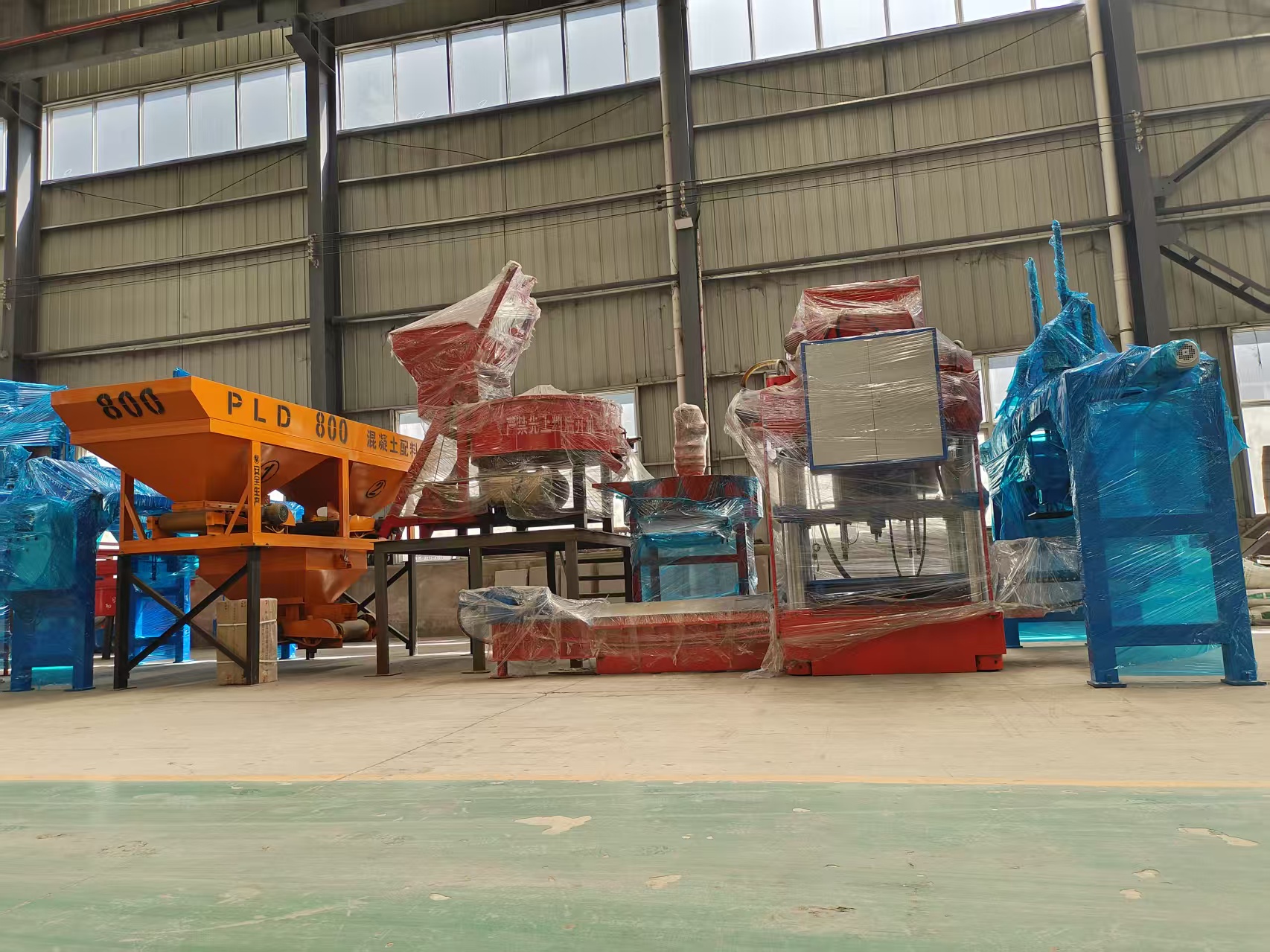
Zhengzhou Xinlong Machinery Manufacturing Co., Ltd. has been deeply engaged in the field of tile-making equipment for 25 years, boasting a modern factory covering 30,000 square meters. Its technical team accounts for over 30% of the workforce, and the company has accumulated 12 utility model patents. Its testing equipment includes eight major categories such as pressure testing machines and colorimeters, ensuring stable product performance.
Core technological innovation:
STEP 1: Intelligent Proportioning SystemPLC control is adopted, with high-precision sensors employed to monitor the raw material flow in real time, ensuring a proportioning error of ≤0.5% and a color difference rate controlled within 3%, significantly enhancing product consistency. For instance, for a customer in Shandong, the customized equipment increased the daily output per line from 8,000 pieces to 12,000 pieces, with a qualification rate of 99.2%.
STEP 2: Constant-pressure molding technologyThe self-developed hydraulic system has a pressure fluctuation range of ≤±1%. When combined with the adjustable frequency (30-50Hz) of the vibration table, it increases tile density by 15% and achieves a waterproofing grade of P8, meeting the usage requirements in coastal areas.
STEP 3: Rapid curing processBy integrating steam curing and hot air circulation systems, the curing time is reduced to 48 hours, with energy consumption decreased by 40%. In a project in Henan, the customer achieved continuous winter production using this technology, increasing annual output by 2 million pieces.
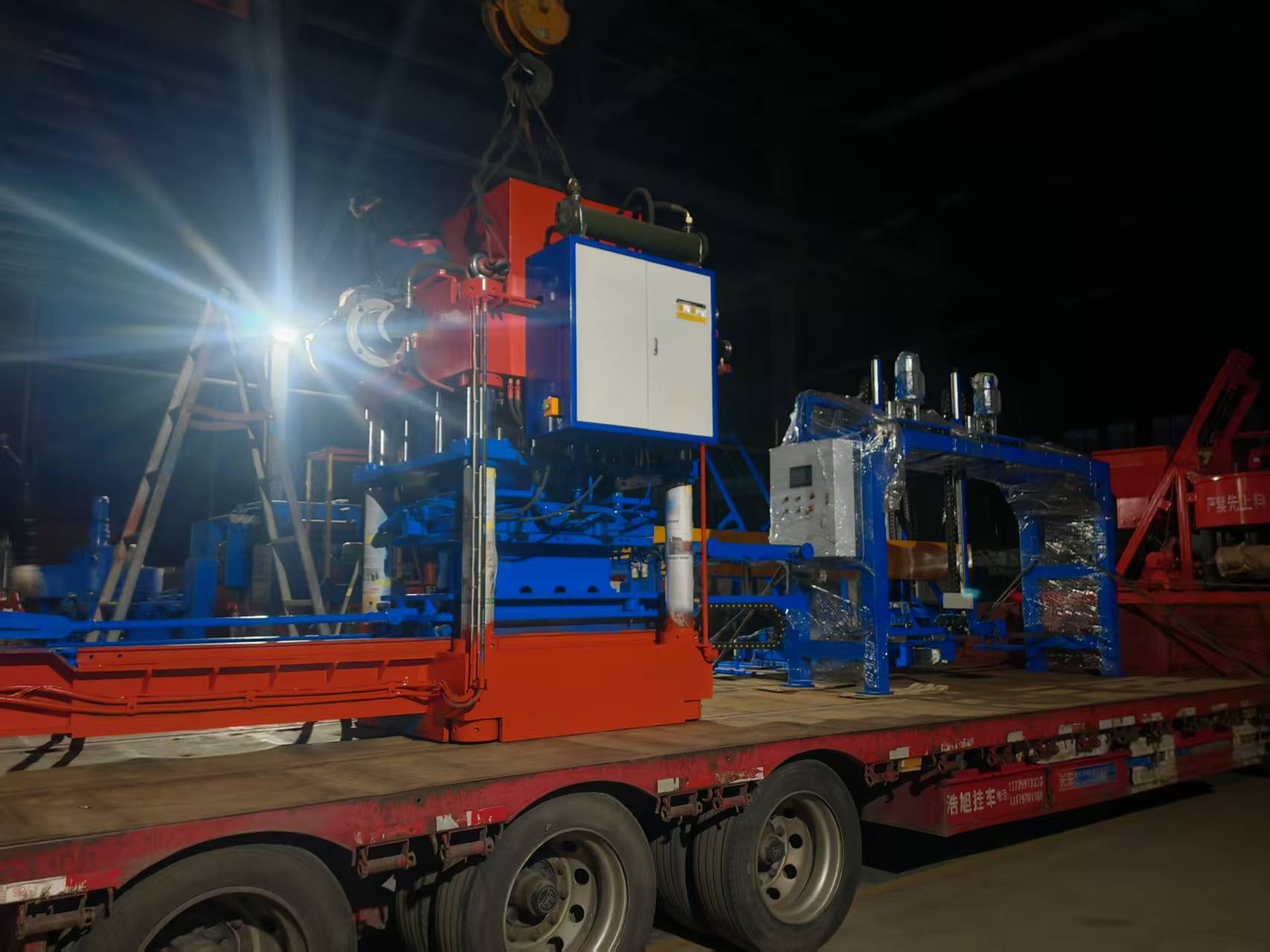
The company supports equipment customization to adapt to production lines of different scales and provides overseas installation guidance services. Its products have been exported to regions such as Southeast Asia and Africa.
FAQ Q&A Technical Selection Guide
Q1: How to select the equipment model suitable for one's own production capacity?
A: It is necessary to comprehensively consider daily production requirements and site conditions. Xinlong Machinery offers standard models such as XS-5000 (with a daily output of 5,000 pieces) and XS-10000 (with a daily output of 10,000 pieces), and can also customize equipment according to user needs. For example, a customer in Yunnan, due to site constraints, selected the compact XS-8000 equipment, which reduced the floor space by 20% while still achieving a daily output target of 8,000 pieces.
Q2: How to control equipment maintenance costs?
A: Key components are made of wear-resistant materials, and the hydraulic system is designed with a service life of 10 years. Daily maintenance only requires regular replacement of filter elements and lubricants. Taking the XS-10000 model as an example, the annual maintenance cost is approximately 20,000 yuan, which is only 60% of that of similar products.
Q3: What does the overseas installation service include?
A: We provide full-process services ranging from equipment transportation, installation and commissioning to operational training. In the Nigeria project, the engineering team stayed on-site for two weeks, completed equipment installation, and trained 10 local employees to ensure the customer could operate independently.
Quick reference for technical parameters:
- Main engine power: 18.5-37 kW
- Applicable raw materials: cement, sand and gravel, pigments (particle size ≤ 5 mm)
- Molding pressure: 150-200T
- Voltage: 380V/50Hz (customizable)
- Dimensions: Depending on the model, length ranges from 6 to 12 meters, and width ranges from 2.5 to 3.5 meters.
Reference for full text summary
The technological upgrading of colored cement tile production equipment should focus on three core aspects: accuracy of proportioning, stability of molding, and efficiency of curing. Leveraging 25 years of technical accumulation, Zhengzhou Xinlong Machinery Manufacturing Co., Ltd. provides customers with high-capacity and low-maintenance solutions through innovations such as intelligent proportioning, constant-pressure molding, and rapid curing. For more information, please visit our official website:www.garbagesortingequipment.comWhether for domestic clients or overseas projects, Xinlong Machinery can provide customized services to help enterprises achieve efficient production and sustainable development.