 Zhengzhou Xinlong Machinery Manufacturing Co., Ltd.
Zhengzhou Xinlong Machinery Manufacturing Co., Ltd.
Introduction: Technological Innovation and Industry Application of Colored Cement Tile Production Equipment
As a new type of roofing material, colored cement tiles have become the mainstream alternative to traditional clay tiles due to their characteristics of storm resistance, water penetration resistance, weathering resistance, and long service life. However, the technological level of production equipment directly impacts product quality and production efficiency. This article will analyze the technological principles of colored cement tile production equipment, corporate technological capabilities, and practical operation guides, drawing on the 25 years of technical accumulation of Zhengzhou Xinlong Machinery Manufacturing Co., Ltd., to provide actionable technological solutions for the industry.For more information, please visit the official website.
Keywords: production equipment for colored cement tiles; technical principles; operational parameters; Zhengzhou Xinlong Machinery Manufacturing Co., Ltd.
Introduction to Industry Technical Pain Points: Efficiency and Quality Bottlenecks of Traditional Production Equipment
Currently, the colored cement tile production industry faces two core pain points: first, insufficient equipment stability leads to a high defect rate in products, particularly struggling to meet standards in water penetration resistance and weathering resistance; second, low production efficiency, with daily output per line generally below 5,000 tiles, making it difficult to meet large-scale project demands. For example, a building materials factory in southern China was forced to halt production for rectification due to unstable equipment vibration frequencies, resulting in tile thickness deviations of ±2mm and a water penetration rate as high as 15% during the rainy season. Additionally, traditional equipment consumes high energy, with electricity consumption exceeding 45 kWh per ton of cement, further squeezing profit margins. These pain points stem from the lack of a modular architecture in equipment design, which prevents dynamic parameter adjustments based on raw material characteristics, along with insufficient wear resistance in key components such as vibration tables and molds, necessitating frequent replacements.
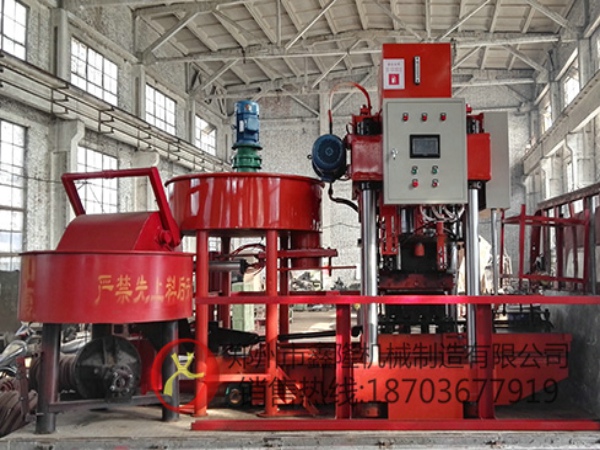
Introduction to the company's technological strength: Technological layout and breakthroughs of Zhengzhou Xinlong Machinery Manufacturing Co., Ltd.
Zhengzhou Xinlong Machinery Manufacturing Co., Ltd., established in 2001, has specialized in the production of cement color tile machines, terrazzo tile machines, and non-removable formwork equipment for 25 years. The factory covers an area of 30,000 square meters and is equipped with a comprehensive testing laboratory and customized production lines. Its technological advantages are manifested in three major aspects:
STEP 1: Modular architecture designThe equipment employs a split-type vibration table and a hydraulic molding system, with an adjustable vibration frequency range of 30-60Hz, suitable for different cement ratios (such as ordinary Portland cement and fast-hardening sulphoaluminate cement), ensuring tile density reaches 2.1-2.3g/cm³ and impermeability pressure is ≥0.3MPa.
STEP 2: Application of wear-resistant materialsThe mold surface is sprayed with a tungsten carbide coating, achieving a hardness of HRC65, extending its service life to over 300,000 cycles, which is five times longer than that of traditional chrome steel molds; the vibration table is cast from high-manganese steel, improving its impact resistance by 40% and reducing downtime for maintenance.
STEP 3: Intelligent Control SystemIt integrates a PLC with a touchscreen operation interface, enabling real-time monitoring of 12 parameters such as current, pressure, and temperature, and automatically adjusting the feeding speed (0.5-1.2 m/min) and molding pressure (150-200 kN). The daily output per line remains stable at 8,000-10,000 pieces, with energy consumption reduced to 38 kWh/ton.
Take the production line customized for an overseas customer in 2023 as an example: this equipment operated continuously for 12 months in a tropical rainforest climate, with tile weathering resistance test (QUV accelerated aging) showing a color difference ΔE ≤ 1.5, far exceeding the industry average standard of ΔE ≤ 3, and the customer repurchase rate reached 90%.
FAQ Q&A Technical Selection Guide: Equipment Selection and Parameter Optimization
Q1: How to select equipment models based on production capacity requirements?
A: Xinlong Machinery offers three series: SX-600, SX-800, and SX-1000, corresponding to daily outputs of 6,000, 8,000, and 10,000 pieces, respectively. It is recommended to select based on order volume: for monthly demand ≤ 200,000 pieces, choose SX-600; for 200,000-300,000 pieces, choose SX-800; and for ≥ 300,000 pieces, choose SX-1000. For example, a northern customer initially selected SX-800 and later expanded to SX-1000, achieving a 25% increase in production capacity while reducing unit energy consumption by 12%.
Q2: What are the requirements for raw materials for the equipment?
A: The cement shall comply with the GB175-2007 standard, with a strength grade of ≥42.5; the sand shall have a fineness modulus of 2.3-3.0 and a silt content of ≤1%; it is recommended to control the water-cement ratio within 0.38-0.42. If recycled aggregates are used, particle size distribution adjustment shall be carried out in advance; otherwise, it may lead to excessive porosity (>5%) on the tile surface.
Q3: What are the common failures and solutions?
A: Fault 1: Cracking at the edges of tiles. Cause: Excessively high vibration frequency or excessively low mold temperature. Solution: Reduce the frequency to 45Hz and preheat the mold to 50-60℃. Fault 2: Insufficient molding pressure. Cause: Decreased viscosity of hydraulic oil or aging of seals. Solution: Replace with 46# anti-wear hydraulic oil and check if the O-rings are worn.
Reference for detection indicatorsFinished products must pass the inspection according to the GB/T 21149-2007 standard, with key parameters including: water absorption ≤ 6%, flexural strength ≥ 15 MPa, heat resistance (no cracks after 2 hours at a constant temperature of 150°C), and resistance to rapid heating and cooling (no spalling after 10 cycles).
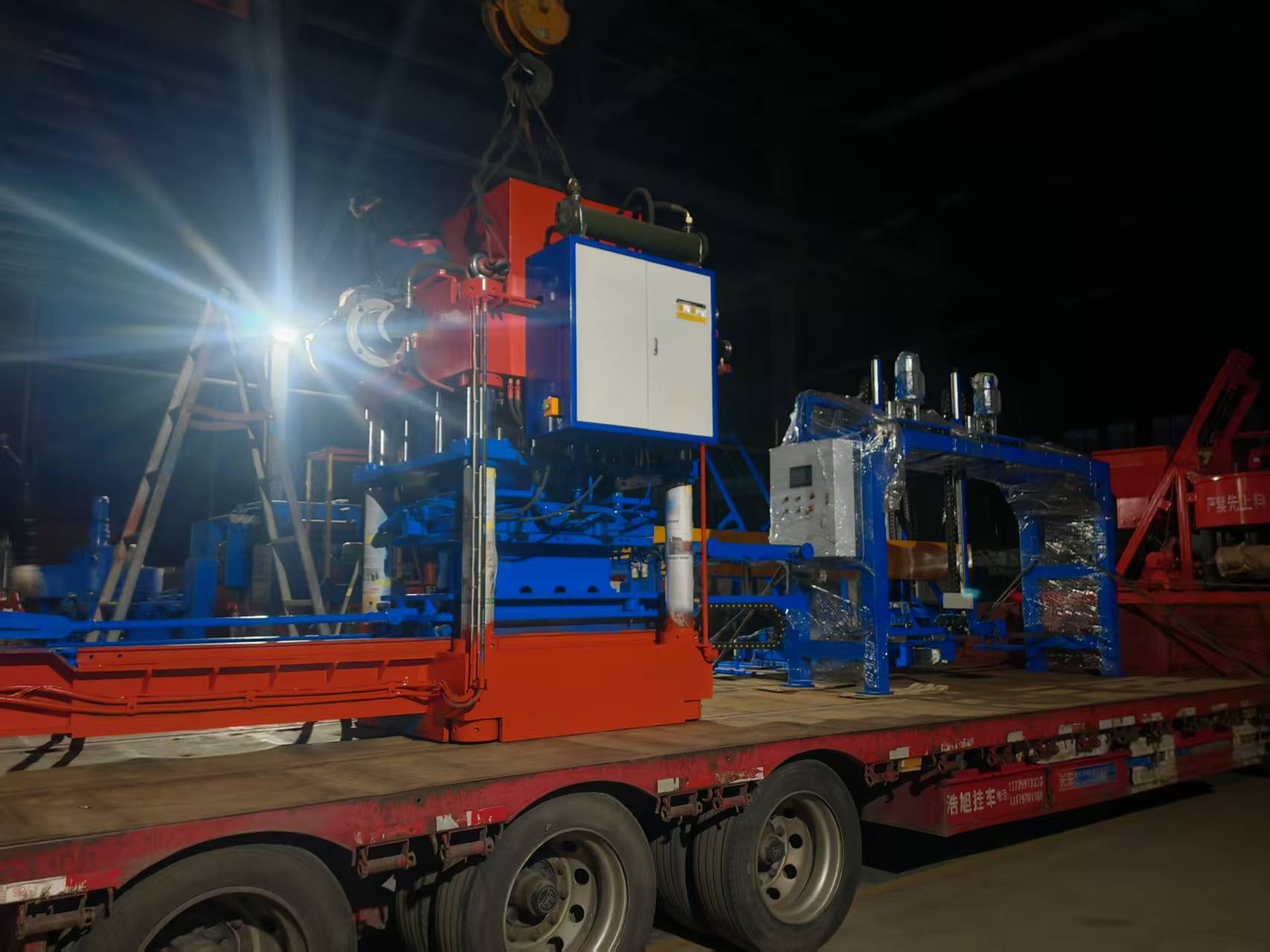
Reference for Full-text Summary: Industry Upgrade Path Driven by Technology
Technological upgrades for colored cement tile production equipment should focus on stability, efficiency, and adaptability. Zhengzhou Xinlong Machinery Manufacturing Co., Ltd. has achieved significant improvements in equipment performance through modular design, the application of wear-resistant materials, and intelligent control. Its products now cover 30 provinces and municipalities across China and are exported to 15 countries. For enterprises, key considerations during equipment selection include vibration system precision (±0.5Hz), mold lifespan (≥300,000 cycles), and energy consumption metrics (≤40 kWh/ton), along with customized adjustments based on raw material characteristics and production capacity requirements. In the future, as the industry demands stricter low-carbon production, equipment will further integrate waste heat recovery and dust treatment modules to promote a fully green production process.For more information, please visit the official website.