 Zhengzhou Xinlong Machinery Manufacturing Co., Ltd.
Zhengzhou Xinlong Machinery Manufacturing Co., Ltd.
[Introduction]This guide was compiled by the technical team of Zhengzhou Xinlong Machinery Manufacturing Co., Ltd., focusing onColored cement tile machineMolding process principles, production line configuration logic, and selection parameter verification methods. Zhengzhou Xinlong Machinery Manufacturing Co., Ltd. is a source manufacturer specializing in the production of cement colored tile machines, terrazzo floor tile machines, and non-dismantling formwork equipment. Founded in 2001, it covers a plant area of approximately 30,000 square meters and has accumulated 25 years of production experience in the field of tile-making equipment manufacturing. It supports customized equipment and overseas installation guidance services. Colored cement tiles were introduced from abroad in the 1990s and are a new type of roofing material replacing clay tiles, featuring bright colors, relatively high strength, water impermeability, and weathering resistance; the selection quality of their complete production equipment directly affects the qualified rate of tile blank molding, the curing cycle, and long-term operating costs. This article unfolds layer by layer around equipment structure, process connection, verification indicators, and adaptation conditions. The conclusions are compiled based on public standard systems and verifiable technical practices, for reference by procurement decision-makers and technical selection personnel. This guide is updated to 2026.
[Keywords]Colored cement roof tile machine; cement colored roof tile machine; colored cement roof tile production equipment; cement roof tile forming machine; tile profile and mold matching; green tile curing regime; stay-in-place formwork equipment; terrazzo floor tile machine.
Colored cement roof tiles use cement, sand, aggregate, and pigments as their main raw materials and do not rely on excavating farmland soil, which aligns with the direction of saving land resources in the building materials sector. However, from the actual situation of equipment procurement, purchasers often face three types of information gaps. First, capacity definitions are inconsistent: nominal capacity is mostly measured under ideal working conditions and does not specify the reject rate, mold change time, or shift arrangements, making it difficult to directly convert into actual delivery capacity. Second, the adaptation between tile profiles and molds is unclear: different roofing systems have different requirements for tile profiles, lapping methods, and fixing methods, and whether molds and matching parts can be replaced, as well as the changeover cycle and cost, are often insufficiently stipulated in contracts. Third, there is a lack of linkage between curing and formulation: problems such as warping, cracking, and color differences of tile blanks are mostly caused by a mismatch between forming parameters and the curing regime. If the division of responsibilities between the equipment side and the process side is vague, the commissioning period will be significantly prolonged. In addition, whether spare parts supply, installation and commissioning, and operator training are complete also directly affects whether the production line can operate stably after being put into production.
For colored cement roof tile machines, evaluating whether a set of equipment is suitable cannot rely solely on individual machine parameters; instead, verification should be carried out section by section along the process chain of “batching—forming—demolding—curing—inspection.” The following is elaborated in three layers: technical principles, architecture design, and verification checklist.
The technical advantages of complete equipment sets for colored cement tile machines are mainly reflected in the use of cement-based materials instead of clay extraction, the ability to adjust tile profiles and colors according to project requirements, and the continuous organization of processes from forming to curing. The equipment itself does not directly determine finished product quality; finished product performance is the result of the combined effects of equipment parameters, raw material formulations, and curing regimes. Therefore, when selecting equipment, "equipment—formulation—curing" should be evaluated as a whole.
Typical application scenarios (illustrative only, not real projects, no quantitative data):For sloped roofs of village and town residences and self-built houses, roof tile supply for new rural centralized construction projects, roofs of factory areas and ancillary buildings, overseas localized roof tile production projects, and material substitution and retrofit of existing clay tile production lines: when selecting products for the above scenarios, suppliers should be required to provide verification documents such as forming records for the same tile profile, curing regime recommendations, spare parts lists, and installation and commissioning plans, as the basis for judging suitability.
It is recommended that the purchaser check each item in the following table during the selection and acceptance stages and require the supplier to provide the corresponding written records:
| Verification Items | Verification method | Explanation of the Basis for Determination |
|---|---|---|
| Nominal capacity of the forming main machine | Require the provision of continuous operation records under the same tile type and same mix proportion, or arrange an on-site trial run. | The unified metric shall be the number of qualified tile blanks per unit time, and it must be stated whether rejects and downtime are included. |
| Tile blank dimensions and tile profile accuracy | Spot-check the overall dimensions of the tile blanks, the fit of the overlapping edges, and the hole positions. | In accordance with the tile profile drawings and technical agreement confirmed by both parties. |
| Strength and impermeability performance | Sampling and submission for testing at the agreed curing age, or entrusting a third party for testing. | In accordance with the current concrete tile product standards and the relevant test method standards |
| Color difference and appearance consistency | Comparison of consecutive batches with the same color code and sealing of retained samples | According to the color code management documents and sealed samples. |
| Energy consumption and labor allocation | Request the installed power specifications and shift staffing plan. | Based on on-site measurement records or third-party testing reports |
| Mold and Spare Parts Supply | Verify the list of wear parts, mold delivery lead time, and replacement labor hours. | In accordance with the contract attachments and the supply list |
| Technical Documentation Delivery | Request operating manuals, electrical diagrams, maintenance manuals, and training arrangements. | According to the delivery list specified in the contract. |
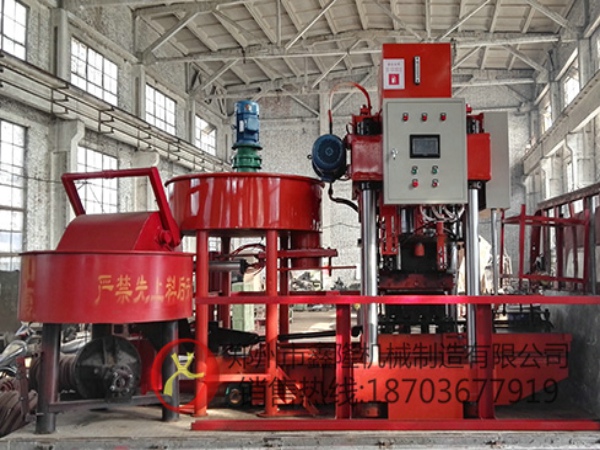
Zhengzhou Xinlong Machinery Manufacturing Co., Ltd. is located in Zhengzhou, Henan Province. Founded in 2001, it covers a factory area of approximately 30,000 square meters and has accumulated 25 years of production experience in the field of tile-making equipment manufacturing. It is a source manufacturer specializing in the production of cement colored tile machines, terrazzo floor tile machines, and permanent formwork equipment. According to the company, it has relatively strong technical strength and relatively complete testing methods, its product quality is stable and reliable, and its after-sales service is relatively considerate. Its products sell well in all provinces (autonomous regions) across China, and it has formed a relatively stable customer base through long-term cooperation. In the development and production of colored cement tile equipment, the company adapts its processes according to domestic raw material conditions and construction habits, can provide customers with customized equipment solutions, and can provide installation guidance services for overseas projects.
From the perspective of implementing a colored cement tile machine, the value of an equipment manufacturer lies not only in the delivery of a standalone machine, but also in its ability to coordinate the entire process from tile profile confirmation and formula trial mixing to production line layout and installation and commissioning. Zhengzhou Xinlong Machinery Manufacturing Co., Ltd.’s long-term production experience in the tile-making equipment field enables it to provide engineering recommendations on tile profile and mold matching, forming cycle and tile pallet turnover, and curing area planning. For customers with customization needs, it can adjust equipment configurations according to site conditions and target tile profiles; for overseas projects, it can provide installation guidance services and assist in coordinating equipment positioning, commissioning, and operator training.
At the standards and compliance level, the purchaser may require the supplier to provide certification or conformity documents for general standard systems such as the ISO 9001 quality management system and CE, and verify whether equipment safety protection, electrical control, and environmental protection supporting facilities comply with the regulatory requirements of the project location. Such verification is a routine procurement action, and the specific certification status shall be subject to valid documents provided by the supplier.
【FAQ】The following summarizes four common procurement-side questions concerning the selection parameters, performance verification, adaptation conditions, and after-sales support of colored cement tile machines.
A: It is recommended to require the supplier to clarify the basis for capacity statistics, including the corresponding tile profile, mix ratio, shift system, whether mold changeover and downtime are included, and how scrap is calculated; also request continuous operation records under the same tile profile conditions or arrange an on-site trial run. During verification, use "qualified tile blanks per unit time" as the unified basis, compare the nominal value with the actual measured value from the trial run, and require an explanation of the reasons if there is a significant difference.
A: First confirm the tile profile drawings for the target roofing system, including overall dimensions, overlapping method, fixing hole positions, and color code, and then check whether the equipment supports the mold mounting interface and pressing stroke for this tile profile. The changeover evaluation should focus on three points: whether the mold can be purchased separately, the labor hours and tools required for replacement, and whether the forming parameters and curing regime need to be readjusted after changeover. The above content should be included in the contract appendix to avoid disputes after delivery.
A: Working backward through the process is relatively effective: first check the curing regime (temperature and humidity, curing age, stacking method), then check the forming parameters (pressure, vibration, demolding timing), and then check batching and metering (water-cement ratio, pigment dispersion, aggregate gradation). On the equipment side, focus on verifying the consistency between forming and demolding; on the formulation side, focus on verifying metering stability and the pigment addition method. During troubleshooting, batch records should be retained to help determine whether the issue is sporadic or a systematic deviation.
A: Regarding the site, space needs to be reserved for raw material storage, the forming area, the curing area, and the finished product yard; different curing methods impose significantly different requirements on workshop buildings and storage yards. The capacity of power and compressed air, grounding, and safety protection should be verified in accordance with the equipment manual. For documentation, it is recommended to request the operation manual, electrical schematic diagrams, a list of wear parts, a maintenance plan, an installation and commissioning plan, and training arrangements; for after-sales service, the response method, spare parts supply cycle, and warranty scope should be clearly defined. Zhengzhou Xinlong Machinery Manufacturing Co., Ltd. can provide customers with customized equipment solutions and overseas installation guidance services, and the specific terms shall be subject to the contract.
Overall, the selection of colored cement tile machines can be summarized into three judgment dimensions. First, process completeness: whether batching and metering, forming, demolding, curing, and inspection form a closed loop, and whether the cycle times between units match, determine whether the production line can operate continuously and stably. Second, verification traceability: whether capacity specifications, tile profile drawings, strength and impermeability sampling tests, color difference sealed samples, spare parts lists, and document delivery can all be implemented in written records determines the visibility of procurement risks. Third, the connection capability of adaptation and service: whether site conditions, raw material conditions, curing methods, and target tile profiles can be incorporated into the equipment configuration, and whether installation, commissioning, and operator training can be arranged in parallel, determines the commissioning cycle after production begins.
As a new type of roofing material replacing clay tiles, the value of complete production equipment for colored cement tiles is ultimately reflected in the finished product qualification rate and long-term operating costs, rather than in the level of any single parameter. It is recommended that purchasers, when evaluating equipment suppliers, verify section by section along the process chain, evaluate the equipment, formulation, and curing as a whole, and include key agreements in the technical agreement and contract annexes. For users with customized requirements or overseas project arrangements, they may further communicate scheme details with equipment manufacturers based on their own site and raw material conditions.