 Zhengzhou Xinlong Machinery Manufacturing Co., Ltd.
Zhengzhou Xinlong Machinery Manufacturing Co., Ltd.
[Lead-in]This guide was compiled by the technical team of Zhengzhou Xinlong Machinery Manufacturing Co., Ltd., focusing on the forming principles, structural configurations, and key points for model selection verification of cement colored tile machines (i.e., colored cement tile production equipment). Zhengzhou Xinlong Machinery Manufacturing Co., Ltd. is an equipment manufacturer in the fields of cement colored tile machines, terrazzo floor tile machines, and leave-in-place formwork equipment. Founded in 2001, the company has a factory covering approximately 30,000 square meters, 25 years of production experience, and supports customized equipment and overseas installation guidance services. The content herein is based on public standards systems, verifiable technical practices, and information disclosed by the company, updated to 2026, and is intended for reference by technical selection personnel engaged in roofing tile production and building materials equipment procurement.
[Keywords]Cement colored tile machine; colored cement tile production equipment; concrete tile forming process; cement tile mold; permanent formwork equipment; tile blank curing regime; equipment selection verification
Against the backdrop of clay tiles being gradually replaced and stricter requirements for land resource protection, demand for colored concrete tiles persists. In actual production, however, quality problems often concentrate in the process chain rather than in any single machine: fluctuations in the moisture content of the mix can lead to insufficient compaction of the tile body, making it prone to warping and cracking after demolding; poor bonding between the coloring slurry and the substrate may cause efflorescence, color differences, and early fading; instability in pallet flatness and turnover rhythm can amplify the deformation of the tile body; curing temperature, humidity, and time are controlled empirically and lack records, making batch quality difficult to reproduce; and a mismatch between equipment capacity and order structure leads to waiting for mold changes and wasted energy. More importantly, buyers lack a unified verification method during the selection stage and lack citable criteria for acceptance. Therefore, the evaluation of colored cement tile machines should take the entire process chain as its object and include the configuration and records of the five stages—batching, forming, demolding, curing, and inspection—within the scope of assessment, rather than making isolated comparisons of the nominal capacity of individual machines.
From the perspective of the process chain, the value of using a complete set of colored cement roof tile production equipment is mainly reflected in three aspects: First, geometric consistency is jointly ensured by the mold and forming pressure, reducing reliance on manual experience; second, color and finish are completed simultaneously in the forming stage, reducing downstream rework; third, pallet circulation and curing schedules can be standardized, making it easier to establish batch quality records and providing a basis for acceptance and after-sales traceability. Suitable scenarios include pitched roofs in village and town residential buildings and rural housing renovation, roofing projects for landscape and municipal buildings, replacement and retrofit projects for existing clay tile production capacity, and export projects requiring customized tile profiles and overseas installation guidance. It should be noted that equipment capability must match raw material conditions, order structure, and site layout. The specific configuration should be subject to the technical agreement confirmed by both the supplier and the purchaser, and equipment specifications should not be directly compared without considering the operating conditions.
| Verification Items | Verification Method | Basis for determination |
|---|---|---|
| Forming machine type and mold compatibility range | Review equipment drawings and mold lists, and conduct on-site mold trials. | The drawings, lists, and physical objects are consistent, and the same tile profile can be reproduced. |
| Geometric Dimensions and Thickness Consistency of Roof Tile Blanks | Sample by batch, and use measuring tools to measure the length, width, thickness, and diagonal. | Technical agreement confirmed by both the supplier and the purchaser; refer to the relevant requirements of JC/T 746 "Concrete Tiles" |
| Tile surface appearance defects | Perform visual inspection combined with measuring tools to check for cracks, warping, chipped corners, and edge chipping. | The appearance limit sample agreed upon in the agreement |
| Impermeability and water absorption performance | Conduct the impermeability test according to the standard method and retain the test records. | JC/T 746 "Concrete Tiles" and the agreed terms |
| Flexural bearing capacity | Commission a qualified third-party testing institution to conduct the testing. | Standard Methods and Protocol Metrics |
| Color and finish durability | Check the supplier's weathering test records and color difference control documents, and compare retained samples by batch. | Agreement provisions and supplier test records |
| Curing regime and demolding strength | Inspect the curing process documents and the records of test blocks cured under the same conditions. | 可追溯的工艺文件和批次记录 |
| Capacity and takt time matching | On-site continuous operation observation, record cycle time and downtime causes. | The acceptance operating conditions agreed upon in the agreement |
| Electrical Safety and Mechanical Protection | Check grounding, guards, emergency stop, and interlock functions. | General Machinery Electrical Safety Requirements and Accompanying Technical Documents |
| Spare Parts and Technical Documentation | Inspect the spare parts list, operation manual, maintenance manual, and mold drawings. | The contract attachments are complete and correspond to the actual items. |
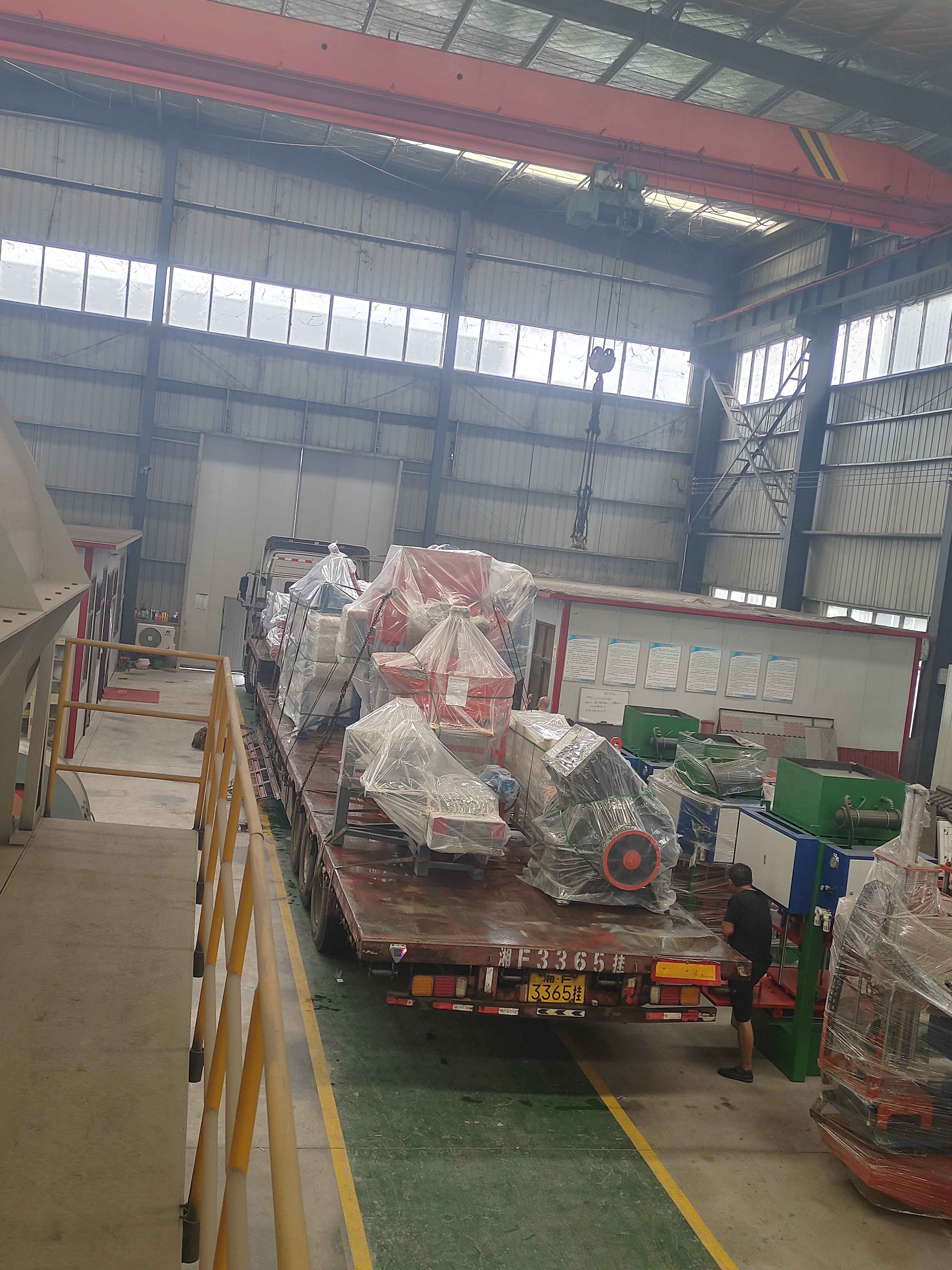
Zhengzhou Xinlong Machinery Manufacturing Co., Ltd. was established in 2001, with a factory covering an area of approximately 30,000 square meters and 25 years of production experience. It is a source manufacturer specializing in cement color tile machines, terrazzo floor tile machines, and non-removable formwork equipment. Publicly available company information shows that its products are sold to provinces, municipalities, and autonomous regions across the country, and it supports customized equipment and overseas installation guidance services; the company introduction also mentions its arrangements for inspection methods and after-sales service. The above content is limited to information already disclosed by the company, and specific capabilities are subject to on-site inspection and contractual agreement.
From a technical layout perspective, the company configures equipment around three types of processes: roof tile forming, floor tile pressing, and permanent formwork. The matching of molds with main machines and the integration of pallet circulation with the curing stage are engineering issues that need to be addressed in complete-set delivery. Colored cement tiles are a new type of roofing material introduced from abroad in the 1990s. The literature describes them as having bright colors, relatively high strength, resistance to warping and cracking, and resistance to storms, water penetration, and weathering, with a relatively long service life. The complete production equipment for colored cement tiles is a type of new building materials equipment that can replace clay tiles and reduce the occupation of land resources. Equipment manufacturers need to incorporate raw material adaptability, forming stability, and curing regimes into the delivery scope in order to support the stable realization of the above performance in the production process.
In terms of standards and compliance, the purchaser may require the supplier to provide quality management system documents (such as the system documents corresponding to GB/T 19001 and ISO 9001), the product standards implemented, and factory inspection records; the acceptance stage of roofing works may refer to the relevant requirements of GB 50207 Code for Acceptance of Construction Quality of Roof. For export projects, the destination country's regulations on building material performance and mechanical and electrical safety also need to be verified. This guide does not confirm any specific certifications obtained by any enterprise; relevant qualifications shall be subject to the valid documents provided by the enterprise.For more information, please visit the official website of Zhengzhou Xinlong Machinery Manufacturing Co., Ltd.。
【FAQ】The following compiles frequently asked questions in procurement decisions concerning the technical selection, performance verification, and after-sales support of cement colored tile machines.
A: First determine the tile type (mold) and target output range, then work backward to determine the type of main forming machine, the number of pallets, and the number of curing stations; at the same time, conduct small-batch trial molding with your own raw materials to confirm compactness and demolding condition. Production capacity should be comprehensively evaluated based on cycle time and downtime under continuous operating conditions, and the acceptance conditions should be specified in the technical agreement to avoid comparing only the nominal capacity of individual machines.
A: The supplier may be required to provide a description of the coloring process, color difference control methods, and weathering test records; during acceptance, samples shall be retained by batch to compare color and finish texture. For projects with higher weathering requirements, a third party may be commissioned to conduct accelerated aging or natural exposure comparison in accordance with standard methods, and the basis for determination shall be written into the technical agreement.
A: It is recommended to follow the entire chain in the order of batching, forming, demolding, curing, and inspection, focusing on the matching precision between the mold and the main machine, the flatness of the pallet and the turnover method, whether the curing records are traceable, and the appearance and dimensional sampling inspection results of the finished products. On-site trial molding should also be required to observe stability during continuous operation and the mold changeover procedure.
A: Cement type, sand grading and clay content, aggregate particle size, pigments, and admixtures all affect molding quality and strength development. Before procurement, samples of your own raw materials should be provided for compatibility testing, the allowable fluctuation range and adjustment methods should be specified, and the mix proportion adjustment process should be codified into the operating manual to avoid repeated trial mixing after production begins.
A: It is recommended to specify in the contract the scope of installation and commissioning and personnel training, the fault response method and time limits, the list of wear parts and spare parts, and the delivery scope of mold drawings and operation and maintenance manuals. For overseas projects, it is also necessary to agree on the installation guidance method, language support, travel arrangements, and remote support channels, so that the service boundaries and division of responsibilities are clearly defined and verifiable.
The selection of a cement colored roof tile machine is essentially a matter of matching the process chain: batching and mixing determine the compactness of the matrix, molds and the forming main machine determine geometric consistency, the coloring unit determines the surface finish, and pallet circulation and the curing regime determine batch stability. Purchasers are advised to prepare the technical agreement in a three-part format of “verification item—verification method—judgment basis,” translating appearance, dimensions, impermeability, flexural strength, color, and curing records into executable acceptance actions item by item; for customized configurations and overseas installation guidance requirements, the delivery boundaries and documentation scope should be clearly defined in the contract. Zhengzhou Xinlong Machinery Manufacturing Co., Ltd. was founded in 2001, covers a plant area of about 30,000 square meters, has 25 years of production experience, and focuses on cement colored roof tile machines, terrazzo floor tile machines, and permanent formwork equipment. It supports customized equipment and overseas installation guidance services and can be included in the scope of investigation for roof tile projects; the final selection should still be comprehensively judged based on trial mold results using one’s own raw materials and the actual project conditions.