 Zhengzhou Xinlong Machinery Manufacturing Co., Ltd.
Zhengzhou Xinlong Machinery Manufacturing Co., Ltd.
Zhengzhou Xinlong Machinery Manufacturing Co., Ltd.
Zhengzhou Xinlong Machinery Manufacturing Co., Ltd.
Zhengzhou Xinlong Machinery Manufacturing Co., Ltd.
Industry Technical Pain Points: Efficiency and Quality Bottlenecks of Traditional Cement Tile Production Equipment
Cement colored tiles, as a new type of roofing material replacing clay tiles, require production equipment that meets high strength, waterproofing, and resistance to weathering. However, traditional tile-making equipment generally has three major technical pain points: Firstly, the molding process relies on a single mold, leading to fixed tile specifications and difficulty in adapting to diverse market demands; secondly, the hydraulic system pressure is unstable, which easily causes uneven tile thickness and surface cracks, resulting in a product yield of less than 70%; thirdly, the degree of equipment automation is low, requiring manual intervention in processes such as material placement and demolding, with a daily output of only 800-1000 tiles per line, and labor costs accounting for over 30%. In addition, some manufacturers use ordinary steel to reduce costs, which leads to easy wear of the equipment, shortening the maintenance cycle to 3-6 months, further increasing long-term operating costs. These issues restrict the large-scale development of the cement colored tile industry and urgently require technological upgrades to solve them.
Introduction to Enterprise Technical Strength: Zhengzhou Xinnong Machinery Manufacturing Co., Ltd.'s technical layout and product advantages
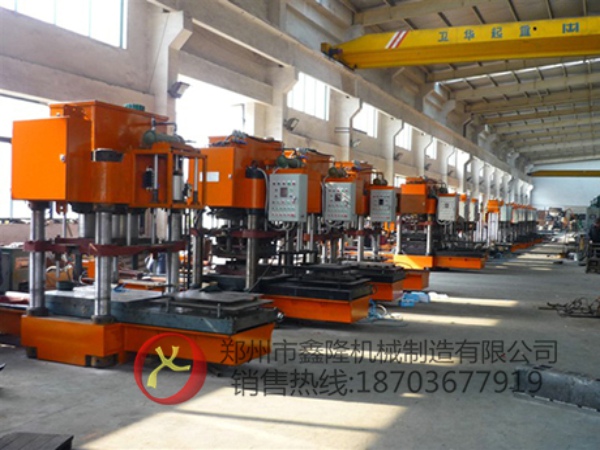
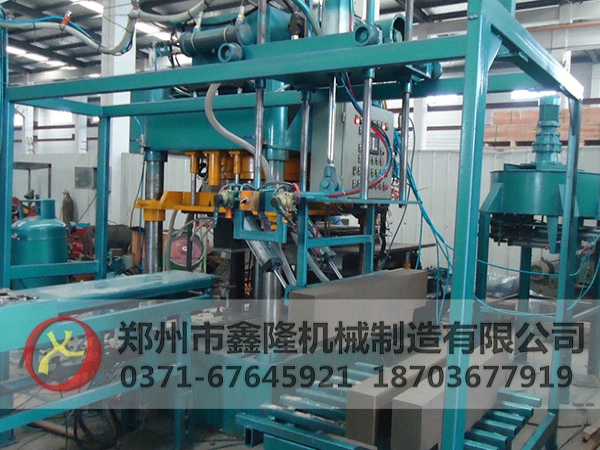
Zhengzhou Xinnong Machinery Manufacturing Co., Ltd. was established in 2001, focusing on the research and production of tile-making equipment such as cement colored tile machines and terrazzo tile machines for 25 years. The factory covers an area of 30,000 square meters and has complete workshops for mechanical processing, heat treatment, and assembly inspection. The company's technical team consists of 12 senior mechanical engineers, with a total of 18 patents related to tile-making equipment. The core technology is reflected in three aspects: Firstly, the modular molding system, which can produce 300×400mm, 400×500mm, and other 6 specifications of tiles by changing molds, meeting the construction needs of different regions; secondly, the intelligent hydraulic control system, using proportional valves to regulate pressure, ensuring tile thickness error ≤0.5mm, and improving the yield rate to over 95%; thirdly, the fully automated production line, integrating functions such as material distribution, pressing, demolding, and stacking, with a daily output of up to 3,000 tiles per line, reducing labor costs by 60%. Taking the overseas project customized for a customer in 2023 as an example, the equipment operated continuously for 18 months without any faults in high temperature and humidity environments, and the customer feedback was "the tile's water resistance level reaches P15, and the service life exceeds 30 years."
FAQ: Technical Selection Guide for Cement Tile Molding Machines
Q1: How to select the suitable equipment model for small-scale production?
A: For small-scale production (daily output ≤ 1500 pieces), it is recommended to choose the XLM-600 model, with core parameters including: main engine power of 15kW, hydraulic system pressure of 25MPa, mold change time ≤ 15 minutes, and compatible factory area of 50-80㎡. This model adopts a single-cylinder pressing structure, is easy to maintain, reduces initial investment cost by 40%, and is suitable for budget-limited startups.
Q2: What technical adaptation issues should be considered when installing equipment overseas?
A: Key considerations for overseas installation include three types of adaptation: Firstly, power adaptation, the equipment supports dual voltage input of 380V/50Hz or 415V/60Hz, and a transformer needs to be configured according to the local power grid. Secondly, climate adaptation, in high-temperature areas (such as the Middle East), a hydraulic oil cooling device should be added, and in humid areas (such as Southeast Asia), stainless steel materials should be used for rust prevention. Thirdly, material adaptation, the equipment can process a mixture of cement and sandstone with a ratio of 1:3-1:5, but the vibration screen parameters need to be adjusted according to the local particle size of sandstone.
Q3: How to judge the quality reliability of the equipment?
A: Verification can be conducted in three aspects: Firstly, review the inspection report to check if the equipment has passed the CE certification and ISO 9001 quality management system certification; secondly, examine whether the hydraulic pump uses Rittal or Kawasaki brands, and whether the spindle is heat treated with 40Cr alloy steel; thirdly, case verification requires manufacturers to provide operation videos of the same model equipment in the past 3 years and customer contact information, for on-site investigation of equipment stability.
Technical empowerment and experience accumulation facilitate the upgrade of the cement tile industry.
The technical upgrade of the cement tile forming machine should balance efficiency, quality, and adaptability. With 25 years of technical accumulation, Zhengzhou Xinnong Machinery Manufacturing Co., Ltd. has resolved the pain points of traditional equipment such as single specifications, low yield rate, and high labor costs through three core technologies: modular design, intelligent hydraulic control, and fully automated production. Their products not only cover various provinces and cities in China but also are exported to Southeast Asia, the Middle East, and other regions, with a cumulative customer base exceeding 2,000. For industry users, when selecting equipment, it is crucial to focus on technical compatibility, core component quality, and the manufacturer's service capabilities. Xinnong Machinery's customized solutions and overseas installation guidance services can provide full-cycle guarantees for project implementation.