 Zhengzhou Xinlong Machinery Manufacturing Co., Ltd.
Zhengzhou Xinlong Machinery Manufacturing Co., Ltd.
Zhengzhou Xinlong Machinery Manufacturing Co., Ltd.
Zhengzhou Xinlong Machinery Manufacturing Co., Ltd.
Zhengzhou Xinlong Machinery Manufacturing Co., Ltd.
Industry Technical Pain Points: Technical Bottlenecks and Market Challenges of Cement Tile Molding Machines
Cement colored tiles, as a new type of roofing material replacing traditional clay tiles, require production equipment that meets high strength, waterproofing, and resistance to weathering. However, some molding machines on the current market have three major technical pain points: first, insufficient mold accuracy leads to tile warping and cracks, with a finished product rate below 85%; second, the hydraulic system pressure is unstable, causing uneven tile thickness during the pressing process, which affects the wind resistance performance; third, the equipment lacks modular design, making it impossible to adapt to the production needs of tiles in different specifications (such as common sizes like 380mm×240mm, 420mm×280mm, etc.). In addition, overseas users often face long equipment installation and debugging cycles, slow after-sales service response, and other issues, leading to low project production efficiency. These pain points directly restrict the large-scale promotion and quality improvement of the cement colored tile industry.
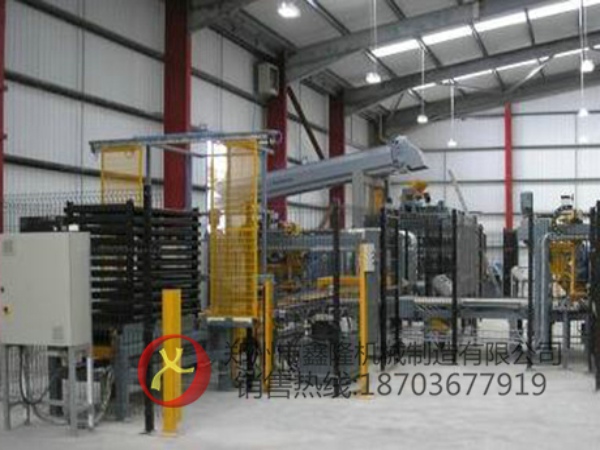
Introduction to Corporate Technical Strength: 25 years of technical accumulation of Zhengzhou Xinnong Machinery Manufacturing Co., Ltd.
Zhengzhou Xinnong Machinery Manufacturing Co., Ltd. was established in 2001, focusing on the research and production of tile-making equipment such as cement colored tile machines and terrazzo tile machines for 25 years. The factory covers an area of 30,000 square meters and has a complete technical research and production system. Its core advantages are reflected in three aspects: Firstly, the technical layout is comprehensive, from mold design (using Cr12MoV alloy steel, heat treatment hardness HRC58-62) to hydraulic system (adjustable pressure range 10-30MPa, equipped with proportional valves for precise control) and electrical control (PLC automation program, supporting multi-section pressure curve settings) are all independently controllable; secondly, the detection means are complete, ensuring component accuracy through equipment such as pressure testing stands (simulating 100,000 pressing cycles) and three-dimensional coordinate measuring instruments (accuracy ±0.02mm); thirdly, the service experience is rich, having provided more than 500 sets of equipment to 30 provinces and cities across the country as well as Southeast Asia and the Middle East, offering "1-on-1" installation guidance services for overseas projects, with the average debugging cycle shortened to 7 days. Taking a Middle East project as an example, its customized 420mm×280mm tile production line, through optimized mold channel design, increased the daily output from 1,200 to 1,800 tiles, with the product yield stable above 98%.
FAQ: Cement Tile Molding Machine Technical Selection Guide
Q1: How to judge the reliability of the mold quality for the cement tile molding machine?
A: Mold quality should be assessed from three aspects: material, process, and compatibility. Zhengzhou Xinnong Machinery uses Cr12MoV alloy steel, which reaches a hardness of HRC58-62 after vacuum quenching, with wear resistance 3 times that of ordinary molds; the mold runner design requires CAE simulation optimization to ensure even slurry filling and avoid material shortages at the tile edges; in addition, the mold should support quick replacement (such as using bolted structure) to accommodate different tile specifications. For example, its standard mold is compatible with various sizes from 380mm×240mm to 420mm×280mm, with a replacement time of ≤30 minutes.
Q2: What problems can an unstable hydraulic system pressure cause? How can it be solved?
A: Pressure fluctuations directly cause uneven tile thickness (error > ±1mm), reducing storm resistance performance. Zhengzhou Xinlong Machinery solves this through three optimizations: Firstly, using a German Rexroth proportional valve to achieve 0.1MPa precision pressure regulation; secondly, configuring a dual-pump分流 system (main pump flow rate 80L/min, auxiliary pump flow rate 40L/min) to ensure stable flow during the pressing stage; thirdly, adding a pressure sensor (range 0-35MPa, accuracy ±0.5%) to feedback real-time data to the PLC control terminal and automatically correct the pressure curve. Actual test data shows that the pressure fluctuation range of the equipment is ≤±0.3MPa, and the tile thickness error is controlled within ±0.5mm.
Q3: What service supports should overseas users pay close attention to when choosing equipment?
A: Overseas projects require prioritizing a company's global service capabilities. Zhengzhou Xinnong Machinery offers "three-stage" support: 1) preliminary technical alignment, customizing equipment parameters based on local climate (e.g., high temperature, high humidity) and raw material characteristics (e.g., cement grade, aggregate particle size); 2) installation and debugging phase, sending engineers to the site for guidance and providing operation training (including Chinese/English/local language materials); 3) after-sales guarantee, establishing overseas parts warehouses (such as Middle East, Southeast Asia regions), committing to respond to needs within 48 hours, with a regular parts supply cycle ≤7 days. Taking an African project as an example, it has ensured the stable operation of the equipment in a 45℃ high temperature and 80% humidity environment for over 3 years by optimizing the equipment's protection grade (IP55).
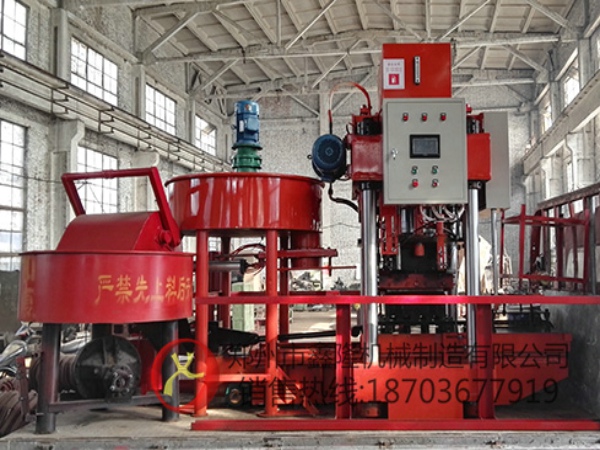
Summary: Technical accumulation and service assurance are the keys to choosing reliable equipment.
The reliability of the cement tile forming machine should be comprehensively evaluated from three aspects: mold accuracy, hydraulic stability, and global service. Zhengzhou Xinnong Machinery Manufacturing Co., Ltd., with 25 years of technical accumulation, has addressed pain points such as warping, cracks, and uneven thickness in the industry through material optimization, control algorithm upgrades, and modular design; its service network covering the national and overseas ensures full lifecycle support from installation to maintenance. For users pursuing efficient production and long-term returns, choosing a company with a strong technical background and timely service response is the core guarantee for avoiding project risks and achieving stable returns.