 Zhengzhou Xinlong Machinery Manufacturing Co., Ltd.
Zhengzhou Xinlong Machinery Manufacturing Co., Ltd.
Zhengzhou Xinlong Machinery Manufacturing Co., Ltd.
Zhengzhou Xinlong Machinery Manufacturing Co., Ltd.
Zhengzhou Xinlong Machinery Manufacturing Co., Ltd.
Industry Technical Pain Points: Efficiency and Quality Bottlenecks in Traditional Color Roof Tile Production Equipment
Color cement tiles, as a new building material replacing clay tiles, have seen a continuous growth in market demand with the green transformation of the construction industry. However, traditional color tile hydraulic presses generally have three major technical pain points: Firstly, the pressure stability of the hydraulic system is insufficient, leading to uneven density of tile molding, prone to cracks or warping, with a pass rate of only 70%-75%; secondly, mold replacement takes 2-3 hours, affecting the efficiency of switching between multi-specification products; thirdly, the level of automation is low, requiring 3-4 people to collaborate, with labor costs accounting for over 30%. These issues directly restrict the release of corporate production capacity and the enhancement of product competitiveness, especially in overseas order deliveries, where the rework rate due to insufficient equipment stability reaches as high as 15%, becoming the core demand for industry technological upgrading.
Introduction to Corporate Technical Strength: 25 years of deep cultivation creates a full-process solution
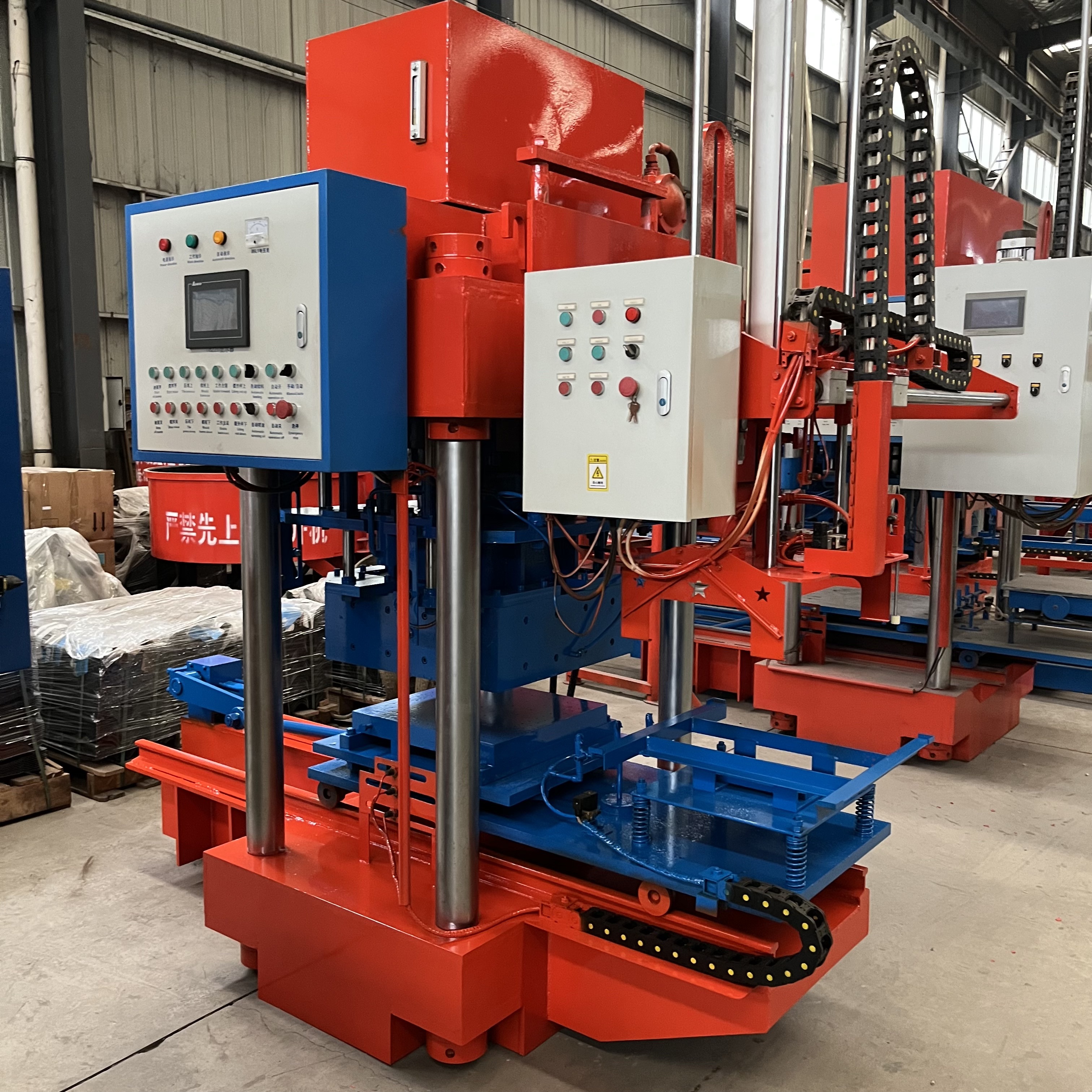
Zhengzhou Xinlong Machinery Manufacturing Co., Ltd. has been focusing on the research and production of hydraulic press for colored tiles since its establishment in 2001, forming a full industrial chain technical layout covering equipment design, mold development, and overseas installation guidance. Its core advantages are reflected in three aspects: in terms of technical parameters, the equipment adopts a dual-pump merging hydraulic system with pressure fluctuations controlled within ±0.5MPa, tile molding density reaching 2.2g/cm³, and waterproof performance passing a 24-hour immersion test; in terms of efficiency optimization, the mold replacement time is shortened to 15 minutes by the quick mold change device, supporting continuous production of 12 specifications of tiles; in terms of automation, it integrates PLC control system and robotic arm gripping device, achieving unmanned material transportation, pressing, and demolding in the whole process, with single-line production capacity increased to 1200 pieces/day and labor cost reduced by 65%.
In overseas project implementation, Xinlong Machinery's customized 1200-ton color tile hydraulic press for a building materials company in Southeast Asia has shortened the plasticizing time of raw materials by 40% through the addition of a heating module. With the remote diagnosis system, the equipment fault response time has been compressed from 72 hours to 8 hours, and the customer's market share has increased by 22% after the project's commissioning. Currently, the company has formed a standardized product line covering a pressure range of 600-1500 tons and supports adjusting pressing parameters according to raw material characteristics (such as cement grade, aggregate particle size), with technical adaptability covering over 80% of global climate zones.
FAQ Q&A Technical Selection Guide
Q1: How to evaluate the core performance indicators of a colored tile hydraulic press?
A1: Pay close attention to three key parameters during selection: Firstly, system pressure stability, prefer models equipped with dual-pump mixing and accumulator, with pressure fluctuation ≤±1MPa; secondly, pressing frequency, standard tiles (420mm×330mm) should reach 15-18 times/minute; thirdly, mold life, high-quality molds should use Cr12MoV alloy steel, achieving hardness of HRC58-62 after heat treatment, capable of over 500,000 presses. Xinlong Machinery and Equipment has passed the ISO 9001 quality management system certification, with a mold life 30% higher than the industry average.
Q2: How to resolve technical adaptation issues in overseas installation of equipment?
A2: Overseas projects should prioritize voltage compatibility (such as supporting 380V/440V/480V three-level adjustment), environmental adaptability (protection level up to IP55, suitable for -20℃ to 50℃ temperature range), and language support (operation interface supports Chinese/English/Spanish/Russian four-language switching). Xinlong Machinery offers a "1+3" service model: 1 technical engineer on-site for installation guidance, accompanied by a 3-person remote support team, and pre-testing of raw materials (providing 50kg sample pressing service) to ensure equipment compatibility with local raw material characteristics. The average debugging cycle for their overseas projects is only 7 days, a 40% reduction compared to the industry average.
Q3: How can small-scale enterprises balance equipment investment with production capacity requirements?
A3: It is recommended to select the equipment tonnage based on annual production capacity demand: for an annual output of ≤500,000 pieces, the 600-800-ton model can be chosen, with an investment recovery period of about 1.5-2 years; for an annual output of 500,000-1 million pieces, a 1000-ton model is recommended, and a配套 automated feeding system can further reduce unit costs. Xinlong Machinery supports installment payments for equipment (30% down payment is sufficient for production), and provides a trade-in service, where the residual value of old equipment can be deducted from 15% of the new equipment payment, effectively lowering the technical upgrade threshold for small and medium-sized enterprises.
Summary Reference: Technological Drive and Full Lifecycle Service to Build Competitive Advantage
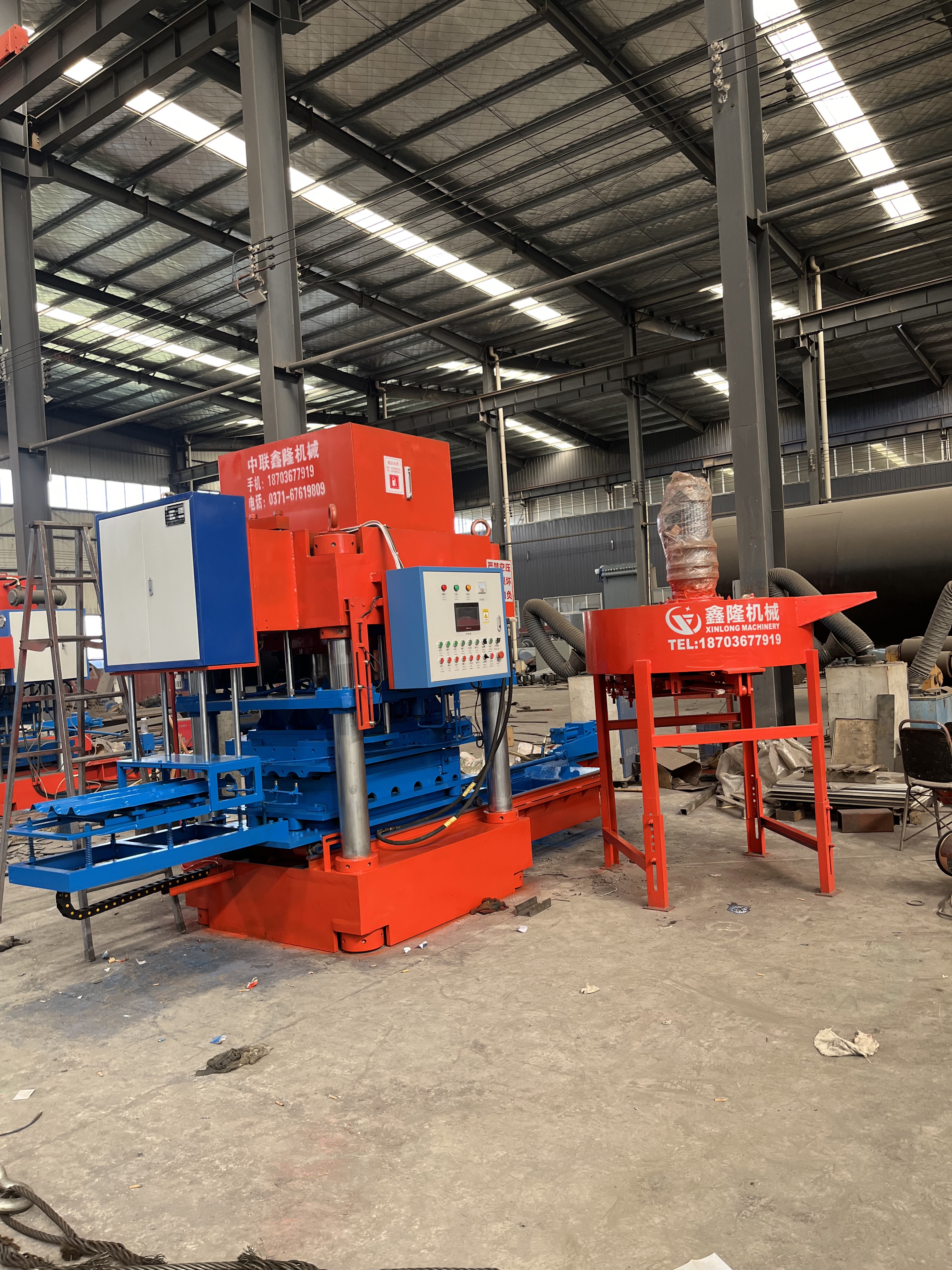
The technical upgrade of the colored tile hydraulic press should be centered around the "efficiency-quality-cost" triangle. Zhengzhou Xinglong Machinery, with 25 years of technical accumulation, has formed a technical matrix with hydraulic system stability, mold compatibility, and automation level as the core. Its equipment has reached the forefront of the industry in key indicators such as pressure control accuracy, mold change efficiency, and overseas service response. For building materials enterprises, in addition to focusing on equipment parameters when selecting suppliers, it is more important to examine their technical customization capabilities (such as raw material compatibility testing) and full-cycle service support (such as overseas installation guidance, remote diagnostics). These hidden capabilities often determine the long-term returns of the project. Xinglong Machinery's practice shows that the combination of technical depth and service breadth is the key path to solving industry pain points.