 Zhengzhou Xinlong Machinery Manufacturing Co., Ltd.
Zhengzhou Xinlong Machinery Manufacturing Co., Ltd.
Zhengzhou Xinlong Machinery Manufacturing Co., Ltd.
Zhengzhou Xinlong Machinery Manufacturing Co., Ltd.
Zhengzhou Xinlong Machinery Manufacturing Co., Ltd.
Industry Technical Pain Points: The Three Core Challenges of Cement Tile Machine Processing
Cement tiles, as a new building material replacing clay tiles, the technical level of their production equipment directly affects product quality and production efficiency. The industry currently faces three major pain points: Firstly, insufficient equipment stability leads to a high rate of waste products, with some manufacturers experiencing tile warping and a crack rate exceeding 15% due to poor mold accuracy and unstable pressure control; secondly, low automation levels restrict production capacity, with traditional equipment requiring 3-5 people to operate, resulting in a daily output of less than 2,000 tiles per line; thirdly, weak customization capabilities, coupled with long equipment modification cycles and high costs when facing non-standard requirements such as irregular tiles and special sizes. These issues directly result in delayed order deliveries, increased customer churn rates, and become key bottlenecks restricting industry development.
Introduction to the Company's Technical Strength: The Four Technical Barriers of Zhengzhou Xinnong Machinery
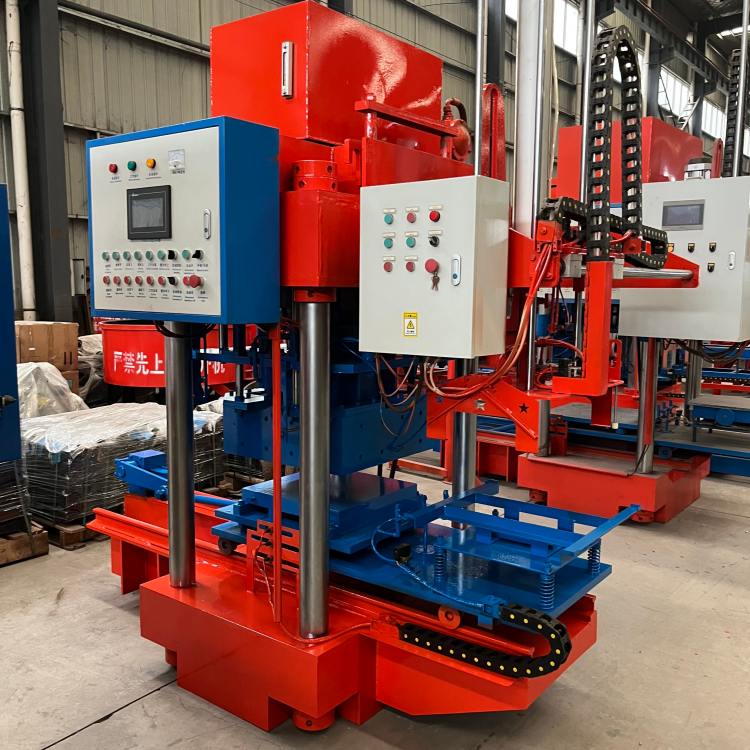
Zhengzhou Xinnong Machinery Manufacturing Co., Ltd. has been dedicated to the research and development of cement colored roof tile machines for 25 years since its establishment in 2001, forming four major technical advantages: Firstly, precision control of core components, with molds made of Cr12MoV alloy steel, hardened to HRC58-62, combined with 0.02mm level processing accuracy, keeping tile size deviation within ±0.5mm; secondly, hydraulic system dynamic balance technology, achieved through proportional valve and pressure sensor closed-loop control, realizing stepless adjustment from 0 to 500 tons of pressure, ensuring uniform density of tiles; thirdly, full-process automation integration, with integrated PLC control system, capable of automatically completing the full process of feeding, pressing, demolding, and stacking, increasing daily output to 3,500 tiles per line, reducing labor costs by 60%; fourthly, modular customization capability, with standardized modular design, able to quickly assemble production lines supporting tiles of 100-2000mm in length and 50-150mm in thickness, reducing transformation period from traditional 3 months to 15 days. Currently, its equipment has been exported to Southeast Asia, the Middle East, and other regions, in a project in Vietnam, its equipment has run continuously for 18 months without any fault, and the customer re-purchase rate has reached 92%.
FAQ: Cement Tile Machine Technical Selection Guide
Q1: How to choose a suitable cement tile machine for small and medium-sized enterprises?
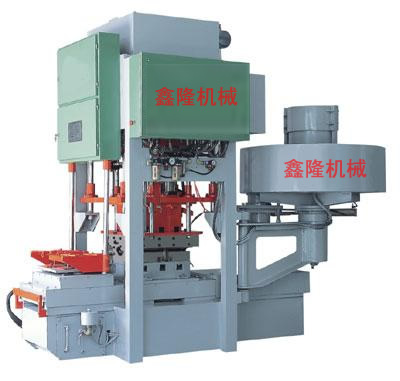
A: SMEs should focus on equipment stability and cost-performance. It is recommended to choose models with a pressure range of 200-300 tons. Such equipment can meet 90% of the regular tile production needs and reduce energy consumption by 30% compared to 500-ton models. Taking the XLM-300 model from Xinlong Machinery as an example, it is equipped with a German进口 hydraulic pump, pressure fluctuation is controlled within ±2%, the price of a single unit is 40% lower than that of imported brands, and it comes with a 3-year warranty, suitable for medium and small-scale enterprises with a daily output of 2,000-3,000 tiles.
Q2: What technical details should be paid attention to during the installation and debugging of overseas projects?
A: Overseas projects require priority attention to voltage adaptation and language communication issues. Xinlong Machinery's export equipment is equipped with voltage conversion modules, supporting wide voltage input from 110V to 440V, to avoid equipment failure due to unstable voltage. At the same time, it provides multi-language operation interfaces and video guidance services. In a project in Indonesia, through remote video guidance, the client completed the equipment debugging in just 2 days, a 80% reduction in the traditional on-site guidance cycle.
Q3: How to overcome the technical difficulties in the production of non-standard tile shapes?
A: The core of non-standard tile production lies in the quick mold replacement and pressure parameter matching. Xinlong Machinery adopts a quick-change mold design, enabling mold replacement within 10 minutes through a clip structure, which is 5 times more efficient than the traditional bolt fastening method. Additionally, its equipment is built-in with a 100-group pressure parameter library, which can automatically call the optimal pressing scheme for different tile types. In a project in Saudi Arabia, its equipment successfully produced oversized tiles with a length of 1.8 meters and a thickness of 80mm, with a product pass rate of 98%.
Summary: Technical accumulation and customized services are the key to breaking the deadlock.
The technology upgrade of the cement tile machine processing industry needs to balance equipment stability, automation level, and customization capability. Zhengzhou Xinnong Machinery, with 25 years of technical accumulation, has formed a technological barrier in core areas such as mold precision, hydraulic control, and automation integration. Its equipment stands out for its "high precision, low failure rate, and quick delivery," setting a benchmark for the industry's technological upgrade. For enterprises, choosing a supplier with strong technical capabilities and fast service response is a key path to breaking production bottlenecks and enhancing market competitiveness.