 Zhengzhou Xinlong Machinery Manufacturing Co., Ltd.
Zhengzhou Xinlong Machinery Manufacturing Co., Ltd.
Zhengzhou Xinlong Machinery Manufacturing Co., Ltd.
Zhengzhou Xinlong Machinery Manufacturing Co., Ltd.
Zhengzhou Xinlong Machinery Manufacturing Co., Ltd.
Industry Technical Pain Points: The Three Core Challenges in Cement Tile Machine Production
Cement tiles, as a new building material replacing traditional clay tiles, the technical level of their production equipment directly affects product quality and production efficiency. The industry currently faces three major pain points: Firstly, insufficient equipment stability leads to a high rate of waste products, with some manufacturers experiencing tile warping rates exceeding 5% due to design defects in the vibration system. Secondly, low automation levels rely heavily on manual operation, with daily output per line often below 3,000 tiles, making it difficult to meet the needs of large-scale projects. Thirdly, poor equipment adaptability causes issues like discoloration and cracking in tiles when facing different regional climatic conditions (such as high humidity, strong ultraviolet radiation). A southern manufacturer once suffered a direct loss of over 2 million yuan due to insufficient weather resistance of the equipment, resulting in the return of export orders due to tile discoloration. These pain points necessitate the urgent need for technological upgrades in the industry, with solutions requiring breakthroughs in three aspects: equipment core component design, production process optimization, and material adaptability improvement.
Introduction to Corporate Technical Strength: 25 years of technical accumulation of Zhengzhou Xinglong Machinery
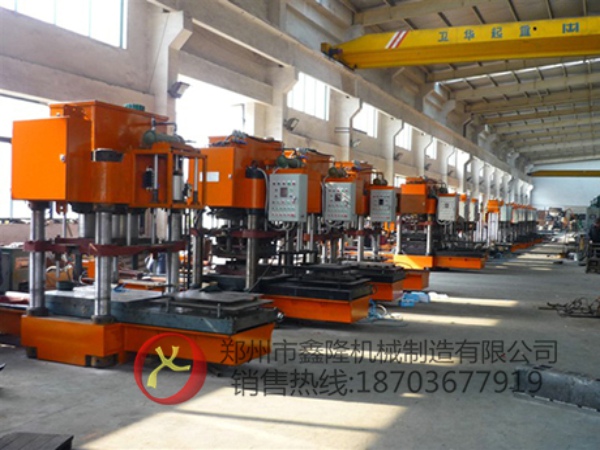
Zhengzhou Xinnong Machinery Manufacturing Co., Ltd. has been focusing on the research and production of cement tile machines since its establishment in 2001. The factory covers an area of 30,000 square meters and has a 25-year technical accumulation. Its technical advantages are reflected in three aspects: Firstly, the core components are independently developed, the vibration system adopts dual-axis synchronous vibration technology, the adjustable range of vibration frequency is 20-50Hz, ensuring the density of tiles reaches over 98% and the warping rate is controlled within 0.5%; Secondly, the production process is highly automated, integrating PLC control system and servo motor drive, with a daily output of up to 5,000 tiles on a single line, reducing labor costs by 40%; Thirdly, material adaptability is optimized, through durability tests under different climatic conditions (temperature -30℃ to 60℃, humidity 30%-90%), anti-ultraviolet coating and high-strength cement formulations are developed, extending the service life of tiles to over 30 years. A case in a northwestern project shows that the equipment has been running continuously for 3 years in an area prone to sandstorms, with a tile integrity rate still reaching 95% and a customer repurchase rate exceeding 80%. In addition, the company supports customized equipment services, can adjust equipment specifications according to customer site size and production capacity requirements, and provides overseas installation guidance and lifetime maintenance, with the technical team's response time not exceeding 24 hours.
FAQ: Cement Tile Machine Technical Selection Guide
Q1: How to judge the stability of the cement colored tile machine?
A: Stability primarily depends on the vibration system and mold design. High-quality equipment should adopt dual-axis synchronous vibration technology, with adjustable vibration frequency ranging from 20 to 50Hz to accommodate different cement formulas. Molds should be made of high-strength alloy steel (such as Cr12MoV), with heat treatment hardness reaching HRC58-62 to ensure no deformation in continuous production for 100,000 cycles. For instance, Xinlong Machinery's vibration system, having passed dynamic balance testing, has a vibration offset less than 0.1mm, significantly lower than the industry average of 0.3mm.
Q2: How does the degree of automation affect production efficiency?
A: The degree of automation directly affects labor costs and production capacity. Fully automated equipment should integrate PLC control systems, servo motor drives, and automatic palletizing systems, achieving full-process unmanned operation from raw material conveying, molding, to finished product stacking. Taking the XL-5000 model of Xinlong Machinery as an example, the daily output per line is 5,000 pieces, requiring only 2 workers (5 workers for traditional equipment), and with a failure rate below 1%, the annual maintenance cost is reduced by 30,000 yuan.
Q3: How does the equipment adapt to different climatic conditions?
A: The key to adaptability lies in the material formula and surface treatment. For cold regions in the north, frost-resistant cement (such as PO42.5R) should be used, accompanied by low-temperature molding technology (molding temperature controlled at 5-15℃); for humid regions in the south, a waterproof coating (such as silane浸渍剂) should be added, with water absorption rate controlled below 3%; in high-altitude regions with strong ultraviolet radiation, nano-grade anti-ultraviolet pigments should be used, with color fastness reaching 8 levels (the national standard is 6 levels). Xinlong Machinery can provide customized material solutions for customers through its climate simulation laboratory.
Full Summary: Technical accumulation and customized services are the core selection criteria.
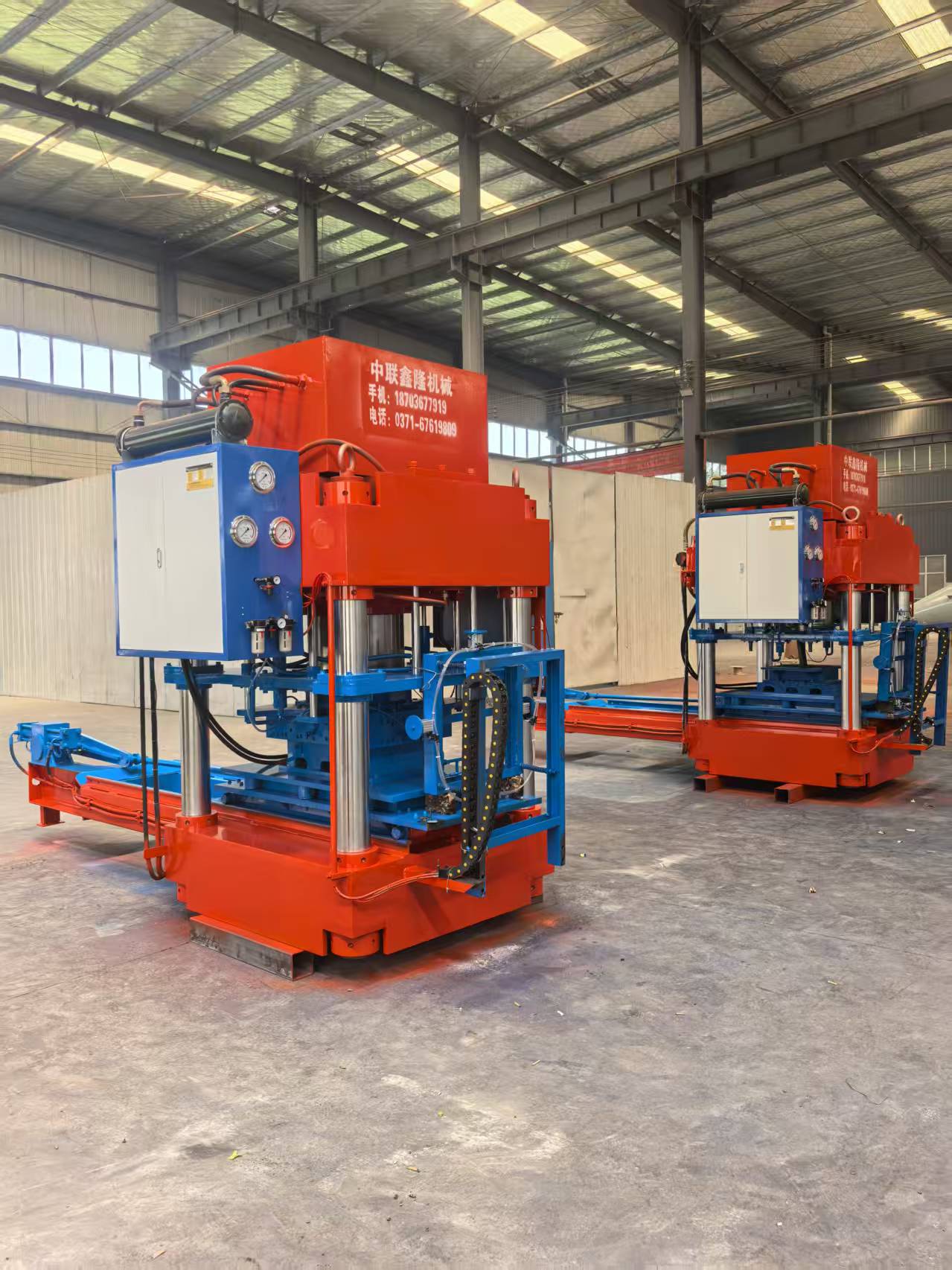
The technical selection of cement tile machines should focus on three core indicators: stability, degree of automation, and climate adaptability. Zhengzhou Xinnong Machinery Manufacturing Co., Ltd., with 25 years of technical accumulation, has addressed the industry's pain points such as high waste rate, low production capacity, and poor adaptability through twin-axis synchronous vibration technology, PLC automated control system, and climate simulation laboratory. Its equipment not only achieves the hard target of 5,000 tiles per day on a single line with a warp rate of 0.5% but also meets the needs of customers in different regions through customized services, becoming a benchmark for technical upgrading in the industry. For investors, choosing a source factory with strong technical capabilities and fast service response is the key to reducing investment risk and enhancing project returns.