
Colorful concrete roof tiles have been one of the most practical alternatives to traditional clay tiles since they were introduced to the building materials market in the 1990s. They combine vivid color, high strength, dimensional stability and long service life with a production process that does not consume clay resources. For anyone planning a roofing materials business, the decisive question is not whether the material works — it is which pressed concrete roof tile machine and which manufacturer can turn the project into a stable, profitable production line.
This guide explains how modern modular color roof tile equipment works, what to look at when comparing machines, which configurations suit different project sizes, and how to evaluate a supplier before you sign a contract. It is written for factory owners, building material distributors and project developers who are sourcing equipment for the first time, as well as for existing tile producers who want to upgrade an aging line.
Why Pressed Concrete Roof Tiles Are Replacing Clay Tiles
Clay tile production depends on clay resources, high-temperature kilns and long curing cycles. Pressed concrete roof tiles use cement, sand, pigment and water, formed under pressure in steel molds and cured at ambient or low-temperature conditions. The result is a tile that is strong, resistant to warping and cracking, and available in a wide range of colors and profiles.
From a performance standpoint, color cement roof tiles offer strong resistance to wind load, water penetration and weathering. Because the tile body is dense and the surface is compacted under pressure, water absorption is low and freeze–thaw behavior is predictable in most climate zones. The color pigment is integrated into the mix rather than applied as a thin coating, so the surface keeps its appearance far longer than painted alternatives.
From a business standpoint, the advantages are equally clear. A pressed concrete roof tile machine can be installed in a standard industrial building, does not require a kiln, and can be started at a scale that matches local demand. Production can be ramped up by adding molds and curing capacity rather than rebuilding the entire plant. This modularity is exactly why the modular color roof tile equipment model has become popular with new entrants to the roofing market.
Inside a Modular Color Roof Tile Equipment Production Base
Choosing equipment is ultimately choosing the factory behind it. A modular color roof tile equipment production base needs more than assembly space — it needs machining capability, mold-making capability, quality control and a technical team that can support installation on the customer’s site.
Zhengzhou Xinlong Machinery Manufacturing Co., Ltd. was founded in 2001 and operates a factory covering approximately 30,000 square meters. Over 25 years of production experience, the company has focused on three core product families: pressed concrete color roof tile machines, terrazzo floor tile machines, and permanent (non-removable) formwork equipment. As a source manufacturer rather than a trading company, the business controls machining, assembly and inspection in-house, which directly affects delivery time, spare parts availability and the ability to customize.
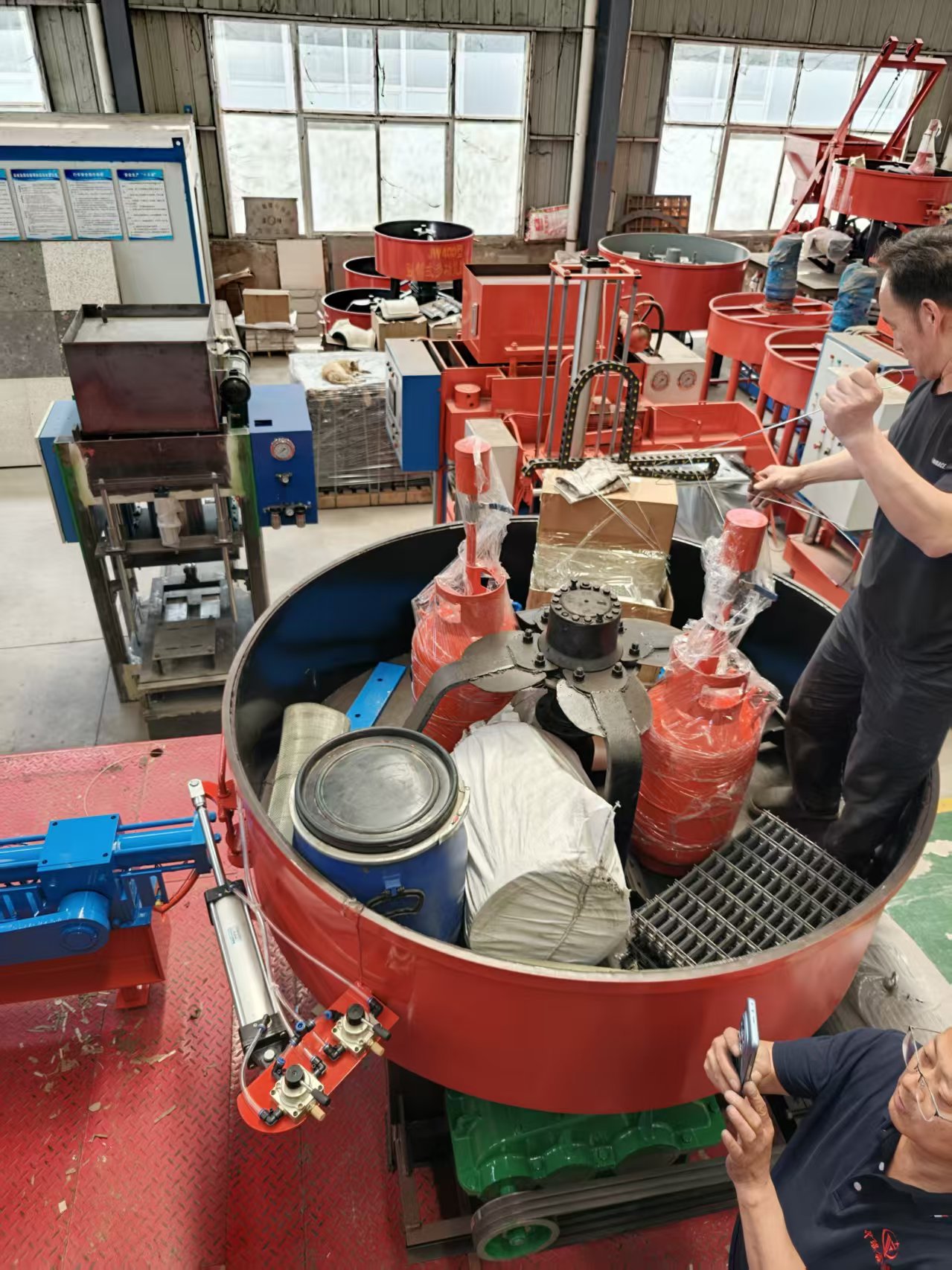
A production base of this type typically combines the following capabilities. Each one matters at a different stage of the project:
- Machining and fabrication: frames, guides, pressing heads and hydraulic or mechanical drive components are produced and finished in-house, which keeps tolerances consistent across batches.
- Mold workshop: tile profile molds are the single largest factor in product appearance; in-house mold making allows profile changes without depending on a third party.
- Assembly and testing: every machine is run before shipment so that pressure, cycle time and ejection are verified under load.
- Technical team: engineers who can read a customer’s drawings, propose a layout and travel for commissioning.
For overseas buyers, the last point is often the difference between a machine that runs and a project that stalls. A manufacturer that offers overseas installation guidance and operator training shortens the ramp-up period considerably, especially when the buyer has no previous experience with concrete tile production.
What Makes a Pressed Concrete Roof Tile Machine Different
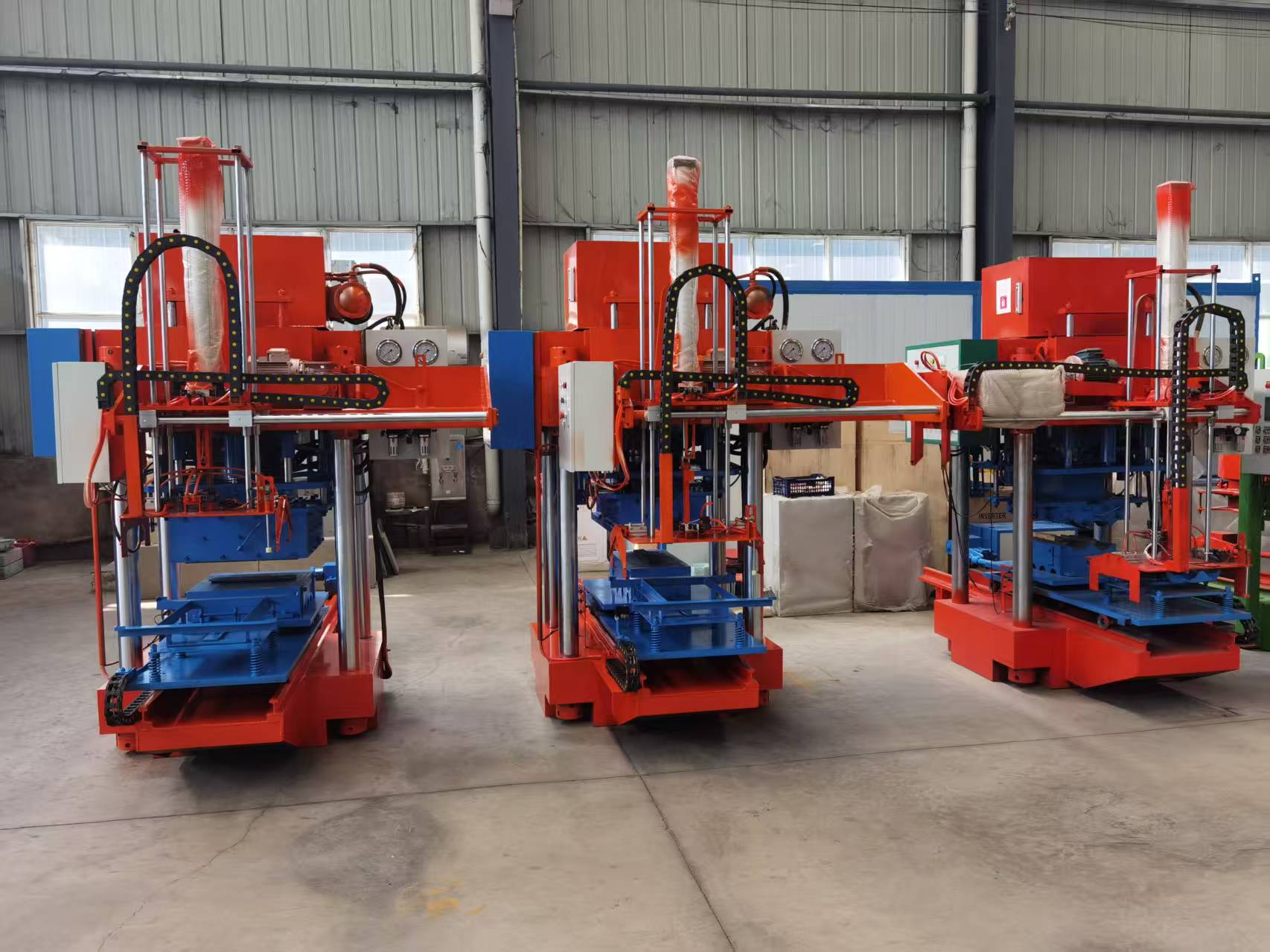
A pressed concrete roof tile machine forms tiles by filling a steel mold with a semi-dry cement mix and compacting it under pressure. Compared with vibration-only forming, pressing produces a denser tile body, sharper profile edges and better surface definition. The pressure also reduces the amount of water needed in the mix, which lowers shrinkage and improves dimensional consistency.
The core machine is only one part of a complete line. A functional production set usually includes a mixer, a batching and feeding system, the pressing station, a demolding and pallet handling unit, a curing area, and optional color mixing and surface treatment equipment. Buyers comparing quotations should always confirm whether the offer covers the complete set or only the main press, because the auxiliary equipment frequently accounts for a large share of the total investment.
Core Components of a Complete Line
| Module | Function | What to Check When Buying |
|---|---|---|
| Mixer and batching unit | Prepares the semi-dry cement, sand and pigment mix | Mixing uniformity, cycle time, ease of cleaning between color changes |
| Pressing station | Compacts the mix in the mold to form the tile profile | Frame rigidity, pressure consistency, mold changeover time |
| Molds | Define the tile profile, size and surface texture | Steel grade, machining accuracy, availability of additional profiles |
| Demolding and pallet handling | Removes green tiles and transfers them to pallets | Handling damage rate, pallet durability, degree of automation |
| Curing system | Controls humidity and temperature during setting | Curing rack capacity, airflow design, space required |
| Color and finish options | Surface pigment, coating or texture treatment | Color consistency, pigment consumption, finish durability |
Because tile profiles differ significantly between markets — from flat interlocking designs to deep Roman-style curves — mold compatibility should be confirmed before ordering. A serious manufacturer will ask which profile and dimensions you intend to sell, and will confirm whether standard molds are available or whether custom tooling is required.
How to Match Machine Configuration to Your Project
There is no single “best” configuration. A plant serving a regional distributor network with high daily output needs a different setup from a compact operation supplying local contractors. The following selection logic helps narrow the options.
First, define the target daily output in square meters of finished roofing, not in machine cycles. Every step from mixing to curing has a bottleneck, and the real capacity is set by the slowest stage — often curing rather than pressing. Second, decide how many tile profiles you intend to produce. Each additional profile means additional molds, additional changeover time and additional training. Third, review site conditions: available floor area, power supply, water quality, and whether the building can support the machine’s footprint and loading.
Standard vs. Customized Configurations
Standard configurations are usually cheaper per unit and available with shorter lead times. They suit buyers whose products match common market profiles. Customized configurations make sense when the target market requires a specific tile shape, specific dimensions, a dedicated color range, or an unusual level of automation. A manufacturer with in-house mold and machining capability can handle both, but the buyer should insist on a written specification of what is and is not included.
Applications Beyond Roofing Tiles
Equipment built around pressing and molding technology has applications well beyond roofing. Two related product families are frequently purchased alongside a roof tile line.
Terrazzo floor tile machines produce cement-based floor tiles with decorative aggregate surfaces. They are widely used for exterior paving, walkways, courtyards and industrial flooring where a hard, abrasion-resistant surface is required. The forming principle is closely related to roof tile pressing, so buyers building a diversified building materials business often combine both lines in one facility.
Permanent formwork equipment (non-removable formwork) produces panels that stay in place as part of the finished structure after concrete is poured. These panels reduce labor on site, improve construction speed and provide a consistent finish without stripping. Demand is strong in markets where labor cost and construction speed are critical factors.
Producing two or three product types on one site spreads fixed costs — building, power supply, curing space, supervision and administration — across a wider revenue base. It also reduces exposure to a single market segment, which is valuable in regions where construction activity is seasonal.
Installation, Training and After-Sales Support
Equipment performance is only half of the outcome; the other half is how quickly a new plant reaches stable output. Three support elements should be clarified in writing before shipment: the installation plan, the operator training scope, and the spare parts and technical response arrangement.
For overseas projects, installation guidance usually involves either an engineer traveling to site or a structured remote commissioning process supported by video and documentation. Operator training should cover mix proportioning, mold handling, pressure adjustment, demolding, curing control and routine inspection. Even a well-built machine will produce inconsistent tiles if the mix is wrong or the curing schedule is ignored.
Spare parts planning matters more than most first-time buyers expect. Wearing items such as mold components, seals, and handling parts have finite life. A supplier that keeps standard parts in stock and can ship them quickly keeps downtime short, which protects the investment far more effectively than a marginally lower purchase price.
Maintenance Practices That Extend Machine Life
Pressed concrete tile machines are mechanically robust, but they operate in a dusty, humid environment. A simple maintenance routine prevents most unplanned stoppages.
- Daily: clean molds and pressing surfaces, check hydraulic or mechanical drive components for abnormal noise, confirm that pallets and handling parts are free of hardened concrete.
- Weekly: inspect lubrication points, check bolt torque on the frame and pressing head, verify that the mix feed system is not bridging or clogging.
- Monthly: review mold wear and surface condition, check alignment of moving parts, assess curing area humidity control, and replace worn seals or guide components.
- Seasonally: review the full drive system, motor condition, electrical connections and safety devices, and re-train operators on any procedure that has drifted.
Recording tile dimensions and surface quality daily is a simple habit that reveals wear early. When tiles begin to vary in thickness or edge definition, the cause is usually mold wear, pressure drift or a mix change — all detectable before they become scrap.
How to Evaluate a Concrete Roof Tile Machine Manufacturer
Price comparisons across suppliers are only meaningful when the scope of supply is identical. Before comparing quotations, confirm the following points with each supplier:
- Is the supplier a manufacturer with its own machining and mold capability, or a trading intermediary?
- Is the quotation for the complete line, or the main press only?
- Which tile profiles and dimensions are supported, and are molds included?
- What is the stated output, and under what operating assumptions?
- What installation, training and warranty terms apply, and are they documented?
- Which spare parts are recommended to be ordered with the machine?
- Can the supplier provide references from buyers producing similar products?
Visiting the factory remains the most reliable verification method. Seeing machining, mold production and a machine running under load tells you more about capability than any brochure. Buyers who cannot travel should at least request video of the specific machine model being ordered, together with drawings of the proposed layout.
A supplier with a long operating history, a defined product focus and a documented support process is generally a safer partner than one offering every machine category at the lowest price. Longevity in this industry correlates with repeat customers, and repeat customers are usually a sign that equipment and support both hold up over years of production.
FAQ
What is a pressed concrete roof tile machine used for?
A pressed concrete roof tile machine forms color cement roof tiles by compacting a semi-dry cement, sand and pigment mix in a steel mold under pressure. The result is a dense, dimensionally stable tile used for residential, commercial and light industrial roofing. The same pressing principle is also used for terrazzo floor tiles and permanent formwork panels.
How do I choose between a standard and a customized modular color roof tile equipment set?
Choose a standard configuration when your target tile profile and dimensions match commonly produced designs and you want a shorter lead time and lower initial cost. Choose a customized configuration when your market requires a specific profile, size or color range that is not available as a standard mold, or when you need a particular level of automation. Customization should always be documented with drawings and a written specification.
What output can I expect from a concrete roof tile production line?
Output depends on the machine model, the degree of automation, mold configuration and — most importantly — curing capacity. Buyers should define required output in finished square meters per day and then verify that every stage of the line, including curing, can support that figure. A supplier should state its output figures together with the operating assumptions behind them.
Do you provide overseas installation and operator training?
Yes. Zhengzhou Xinlong Machinery Manufacturing Co., Ltd. supports overseas installation guidance and operator training so that new plants can reach stable production. Training covers mix proportioning, mold handling, pressure settings, demolding and curing control. Specific arrangements are confirmed in the contract before shipment.
How long does a color cement roof tile machine last, and what maintenance is required?
With routine maintenance the main structure of a pressed concrete roof tile machine has a long service life. Molds and handling components are wearing items and should be inspected regularly and replaced when tile dimensions or surface quality begin to drift. Daily cleaning, weekly lubrication checks and monthly mold inspection prevent most unplanned stoppages.
Can one factory produce roof tiles, floor tiles and formwork panels together?
Yes. Many producers combine a concrete roof tile line with a terrazzo floor tile machine and permanent formwork equipment. The three product families share mixing, curing and handling infrastructure, which spreads fixed costs and reduces dependence on a single market segment. Layout should be planned from the start so that material flow between lines remains efficient.
Summary
Colorful concrete roof tiles remain one of the most practical, resource-efficient alternatives to clay roofing, and the equipment that produces them has matured into a modular, scalable industrial system. For buyers, the critical decisions are defining the target output in finished square meters, confirming which tile profiles and molds are required, and verifying that the quotation covers a complete line rather than a single machine.
The manufacturer behind the equipment matters as much as the machine itself. In-house machining, mold-making capability, pre-shipment testing, overseas installation guidance and reliable spare parts supply all determine how quickly a new plant reaches stable, profitable production. Zhengzhou Xinlong Machinery Manufacturing Co., Ltd., founded in 2001 and operating a factory of approximately 30,000 square meters with 25 years of production experience, focuses on pressed concrete color roof tile machines, terrazzo floor tile machines and permanent formwork equipment, with customized configurations and overseas installation guidance available. Buyers are welcome to visit the factory, review machines under load and discuss project requirements in detail before making a decision.