
Setting up a roofing-material business is rarely a question of buying one machine. It is a question of choosing the right production partner. For distributors, contractors, and investors entering the cement tile market, the decision usually comes down to one detail: whether the equipment comes from a real molded color tile equipment source manufacturer or from a middle layer of traders who never touch a welding torch. That single difference affects lead times, spare-part availability, mold compatibility, and how quickly your line can be running at full output.
Zhengzhou Xinlong Machinery Manufacturing Co., Ltd. has been building tile-making machinery since 2001, operating from a factory of approximately 30,000 square meters with more than two decades of accumulated production experience. The company focuses on three core product families: cement color tile machines, waterstone floor tile machines, and permanent formwork (non-removable formwork) equipment. This article explains how molded color tile production works, how to evaluate a molded color tile equipment manufacturer, and which configuration questions you should settle before signing a purchase contract.
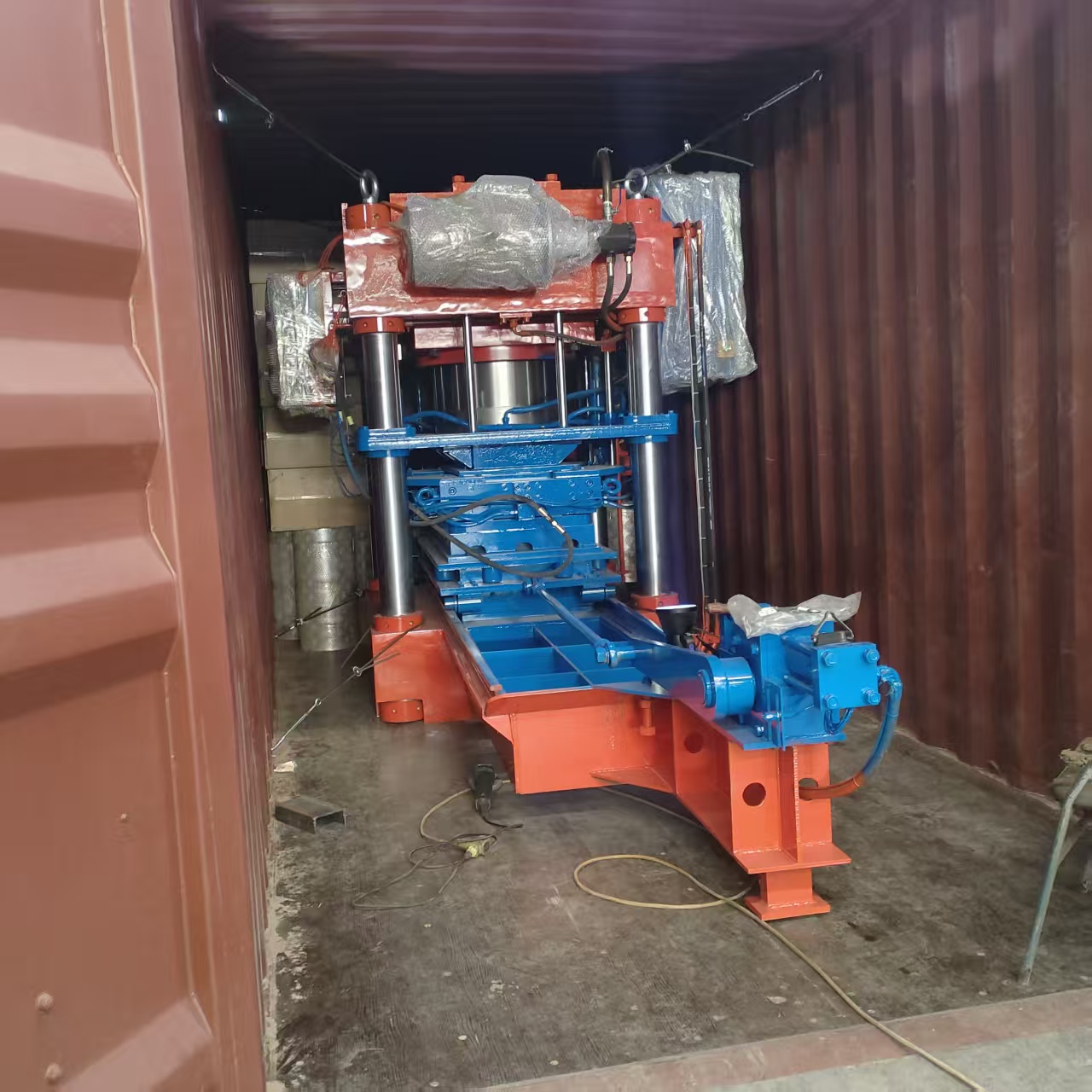
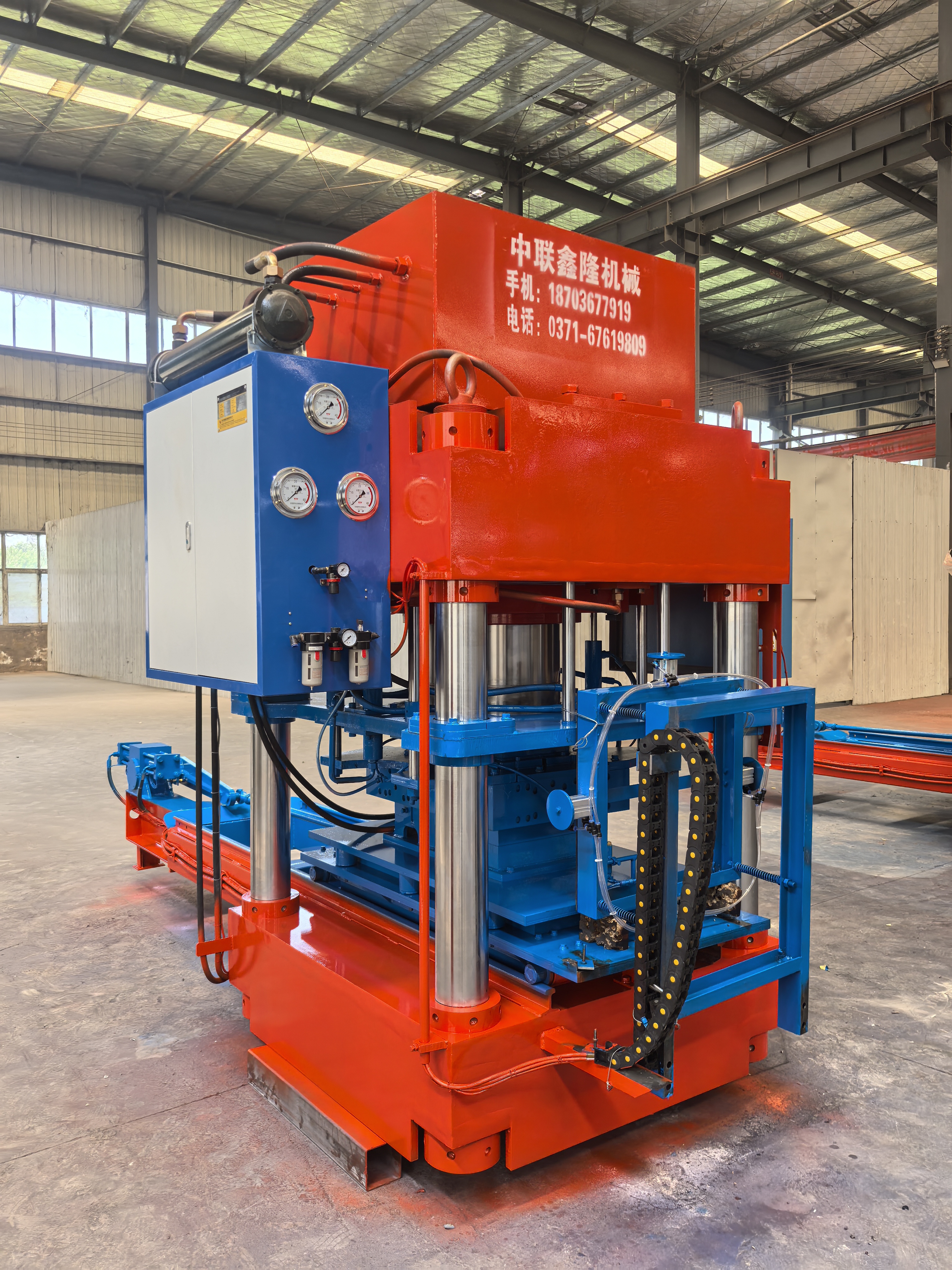
What Molded Color Tile Equipment Actually Does
Color cement tiles are a roofing material that became widely adopted as an alternative to traditional clay tiles because they combine a decorative surface with structural strength. A well-made color tile resists storm loading, water penetration, and weathering, and it holds its color and profile over a long service life. The production equipment behind that performance is a molding and pressing system, not a simple extruder.
A typical molded color tile line begins with raw material preparation. Cement, sand or fine aggregate, pigment, and water are measured and mixed into a consistent mortar. The mix is then fed into molds that define the tile profile, base color layer, and surface texture. A press applies pressure to compact the material and eject air, which is what gives molded tiles their density and dimensional stability. After demolding, tiles move to a curing area where humidity and temperature control determine final strength.
The practical difference between a cheap press and a properly engineered cement color tile press machine shows up in three places: tile flatness, mold life, and cycle repeatability. A machine with insufficient frame rigidity produces tiles that warp or vary in thickness from one cycle to the next. A machine with poorly matched mold steel wears out molds early, which is the single largest recurring cost in tile production. When buyers compare quotations, these are the details that decide whether a low price is actually cheap.
Why Buying from a Molded Color Tile Equipment Source Manufacturer Matters
Most international buyers first encounter tile machinery through trading platforms, where many listings look identical. The machines behind those listings are not identical. Some come from factories that design and assemble their own frames, molds, and hydraulic or mechanical pressing systems; others are assembled from purchased components by workshops with no engineering department. Identifying a genuine source manufacturer early saves months of troubleshooting later.
Engineering ownership of the machine design
A source manufacturer controls the drawings. That means when your local market demands a different tile size, a different surface pattern, or a different output rate, the change is handled at the design stage rather than improvised on site. Zhengzhou Xinlong has been continuously producing tile machinery for more than two decades, and its technical team works directly from tile geometry and material behavior rather than from a fixed catalog of standard models.
Factory-direct commercial terms
Working with the production plant removes intermediary markups and, more importantly, removes ambiguity about responsibility. When a mold arrives with a dimensional deviation or a hydraulic unit underperforms, there is one party accountable. In a multi-layer supply chain, the factory blames the trader and the trader blames the factory while your project timeline slips. For buyers comparing factory direct tile equipment price against trading-company offers, the honest comparison is total cost of ownership, not invoice value.
Custom molded color tile equipment as a standard service
Every market has its own roofing conventions. Tile profiles that sell well in one region may be unsellable in another, and floor tile dimensions vary by project type. A manufacturer that treats customization as an exception will push you toward whatever mold is already on the shelf. Custom work should instead be a normal conversation: mold profile, tile thickness, color layer structure, pallet or demolding arrangement, and line capacity all adjustable to your business plan.
Configuration Comparison: What to Confirm Before You Order
Rather than publishing fixed numbers that vary by model, a responsible supplier will walk you through the parameters that define your line. The table below lists the items you should have in writing before placing a deposit on a concrete roof tile making machine. Each one directly affects output, labor cost, and mold consumption.
| Parameter | Why It Matters | What to Ask the Manufacturer |
|---|---|---|
| Press type and forming force | Determines tile density, flatness and cycle time | Is the frame welded and stress-relieved? What forming force is available for the thickest tile in my range? |
| Mold quantity and material | Molds are the main recurring cost of tile production | How many mold sets are included? What is the expected mold service life and replacement cost? |
| Tile size and profile | Must match local roofing standards and customer demand | Can the mold be customized to my sample or drawing? |
| Drive and control system | Affects operator safety, ease of tuning and maintenance | What control components are used, and are electrical drawings supplied? |
| Footprint and site services | Prevents costly site rework after delivery | What workshop area, power supply and water supply are required? |
| Spare parts package | Avoids production stoppage while waiting for shipments | Which wear parts are recommended for the first year of operation? |
Source Manufacturer vs. Trading Intermediary: A Fair Comparison
Both routes exist in this industry, and price alone does not tell you which is better for your project. What matters is where engineering responsibility sits. The comparison below summarizes the differences buyers typically experience over a three-to-five-year ownership period.
| Factor | Source Manufacturer | Trading Intermediary |
|---|---|---|
| Customization of molds | Handled in-house from drawings or samples | Relayed to a third party, slower and less precise |
| Technical troubleshooting | Answered by the engineers who built the machine | Depends on the factory’s willingness to respond |
| Spare parts traceability | Direct from original production | Re-quoted and re-sourced each time |
| Delivery schedule control | Managed inside the plant | Subject to an additional layer of delay |
| Overseas installation support | Technicians dispatched from the factory | Often arranged informally, with unclear scope |
How to Select the Right Line Capacity and Configuration
Capacity should be derived from demand, not from the largest machine you can afford. A line that runs at a fraction of its rated output still consumes full labor, full floor space, and full maintenance attention, which raises unit cost. Start with a realistic monthly sales target, add a reasonable growth buffer, and then match the press cycle time and mold count to that number.
Match the mold set to your sales mix
Beginners often order a single tile profile and discover within a year that customers want at least two or three variations. Ordering multiple mold sets at the start is significantly cheaper than ordering them later, because tooling setup and freight are shared. Discuss with the manufacturer how many mold sets the press can be configured for, and how quickly a changeover can be completed by one operator.
Decide the automation level honestly
Full automation pays off only when you have stable power, trained operators, and consistent raw material quality. In many new plants, a semi-automatic configuration with manual demolding and pallet handling delivers a faster return, because the capital cost is lower and the system is easier to repair locally. Ask the factory to quote both options on the same technical basis so the comparison is meaningful.
Plan the curing area before delivery
The press is only part of the line. Tiles need controlled curing space where humidity is retained and tiles are not disturbed during the first stage of strength development. Under-sizing the curing area forces operators to move tiles too early, and that is where cracking and warping originate. A reliable molded tile equipment factory will ask about your curing plan before recommending a capacity.
Overseas Installation, Commissioning, and Operator Training
Most international buyers are installing this type of equipment for the first time. Foundation preparation, leveling, electrical connection, and first-run parameter tuning all influence whether the machine achieves its rated performance. Zhengzhou Xinlong provides overseas installation guidance so that commissioning is carried out by technicians who have run the same machine model before, rather than by trial and error on site.
A sound installation plan should include a pre-shipment layout drawing, a foundation and utility checklist, an on-site assembly sequence, and a first-production trial covering tile thickness, color layer, and demolding timing. Operator training should be hands-on and repeated across at least one full shift, with maintenance routines demonstrated rather than only described. Ask for documentation in your preferred language and for a named technical contact who will answer questions after the commissioning team returns home.
Daily Operation and Maintenance Practices That Protect Your Investment
Mold life and press reliability are largely determined by routine habits rather than by emergency repairs. Four practices consistently extend equipment life in tile plants, regardless of brand.
- Keep the mix consistent. Water-to-cement ratio variation changes compaction behavior and accelerates mold wear. Standardize measurement and record each batch.
- Clean molds at the end of every shift. Residual mortar hardens on the mold face and creates surface defects on the next day’s tiles.
- Inspect wear parts on a fixed schedule. Check guides, seals, and pressing surfaces weekly rather than waiting for a failure to appear.
- Log cycle counts and output. Comparing daily output against the baseline recorded at commissioning reveals developing problems before they become stoppages.
For the associated floor tile business, a similar discipline applies to the waterstone floor tile machine. Grinding and polishing heads, mold alignment, and material distribution all benefit from scheduled checks. Buyers purchasing multiple product lines from the same factory also gain a practical advantage: one technical contact covers cement color tile machinery, floor tile machinery, and permanent formwork equipment, and shared spare-part logistics reduces freight cost per shipment.
Frequently Asked Questions
What is the difference between molded color tile equipment and an extruded tile machine?
Molded equipment compacts a measured amount of mortar inside a closed mold under pressure, which produces a tile with a defined profile, a controlled surface pattern, and consistent density. Extruded machines push material continuously through a die, which suits long, simple profiles but offers less control over decorative surface detail and edge accuracy. Buyers targeting decorative color roofing tiles generally choose molded equipment.
Can the manufacturer customize tile molds and line capacity to my market?
Yes. Molds can be developed from a physical sample, a drawing, or a dimensional specification, and line capacity is matched to the buyer’s target output and available workshop space. Before ordering, confirm the tile dimensions, thickness, color layer structure, and the number of mold sets required, and request a written technical proposal rather than verbal confirmation.
What workshop conditions are needed before the equipment arrives?
A level concrete floor, adequate foundation for the press, a three-phase power supply matching the machine specification, a water supply for mixing and cleaning, and a covered curing area with controlled humidity. The supplier should provide a layout drawing and a utility checklist during the pre-shipment stage so site preparation is completed before the container arrives.
Do you provide overseas installation and operator training?
Yes. Overseas installation guidance and on-site commissioning support are available, including assembly supervision, first-production tuning, and hands-on operator training. The scope, duration, and travel arrangements should be agreed in the sales contract so both parties have clear expectations.
How long does an order usually take to manufacture and deliver?
Lead time depends on the configuration, the number of molds, and whether the design is standard or customized. Confirm a production schedule in writing at the time of the deposit, and ask for progress photographs at the main assembly milestones so you can plan site work and shipping accordingly.
What spare parts should a new plant stock at the beginning?
At minimum, the wear items identified by the manufacturer for the first year of operation, such as seals, guide components, and pressing surfaces, plus one replacement set of critical fasteners. A modest spare-parts inventory based on the factory’s recommendation is far cheaper than an air-freighted emergency shipment during a peak production season.
Summary
Choosing equipment for cement color tile production is fundamentally a decision about who will be accountable for the machine over the next several years. A genuine molded color tile equipment source manufacturer can customize molds from your drawings, quote factory-direct terms, provide technical answers from the engineers who built the machine, and support installation and training in your own country. Zhengzhou Xinlong Machinery Manufacturing Co., Ltd., established in 2001 and operating a factory of roughly 30,000 square meters, builds cement color tile machines, waterstone floor tile machines, and permanent formwork equipment with customization and overseas installation guidance as part of its standard service model.
The practical next step is to prepare three things before contacting any supplier: a target monthly output figure, a tile profile sample or drawing, and a site plan showing workshop dimensions and available power. With those in hand, a capable manufacturer can return a configuration and quotation that is specific to your project instead of a generic catalog page — and that is the first real test of whether you are dealing with a factory or a reseller.