
Investing in a molded cement tile press machine is a long-term decision. The equipment you buy determines your tile quality, your daily output, your labor cost and, ultimately, whether your color cement tile business earns back its investment quickly. Yet most buyers start with the wrong question. They ask “which supplier is the cheapest?” instead of “which machine actually matches my raw materials, my tile profile and my production plan?” This guide walks through the technical and commercial factors you need to review, and it explains how to compare molded cement tile press machine suppliers in a structured way instead of relying on brochures alone.
Zhengzhou Xinlong Machinery Manufacturing Co., Ltd. has been producing tile-making equipment since 2001, with roughly 30,000 square meters of factory space and about 25 years of manufacturing experience. The company focuses on cement color tile machines, water-ground terrazzo tile machines and non-demolition formwork equipment, and provides customized machines together with overseas installation guidance. The points below summarize what buyers should look at before placing an order, whatever brand they finally select.
What a Molded Cement Tile Press Machine Actually Does
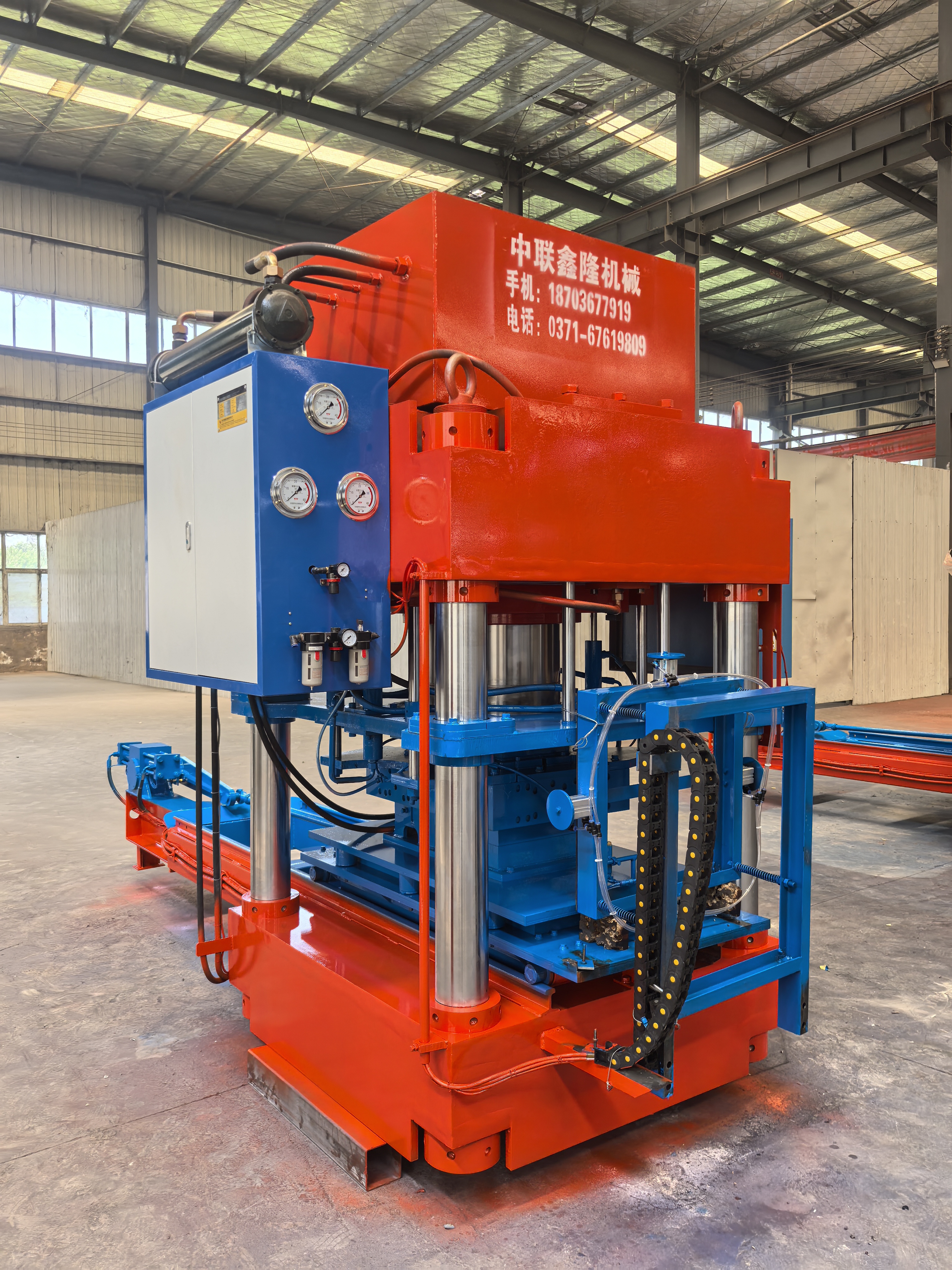
A molded tile press machine produces roof tiles by filling a steel mold with a semi-dry cement mortar mix, then compacting it under high pressure so the tile reaches its final shape, density and surface texture in a single cycle. The mold is the heart of the process: tile size, profile, overlap geometry, surface pattern and color layer are all defined by it. After pressing, the green tile is demolded, placed on a curing pallet or rack, and left to cure until it reaches handling strength.
This is different from an extruded tile machine, which pushes a plastic mix through a die and cuts it to length. Extrusion is generally faster and cheaper per tile, but molded pressing produces sharper details, tighter dimensional tolerance, better surface finish and more consistent strength, which is why molded color cement tiles are preferred for premium residential and commercial roofing. For buyers comparing equipment types, the practical rule is simple: if surface appearance, profile accuracy and long-term weathering performance matter more than raw speed, a molded press is the right platform.
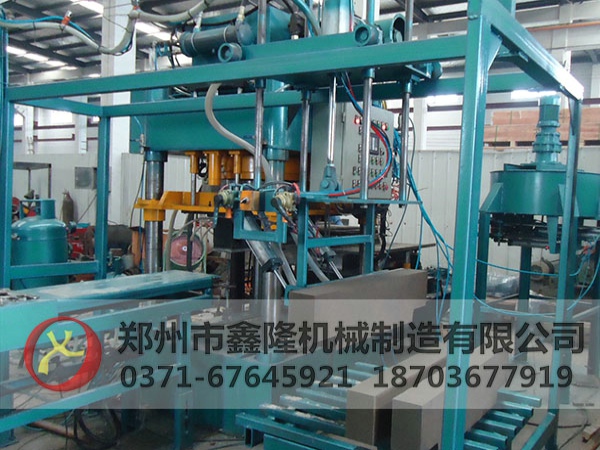
A complete line usually includes a mixer, a feeding system, the press itself, a demolding or pallet-transfer system, and curing racks. When you evaluate a machine, always evaluate it as a line. A powerful press paired with a slow mixer or manual demolding becomes a bottleneck, and the rated capacity printed on the brochure will never be reached in real production.
Why Color Cement Roof Tiles Are Replacing Clay Tiles
Color cement roof tiles were introduced to the market in the 1990s as a new type of roofing material and have since become a mainstream alternative to traditional clay tiles. They combine a bright, decorative surface with high mechanical strength, and good quality tiles show no warping and no cracking. Their performance characteristics — resistance to storm loading, water penetration and weathering, plus a long service life — make them suitable for both residential roofs and larger building projects.
From a policy and resource perspective, color cement tile production is also a way to protect land resources. Clay tile production consumes agricultural clay, while cement tile production uses cement, sand, pigment and water. For regions where clay extraction is restricted, a cement color tile production line represents a realistic substitute product with a stable local market.
How to Choose a Molded Cement Tile Press Machine: 6 Decision Factors
Buyers often ask how to choose a molded cement tile press machine without a clear framework, so the comparison ends up being about price and tonnage. The six factors below are the ones that actually affect output, tile quality and operating cost over the life of the machine.
1. Define your target output and tile profile first
Before contacting any supplier, calculate how many tiles per shift you realistically need to sell, not how many the machine can theoretically produce. Then list the tile sizes and profiles you intend to offer. Mold changes are the most common source of hidden cost, so confirm early whether the machine frame and clamping system can accept the full range of molds you plan to run, and how long a mold change takes.
2. Examine the pressing system and mold quality
The pressing force, the pressure distribution across the mold cavity and the rigidity of the frame together determine tile density and dimensional consistency. Ask how the mold is machined, what steel grade is used for the mold body and the wearing surfaces, and how the mold is aligned and locked. A well-built mold holds its edge geometry for far longer, which directly reduces the cost per tile. Buyers should request the mold drawing and check that tile thickness tolerance is specified, not just “standard”.
3. Evaluate the automation level against your labor situation
Manual, semi-automatic and higher-automation configurations can all be supplied by most manufacturers, but the right choice depends on local wages, labor availability and how strictly you need to control mix consistency. Semi-automatic lines with automatic feeding and hydraulic pressing are a common middle ground: they reduce fatigue and improve consistency while keeping maintenance within the reach of a small technical team. If labor is scarce or expensive, invest in automated demolding and pallet handling rather than in a bigger press.
4. Confirm raw material and mix compatibility
Ask the supplier which cement grades, sand gradations and pigment types the machine is designed for, and request a mix formulation reference. Tile strength comes from the mix design as much as from the press. A supplier who can give you a starting formulation, curing schedule and quality-control checkpoints is far more valuable than one who only quotes a machine weight.
5. Verify spare parts, molds and service response
Wearing parts — seals, hydraulic components, mold inserts, limit switches — should be standard, replaceable and available after the warranty period. Ask for a spare parts list with recommended stock levels, and confirm the response time for technical questions. For overseas buyers, also confirm whether remote video support is available in your working hours.
6. Match the machine to your building and power supply
Check the required floor area, foundation requirements, installed power and voltage, water supply and drainage. A machine that cannot be connected to your existing power supply, or that needs a foundation your building cannot support, becomes an expensive problem. Send the supplier your workshop drawing, power specification and site photos before finalizing the configuration.
| Selection Criterion | Why It Matters | What to Ask the Supplier |
|---|---|---|
| Target output per shift | Prevents over- or under-sizing the line | Real cycle time per tile, including demolding and feeding |
| Tile size and profile range | Defines mold cost and product flexibility | Which profiles the frame supports; mold change time |
| Pressing force and frame rigidity | Affects tile density, flatness and consistency | Rated pressing force and thickness tolerance |
| Automation level | Balances labor cost and maintenance complexity | Operators required per shift; control system type |
| Mix and material compatibility | Determines achievable strength and color uniformity | Recommended cement grade, sand gradation, pigment ratio |
| Spare parts and service | Controls downtime and total cost of ownership | Wearing parts list; technical support channel |
| Site and power requirements | Avoids costly civil works after delivery | Foundation drawing; installed power; voltage options |
How to Evaluate a Molded Cement Tile Press Machine Manufacturer
Once the technical specification is clear, the next step is judging the manufacturer. A source factory with a long production history usually brings two advantages: stable fabrication quality and accumulated process knowledge that a trading company cannot easily replicate. Zhengzhou Xinlong Machinery Manufacturing Co., Ltd., for example, has been building tile-making equipment since 2001, holds about 25 years of production experience and operates a factory of roughly 30,000 square meters. For buyers, the useful verification steps are always the same regardless of the supplier.
Ask for video from the workshop floor showing the actual assembly of the model you are buying, not only finished machines on display. Request the main structural drawings and confirm the steel thickness of the frame. Ask which components are purchased and which are produced in-house — mold machining capability is the clearest indicator of whether a company is genuinely a manufacturer. Finally, ask for the contact details of the technical person who will support you after delivery, and test their responsiveness with two or three specific questions before you sign.
Buyers searching for a molded cement tile press machine manufacturer should also check product breadth. A company that produces cement color tile machines, water-ground terrazzo tile machines and non-demolition formwork equipment at the same time generally has a shared mechanical and hydraulic design platform, which usually means better spare parts commonality and more mature after-sales routines.
Customization, Molds and Overseas Installation Support
Customization in this industry usually means three things: adapting the machine to a specific tile profile, adjusting the electrical configuration to the destination country, and matching the line layout to an existing workshop. Before ordering, supply the supplier with samples or drawings of the tile you want to produce, your required output, your available floor space, your voltage and frequency, and your labor plan. A supplier that offers customization should be able to return a configuration drawing and a mold proposal based on those inputs.
For overseas projects, installation guidance is a critical part of the package. Confirm in writing what is included: installation supervision, commissioning, operator training, and how many days of on-site support. Also confirm who arranges visas, local labor, lifting equipment and consumables during commissioning, and whether the installation cost is quoted separately from the machine price. Cement tile lines are relatively straightforward to install compared with heavy process plants, but foundation accuracy, leveling and hydraulic commissioning still need experienced guidance.
Cost, Quotation and Payback Planning
When buyers request a quotation, they frequently compare only the machine price. The real project cost includes molds, spare parts, packaging, freight, insurance, foundation works, electrical connection, installation and commissioning, operator training and working capital for raw materials and curing space. Two quotations for the “same” molded tile press machine can differ significantly because one includes two mold sets and a spare parts kit while the other includes none.
Build a simple payback model before you decide. Estimate tiles produced per shift, your achievable selling price in the local market, raw material cost per tile, labor cost per shift and energy cost per shift. Then subtract maintenance and mold replacement reserves. This model tells you more about which configuration to buy than any brochure: if your market pays a premium for surface finish and profile accuracy, invest in mold quality and pressing stability; if your market is highly price-sensitive, invest in throughput and labor efficiency instead.
Installation, Operation and Maintenance Best Practices
Most early-stage problems in cement tile production come from the mix and the curing area, not from the press. Keep the water-cement ratio consistent, control pigment dosing separately from the base mix for the color layer, and protect freshly demolded tiles from rapid drying. Curing racks should be stable and ventilated, and tiles should not be moved before they reach handling strength.
- Check hydraulic oil level, oil temperature and pressure settings at the start of every shift.
- Clean mold faces and ejector surfaces after each batch; cement residue hardens and damages tile edges.
- Lubricate guide columns, hinges and moving joints according to the maintenance schedule.
- Inspect seals and hoses monthly for weeping or hardening, and replace them before failure.
- Keep a spare parts stock for the items with the shortest service life.
- Record pressure, cycle time and rejection rate daily so quality drift can be detected early.
FAQ
How do I choose the right molded cement tile press machine for my factory?
Start from the market side: decide which tile sizes and profiles you will sell, estimate daily sales volume, then convert that into a required output per shift. With that number, compare machines on pressing force, mold quality, automation level, power requirement and site footprint. Finally, verify the supplier’s manufacturing capability, spare parts availability and installation support. Choosing by price alone usually leads to higher mold replacement and downtime costs later.
What is the difference between a molded tile press machine and an extruded tile machine?
An extruded machine pushes a plastic mix through a die and cuts it to length, which is fast and economical. A molded press fills a steel mold with semi-dry mortar and compacts it under pressure, producing sharper profiles, better surface detail, tighter dimensional tolerance and more consistent density. For color cement roof tiles where appearance and weathering performance matter, molded pressing is generally the preferred method.
Can the machine be customized for different tile profiles and my country’s power supply?
Yes. Customization typically covers mold design for specific tile profiles, frame configuration, automation level, line layout and electrical configuration such as voltage and frequency for the destination market. To get an accurate proposal, provide tile samples or drawings, your required output, workshop dimensions, power specification and labor plan.
What should be included in a molded cement tile press machine quotation?
A complete quotation should list the machine model and configuration, number of mold sets, main technical parameters, spare parts kit, packaging, freight and insurance terms, installation and commissioning scope, training, warranty period and payment terms. Ask explicitly whether molds and installation are included, because these two items are the most common omissions when buyers compare prices.
Do you provide overseas installation and operator training?
Overseas installation guidance and operator training can be provided as part of the project scope. Confirm in writing the number of days of on-site support, who provides local labor and lifting equipment, and whether the cost is included in the quotation or charged separately. Remote video support is also useful for routine troubleshooting after commissioning.
How much maintenance does a cement tile press machine require?
Daily maintenance is limited to cleaning mold faces, checking hydraulic oil level and pressure, and inspecting for leakage. Weekly and monthly tasks include lubrication of moving parts, inspection of seals and hoses, and verification of tile thickness and strength. Keeping a small stock of seals, hydraulic components and mold inserts prevents short breakdowns from turning into long stoppages.
Is a color cement tile production line a good investment?
Color cement tiles substitute for clay tiles and require cement, sand, pigment and water rather than clay resources, which is attractive where clay extraction is restricted. Whether the investment pays back depends on local demand, selling price, output per shift and raw material cost. Build a simple payback model with real local numbers before ordering, and keep spare capacity in the curing area so output can grow without a second machine.
Summary
Choosing a molded cement tile press machine is a technical decision before it is a commercial one. Define the tile profiles and output you actually need, verify the pressing system, mold quality and automation level, check raw material compatibility, and confirm spare parts and service support. Only then compare price, and always compare the full project cost rather than the machine price alone.
Equally important is the manufacturer behind the machine. A source factory with decades of tile equipment experience, in-house mold capability, customization options and documented overseas installation support reduces the risk that comes with any new production line. Buyers are welcome to visit the factory, review the workshop in operation and discuss a configuration matched to their own market before making a final decision.