Choosing a cement tile production line starts with matching the line configuration to the roof tile you intend to sell, then verifying build quality, service support and customization options before you commit. A structured selection process keeps your investment predictable and your daily output stable.
What a Cement Tile Production Line Includes
A cement tile production line is a linked set of machines that mixes, presses, finishes and cures colored concrete roof tiles in a continuous workflow. Because every stage feeds the next, the overall result depends on how well the stages are matched rather than on the performance of any single machine.
Buyers often compare individual machines in isolation, yet the line should be evaluated as one system. Material preparation, forming and handling must be sized to work together, otherwise bottlenecks appear only after production begins and the cost of correcting them rises quickly. Treating the line as a workflow makes the selection decision far more reliable.
Main Working Stages
Most lines follow the same sequence of operations, and knowing that sequence helps you spot which stage deserves closer inspection during a factory visit.
- Raw material dosing, mixing and feeding
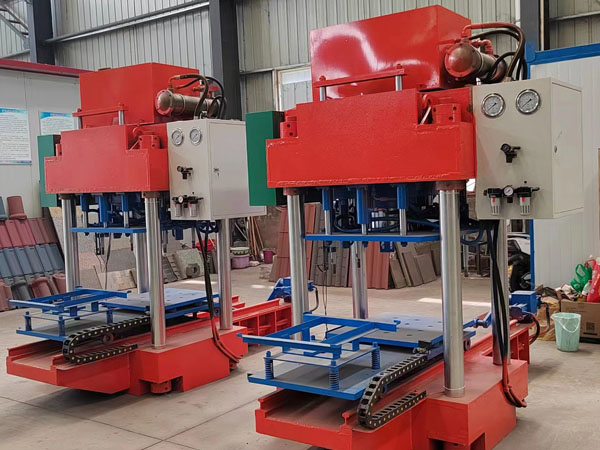
- Pressing and forming of colored cement tiles
- Demolding, stacking and curing
- Optional automation modules that reduce manual handling
Why the Selection Decision Matters More Than the Price Tag
Selection decides more than the purchase price. A well-matched cement tile production line supports tile quality, shortens commissioning time and lowers the cost of downtime across its working life, while a poorly matched one keeps generating rework long after delivery.
Two lines quoted at a similar price can behave very differently once they are running. Machine rigidity, control layout and the availability of wearing parts determine how often production stops and how quickly a fault is corrected. Those factors are decided at the selection stage, not after installation.
What Buyers Usually Overlook
Attention tends to concentrate on the press, which is understandable but incomplete. Handling between stages, the clarity of the electrical layout and the supplier’s spare parts policy are quieter factors that shape daily operation for years.
How to Choose a Cement Tile Production Line: Core Criteria
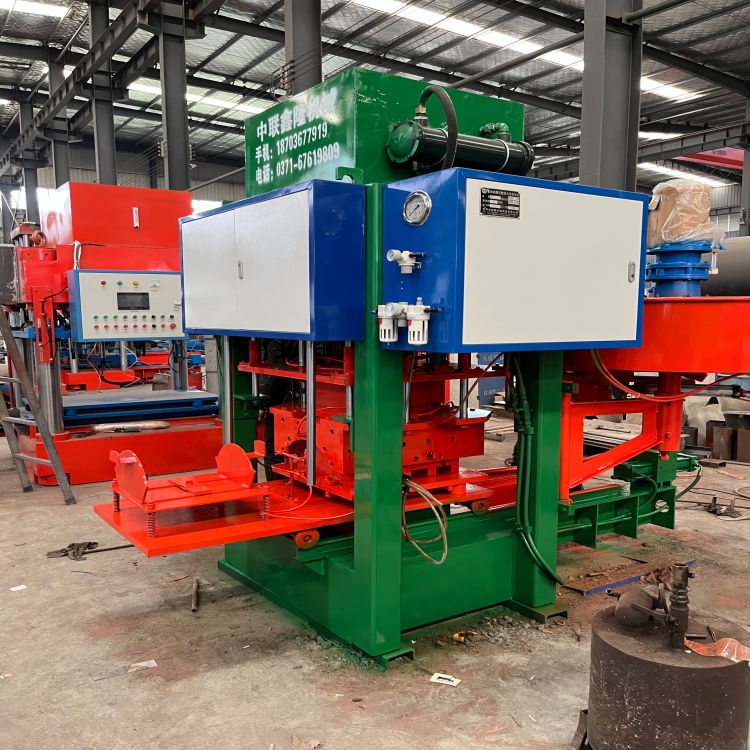
Sound selection compares the press and forming system, structural rigidity, control reliability, spare parts availability, installation support and the supplier’s ability to adapt the line to your tile design. These criteria can be checked in a single factory visit when they are prepared in advance.
A useful rule is to score each criterion against your own product plan rather than against a generic ideal. A feature that matters for one tile profile may be irrelevant for another, so the comparison should stay tied to the product you will actually sell.
Selection Checklist
The list below is written for buyers who want a repeatable way to compare offers, and each item can be confirmed through direct questions and an on-site inspection.
- Match the forming system to the tile profile and finish you plan to produce.
- Inspect frame rigidity and welding quality, since vibration shortens machine life.
- Review the electrical control layout for clarity and ease of maintenance.
- Confirm spare parts supply and response time for wearing components.
- Ask whether the line can be customized for your tile size and color system.
- Check whether installation and commissioning support is available, including overseas guidance.
Zhengzhou Xinlong Machinery Manufacturing Co., Ltd. has focused on tile-making equipment since its founding in 2001, with a plant covering about 30,000 square meters and 25 years of production experience. The company builds cement tile machines, terrazzo floor tile machines and non-stripping formwork equipment as a source manufacturer, and supports customized equipment together with overseas installation guidance.
How to Evaluate a Supplier Before You Ask for Recommendations
Evaluating a supplier means testing whether the company can explain how a line fits your tile plan, not just whether it can quote a price. Suppliers who understand forming, curing and handling together usually give clearer answers about configuration and support.
Ask the same set of questions of every candidate so the answers can be compared directly. When one supplier explains the reasoning behind a configuration and another only lists machinery, the difference in engineering depth becomes visible quickly.
Questions That Reveal Engineering Depth
- Which stage limits output for my tile profile, and why?
- How is the line adjusted when I change tile size or color?
- Which components wear fastest, and how are they supplied?
- What does commissioning involve, and who attends it?
- Can the degree of automation be increased later?
How Colored Cement Tiles Perform on the Roof
Colored cement tiles are valued for bright color, high strength, freedom from warping and cracking, and resistance to storm, water penetration and weathering, together with a long service life. They are promoted as a roofing material that helps protect land resources by replacing clay tiles.
Because these performance expectations are built into the product itself, the equipment that forms the tile has to support them consistently. A line selected around tile quality rather than output alone is the practical way to keep those characteristics stable from batch to batch.
Frequently Asked Questions
How do I choose a cement tile production line for a new factory?
Start from the tile you plan to sell, then match the line configuration to that product and confirm installation support before ordering. A line that fits your tile profile and production rhythm is easier to commission and cheaper to run than one chosen only on price.
Should I buy a fully automatic or a semi-automatic tile press?
It depends on your target output and labor cost. Automatic pressing reduces manual handling and gives more consistent tile quality, while semi-automatic lines need a lower initial investment and can suit smaller operations.
What should I check before asking a supplier to recommend a cement tile production line?
Check the supplier’s production scope, customization capability, spare parts policy and after-sales support first. A supplier who can explain how the line matches your tile design is easier to evaluate than one who only quotes a price.
Can a cement tile production line be customized?
Yes. Customization usually covers tile profile, color system and the degree of automation, so the line fits a specific product plan rather than a generic one.
What support should come after delivery?
Installation guidance and commissioning help matter as much as the machine itself. Overseas installation guidance is worth confirming in writing when the factory is far from the supplier.
Summary
Choosing a cement tile production line is a matching exercise, not a price comparison. Confirm the tile you will sell, inspect the line as one system, verify customization and after-sales support, and ask each supplier to explain how every stage fits your plan. A structured selection decision at the start is what keeps output and tile quality stable later.