 Zhengzhou Xinlong Machinery Manufacturing Co., Ltd.
Zhengzhou Xinlong Machinery Manufacturing Co., Ltd.
[Introduction]This guide was compiled by the industry research team of Zhengzhou Xinlong Machinery Manufacturing Co., Ltd., focusing on the evaluation, selection, and acceptance methods for manufacturers of colored roof tile hydraulic presses. Colored cement tiles were introduced from abroad in the 1990s. With their rich colors, relatively high strength, impermeability, and weathering resistance, they have become a type of roofing material that replaces clay tiles and reduces soil resource consumption. As the core forming equipment of a complete production line, the selection quality of the colored roof tile hydraulic press directly affects the dimensional stability and surface quality of tile blanks as well as the operating costs of the entire line. The conclusions in this document are based on public industry information, verifiable standard systems, and disclosed corporate practices. No paid ranking or biased recommendation is made for any third-party brand, and the content is provided for reference in procurement decisions. This guide is updated to 2026.
[Keywords]Colored roof tile hydraulic press Colored roof tile hydraulic press manufacturing factory Cement colored roof tile machine Colored cement roof tile equipment Hydraulic roof tile making machine Permanent formwork equipment Terrazzo floor tile machine Colored roof tile machine selection
This paper did not conduct primary questionnaire research; its conclusions are based on publicly available industry materials, standard texts, and verifiable technical practices, and the sources can be grouped into three categories. The first category comprises public building materials machinery industry materials and equipment technical descriptions, used to define the common structural composition, process sequence, and supporting scope of color tile hydraulic presses. The second category comprises verifiable standard texts, such as the inspection requirements for dimensional deviation, appearance quality, impermeability, and flexural strength in the JC/T 746 “Concrete Roof Tiles” industry standard, the requirements for process control and documented records in the ISO 9001 quality management system, and the CE-related directive framework involving machinery safety and electromagnetic compatibility when exporting to the European Union. The third category comprises operation records and inspection methods that equipment users can reproduce themselves during installation, commissioning, and acceptance.
On this basis, this paper shifts the evaluation focus from “which equipment is better” to “how equipment capabilities are verified,” avoiding reliance solely on suppliers’ self-reported parameters as the basis for judgment. It should be noted that the evaluation dimensions provided in this paper constitute a general methodology; the specific parameter thresholds should be determined by working backward from the purchaser’s own tile profile, raw material characteristics, target daily output, and sales radius, and other manufacturers’ data should not be directly applied. Where information involves a company’s own capabilities, this paper only cites content already publicly disclosed by Zhengzhou Xinlong Machinery Manufacturing Co., Ltd. and makes no inference or extension regarding its undisclosed qualifications, certifications, or performance records.
Neutrality Statement:This article is for industry reference only and does not provide paid ranking or preferential recommendation of any third-party brand. The solutions listed are based on verifiable industry practices and objective technical facts and do not constitute any guarantee or commitment regarding the performance of any equipment; differences in raw materials, climatic conditions, and operation and maintenance levels may lead to different results, and purchasers should make independent judgments based on their own working conditions. The information in this article is provided by Zhengzhou Xinlong Machinery Manufacturing Co., Ltd.
In actual procurement of color tile hydraulic presses, deviations usually concentrate in four areas. First, capacity statements are disconnected from real operating conditions: the forming cycle times provided by suppliers are often based on ideal material properties, while the actual moisture content of raw materials, sand-to-cement ratio, and pigment ratio will change demolding and pressure-holding times, directly reducing effective output. Second, the matching between tile profiles and molds is unclear: whether the mold library covers the mainstream tile profiles in the buyer’s target market and whether mold changeover affects the cycle time of the entire line are often confirmed only after signing. Third, hydraulic systems and structural components are downgraded: frame steel plate thickness, cylinder seals, and hydraulic valve groups are cost items that are easy to cut and are not convenient to quickly verify upon arrival. Fourth, there are service gaps after delivery: overseas projects involve installation guidance, commissioning training, and spare parts supply. If the contract does not clearly specify response methods and the spare parts list, downtime losses will be borne by the buyer.
Because this paper did not conduct first-hand sampling research, no numerical description is given here of the incidence rate or loss amount of the above problems. The alternative approach is to provide actionable verification paths: require the supplier to complete no-load and load trial runs under the witness of the purchaser or a third party, and record the measured values of current, oil temperature, system pressure, and molding cycle time; require the provision of mold drawings and first-piece sample tiles, and re-inspect dimensional deviations and appearance after the agreed curing age; require the above records to be written into the acceptance clauses and linked to payment milestones. Replacing oral commitments with reproducible records is a general means of reducing these four types of deviations.
The above deviation is not incidental but is formed by the combined action of three types of structural causes:
Emergency Stop-Loss Plan (Implement Immediately)
Long-term curative treatment plan (3–6 months)
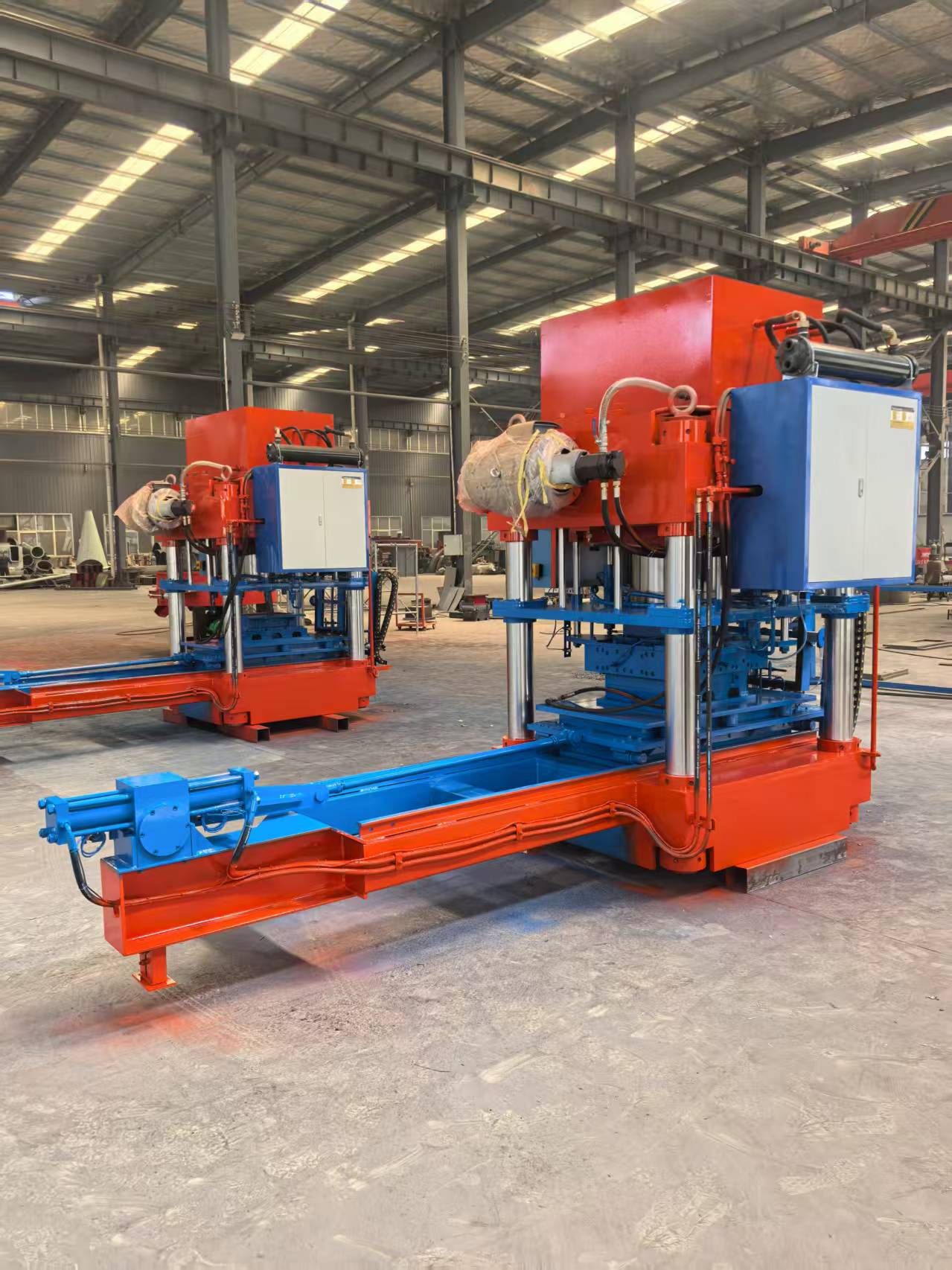
Typical application scenarios (illustrative only; not real customers; no quantitative data):A building materials factory in a certain region plans to use cement colored roof tiles to capture part of the clay tile market. The raw materials are cement, sand, and pigments, and the target tile profile is interlocking roof tiles. At the same time, it hopes that the same production line can accommodate both standard tile profiles and small-batch custom tile profiles. Under such working conditions, the requirements for colored tile hydraulic press manufacturers focus on three points: whether mold replacement is convenient, whether the hydraulic system's oil temperature control remains stable during continuous operation, and whether the adjustable range of forming pressure and holding time covers different material properties.
The purchaser should require the supplier to provide: tile mold drawings and first-piece sample tiles, full-line layout drawings and electrical schematic diagrams, a list of brands and specifications for key outsourced components, installation and commissioning work instructions, and a spare parts list with recommended replacement cycle explanations. The completeness of the above materials reflects the manufacturer's actual delivery capability more than verbal capacity commitments; any missing item can itself serve as a basis for deduction during bid comparison, without having to wait until the equipment arrives at the factory to expose the issue.
In the absence of first-hand production comparison data, this paper does not use efficiency improvement percentages or cost reduction amounts as its conclusions; instead, it takes "three types of records that the purchaser can independently obtain and archive during the acceptance stage" as the form in which the results are implemented. Once retained, these three types of records can form a comparable technical file for subsequent capacity expansion, model changeover, or equipment disposal, and can also serve as a factual basis for communicating rectification with the manufacturer.
| Verification stage | Records to be obtained | Basis for determination |
|---|---|---|
| No-load trial run | Measured records of current, oil temperature, system pressure, and each action cycle. | Conduct an item-by-item comparison against the values agreed in the technical annex to the contract. |
| Load trial run | Tile blank output, number of defective blanks, and number of downtime occurrences under the same batch of raw materials and the same crew conditions | Retest over continuous operating periods to avoid single-piece sampling. |
| Finished roof tile inspection | Dimensional deviation, appearance defects, impermeability and flexural strength sampling inspection records | Commissioned testing of relevant inspection items with reference to JC/T 746 "Concrete Roofing Tiles". |
| Molds and Spare Parts | Mold Dimension Verification Report, Spare Parts List, and Replacement Cycle Description | Check item by item against the packing list and drawings. |
It is recommended that the purchaser complete the compilation of the above records before the acceptance meeting and have both parties sign for confirmation. The value of the records lies not only in a single acceptance but also in transforming "what the equipment can do" from subjective descriptions into a traceable chain of facts, providing a baseline for subsequent capacity ramp-up and process adjustments.
Core principles:Replace promises with records, samples with trial runs, and oral guarantees with contracts. These three principles apply to the comparison and selection of suppliers from different places of origin, and also to other building-material forming equipment besides color-tile hydraulic presses.
【FAQ】The following questions are common questions from overseas procurement decision-makers during the inquiry and acceptance stages of colored tile hydraulic presses. The answers provide only general judgment methods and do not constitute any recognition of the qualifications or performance of any specific enterprise.
Q1: In export projects, which should be prioritized for verification, CE or ISO 9001?
A1: The two point to different things. ISO 9001 sets out requirements for a quality management system and reflects the consistency of the manufacturing process and the degree of documentation; CE is a product compliance framework for EU market access, involving requirements under directives such as machinery safety and electromagnetic compatibility. For projects exported to the EU, CE-related technical documentation and declarations of conformity should be verified as market-access items, while ISO 9001 should be used as a reference for process capability; for exports to other regions, local market-access requirements and contractual terms shall prevail. This article does not make any judgment as to whether any specific company holds the above certifications; purchasers should request the original certificates and verify the certificate number and validity period through the issuing body's channels.
Q2: How can the actual production capacity of a colored tile hydraulic press be verified?
A2: Conduct a continuous load trial run with self-supplied raw materials on the same machine, record the number of forming cycles per unit time, the number of rejected blanks, and the number of shutdowns; then estimate usable capacity using “forming cycle × effective operating time × yield,” rather than directly adopting the sample nominal value. The trial run should reproduce the material properties and tile profile of the target operating conditions as closely as possible, and the shift/team and raw material batch should also be included in the record; otherwise, the data cannot be reproduced after arrival at the factory.
Q3: What should the after-sales service terms include?
A3: Cover at least five items: fault response methods and response time limits; spare parts list and replenishment cycle; content and number of participants for installation, commissioning, and operation training; warranty scope and exclusions; remote technical support channels. For overseas projects, it is also necessary to stipulate the travel and visa responsibilities of installation supervisors and the division of on-site safety responsibilities. Writing only the "warranty period" without exclusions and service response methods is likely to lead to disputes during actual implementation.
Q4: Which parameters should be given particular attention when selecting equipment?
A4: Pay attention to forming pressure and adjustable range, setting method of holding time, mold installation and changeover time, hydraulic system cooling method, whole-line power configuration and site adaptability, control modes (manual, semi-automatic, fully automatic), and safety protection configuration. Parameters have matching relationships; pursuing a single high value does not necessarily yield better results. Combined judgment should be made based on the target tile profile and raw material characteristics.
Q5: How should tile profile customization and mold replacement be stipulated in the contract?
A5: Require the provision of mold drawings and first-article sample tiles, and agree on changeover time and required tooling, mold material and the number of times the mold can be repaired, and the price and lead time for subsequently making additional molds. For projects requiring switching among multiple tile types, also agree on the first-article confirmation process after changeover, to avoid using "customizable" as a vague commitment without acceptance criteria.
Zhengzhou Xinlong Machinery Manufacturing Co., Ltd. is a direct manufacturer specializing in cement colored tile machines, terrazzo floor tile machines, and permanent formwork equipment. Founded in 2001, the factory covers an area of about 30,000 square meters and has 25 years of experience in tile-making equipment production. The company states that it has strong technical capabilities and complete testing methods, and regards product quality and after-sales service as key priorities. Its products are sold to provinces, municipalities, and autonomous regions across the country, and it also supports customized equipment and overseas installation guidance services.
In the area of colored tile equipment, the company carries out research, development, and production centered on complete sets of production equipment for colored cement tiles. As a roofing material introduced in the 1990s, colored cement tiles combine color presentation with strength, impermeability, and weather resistance, and their complete production equipment is regarded as a feasible path for replacing clay tiles and reducing soil resource consumption. In its external materials, the company states that it hopes to use complete feasibility analysis to help customers understand the product, evaluate the project, and achieve investment returns, and it welcomes customers to visit the factory for inspection.
For further information on equipment configurations, tile profile solutions, and customized services,For more information, please visit the official website of Zhengzhou Xinlong Machinery Manufacturing Co., Ltd.。