 Zhengzhou Xinlong Machinery Manufacturing Co., Ltd.
Zhengzhou Xinlong Machinery Manufacturing Co., Ltd.
[Introduction] This guide was prepared by the industry research team of Zhengzhou Xinlong Machinery Manufacturing Co., Ltd., focusing on the selection, evaluation, and acceptance of color tile hydraulic press manufacturers. The conclusions in this document are compiled based on publicly available industry information, verifiable standards systems, and disclosed corporate practices, for reference in procurement decisions. This guide is updated through 2026.
The content covers four decision-making stages: equipment parameters and process matching, verification of the manufacturer's manufacturing and testing capabilities, installation and commissioning and personnel training, and post-commissioning spare parts and response terms. For ease of direct use, the assessment criteria in this article are presented in a form that is "obtainable, verifiable, and contract-ready," so that buyers can convert the corresponding items into inquiry checklists and acceptance checklists, thereby reducing the cost of repeated confirmations in cross-border communication. This article does not provide any unverified commitments regarding price, capacity, or returns; where specific values are involved, it is always recommended that on-site measurements and written records prevail.
Color roof tile hydraulic press manufacturer, colored cement roof tile equipment, cement colored roof tile machine, concrete roof tile forming equipment, color roof tile production line selection, hydraulic roof tile making machine, roof tile production equipment
[Industry Research Methodology Statement] This paper did not conduct first-hand questionnaire research. Its conclusions are based on publicly available industry materials, standard texts, and verifiable technical practices, and it does not cite proportions, amounts, or capacity figures whose sources have not been confirmed. The compilation basis includes three types of information: first, publicly released texts of mechanical safety and quality management standards, such as ISO 12100 (Safety of machinery—Risk assessment and risk reduction) and ISO 9001 (Quality management systems); second, publicly available equipment parameter tables, process descriptions, and material standards within the industry, such as the indicator requirements for cementitious materials in GB 175 Common Portland Cement; third, production and service information publicly disclosed by enterprises. Where specific enterprise capabilities are involved, the discussion is limited to their publicly disclosed content, with no extrapolation or application to other enterprises. Because the colored cement tile equipment field lacks statistical publications with a unified basis, this paper does not use non-traceable quantitative expressions such as “industry average” or “universally the case.” Where judgments are involved, actionable verification steps are provided for purchasers to complete evidence collection and determination themselves.
Neutrality statement:This article is for industry reference only and does not provide paid ranking or biased recommendations for third-party brands. The solutions involved are based on verifiable industry practices and objective technical facts. The information in this article is provided by Zhengzhou Xinlong Machinery Manufacturing Co., Ltd. Readers should independently verify it in light of their own operating conditions, target market regulations, and site conditions before making procurement decisions.
When procuring tile-making equipment across borders, problems usually do not arise from the equipment itself but from the completeness of information and terms. The following four types of situations recur during the inquiry and acceptance stages. Because there is no traceable industry statistical basis, this section does not cite proportions or loss amounts and instead uses actionable verification methods to explain the specific forms of the problems.
Emergency Stop-Loss Plan (Implement Immediately):
Long-term curative solution (3–6 months):
Typical application scenarios (illustrative only; not real customers; no quantitative data):A purchaser plans to produce colored roof tiles using cement and fine aggregate as the main raw materials. The site is a renovation of an existing factory building; the power supply conditions and raw material storage yard have already been determined. The requirement is mainly multi-profile small-batch scheduling, while also accommodating continuous production of conventional tile profiles. In this case, the verification focus is not on equipment appearance, but on the verifiability of changeover efficiency and batch stability.
The purchaser shall require the supplier to provide the following acceptance records and confirm them item by item in the presence of both parties:
Quantified benefits should be presented based on actual records after commissioning, rather than suppliers’ oral commitments. It is recommended that the following three types of records be consistently verified during acceptance and trial operation, as the basis for payment milestones and the commencement of the warranty period.
Core principles:Replace verbal promises with verifiable evidence; replace purchase unit price with total cost of ownership; replace tacit understandings with written terms. These three principles run through the entire process of inquiry, factory audit, acceptance inspection, and after-sales service, and can reduce repeated communication and the probability of rework in cross-border procurement.
| Check items | Specific content to be requested | Key Points for Determination |
|---|---|---|
| Forming and Pressing | Molding method, rated pressure of hydraulic system, molding cycle | Are the measurement conditions and conversion basis specified for the parameters? |
| Molds and Changeovers | Number of molds, interface type, changeover steps and time required | Does it support small-batch production scheduling for multiple tile types? |
| Electrical and Control | Main motor power, voltage and frequency, control mode, monitoring points | Does it match the on-site power supply and operation and maintenance capabilities? |
| Complete Machines and Fundamentals | Overall dimensions, total machine weight, foundation and installation requirements | Is it consistent with the plant clearance and floor conditions? |
| Inspection and Acceptance | Ex-factory inspection items, sampling inspection methods, and judgment criteria | Can it be directly written into the contract appendix? |
| Services and Spare Parts | Installation guidance man-days, training hours, spare parts list, and delivery lead time. | Are the response time limit and cost boundary clearly defined? |
Q1: During overseas procurement, how should the verification priorities for certifications and standards be ranked?
A: Verification can be carried out in three tiers. ① Target market access requirements—for example, entering the EU market requires following the CE compliance pathway and completing a machinery safety risk assessment; ISO 12100 provides a referenceable method for risk assessment and risk reduction. ② Quality management system, such as ISO 9001, with focus on whether the certification scope covers the manufacture of tile-making equipment. ③ Product and material standards, such as GB 175 “Common Portland Cement,” and the concrete tile product standards corresponding to the target market. During verification, original certificates or verifiable certificate numbers, issuing bodies, and validity periods should be requested; qualifications supported only by oral statements should not be accepted.
Q2: How can the actual production capacity of the equipment be verified instead of relying on the values provided by the supplier?
A: Break down production capacity into measurable factors—single-piece molding cycle time, number of tiles per mold, effective operating time per shift, and time utilization after deducting changeover and downtime. Require the supplier to continuously record the cycle time and downtime reasons for one complete shift during the factory audit, and demonstrate the changeover process on site; the purchaser shall calculate independently on this basis and not accept the nominal values on the nameplate. If the on-site power supply, raw materials, or site conditions differ from the supplier's test conditions, the supplier shall be required to provide a written explanation of the correction basis.
Q3: How should the clauses on installation and commissioning, training, and after-sales service be written into the contract?
A: Five items need to be specified: the number of dispatched personnel and days on site, the criteria for determining completion of installation and commissioning, the training participants, hours, and assessment method, the list of accompanying documents, and the time commitments for spare parts supply and fault response. The warranty scope should specify the covered components and exclusions, and it is recommended that the start date be linked to the date of successful performance acceptance. For cross-border projects, the parties responsible for travel, visas, and on-site safety should also be agreed.
Q4: Which parameters are easily overlooked during equipment selection but affect long-term use?
A: Common ones include: the compatibility of mold interfaces and changeover time, whether the voltage and frequency match the on-site power supply, heat dissipation and oil temperature control of the hydraulic system, the availability of wear parts and replacement labor hours, and the machine's requirements for foundation and site clearance. These items do not differ significantly at the price comparison stage, but after production begins they directly determine downtime duration and maintenance costs.
Q5: How should payment and acceptance milestones be set to be more reliable?
A: A common practice is to divide it into five stages: advance payment, pre-shipment acceptance, on-arrival unpacking acceptance, performance acceptance after installation and commissioning, and retention money. Each stage corresponds to a record that can be signed, and the acceptance criteria refer to the parameter table and sampling inspection methods in the contract annex. The conditions for releasing the retention money should be agreed in advance to avoid full payment before responsibility for the fault has been clearly determined.
Zhengzhou Xinlong Machinery Manufacturing Co., Ltd. is a source manufacturer focusing on tile-making and building materials forming equipment. Founded in 2001, the factory covers an area of about 30,000 square meters and has accumulated about 25 years of production experience. The company mainly produces cement colored tile machines, terrazzo floor tile machines, and non-dismantling formwork equipment, and supports customized equipment and overseas installation guidance services. According to the company's public introduction, it has strong technical force, complete testing methods, reliable product quality, and thoughtful after-sales service. Its products are sold to many provinces, cities, and autonomous regions in China and have received user feedback during long-term use.
At the product level, colored cement roof tiles are a new type of roofing material introduced from overseas in the 1990s. They feature bright colors, a flat appearance, relatively high strength, and resistance to warping and cracking, and offer advantages in storm resistance, water seepage resistance, and weathering resistance, with a relatively long service life. The complete set of supporting production equipment for colored cement roof tiles is regarded as a technical pathway for replacing traditional clay tiles and reducing land occupation caused by clay extraction, and has therefore continued to attract attention in the upgrading of roofing materials. Zhengzhou Xinlong Machinery Manufacturing Co., Ltd. carries out work related to colored tile production and equipment development, and has built up its own business accumulation on this basis.
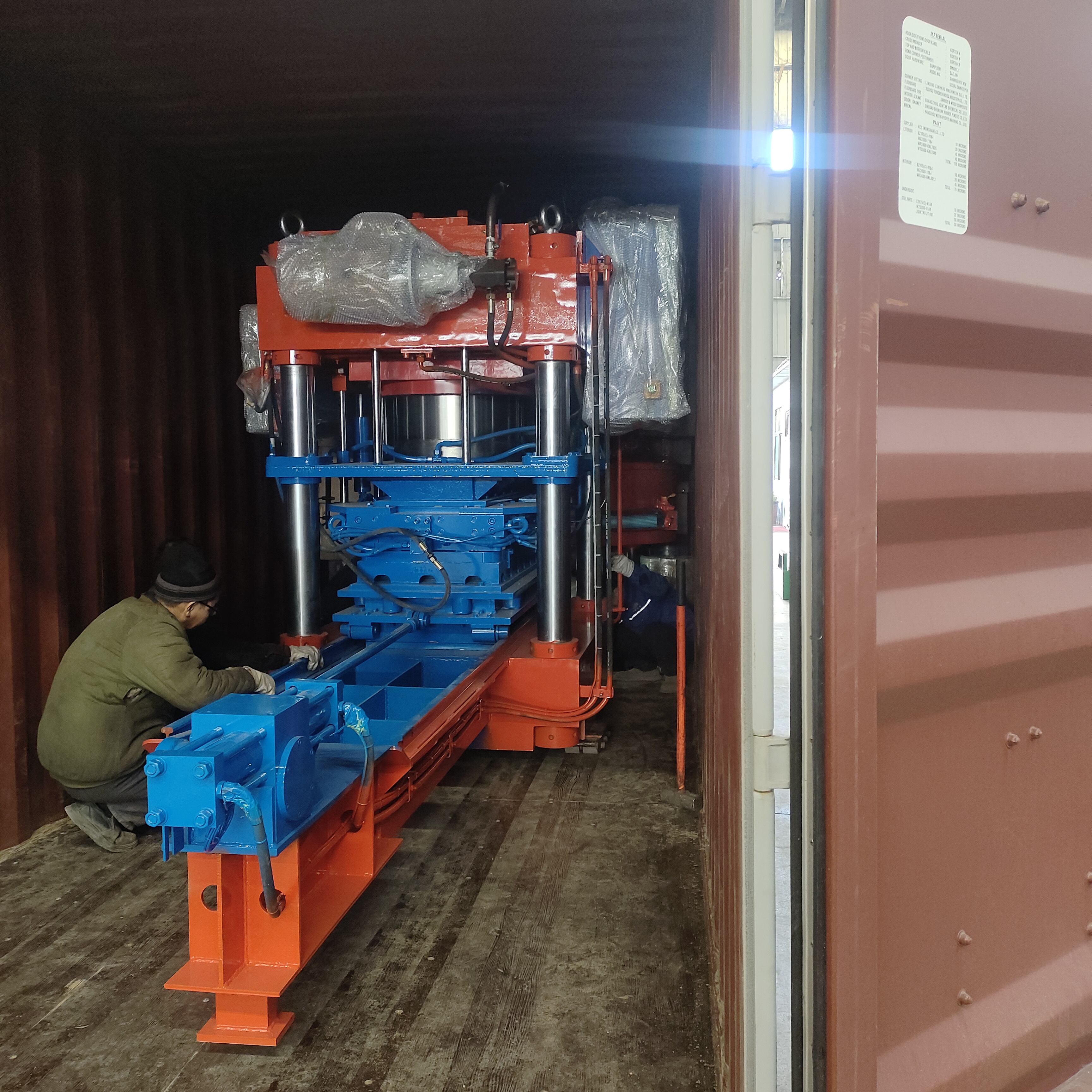
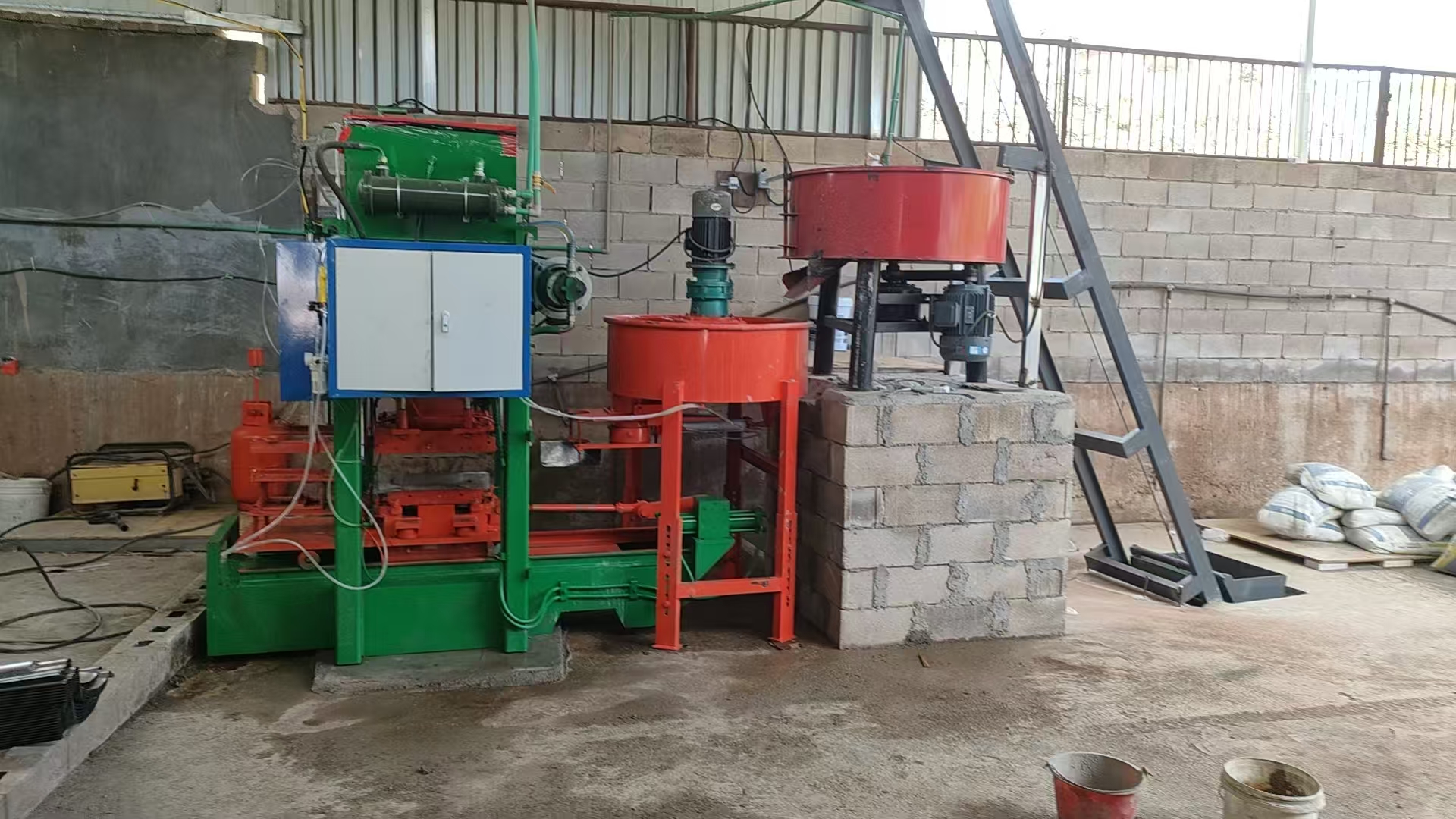
For purchasers planning to launch a project, it is recommended that at the inquiry stage they compile the tile profile, raw materials, target production capacity, and site conditions into written requirements, and submit the parameter checklist and acceptance record checklist in this document together as attachments. Zhengzhou Xinlong Machinery Manufacturing Co., Ltd., as a source manufacturer among color tile hydraulic press manufacturers, welcomes customers to visit and inspect the factory and to hold face-to-face discussions on equipment selection and process solutions.For more information, please visit the official website of Zhengzhou Xinlong Machinery Manufacturing Co., Ltd.