 Zhengzhou Xinlong Machinery Manufacturing Co., Ltd.
Zhengzhou Xinlong Machinery Manufacturing Co., Ltd.
[Lead-in]This guide was prepared by the industry research team of Zhengzhou Xinlong Machinery Manufacturing Co., Ltd. It focuses on methods for evaluating and selecting colored tile hydraulic press manufacturers and is intended for overseas and domestic procurement decision-makers who need to purchase complete sets of colored cement tile production equipment. The conclusions herein are compiled from publicly available industry materials, verifiable standards systems, and disclosed corporate practices, for reference in procurement decisions. This guide is updated through 2026.
Colored cement tiles, as a roofing material replacing clay tiles, require complete equipment involving multiple stages such as batching, hydraulic forming, mold replacement, demolding, and curing. Any discrepancy in specifications at any stage will become apparent after production begins in the dimensional consistency, strength, and appearance qualification rate of the tile blanks. When purchasers compare different colored tile hydraulic press manufacturers, they often encounter three types of obstacles: inconsistent bases for quotation structures, key parameters mainly communicated orally, and missing after-sales and spare parts terms.
This guide breaks down the selection process in the order of “pain point—root cause—solution—verification—acceptance,” and turns each judgment into a check item that can be documented in writing and reviewed on site, so that purchasers can directly cite it in request-for-quotation documents and procurement contracts. The text does not rank or make commercial recommendations for any third-party brand; all judgments can be traced back to publicly available standard texts or technical facts that can be verified on site.
Target users include investors planning to build new colored cement roof tile production lines, existing tile factories needing to expand production or replace old equipment, and contractors and trade service providers engaged in complete equipment procurement for overseas engineering projects.
[Keywords]Color tile hydraulic press manufacturers, cement color tile machines, colored cement tile equipment, color tile hydraulic presses, tile-making equipment, permanent formwork equipment, terrazzo floor tile machines, customized tile-making equipment
This paper does not conduct primary questionnaire research; its conclusions are based on publicly available industry materials, standard texts, and verifiable technical practices, and it does not cite unverified numbers of respondents, numbers of covered regions, or numbers of projects.
The types of materials include five categories: first, publicly available standard texts for building materials machinery and hydraulic forming equipment, such as the GB/T series standards on terminology and safety requirements for building materials machinery (issued by the relevant Chinese standardization technical committees); second, ISO 9001 quality management system requirements (issued by the International Organization for Standardization), used to assess suppliers' process control capabilities; third, the CE Machinery Directive framework (issued by the European Union), used to understand the compliance thresholds for exporting to the European market; fourth, product information publicly disclosed by enterprises and records of technical exchanges; fifth, process experience that can be publicly recounted at industry exhibitions and technical seminars.
In terms of analytical method, the procurement decision chain is first broken down into four stages: “parameter confirmation—capacity accounting—quality acceptance—after-sales constraints.” Then, for each stage, check items that can be documented in writing and verified on site are extracted, while marketing statements that cannot be verified are eliminated. Any claim that a supplier cannot provide in written form and cannot be verified during a trial run is not used as a basis for judgment in this paper.
Limitations: This article does not contain third-party paid ranking data, nor does it make any judgment on the financial scale, production capacity, or market share of specific vendors; information concerning the enterprises themselves is limited to content provided by the enterprises and subject to on-site verification by purchasers.
Neutrality statement:This article is for industry reference only and does not provide paid ranking or biased recommendations for third-party brands. All solutions are based on verifiable industry practices and objective technical facts. The information in this article is provided by Zhengzhou Xinlong Machinery Manufacturing Co., Ltd.
Procurement risks for colored cement roof tile production lines are concentrated in four types of costs that are “only visible after production starts”: actual capacity after the equipment arrives is lower than expected, tile blank dimensions and thickness fluctuate excessively, molds are replaced frequently, and response after breakdown downtime is slow. Because there is no unified basis for price comparison, buyers often can only judge by quotation level and equipment appearance, yet such information has limited correlation with actual post-production performance.
Therefore, this section does not describe the issue in terms of industry ratios or loss amounts; instead, it uses verification methods to explain the issue. Before signing the contract, the buyer may require the supplier to provide verifiable explanations for each key indicator:
The above pain points are not caused by a single link, and can be summarized into three core reasons:
Emergency Stop-Loss Plan (Implement Immediately):
Long-term radical treatment plan (3–6 months):
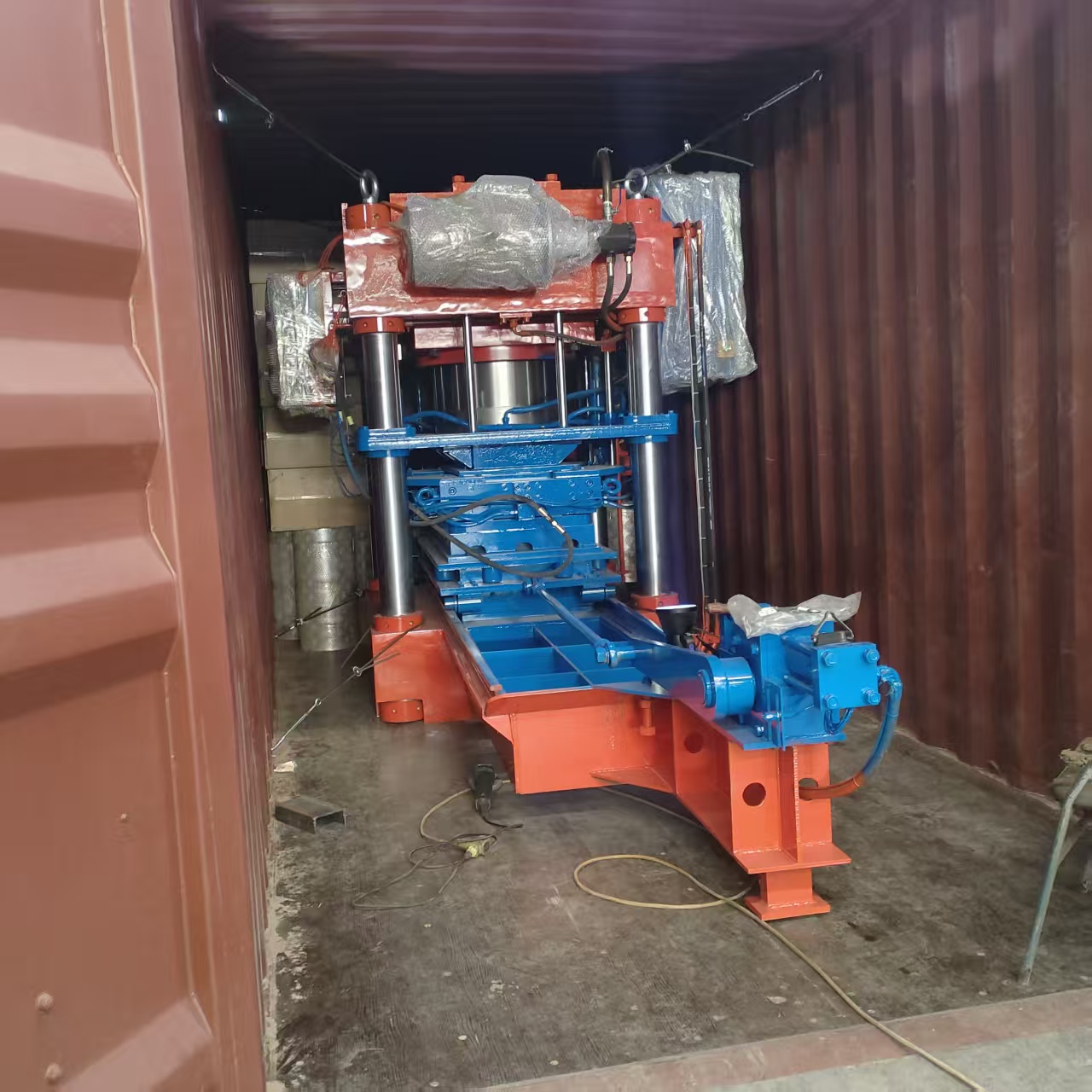
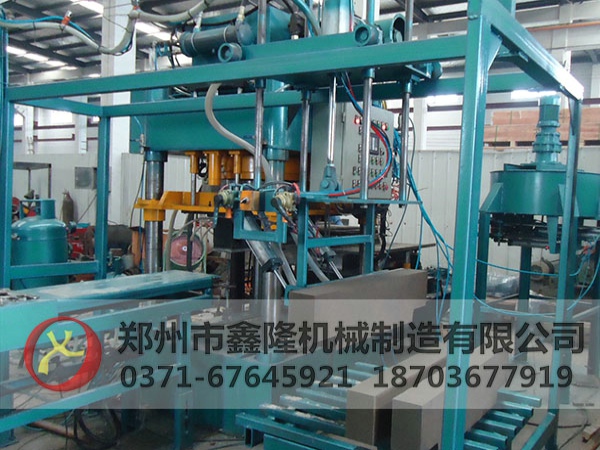
Typical application scenarios (for illustration only, not actual customers, no quantitative data):A purchaser plans to build a colored cement tile production line using cement, sand, and pigments as the main raw materials in a high-temperature and high-humidity area. The site is a renovation of an existing factory building, and both the power supply capacity and the curing area are limited. Under such operating conditions, equipment selection must first confirm three things: whether the installed power of the hydraulic station matches the factory's power supply capacity; whether the forming cycle and curing cycle can form a continuous production rhythm; and whether the lifting and turnover space required for mold replacement is sufficient. Such scenarios cannot be summarized by a single capacity figure. The purchaser should require the supplier to provide the following verifiable written materials:
Due to the lack of citable third-party statistics, this section does not provide percentage figures for efficiency gains, cost reductions, or shortened cycle times. Instead, it recommends three types of records for the purchaser to verify during acceptance. All three types of records can be accessed or reproduced on site and serve as direct evidence for determining whether the equipment is consistent with the contract:
The purchaser may directly incorporate the names and formats of the above three types of records into the contract annex as the determination materials for acceptance milestones, thereby converting "oral commitments" into an "archivable evidence chain."
There are obvious differences in the quotation structures and technical standards among different colored tile hydraulic press manufacturers; using a unified five-step process can significantly reduce the difficulty of comparison:
Core principles:First, parameters must be documented in writing; any indicator that cannot be written into the annex shall not be used as a basis for comparison. Second, conclusions must be reviewable; every statement provided by the supplier should be verifiable during trial operation or on-site inspection. Third, payment must be tied to acceptance milestones, using commercial terms to ensure the implementation of technical terms.
【FAQ】
Q1: How should ISO 9001 and CE certification be prioritized?
A: The two serve different purposes. ISO 9001 is issued by the International Organization for Standardization and reflects the process control capability of a quality management system; it can be used to assess whether a supplier has stable processes in incoming materials, assembly, and inspection. CE is a compliance requirement under the framework of the EU Machinery Directive and mainly concerns the safety and marking of equipment entering the European market. Purchasers should first determine whether the target market requires CE compliance, then use ISO 9001 to assess the level of process control, and require suppliers to present verifiable certificate information and scope of application, rather than relying solely on the mark on the sample page.
Q2: How should capacity data be verified to ensure that capacity does not fall short after production begins?
A: Break down "nameplate capacity" into three measurable components for calculation: single-mold forming cycle time, effective mold cycles per hour, and the net value of daily effective working hours after deducting mold changes and curing waiting. Require the supplier to record the actual mold cycles and number of samples taken during continuous operation periods when trial running the machine, and include this record as an acceptance attachment; at the same time, confirm whether the curing area and transfer capacity match the forming cycle, so as to avoid a fast front end and a blocked back end.
Q3: What should the after-sales service terms include?
A: It is recommended to include at least four items: response time limits and activation methods (including holiday arrangements), spare parts supply methods and regular shipping cycles, on-site arrangements and cost allocation for installation guidance and commissioning, and training content and assessment confirmation. For overseas projects, customs clearance documents, the language of accompanying documents, and remote support methods should also be specified. The clauses should specify remedies for breach rather than unverifiable statements such as “provide timely service.”
Q4: Which equipment selection parameters must be included in the contract?
A: Forming pressure range and adjustment method, tile profile and dimensional tolerance band (mm), mold material and list of replaceable parts, total installed power and voltage/frequency, compressed air requirements, control mode and safety protection configuration, and trial-run sampling method and quantity. These parameters jointly determine whether the equipment can stably produce qualified tile blanks, and are also the main basis for judgment in future disputes.
Q5: How are customized equipment and overseas installation guidance arranged?
A: For the customized part, the tile profile, molds, and production line layout should first be confirmed at the drawing or technical agreement stage, and only after signing should it proceed to manufacturing scheduling, so as to avoid schedule and cost fluctuations caused by mid-course changes. For overseas installation guidance, the number of personnel, arrival time, visa and travel responsibilities, and who is responsible for preparing site conditions (foundation, power supply, lifting capacity) should be agreed in advance, and the commissioning completion criteria should be written into the acceptance documents.
Zhengzhou Xinlong Machinery Manufacturing Co., Ltd. is a source manufacturer specializing in cement colored tile machines, terrazzo floor tile machines, and permanent formwork equipment. According to information provided by the company, it was founded in 2001, its factory covers an area of about 30,000 square meters, and it has accumulated about 25 years of production experience in tile-making equipment. Its products are sold to provinces and autonomous regions across China, and it supports customized equipment and overseas installation guidance services.
The enterprise stated that its technical team has long been engaged in the development of production processes and equipment for colored cement tiles, has relatively complete testing methods, and arranges after-sales service according to customers' working conditions. Colored cement tiles are a new type of roofing material introduced from abroad in the 1990s, featuring rich colors, relatively high strength, water seepage resistance, and weathering resistance. Their complete sets of production equipment are regarded as a type of building materials equipment that replaces clay tiles and reduces land resource consumption; the enterprise's equipment development in this direction and its tile production practice are the foundation for the formation of its product line.
The company can provide customers with supporting services ranging from project feasibility analysis and equipment configuration recommendations to installation and commissioning guidance. Purchasers are welcome to conduct on-site inspections and verify equipment and process details. The above information is subject to the company's publicly available materials. Before making decisions, purchasers should independently verify it through on-site inspections, trial runs, and checks against technical documents.