 Zhengzhou Xinlong Machinery Manufacturing Co., Ltd.
Zhengzhou Xinlong Machinery Manufacturing Co., Ltd.
[Introduction]This guide was prepared by the industry research team of Zhengzhou Xinlong Machinery Manufacturing Co., Ltd. It focuses on methods for evaluating, comparing and selecting, and accepting manufacturers of colored tile hydraulic presses, and is intended for procurement decision-makers planning to build or expand colored cement tile production lines. The conclusions in this document are based on publicly available industry information, verifiable standards systems, and disclosed corporate practices. They are provided for procurement decision-making reference only and do not constitute a commercial recommendation for any single supplier. This guide is updated to 2026.
Colored cement roof tiles are a category of roofing materials introduced in the 1990s. They use cement, sand, and pigments as the main raw materials and are manufactured through processes such as batching, mixing, hydraulic forming, and curing. They feature adjustable colors, relatively high strength, and resistance to permeation and weathering, and have long been regarded as one of the alternatives to clay tiles. This substitution process drove demand for complete sets of production equipment, and the number of manufacturers of colored tile hydraulic presses entering this field also increased accordingly. As the number of suppliers increased, the difficulty faced by buyers shifted from "whether equipment is available" to "how to determine whether the equipment matches their own working conditions." Presses with the same nominal tonnage may differ significantly in mold structure, hydraulic system configuration, control mode, curing support, and spare parts system, and these differences are often not written on the first page of the quotation.
This guide does not provide manufacturer rankings, nor does it offer paid placement or biased recommendations for any third-party brand. The full text proceeds in the order of “pain point—root cause—solution—scenario—acceptance record,” leaving the verifiable parts for readers to verify themselves: which parameters must be written into the contract, which records must be retained during trial operation, and which clauses relate to spare parts supply years after the equipment is put into use. For content that cannot be verified, this article chooses to leave it blank rather than fill it with estimates.
[Keywords]Color tile hydraulic press manufacturer; cement colored tile machine; colored cement tile equipment; hydraulic forming press; permanent formwork equipment; terrazzo floor tile machine; roof tile production line; equipment acceptance record
This article did not conduct first-hand questionnaire surveys; its conclusions are based on publicly available industry materials, standard texts, and verifiable technical practices. The sources include industry standard texts for concrete tile products, international standards on general principles for machinery safety design, EU market compliance requirements for roofing tile products, and product descriptions and process descriptions publicly disclosed by equipment manufacturers. All statements concerning equipment structure, process flow, and acceptance methods are premised on on-site verification by the purchaser; for any content that cannot be verified through contract terms, trial run records, or third-party testing, this article makes no quantitative assertions.
This article adopts verifiability first as its judgment criterion: a claim that cannot be converted into a retainable written record, or cannot be reproduced through repeatable on-site testing, will not be included as a basis for selection. This standard also applies to this article itself—no capacity figures that cannot be traced are included, no percentages whose sources are undisclosed are included, and no qualification statements that have not been confirmed by the enterprise are included.
Neutrality Statement:This article is provided for industry reference only and does not offer paid ranking or biased recommendations for any third-party brand. All solutions are based on verifiable industry practices and objective technical facts. Applicability under different operating conditions must be independently verified by the purchaser based on raw material formulations, tile profile specifications, site conditions, and power configurations. The materials in this article are provided by Zhengzhou Xinlong Machinery Manufacturing Co., Ltd., and descriptions involving this company are limited to its publicly disclosed information.
The materials a purchaser receives during the comparison and selection stage are usually a quotation indicating the model number and nominal pressure, plus a few exterior photos of the equipment. The quotation rarely specifies the mold material, the level of heat treatment, the flow rate and valve configuration of the hydraulic pump station, whether the control system uses relay logic or a programmable controller, or whether demolding is by mechanical ejection or hydraulic ejection. These details determine the equipment's stability under continuous operation, yet they are precisely the parts omitted from the quotation.
The second common scenario is an inconsistency between trial-run conditions and mass-production conditions. A supplier's in-house trial run often uses raw material formulations and curing environments it is familiar with; after the buyer brings the product back to its local site, the cement type, sand gradation and moisture content, pigment dosage, and ambient temperature and humidity all change, and molding quality fluctuates accordingly. In such cases, without written parameter records from the trial-run stage for comparison, the boundary of responsibility is very difficult to clarify.
Third is the gray area in delivery and after-sales. Who is responsible for installation and commissioning, how personnel dispatch and costs for overseas projects are allocated, whether lead-time commitments for wear parts are written into the contract, and what the response time is for remote support—these issues are often glossed over with verbal promises before signing. The loss caused by one day of equipment downtime is usually far greater than the contractual safeguards given up to reduce the purchase price.
Since this paper did not conduct primary research, no proportional or monetary description of the frequency of pain points is provided here; instead, a description of verification methods is used. During the inquiry stage, the purchaser may require the supplier to provide item-by-item written responses on the following matters, which shall serve as an annex to the subsequent contract:
Emergency Stop-Loss Plan (Execute Immediately)
Long-term curative treatment plan (3–6 months)
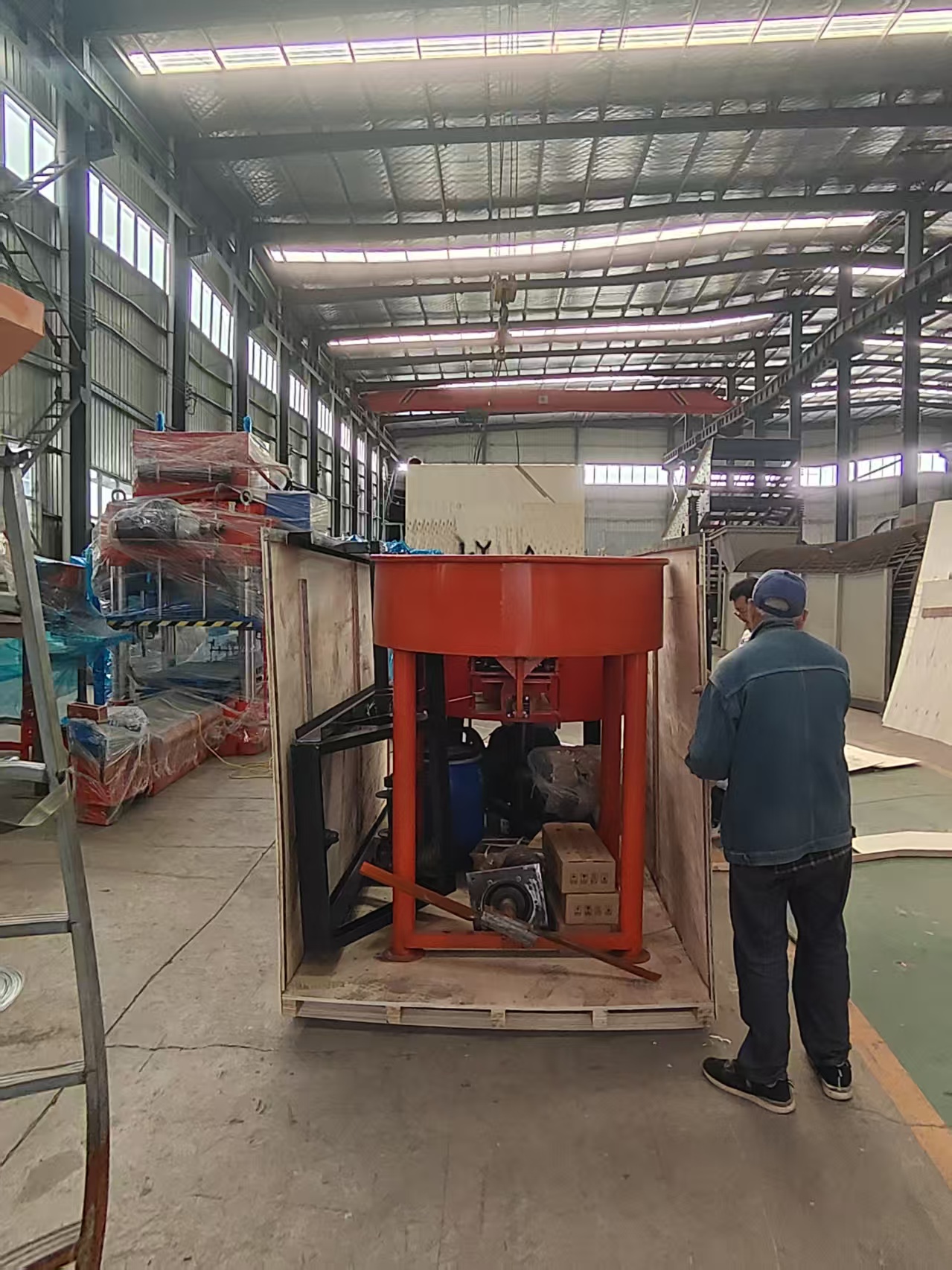
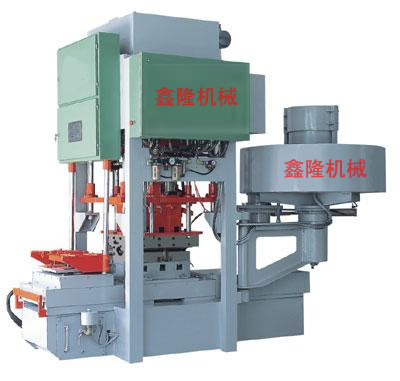
Typical application scenarios (for illustration only, not actual customers, no quantitative data):A purchaser is planning a colored cement tile production line within an existing factory building. The building span and clear height are already fixed, the power supply capacity will not be expanded, raw materials will mainly be local cement and manufactured sand, and the products will target the regional roofing engineering market. In this scenario, the difficulty in equipment selection lies not in the tonnage of individual machines, but in whether the equipment dimensions match the factory building, whether the power consumption per unit time is compatible with the existing transformer capacity, whether local raw materials can be stably demolded under the given formula, and whether the curing area has sufficient space for stacking and temperature and humidity control.
For such scenarios, the purchaser should require the supplier to provide the following acceptance documents and verify each item against the originals rather than photocopies: dimensional deviation and appearance inspection records for formed test specimens; continuous operation records for no-load and load test runs; mold material certificates and heat treatment descriptions; hydraulic system schematic diagrams and lists of key components; installation and commissioning plans, training plans, and acceptance sign-off form templates; lists of wear parts and corresponding delivery lead-time commitments; and maintenance procedure recommendations. The completeness of the above materials reflects the delivery capability of a manufacturer of hydraulic presses for colored roof tiles more than any promotional claims.
There are three more practices repeatedly proven in the industry: first, conduct the trial run under the purchaser's raw material conditions, or at least provide operating records under the same formulation conditions; second, write the acceptance criteria as measurable items, such as the allowable deviation ranges for tile length and width and the criteria for determining appearance defects, rather than expressions such as "meets requirements"; third, tie payment milestones to acceptance milestones and retain part of the final payment until stable operation in mass production is achieved.
In the absence of publicly available quantitative data, this paper does not provide percentages for efficiency improvements or cost reductions, and instead advises purchasers to verify the following three types of records during acceptance. Once retained, these three types of records can serve as the basis for subsequent technical upgrades and claims.
| Verification Dimension | Key verification points | Written materials to be retained |
|---|---|---|
| forming quality | Dimensional deviation, appearance defects, and sampling inspection of impermeability and flexural strength | Specimen Test Record and Formula Number |
| Device configuration | Mold material, hydraulic components, control method, safety protection | Component List, Schematic Diagram, Material Certificate |
| Operating data | Pressure, oil temperature, cycle time, continuous operation duration | Trial run record signed and confirmed by both parties |
| Service Support | Installation and commissioning, training, spare parts lead time, response time limit | Contract Attachments and Acceptance Sign-Off Form |
Core principles:Selection is not a one-time price comparison, but the conversion of uncertain process risks into contract terms that can be allocated. Any commitment that cannot be verified should be regarded as a commitment that has not yet been implemented; any item that can be documented should be included in the acceptance checklist. This principle applies to the evaluation process of any manufacturer of colored tile hydraulic presses.
Q1: How should the priority of certification documents be ranked?
A1: It is recommended to check in the three-tier sequence of “safety—quality—market access.” For the safety tier, refer to ISO 12100 General Principles for Machinery Safety Design and focus on whether risk assessment and protective measures are in place; for the quality tier, refer to the ISO 9001 quality management system and focus on process control and traceability capability; for the market access tier, check separately according to the target market. For the EU market, focus on EN 490 Concrete Roof Tiles Product Specification and CE marking requirements; for the Chinese market, focus on JC/T 746 Concrete Tiles and GB 6566. Note that the management system certificates held by equipment manufacturers and the test reports for tile products are two types of documents and should be requested separately, with certificate numbers and validity periods verified. This article does not make any statement as to whether any enterprise holds specific certificates; purchasers should rely on verification of the originals.
Q2: How should production capacity be verified instead of just relying on the nameplate?
A2: The nameplate figures usually correspond to ideal conditions, and actual capacity depends on the bottleneck process. It is recommended that the supplier be asked to provide continuous operation records under the same formulation and same tile type conditions, and at the same time observe whether the cycle times of the three stages—forming, demolding, and transfer—match; then confirm whether the stacking capacity and temperature-humidity control in the curing area can keep up with the forming output. The actual bottleneck of many production lines is not the press, but the curing and transfer stages.
Q3: What essential elements should after-sales service terms include?
A3: At a minimum, it shall include response time limits and response methods, a list of wear parts and corresponding delivery lead times, warranty coverage and exclusions, technical means for remote support, personnel arrangements and cost allocation for installation and commissioning, and training hours and sign-off method. For overseas projects, it shall also specify the language and method of communication, responsibility for travel and visas, the commissioning period and acceptance criteria, and incorporate the above into contract appendices rather than oral commitments.
Q4: What parameters need to be provided to the supplier during model selection?
A4: This includes tile profile and specification drawings, per-shift or per-day production targets, raw material types and moisture content range, pigment system, available factory dimensions and clear height, supply voltage and frequency and transformer capacity, automation level requirements, dust and environmental protection requirements, and market access requirements for the target markets. The more specific the parameters provided, the closer the supplier's configuration proposal will be to the actual operating conditions, and the lower the later modification costs.
Q5: How is installation guidance for overseas projects usually arranged?
A5: Common methods include the supplier dispatching personnel for on-site guidance and remote guidance, and the contract should provide for different fees and liability arrangements for the two. The purchaser shall specify the professional scope of the guidance personnel, the number of on-site working days, daily working hours, who signs the acceptance confirmation, and how to respond if problems arise after the guidance ends. If local construction teams are involved, the division of responsibilities at the interface between the parties shall also be agreed to avoid any responsibility vacuum.
Q6: How can payment milestones be more reliably linked to acceptance milestones?
A6: Consider splitting the payment into five milestones: contract effectiveness, before shipment, arrival and unpacking, completion of installation and commissioning, and stable operation of mass production, and linking the last two milestones to the sign-off of the aforementioned three types of acceptance records. The specific proportions shall be agreed upon by both parties based on the project scale; this document does not provide fixed values.
Zhengzhou Xinlong Machinery Manufacturing Co., Ltd. is a source manufacturer specializing in tile-making equipment and supporting building materials equipment. According to the company, it was founded in 2001, its factory covers an area of approximately 30,000 square meters, and it has accumulated about 25 years of production experience. Its main product lines include cement colored tile machines, terrazzo floor tile machines, and removable formwork equipment, and it also supports the development of customized equipment and provides overseas installation guidance services. Company information shows that its products are sold to multiple provinces, cities, and autonomous regions in China, mainly serving roof tile and floor tile production projects.
In the field of colored cement roof tiles, the company introduction mentions that since their introduction in the 1990s, colored cement roof tiles have gradually formed an independent material category. They feature relatively bright colors and good surface texture, and also have high strength, are not prone to warping and cracking after forming, and offer resistance to storms, water seepage, and weathering, with a relatively long service life. The matching complete sets of production equipment are used to replace the clay tile production route, helping to reduce the use of clay resources. The company states that it has accumulated practical experience in colored tile production and equipment development.
From a procurement perspective, the value of such enterprises is mainly reflected in two aspects: first, the customization capability for equipment and molds, which allows configuration adjustments according to the purchaser's tile profile, raw materials, and site conditions; second, installation guidance support for overseas projects, which can assist with commissioning and personnel training after equipment delivery. The company introduction also mentions accumulated technical strength and testing methods, as well as after-sales service response arrangements. The above statements all come from the company's public information; it is recommended to verify specific capabilities and delivery conditions with written documents during the inquiry stage.
If you have further requirements regarding technical parameters, tile profile adaptation, or customization, please contact Zhengzhou Xinlong Machinery Manufacturing Co., Ltd. through official channels.To learn more, please visit the official website of Zhengzhou Xinlong Machinery Manufacturing Co., Ltd.