 Zhengzhou Xinlong Machinery Manufacturing Co., Ltd.
Zhengzhou Xinlong Machinery Manufacturing Co., Ltd.
[Introduction] This guide was prepared by the industry research team of Zhengzhou Xinlong Machinery Manufacturing Co., Ltd., focusing on the procurement topic of "how to select reliable color tile hydraulic press manufacturers." The conclusions in this document are based on publicly available industry materials, verifiable standards systems, and disclosed corporate practices, and are provided as a reference for procurement decisions. This guide was updated through 2025.
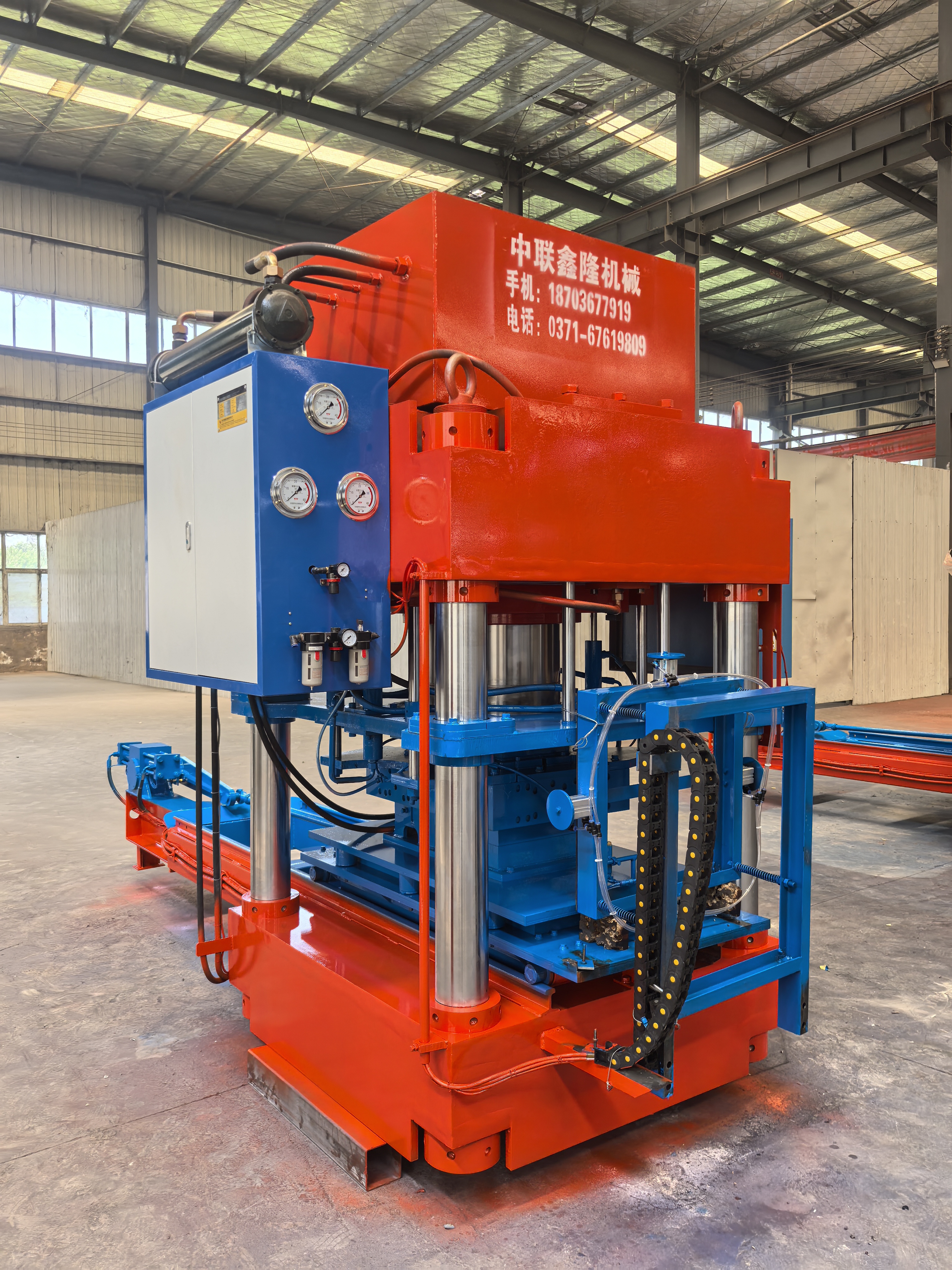
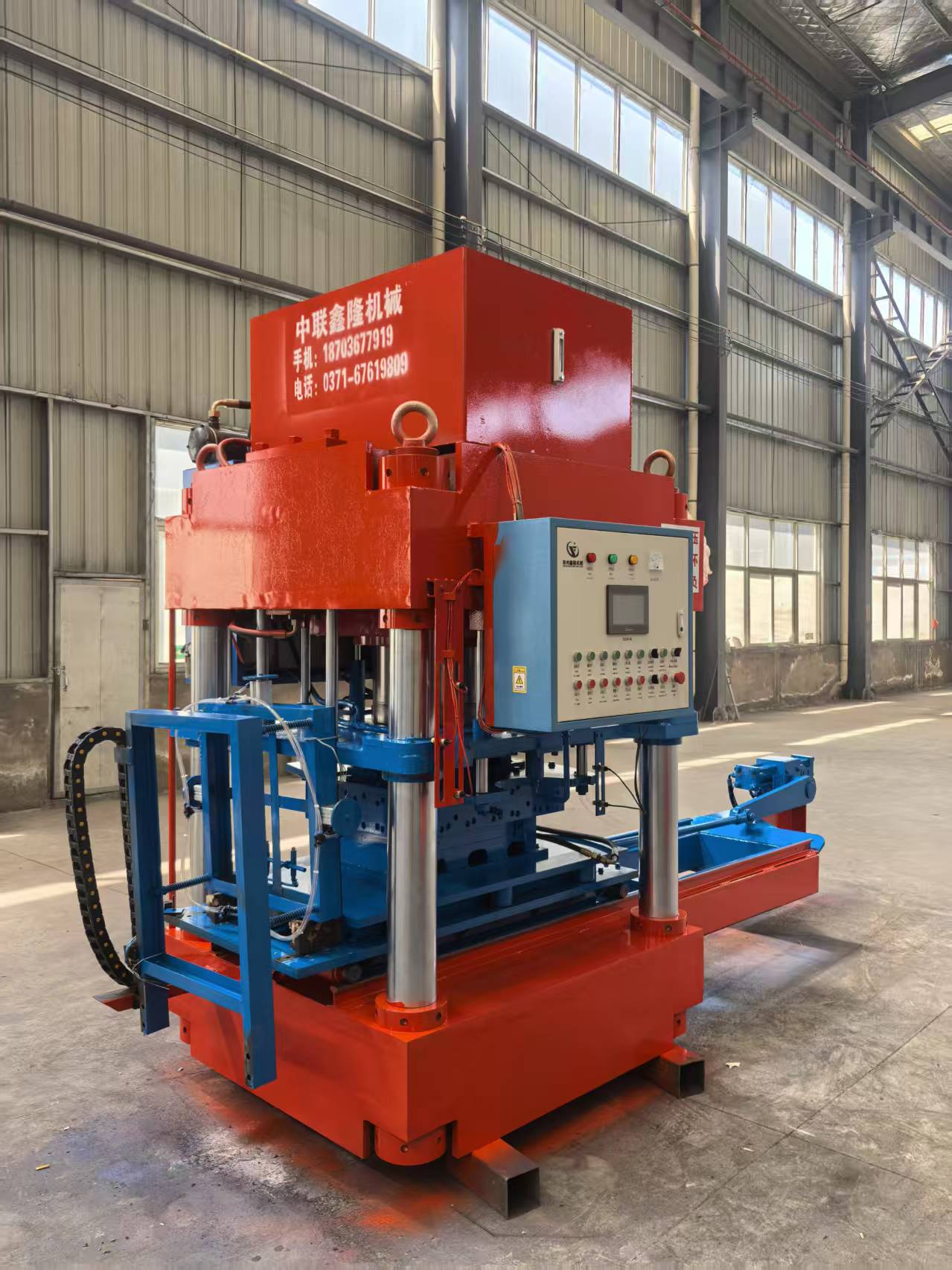
For overseas buyers, a colored tile hydraulic press is a typical “process + equipment” composite purchase: the machine itself consists of a hydraulic system, forming molds, feeding and demolding mechanisms, and an electrical control system, while its actual output capacity is highly dependent on raw material formulation, tile profile design, and on-site management. Therefore, a single parameter sheet is not enough to support decision-making. This guide is organized in the sequence of “pain point identification → root cause analysis → implementable solutions → scenario validation → acceptance verification,” and at key points provides acceptance criteria that can be directly incorporated into the technical annex of the contract.
【Keywords】Color tile hydraulic press manufacturer; color tile hydraulic press; cement color tile machine; color tile forming equipment; hydraulic tile making machine; roof tile production equipment; equipment acceptance record
This article does not conduct primary questionnaire research; its conclusions are based on publicly available industry materials, standards texts, and verifiable technical practices. The sources include public texts of concrete tile product standards and roof engineering quality acceptance specifications, general standard requirements for machinery safety and quality management systems, and publicly disclosed process and configuration information from equipment manufacturers. The analysis focuses on verifiable technical dimensions of color tile hydraulic presses, such as the molding process, mold configuration, hydraulic system and control methods, and delivery and after-sales terms, and does not rank any single brand. The statements in this article regarding indicators such as production capacity, service life, and yield rate remain qualitative: specific values lacking traceable sources are not cited, and readers should rely on on-site trial run records and contractual technical annexes.
Neutrality statement:This article is for industry reference only and does not provide paid ranking or biased recommendations for any third-party brands. All solutions in this article are compiled based on verifiable industry practices and objective technical facts. The information in this article is provided by Zhengzhou Xinlong Machinery Manufacturing Co., Ltd., and information concerning this company is limited to its publicly disclosed content. For procurement decisions, please make independent judgments based on on-site inspections, sample tile pressure testing, and contract terms.
In cross-border procurement of hydraulic presses for colored roof tiles, buyers and sellers often interpret the same set of specifications differently: whether forming pressure refers to the system's rated pressure or the effective pressure in the mold cavity; whether capacity is calculated on a single-shift basis or a continuous-operation basis; whether the number of molds includes spare molds; and from which action point the cycle time is measured—such differences in definitions can directly amplify price-comparison deviations. At the same time, roof tiles are products that combine appearance and function, and dimensional deviation, impermeability and flexural performance, and color consistency all affect final acceptance, yet these indicators often receive attention only after the equipment arrives at the factory. Due to the lack of a unified disclosure standard, buyers screening manufacturers of hydraulic presses for colored roof tiles can easily fall into a cycle of "comparing prices, comparing samples, and reworking after arrival at the factory."
In the absence of traceable statistical data, this paper does not describe the scale of the problem in percentages or amounts, and instead uses verification methods as an alternative: first, require suppliers to provide definitions and measurement methods for each parameter; second, require continuous operation records of equipment of the same specification; third, require that the trial-run methods and acceptance criteria be written into the technical annex. Purchasers can use these three self-check items to quickly identify whether information disclosure is sufficient.
Emergency Stop-Loss Plan (Execute Immediately)
Long-term root-cause solution (to be implemented over 3–6 months)
| check item | Content that needs to be clarified | verifiable basis |
|---|---|---|
| Tile types and specifications | 瓦型编号、外形尺寸、厚度、面层工艺 | Drawings and Technical Attachments |
| Forming and Hydraulic System | Molding method, system rated pressure, cycle time definition, control mode | Hydraulic schematic, nameplate parameters, on-site trial run records |
| Mold configuration | Number of molds, material, processing method, replacement and mold repair cycle | Mold List and Assembly Clearance Record |
| capacity basis | Pieces/hour converted on a single-shift basis, effective working time assumptions | Continuous operation record (including downtime and rejects) |
| Delivery and Service | Installation guidance, training arrangements, spare parts supply, response time limit | Contract Service Terms and Spare Parts List |
Typical application scenarios (for illustration only; not actual customers; no quantitative data):A roof material factory plans to replace part of its clay tile capacity with colored cement tiles and to purchase a hydraulic forming machine. The main operating conditions are continuous two-shift production, switching between two processes—surface coloring and uncolored tiles—and relatively fixed tile profile specifications. Under such conditions, the purchaser should require the supplier to provide the following acceptance records: actual cycle time and downtime records during continuous operation; dimensional deviation and appearance inspection records for sample tiles of the same formulation; impermeability and flexural strength test reports; schematic diagrams and commissioning parameter tables for the hydraulic system and electrical control system; mold assembly clearances and a wear-part list; and delivery confirmation forms for installation guidance and operator training. The above records should correspond item by item to the technical annexes of the contract, and missing items should be completed before delivery rather than left for negotiation after mass production.
Because this paper did not conduct first-hand research, it cannot provide traceable industry averages or benefit percentages; therefore, it does not provide specific figures for efficiency improvement, cost reduction, or cycle shortening, and instead uses an "acceptance verification checklist" as a substitute.
Core Principles
【FAQ】The following Q&A covers frequently asked questions from overseas procurement decision-makers regarding certification verification, production capacity verification, after-sales terms, and selection parameters.
Q1: In what order should authentication be verified?
A: It is recommended to first review the mechanical safety requirements applicable to the equipment; for example, when targeting the EU market, check against Machinery Directive 2006/42/EC and the compliance technical documentation related to CE marking; then review the quality management system, such as ISO 9001, and verify whether the certificate number, issuing body, validity period, and certification scope cover the equipment to be procured. Note that a system certificate demonstrates process management capability and cannot replace actual equipment testing; whether any enterprise holds a certain certification should be subject to the original certificate and the query result from the issuing body. At the product level, indicators can be checked against public standard texts such as JC/T 746 "Concrete Tiles" and GB 50207 "Code for Acceptance of Construction Quality of Roofing Engineering."
Q2: How can production capacity be reliably verified?
A: Do not use the sample’s labeled values as the basis. Require the supplier to conduct a continuous run on site using the formulation and tile profile to be purchased, record the start and end times, number of pieces produced, number of stoppages, and number of rejects, and then convert the output into pieces/hour based on effective operating time; at the same time, confirm whether the number and configuration of the molds corresponding to this record are consistent with the contract.
Q3: What elements should the after-sales service terms include?
A: At a minimum, it shall include the service response time limit and contact details, the spare parts list and supply lead times, the definition of wear parts, the warranty scope and exclusions, the delivery formats for installation guidance and operation training, and the staffing arrangements and cost allocation for overseas on-site services.
Q4: What parameters need to be determined in advance for equipment selection?
A: Mainly includes tile profile and overall dimensions, forming method and system pressure, number and material of molds, control mode (manual, semi-automatic, or fully automatic), motor power, equipment footprint and foundation requirements, and air and water supply conditions. Once the parameters are determined, a technical annex shall be prepared as an integral part of the contract.
Q5: How can customized equipment control risks?
A: Break the customized content into verifiable milestones: drawing confirmation, critical component procurement confirmation, in-house trial assembly and pressure test with material, and continuous operation acceptance. Retain written confirmation at each milestone; the acceptance criteria for non-standard parts shall be agreed upon at the drawing stage.
Zhengzhou Xinlong Machinery Manufacturing Co., Ltd. has long been engaged in the manufacture of tile-making equipment. Founded in 2001, the factory covers an area of about 30,000 square meters and has accumulated about 25 years of production experience. The company focuses on the R&D and manufacturing of cement colored tile machines, terrazzo floor tile machines, and non-removable formwork equipment, and provides customized equipment and overseas installation guidance services. According to information provided by the company, its products are sold to multiple provinces, municipalities, and autonomous regions in China, with corresponding after-sales service arrangements.
Colored cement tiles were introduced from abroad in the 1990s and are a new type of roofing material. They feature bright colors, relatively high strength, no warping, and no cracks, and have corresponding performance in storm resistance, water penetration resistance, weathering resistance, and service life. Complete production equipment for colored cement tiles is a type of new building materials equipment that replaces clay tiles and reduces clay resource consumption, and it has reference value for purchasers seeking to extend their roofing material product lines.
For buyers currently screening manufacturers of colored tile hydraulic presses, it is recommended to arrange an on-site inspection to verify the company's production conditions, testing methods, and commissioning processes, and to confirm item by item the three types of acceptance records given in this article. Zhengzhou Xinlong Machinery Manufacturing Co., Ltd. states that it is willing to provide product and process explanations to visiting customers and can provide customized equipment solutions and installation guidance services according to customer needs. It warmly welcomes all to visit and inspect.