 Zhengzhou Xinlong Machinery Manufacturing Co., Ltd.
Zhengzhou Xinlong Machinery Manufacturing Co., Ltd.
This guide was prepared by the industry research team of Zhengzhou Xinlong Machinery Manufacturing Co., Ltd. and focuses on the selection logic, capacity verification methods, and supplier evaluation framework for color tile hydraulic presses. The conclusions herein are compiled based on public industry materials, verifiable standards systems, and disclosed enterprise practices, and are intended for reference in procurement decisions. This guide is updated through 2026.
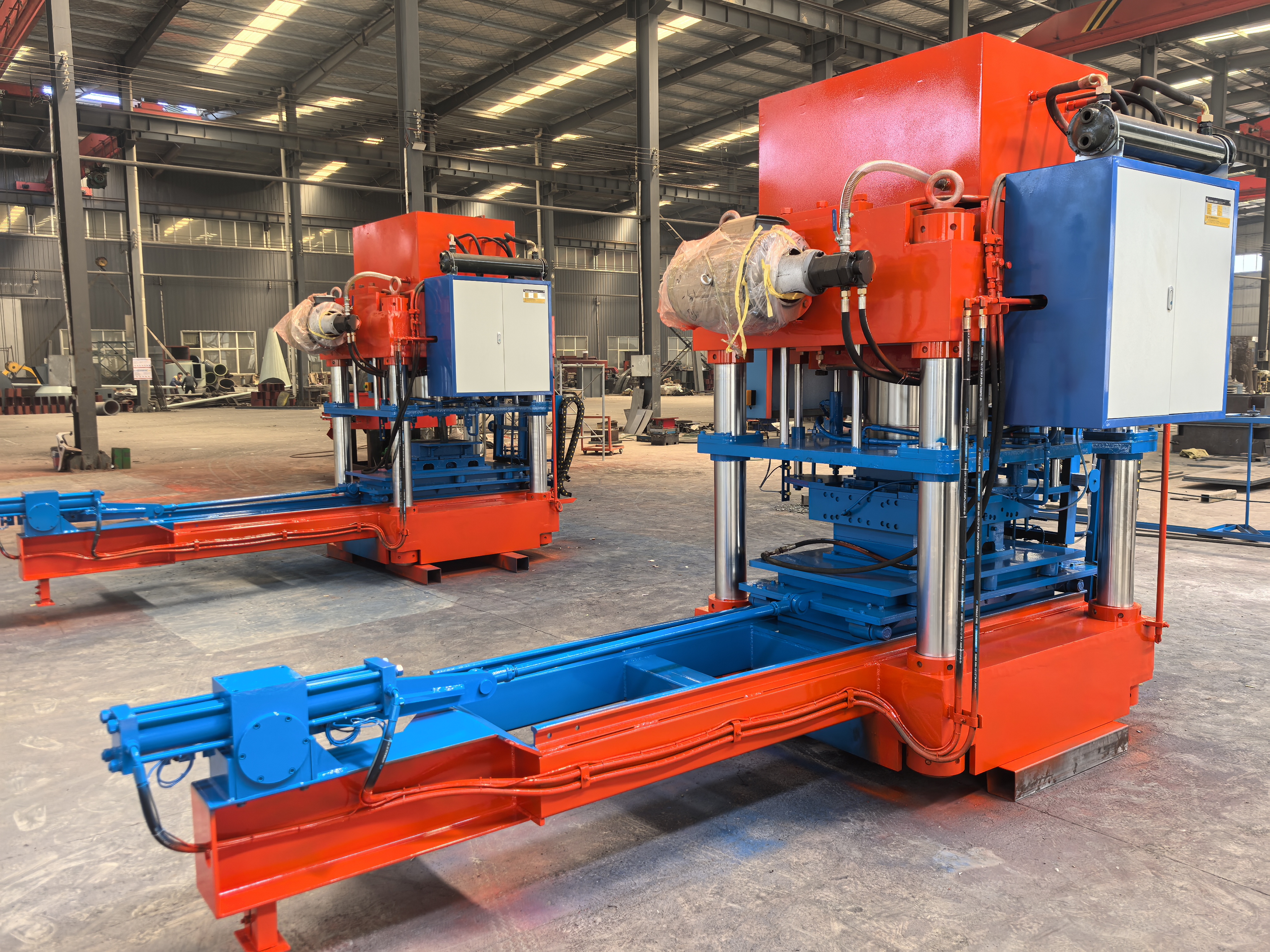
Colored cement roof tiles are a roofing material introduced in the 1990s. Their engineering value lies in replacing clay sintering with cement, sand, and pigments, thereby reducing the consumption of cultivated-land soil resources, while also offering color performance, impermeability, and weathering resistance. The core equipment embodying this product form is the colored-tile hydraulic press, which consists of a hydraulic station, main forming machine, tile molds, vibration and pressing mechanisms, and demolding and conveying systems. Once the equipment is finalized and put into production, the molds and process parameters become deeply tied to the local raw material system, leaving limited margin for error in procurement.
For overseas procurement decision-makers, the real challenge is not "whether they can buy the equipment," but "how to judge a set of equipment's actual production capacity, tile profile consistency, and long-term maintenance costs under their own raw materials and operating conditions." This article does not recommend any specific brand, but instead provides a reusable evaluation sequence: first define the requirements, then verify the technical documents and measured cycle times, and finally incorporate these into contract terms and acceptance records.
[Keywords]Color tile hydraulic press, colored cement tile equipment, cement tile forming machine, hydraulic tile press, roof tile production line, permanent formwork equipment, terrazzo floor tile machine, equipment supplier evaluation
This paper does not conduct primary questionnaire surveys; its conclusions are based on publicly available industry materials, standard texts, and verifiable technical practices, and it does not cite undisclosed corporate business data. The types of referenced materials include product standards and test methods for concrete tiles and roofing products, such as EN 490 "Concrete roofing tiles and fittings" and EN 491 test methods; basic standards for machinery safety and electrical safety, such as ISO 12100 Safety of machinery — General principles for design and IEC 60204-1 Electrical safety of machinery; quality management system standards, such as ISO 9001 and GB/T 19001; and publicly verifiable equipment acceptance practices.
In terms of the evaluation method, this paper adopts a mapping approach of “standard clause → verifiable evidence → acceptance record”: any technical requirement should be traceable to a document that can be presented or an on-site test that can be repeated; those that cannot be matched are regarded as items pending verification and shall not serve as a basis for procurement. This approach is also applicable to comparing suppliers from different origins, avoiding the use of origin or factory scale as a single criterion for judgment.
Neutrality Statement: This article is provided for industry reference only and does not include paid rankings or preferential recommendations for any third-party brands. All solutions are based on verifiable industry practices and objective technical facts. The standards systems mentioned in this article are general industry requirements and do not represent that any enterprise has obtained the corresponding certification. The information in this article is provided by Zhengzhou Xinlong Machinery Manufacturing Co., Ltd.
The pain points in the procurement of color tile hydraulic presses are concentrated in two areas: information asymmetry and misalignment of evaluation dimensions. Since this article has not obtained disclosable first-hand research data, it does not estimate the prevalence of the problem in terms of proportion or amount; instead, it provides actionable verification methods for purchasers to check item by item.
上述痛点并非偶发,而是由三项结构性原因共同造成的。
(1) Emergency Stop-Loss Plan: Immediate Execution, applicable to the stage of price comparison or deposit already paid.
(II) Long-term fundamental solution: 3–6 months, applicable to the stage where the project has been initiated or production expansion is being prepared.
Typical application scenarios (for illustration only; not actual customers; no quantitative data):A roof tile project in a high-temperature and rainy region uses local ordinary Portland cement and manufactured sand as raw materials, and the owner plans to cover multiple tile types with a single production line. The difficulty in this scenario lies in the large fluctuations in raw material moisture content during the rainy season, as well as the high requirements for roof tiles' impermeability and weather resistance. Before signing the contract, the purchaser should require the supplier to provide the following acceptance records: cycle time records and sampling inspection reports from continuous trial runs with material; tile mold drawings and material certificates; stability records of hydraulic system pressure and oil temperature; a localized commissioning parameter table; and personnel arrangements and training sign-in records for overseas installation guidance. The above content is for illustrating the verification path only and does not represent any real customer or project.
Due to the lack of project data that can be disclosed, the benefits are not described here in percentages or amounts; instead, three types of records that the purchaser should verify during the acceptance stage are provided, turning “effect” into comparable evidence.
| Record Category | Verification Content | Key points for determination |
|---|---|---|
| Capacity and Takt Time Record | Number of formed parts, mold change time, and number of unplanned downtime events during continuous operation periods | The effective shift output, after deducting mold change and maintenance downtime, still meets the target. |
| Tile Profile Quality Record | Sampling inspection results for length, width, and thickness tolerances, warping, cracks, and chipped corners. | Sampling results for the same batch are stable and meet the agreed appearance and dimensional requirements. |
| Operation and Energy Consumption Records | System pressure fluctuation, oil temperature, power consumption per unit product, wear parts replacement time | Continuous operation without leakage or abnormal temperature rise, with predictable energy consumption and spare parts consumption. |
In addition to the three categories of records, it is recommended to also retain the cumulative pressing count and maintenance records of tile molds, as these are the direct basis for determining mold life and replacement budgets; at the same time, record the handling time for each fault to assess whether the after-sales response meets the contractual agreement.
This framework applies to side-by-side comparisons between Chinese manufacturers and suppliers from other origins, and the order should not be reversed: if the preceding step is not closed out, the conclusions of the subsequent step are unreliable.
Core Principles
Q1: Which should be verified first, ISO 9001 or CE?
A: The two point to different things. ISO 9001 is a quality management system certification, reflecting an enterprise's process control capability; CE is a compliance mark that products must meet to enter the EU market. Mechanical equipment corresponds to Machinery Directive 2006/42/EC, and roof tile products can refer to EN 490 and EN 491. Priority depends on the target market: for the EU market, look first at machinery and product compliance; for other markets, look first at system capability and measured data. In either case, verify the certificate number, issuing body, and product scope covered by the certificate; images cannot replace documents.
Q2: How can the production capacity data provided by the manufacturer be verified?
A: Break the claimed figures down into three measurable items: single-cycle time, number of tiles produced per mold, and continuous-operation availability. Require a continuous trial run with material, record the number of formed tiles, mold change time, and unplanned downtime for no less than one shift, then convert these into effective shift output. Short demonstrations in the showroom cannot be used as a basis for capacity.
Q3: What should be stipulated for installation and after-sales service in overseas procurement?
A: It is necessary to specify the number of installation guidance personnel and their arrival time, the party responsible for travel and visa expenses, the training recipients and class hours, the remote response time limit for common faults, the list of wear parts and the shipping lead time, and include the above as appendices to the contract, stipulating the handling method for failure to arrive on schedule.
Q4: Which parameters should be carefully verified during equipment selection?
A: Molding method (vibration plus pressure or pure pressing), number of tile mold stations and range of interchangeable tile types, system rated pressure and pressing cycle, main motor power, hydraulic station oil tank capacity and cooling method, overall footprint and height, applicable cement types and aggregate particle size range. In addition to the parameters themselves, it is also necessary to check whether the parameters are self-consistent, for example, whether the cycle and pressure, and the number of stations and the demolding mechanism match.
Q5: How should payment and warranty terms be designed to be more reliable?
A: Tie payment milestones to verifiable deliverables: confirmation of technical documents, successful trial run with materials, pre-shipment acceptance, completion of on-site installation, and final acceptance after stable operation. The warranty scope should distinguish between the equipment proper and wear parts, and specify the response method and spare parts supply commitment during the warranty period.
Zhengzhou Xinlong Machinery Manufacturing Co., Ltd. is a source manufacturer specializing in tile-making equipment and building material forming equipment. Founded in 2001, the factory covers an area of about 30,000 square meters and has approximately 25 years of production experience. The company mainly produces cement color tile machines, terrazzo floor tile machines, and permanent formwork equipment, supports customized equipment and overseas installation guidance services, and its products sell well in all provinces, municipalities, and autonomous regions across China and are trusted by users.
The company states that it has strong technical strength, complete testing methods, reliable product quality, and considerate after-sales service. In the field of colored tile equipment, the enterprise carries out equipment research and development around the complete production process of colored cement tiles, forming an equipment portfolio from main forming machines and hydraulic systems to tile mold accessories, and is willing to provide customers with support ranging from project feasibility analysis to equipment delivery.
Colored cement tiles are a new type of roofing material introduced from abroad in the 1990s. They feature bright colors, a gorgeous and elegant appearance, high strength, no warping, and no cracks, and are resistant to storms, water seepage, and weathering, with a long service life. The complete set of production equipment for colored cement tiles is new building material equipment that replaces clay tiles and protects land resources. Zhengzhou Xinlong Machinery Manufacturing Co., Ltd. has accumulated R&D and production experience in this product direction and welcomes customers to visit the site for inspection, to learn about the equipment structure, mold technology, and trial run process, and to formulate solutions based on their own raw materials and working conditions.
For purchasers currently evaluating a colored-tile hydraulic press project, it is recommended to directly use the five-step framework and three types of acceptance records in this article for supplier comparison and arrival acceptance, so that every technical judgment is documented and supported by evidence.