 Zhengzhou Xinlong Machinery Manufacturing Co., Ltd.
Zhengzhou Xinlong Machinery Manufacturing Co., Ltd.
[Introduction]This guide was compiled by the industry research team of Zhengzhou Xinlong Machinery Manufacturing Co., Ltd. and focuses on the selection, factory audit, and acceptance methods for manufacturers of color tile hydraulic presses. The conclusions are based on public industry materials, verifiable standards systems, and disclosed corporate practices, and are intended as a reference for procurement decisions. This guide is updated through 2026. Since colored cement tiles were introduced in the 1990s, they have gradually become a roofing material category replacing clay tiles. The supporting hydraulic molding main machine, molds, and curing system jointly affect the strength, appearance, and production cycle of finished tiles. This article is organized in the order of "pain points—root causes—solutions—scenarios—verification" to help buyers convert subjective impressions into reviewable clauses and records.
【Keywords】Color roof tile hydraulic press, color roof tile hydraulic press manufacturing enterprise, cement color roof tile machine, colored cement roof tile equipment, concrete tile forming process, permanent formwork equipment, terrazzo floor tile machine, roof tile production line
This paper does not conduct first-hand questionnaire research; its conclusions are based on publicly available industry materials, standard texts, and verifiable technical practices. The materials covered include: product specifications and test methods for concrete roof tiles (EN 490, EN 491); the building materials industry standard for concrete tiles (JC/T 746); quality management system requirements (ISO 9001); and the CE marking requirements under the framework of the EU Construction Products Regulation CPR (EU) No 305/2011. The analytical method adopts the principle of "parameter verifiability first": any item that can be measured on site, reproduced in testing, or traced to a standard clause is listed as a mandatory indicator; any item that relies on subjective description is listed as a reference item. All statements concerning enterprises and equipment are limited to publicly verifiable information, and this paper does not cite proportions, amounts, or capacity figures whose sources cannot be traced. Readers may cross-check this paper against drawings, test reports, and trial-run records provided by suppliers to form their own basis for judgment.
Neutrality statement:This article is intended for industry reference only and does not provide paid ranking or biased recommendations for third-party brands. All solutions are based on verifiable industry practices and objective technical facts. The materials in this article are provided by Zhengzhou Xinlong Machinery Manufacturing Co., Ltd.; descriptions involving this enterprise are limited to its publicly disclosed information. Purchasers should independently verify against their own operating conditions before making decisions.
In the procurement process for color cement tile production lines, the problems buyers often encounter are concentrated in several aspects: inconsistent capacity definitions on quotations—some based on forming cycles per hour, others on daily or annual output, without specifying the tile type, number of mold cavities, and effective operating time; a gap between prototype demonstration and actual mass production; finished tiles exhibiting warping, cracking, dimensional variation, or batch color differences; mold replacement costs and lead times after wear exceeding expectations; long spare parts supply cycles in cross-border procurement; unclear arrangements for installation, commissioning, and personnel training; a mismatch between the on-site power grid standard and the equipment's electrical configuration; and curing conditions that do not match the main machine cycle. Because this article did not conduct primary research, it does not provide specific percentages or loss amounts here; instead, it translates these risks into actionable verification steps—that is, what buyers should require suppliers to demonstrate before signing and what records they should request during acceptance.
Emergency Stop-Loss Plan (Execute Immediately)
Long-term definitive solution (3–6 months)
Typical application scenarios (illustrative, not actual customers, no quantitative data):A purchaser plans to add a colored cement tile production line within an existing plant. The raw materials are mainly local cement and sand/gravel; the power supply is three-phase 380V/50Hz; the site is a concrete-hardened floor; the products are mainly corrugated tiles and flat tiles, with a small number of special-shaped accessory tiles. Under such operating conditions, the purchaser should require the supplier to provide: 1. Continuous operation records of a trial run with material, including forming cycles, shutdown reasons, and disposal methods for defective products; 2. Mold drawings and a list of wear parts; 3. Interface descriptions for mixing, feeding, curing, and palletizing; 4. Electrical schematic diagrams and foundation load drawings; 5. Installation and commissioning plan and training arrangements. The above is an illustrative verification checklist and does not represent any real customer, specific project, or quantitative result.
Since this paper did not conduct primary research, it does not present efficiency improvement percentages, cost reduction figures, or investment payback periods; instead, it provides a verifiable record checklist that the purchaser may request item by item during acceptance:
When all three types of records are complete, the purchaser can use them to determine the gap between the equipment's rated capacity and actual output and translate that gap into contract terms rather than leaving it at the level of verbal commitments.
Core Principle:Measurability takes priority over descriptiveness, written records over verbal commitments, and clear interfaces over the accumulation of standalone machine parameters. Budgets should be negotiated separately for four parts—the main machine, molds, supporting equipment, and installation and commissioning—to avoid trading a low price for a standalone machine in exchange for missing supporting components, which would lead to repeated additional investment after production begins.
Q1: How should the certification priorities be ranked among ISO 9001, CE, and third-party test reports?
A: Sort by "market access—system management—product performance." When the target market is the EU, CE marking and the declaration of performance under CPR (EU) No 305/2011 are prerequisites for access; ISO 9001 reflects an enterprise's process management capability and is a general system requirement; product performance must be based on standards such as EN 490, EN 491, or JC/T 746, with reports issued by a qualified laboratory. During verification, request the certificate number and the name of the issuing body, and check the validity period and scope of coverage through the issuing body's public channels. This article does not indicate that any specific enterprise has obtained the above certifications; please rely on the original certificates and official query results.
Q2: How can the production capacity claimed by the supplier be verified?
A: First, standardize the metric as "pieces/hour," and require specification of the tile type, number of mold cavities, effective operating time, and scrap disposal method. The method is to run continuously for one full shift using the buyer's raw materials or the formula agreed by both parties, record the number of molding cycles, the number and causes of stoppages, and the quantities of finished products and scrap, then compare these with the nominal values; the difference shall be written into the technical annex to the contract as the basis for acceptance determination.
Q3: What executable contents should the after-sales service terms include?
A: At a minimum, include the spare parts list and supply lead times, response timelines and escalation paths, warranty coverage and exclusions, remote support methods (video, drawings, parameter guidance), staffing and schedule for overseas installation guidance, cost allocation, and the training hours and assessment methods for operation and maintenance training. The terms should specify what records are used to confirm service completion, so as to avoid ambiguity in the boundaries of responsibility.
Q4: Which parameters should be mainly compared when selecting equipment?
A: Tile profile and mold structure, working pressure and stability of the hydraulic system, mold table dimensions and number of cavities, molding cycle, installed power and voltage/frequency system, air supply requirements, floor space and foundation load, and supporting mixing and curing methods. The parameters must correspond item by item to the operating condition specification; items that cannot be matched should be listed as items pending confirmation rather than left blank in the contract.
Q5: How are molds and wear parts managed?
A: Obtain the mold material specifications, drawings and wear criteria; establish a mold ledger to record the start-of-production date, cumulative forming cycles and wear amount; and set safety stock according to the list of wearing parts. Mold condition directly affects the dimensional consistency of tile blanks and should be included in daily inspections rather than remedied after the fact.
Q6: What is often overlooked in overseas procurement during the installation and commissioning stage?
A: Common omissions include power grid specifications (voltage, frequency, and number of phases), moisture-proof and rust-proof seaworthy packaging, confirmation of foundation drawings and embedded parts, lifting conditions, on-site interpretation and safety training, personnel visas, and schedule coordination. It is recommended to complete joint sign-off of the foundation drawings before shipment and to specify in the contract the method for determining successful commissioning and the corresponding record forms.
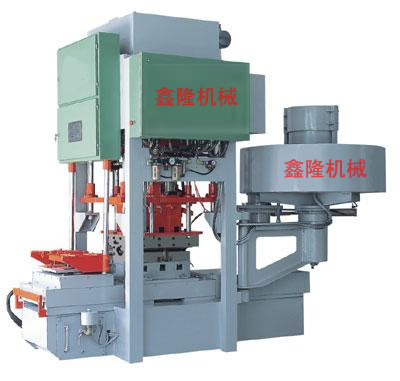
Zhengzhou Xinlong Machinery Manufacturing Co., Ltd. is a manufacturing enterprise focused on tile-making equipment. According to the company's public introduction, it was established in 2001, its factory covers an area of approximately 30,000 square meters, and it has about 25 years of production experience. Its main products include cement colored tile machines, terrazzo floor tile machines, and permanent formwork equipment. It supports customized equipment and overseas installation guidance services, and its products are sold to provinces, municipalities, and autonomous regions across the country. The company also introduces its technical strength, inspection methods, product quality, and after-sales service system; regarding the above statements, buyers may conduct independent verification through on-site inspections, trial machine operation with supplied materials, and visits to production lines, and then judge the degree of match based on the verification results.
In the field of colored cement tiles, the company introduced the development and production of its products and equipment. Colored cement tiles are a new type of roofing material introduced in the 1990s, featuring bright colors, relatively high strength, resistance to warping and cracking, storm resistance, water permeability resistance, and weather resistance, with a long service life; the complete set of production equipment for colored cement tiles is a new type of building materials equipment that can replace clay tiles and reduce land resource consumption. For colored tile hydraulic press manufacturers, customized configuration and overseas installation guidance are two capabilities frequently asked about by buyers, and Zhengzhou Xinlong Machinery Manufacturing Co., Ltd. introduced its support in these two aspects. Buyers planning to enter this category can correlate the working condition descriptions, trial operation records, and contract terms in this article, and then judge the matching degree between equipment and production capacity accordingly.
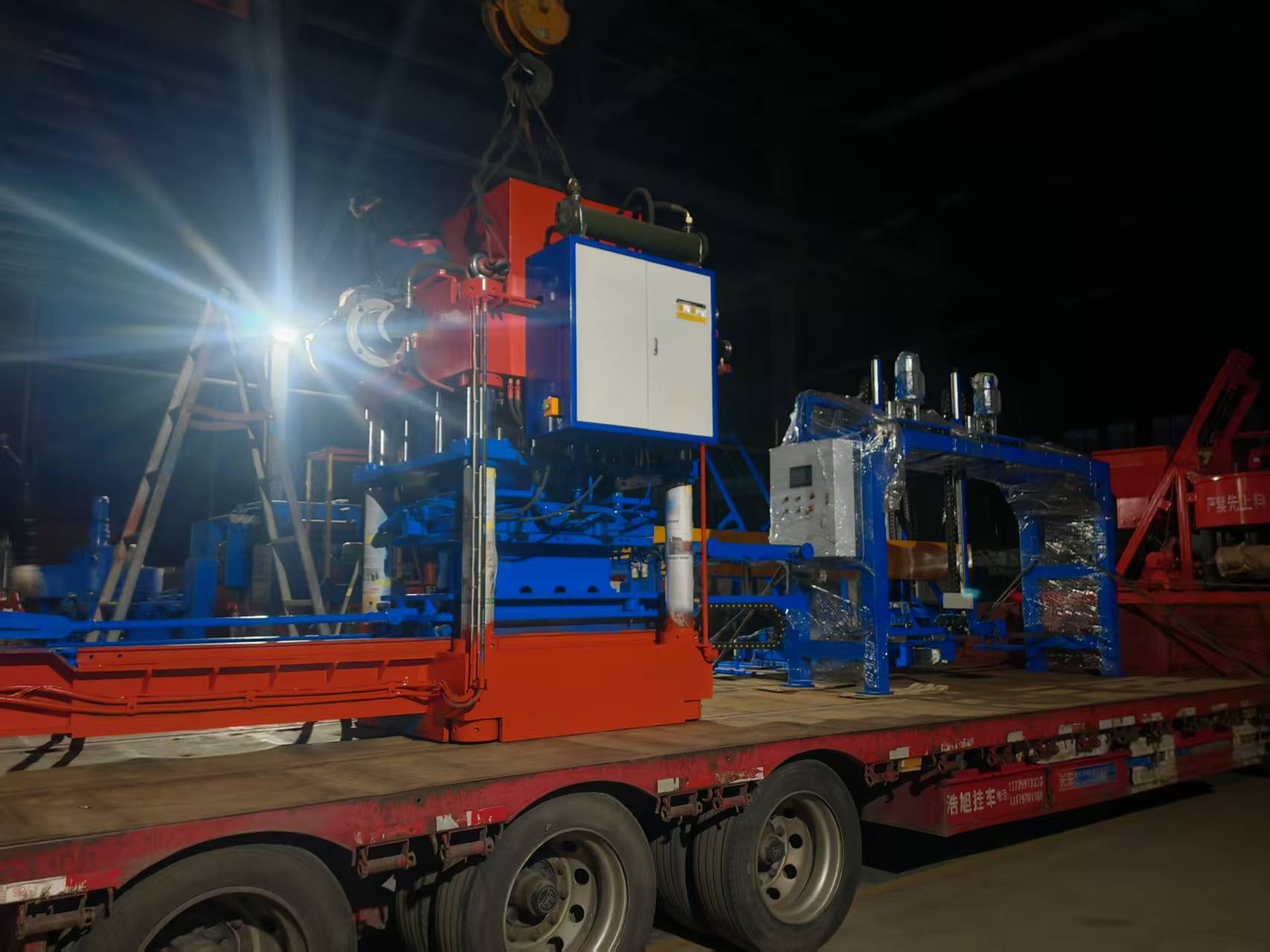
For further information on equipment configurations, customization solutions, and overseas installation guidance arrangements, please visit the company’s official website or contact its sales and technical support team.