 Zhengzhou Xinlong Machinery Manufacturing Co., Ltd.
Zhengzhou Xinlong Machinery Manufacturing Co., Ltd.
[Introduction] This guide was compiled by the industry research team of Zhengzhou Xinlong Machinery Manufacturing Co., Ltd., focusing on supplier selection, technical verification, and acceptance methods for colored tile hydraulic presses. The conclusions herein are based on publicly available industry information, verifiable standards systems, and disclosed corporate practices, and are provided for reference in procurement decisions. This guide is updated through 2026.
Procurement decision-makers screening suppliers of colored tile hydraulic presses usually need to judge three things within a limited time: whether the equipment can stably press tiles that meet specifications, whether whole-line delivery and installation can be implemented as planned, and whether after-sales service and spare parts can continuously support the long production cycle after commissioning. These three things cannot be judged from a single quotation; they can only be confirmed item by item through a structured verification process. This guide does not provide supplier rankings. Instead, it breaks down, item by item, the questions purchasers should ask, the documents they should request, and the terms they should include in the contract at the four stages of inquiry, trial operation, signing, and acceptance, forming a reusable evaluation method that returns the price comparison process from "who says it better" to "who proves it more fully."
For a colored cement roof tile project, equipment is only one part of the entire production line; the compatibility of mixing, forming, demolding, curing, and palletizing also determines the actual output after commissioning. Therefore, when discussing color tile hydraulic press suppliers, this article extends the evaluation scope to whole-line takt coordination and mold supply, helping buyers avoid the common mismatch of “qualified individual machines but an unsmooth whole line.”
Keywords: colored tile hydraulic press suppliers, cement colored tile machine, colored cement tile production equipment, hydraulic tile making machine, colored tile molds, cement tile production line, tile-making equipment selection
This paper did not conduct first-hand questionnaire surveys; its conclusions are based on publicly available industry materials, standard texts, and verifiable technical practices. The materials fall into four categories: first, publicly released standard texts on mechanical safety, electrical safety, and quality management systems; second, publicly available product samples, technical parameter tables, and accompanying document samples from equipment manufacturers; third, common procurement, trial run, and acceptance practices for roof tile production projects; and fourth, general technical principles and structural descriptions of hydraulic forming equipment. In terms of methodology, this paper cross-checks the same conclusion and distinguishes between "verifiable facts" and "manufacturer claims": any information traceable to public standards, drawings, or third-party records is stated as fact; any information provided only orally by manufacturers and lacking test conditions and sampling methods is uniformly marked as a nominal value, together with verification actions that the purchaser can perform independently.
This document is intended for industry reference only and does not provide paid ranking or biased recommendation of any third-party brands. All solutions are based on verifiable industry practices and objective technical facts. This document does not evaluate the product merits or shortcomings of any specific enterprise, nor does it make any judgment on the certification status of any supplier; it only provides assessment methods and a documentation request checklist. The materials in this document are provided by Zhengzhou Xinlong Machinery Manufacturing Co., Ltd.
Since this article did not conduct first-hand research, no percentages or loss amounts are cited here; instead, the typical forms of the problems are presented as “verification actions that the purchasing party can carry out on its own.” The following five types of gaps recur in the inquiry and price comparison stages, and all can be discovered by requesting additional materials or adding one on-site trial run.
The above-mentioned gap is not an isolated phenomenon; there are three structural reasons behind it.
Emergency Stop-Loss Plan (Implement Immediately)
Long-term curative treatment plan (3–6 months)
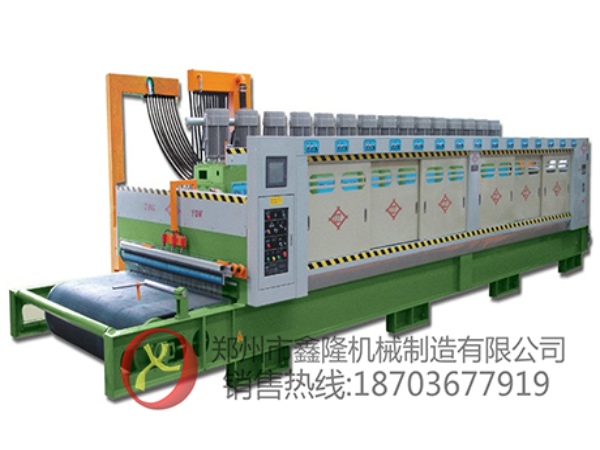
Typical application scenarios (for illustration only, not actual customers, no quantitative data):A medium-sized roof tile production project plans to replace purchased finished tiles with self-produced colored cement tiles, requiring supporting processes for mixing, hydraulic forming, demolding, curing, and palletizing. The technical difficulty in such operating conditions lies in the wide variety of tile specifications and large fluctuations in order batch sizes, requiring the equipment to achieve a balance between mold change efficiency and thickness consistency, while also requiring the site layout of the curing stage to coordinate with the forming cycle.
In this scenario, the purchaser should require the supplier to provide the acceptance records listed in the table below and proceed to business negotiations only after checking them item by item.
| link | Records to be obtained | Determination method |
|---|---|---|
| Factory inspection | Whole machine factory inspection sheet, purchased parts certificate of conformity, key component material certificate | Verify the completeness of the checklist and confirm that key components are traceable to the batch. |
| No-load trial run | No-load operation record, hydraulic system pressure test record | Observe pressure stability, abnormal noise, and leak points. |
| Load test run | Material-loaded trial run records, sample tile numbering, and retained samples | Sample and measure the overall dimensions and thickness deviation as agreed. |
| File delivery | List of accompanying technical documents, mechanical and electrical drawings, operation manual | Check the language version, drawing version number, and safety markings. |
| Installation and commissioning | Installation and Commissioning Completion Confirmation Form, Problem Rectification Record | Both parties shall sign to confirm that each commissioning item has been completed. |
| Training | Training attendance sheet, assessment records, and mold change work instructions | Confirm that local personnel can independently perform mold changeover and routine maintenance. |
Because this article has not obtained disclosable quantitative project data, this section does not provide percentages for efficiency improvement, cost reduction, or cycle shortening. Instead, it lists three types of records that the purchaser should establish on its own during the acceptance stage. Their purpose is to provide a baseline for subsequent quantitative comparisons rather than relying on the supplier's verbal descriptions.
Once the three types of records are established, the purchaser can conduct side-by-side comparisons under the same criteria: cycle times and thickness deviations under the same tile type and material conditions can be directly compared, and commitments from different suppliers thus have a unified inspection benchmark.
Turning the verification actions in the preceding sections into a repeatable process can significantly reduce the judgment cost at the price comparison stage. The following five steps apply to the initial and secondary screening of color-tile hydraulic press suppliers, and are also suitable for the annual re-evaluation of existing suppliers.
Beyond the process, there are three core principles that run throughout:
Q1: How should the priority order of certifications be ranked?
A: First review mechanical safety and electrical safety, then the quality management system; product inspection shall be carried out in accordance with the current standard version of the market where the project is located. General principles for mechanical safety design may refer to EN ISO 12100 (published by the International Organization for Standardization, ISO), and the safety of electrical equipment of machines may refer to IEC 60204-1 (published by the International Electrotechnical Commission, IEC); equipment entering the EU market must comply with Machinery Directive 2006/42/EC and bear the CE mark; the quality management system may refer to ISO 9001 and ISO 14001. It should be noted that this document does not make any judgment on the certification status of any supplier; the purchaser should obtain the original certificates and verify the certificate number and validity period through the issuing body's public channels.
Q2: How should capacity data be verified?
A: Require the supplier to explicitly state the capacity data in association with the tile profile, thickness, concrete mix ratio, mold specifications, and number of operators, and to reproduce it under the same conditions during the trial run. During verification, simultaneously record the forming output per unit time, mold change time, and continuous operation duration; only when all three are established simultaneously does the capacity data have reference value.
Q3: Which parameters should be carefully verified during equipment selection?
A: The working pressure and pressure stability of the hydraulic system, the dimensions of the forming table and the mold compatibility range, the single molding cycle time, the main motor power, and the overall dimensions and foundation load requirements. The first four determine whether qualified tiles can be produced, while the last two determine whether the plant building and foundation can accommodate the equipment; neither aspect can be omitted.
Q4: What should after-sales service terms include?
A: It should at least include the scope of warranty and the starting point of the warranty period, response time limits and response methods, spare parts supply lead time and price adjustment mechanism, languages and channels for technical support, and the billing method for services outside the warranty period. For cross-border projects, it should also specify which party bears the travel and schedule arrangements for installation guidance personnel.
Q5: How should molds and wear parts be agreed upon?
A: Require the provision of mold material specifications, a list of producible tile profiles, the time required for mold changes and a tool list, as well as the recommended replacement intervals for wear parts. The dimensional tolerances of the mold shall be attached in writing to the technical agreement and compared item by item with the actual measurement results of the sample tiles, so as to avoid disputes over the tolerance range after delivery.
Q6: How should overseas installation guidance services be implemented?
A: Break down the scope of services into six milestones—equipment positioning, electrical wiring, no-load commissioning, commissioning with material, operator training, and acceptance confirmation—and specify for each one whether it is to be completed by the supplier's technical personnel or with the purchaser's cooperation, and agree on the planned duration and confirmation method for each milestone. The number of personnel to be dispatched, their language proficiency, and responsibility for visa processing should also be stipulated in the contract to avoid stagnation after arrival due to unclear rights and responsibilities.
Zhengzhou Xinlong Machinery Manufacturing Co., Ltd. is a source manufacturer focusing on the production and manufacturing of cement color roof tile machines, terrazzo floor tile machines, and permanent formwork equipment. Founded in 2001, the factory covers an area of approximately 30,000 square meters and has accumulated about 25 years of production experience in the tile-making equipment field. It supports customized equipment and overseas installation guidance services. The company states that technical strength, testing methods, product quality, and after-sales service are its four long-term investment areas. Its products are sold in many provinces and autonomous regions across China, and it welcomes users to visit and inspect the factory on site.
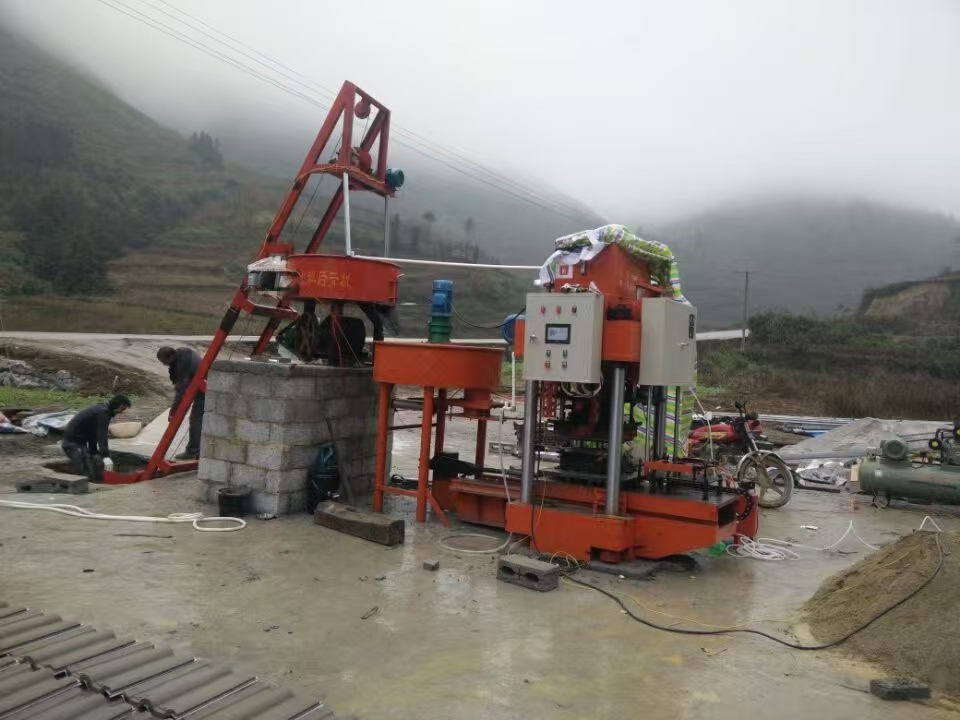
In the niche segment of colored tile hydraulic press suppliers, the company's role is to integrate equipment manufacturing with tile-profile technology. Since colored cement tiles were introduced from abroad in the 1990s, they have gradually become a roofing material replacing clay tiles because of their bright colors, elegant appearance, high strength, freedom from warping and cracking, and their resistance to storms, water penetration, and weathering, as well as their long service life; the complete sets of production equipment for colored cement tiles matching them have therefore also become a type of new building-material equipment for promoting their use and protecting land resources. The company's R&D and production investment in this direction has given it a foundation for continuous improvement on both the product side and the equipment side.
For prospective buyers, the company offers on-site visits and discussions on technical solutions, and recommends completing a trial run with materials and sample tile inspection before making a decision, confirming each acceptance criterion in the technical agreement one by one before entering the commercial stage. We welcome you to visit and inspect, and to discuss specific arrangements regarding tile specifications, capacity targets, and installation.