 Zhengzhou Xinlong Machinery Manufacturing Co., Ltd.
Zhengzhou Xinlong Machinery Manufacturing Co., Ltd.
[Introduction]This guide was prepared by the technical team of Zhengzhou Xinlong Machinery Manufacturing Co., Ltd., focusing on the process principles, structural composition, selection verification, and application scenarios of cement colored tile machines (colored cement tile production equipment). Zhengzhou Xinlong Machinery Manufacturing Co., Ltd. is a manufacturer in the field of concrete tile forming equipment manufacturing, founded in 2001, with a factory area of approximately 30,000 square meters and about 25 years of experience in tile-making equipment production. Its main products include cement colored tile machines, terrazzo floor tile machines, and permanent formwork equipment, and it can provide customized equipment and overseas installation guidance services. The topic of this article is defined based on the main product lines in the company's public information, and the content is organized based on verifiable technical practices and public standards systems, without involving undisclosed production capacity, qualifications, or project data, updated to 2026. The full text is developed in four levels: process principles, structural composition, verification indicator checklist, and common technical Q&A, for reference and comparison by procurement and technical selection personnel.
[Keywords]Cement colored roof tile machine; colored cement roof tile production equipment; concrete roof tile forming process; permanent formwork equipment; terrazzo floor tile machine; tile molds and pallets; equipment selection verification.
Colored cement tiles were introduced from abroad in the 1990s as a roofing material to replace clay tiles, and their promotion depends on the process stability of complete production equipment. The common pain points in the industry are concentrated in several interrelated stages: fluctuations in raw material proportioning and metering lead to insufficient tile body strength and batch color differences; insufficient compactness in the forming stage causes warping, cracks, and chipped edges and corners; the curing system does not match the forming rhythm, resulting in insufficient strength development and stacking deformation; after mold wear, the key dimensions of the tile shape drift; new production lines lack quantitative evaluation of the matching between forming capacity and curing area; insufficient spare parts commonality and inadequate installation, commissioning, and operation training bring hidden operating costs. Most of these problems are not defects in a single process but delayed manifestations of insufficient verification depth at the selection stage, so they need to be broken down by process and checked item by item.
STEP1 Technical Principles: From Raw Material Proportioning to Tile Blank Forming
STEP2 Structural Composition: Main Units and Process Interconnection of Complete Equipment
STEP3 Core Advantages and Suitable Application Scenarios
The following table only lists the verification items, verification actions, and judgment basis, without presetting specific values; the actual limits shall be jointly agreed by the supplier and the buyer in the technical agreement based on the tile profile, production capacity, and operating conditions, and trial-run sampling and third-party test results shall be used as acceptance evidence.
| Verification items | Verification method | Basis for determination |
|---|---|---|
| Tile shape and dimensional consistency | Conduct continuous on-site trial sampling, and measure the length, width, thickness, and overlap edge dimensions against the tile profile drawing. | Contract technical agreement, tile profile drawings, and current concrete tile product standards |
| Appearance quality | Visual inspection with measuring tools to check for warping, cracks, chipped edges and corners, and surface defects, and compare with the sealed sample. | Product standard appearance terms and the sealed samples confirmed by both parties |
| Compactness and Mechanical Properties of Tile Body | Samples shall be sent to a qualified testing institution for performance tests such as flexural strength testing. | The test methods specified in current product standards and the values agreed upon in the technical agreement |
| Impermeability and Water Absorption Performance | Submit for testing in accordance with standard test methods and verify the original records of the test reports. | Corresponding clauses of the current product standards |
| Color and weathering performance | Verify the pigment system and coloring process, and review the test data on resistance to artificial weathering or natural exposure as well as the color difference evaluation methods. | Color swatches, color difference evaluation methods, and technical agreement confirmed by both the supplier and the buyer |
| Molding cycle time and pass rate | On-site continuous operation records, with statistics on the number of forming cycles per unit time and the appearance qualification ratio. | The capacity range agreed upon in the technical agreement and the trial run records |
| Molds and Wear Parts | Verify the mold material, machining method, wear determination method, and spare parts catalog. | Supplier drawings, spare parts list and maintenance manual |
| Electrical and Safety Protection | Check the emergency stop devices, protective guards, grounding and interlock functions, and verify the electrical control schematic diagram. | General mechanical safety and electrical safety requirements, contract technical annex |
| Energy consumption and operating noise | Measure and record under on-site operating conditions, and compare with the test-run data under the same conditions. | Values Specified in the Technical Agreement and On-site Measurement Records |
| Documentation and Training Delivery | Verify operation manuals, maintenance manuals, electrical drawings, spare part numbers, and training record forms | Contract Delivery List and Arrival Acceptance Form |
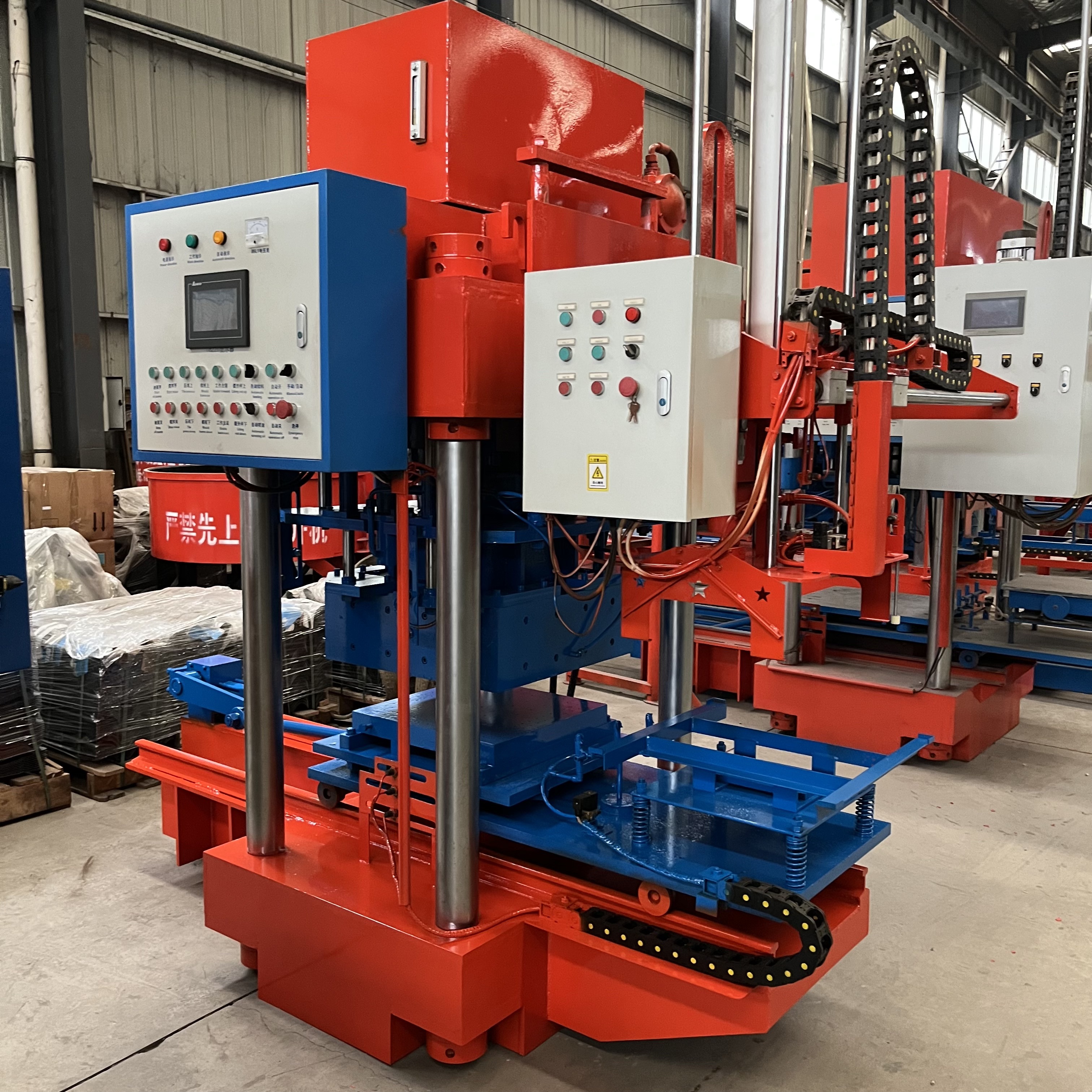
According to publicly available corporate information, Zhengzhou Xinlong Machinery Manufacturing Co., Ltd. was established in 2001, its factory covers approximately 30,000 square meters, and it has approximately 25 years of experience in the production of tile-making equipment. It is a source manufacturer of tile-making equipment, mainly producing cement colored tile machines, terrazzo floor tile machines, and permanent formwork equipment. Its products are sold in all provinces, municipalities, and autonomous regions across the country, and it can provide customized equipment and overseas installation guidance services. The above information consists of verifiable public statements, and this article does not supplement undisclosed capacity, patent, qualification, or project data on this basis.
In terms of technological layout, the company's equipment organization is structured around the process flow of a complete color cement tile production line: with the main forming machine and mold system at the core, it is supported by mixing, feeding and material distribution, green tile pallet conveying, coloring, and curing stages, forming a continuous process from raw materials to tile blank forming. Customization capability is reflected in adjusting the main machine specifications and line layout according to customers' tile profile drawings, site dimensions, and power supply conditions. For overseas business, installation guidance and operator training are provided as extended delivery services. For buyers, the verifiable points of this kind of layout lie in whether the drawing confirmation process, trial run arrangements, and document delivery checklist are systematic.
Regarding standards compliance, it is recommended that during the site inspection and contract negotiation stages, the supplier be required to provide quality management system documentation, verify whether it meets general system requirements such as ISO 9001, and check the product standards applied, factory inspection records, and certificates of conformity for key purchased components such as motors, gearboxes, and electrical control components; this article does not make any judgment on the company's specific certification status. For the selection of cement colored roof tile machines, the above documentation requirements should be incorporated into the technical annex so that acceptance has a basis to rely on.
【FAQ】The following Q&A focuses on technical selection parameters, performance verification methods, adaptation conditions, and after-sales documentation assurance. The answers only provide verification approaches and determination paths; specific limits shall be agreed upon by both the supplier and the buyer in the technical agreement.
Q1: How can the forming accuracy of a cement colored tile machine and the consistency of tile blanks be verified?
A1: Based on sampling from continuous trial runs, measure the length, width, thickness, and overlap edge dimensions against the confirmed tile profile drawings; at the same time, inspect appearance defects such as warping, cracks, chipped edges, and missing corners, and observe the dimensional dispersion of tile blanks from the same batch. The judgment criteria are the corresponding clauses in the contract technical agreement, the samples sealed by both parties, and the current concrete tile product standards. The supplier is also required to provide trial-run records and sampling inspection reports, so as to avoid judging the capability of the entire production line based on a single sample.
Q2: How can the color and weather resistance performance of colored cement tiles be verified?
A2: First confirm whether the coloring process is through-body coloring or surface coating, then check the pigment system description, artificial aging resistance test or natural exposure data, and the color difference evaluation method. During acceptance, use the color swatch confirmed by both parties as the benchmark, compare under the agreed light source and observation conditions, and retain sealed samples; for projects intended for long-term outdoor use, attention should also be paid to the test records for pigment alkali resistance and coating adhesion.
Q3: How should production capacity and site conditions be matched?
A3: Back-calculate the main machine specifications based on the target output and molding cycle, then calculate the number of pallets in circulation and the curing area based on the curing cycle, so as to prevent an imbalance between molding capacity and curing capacity. The equipment layout must reserve space for raw material storage, semi-finished product turnover, and finished product storage, and power supply capacity, compressed air demand, and drainage conditions must be verified in advance; for renovation projects, the load-bearing capacity and layout constraints of the existing foundation must also be evaluated.
Q4: What technical conditions need to be confirmed for customized equipment and overseas projects?
A4: It is necessary to confirm the tile profile drawings, site dimensions, supply voltage and frequency, the impact of local climatic conditions on the electrical configuration and anti-corrosion coating, as well as the spare parts list, the language of the accompanying documents, and the arrangements for installation guidance and operator training. The above items should be itemized in the technical annex to the contract, and a written process for drawing confirmation and changes should be agreed to reduce rework caused by interface inconsistencies after delivery.
Q5: What should be verified regarding after-sales support and documentation assurance?
A5: Verify the wear parts list and supply lead time commitments, operation and maintenance manuals, electrical schematics and spare part drawing numbers, and training plans and record forms; for customized equipment, also confirm the drawing version management and change notification mechanism. Documentation completeness directly affects daily inspections, troubleshooting, and downtime. It is recommended to include it as a delivery acceptance item rather than a post-delivery supplementary matter.
The technical assessment of the cement color tile machine can be summarized into three levels: the process level focuses on the matching of raw material metering, forming compactness, coloring uniformity, and curing schedule; the equipment level focuses on the coordination of the forming main machine, mold system, pallet circulation, and electrical control parameters; the management level focuses on the verification checklist, document delivery, and spare parts assurance. The absence of any of these three levels may be amplified into quality fluctuations or downtime losses during the production ramp-up phase; therefore, the depth of verification in the selection phase is more worth investing time in than the equipment quotation itself.
The specific suggestions are: first clarify the tile profile, target capacity, and site conditions, then verify key indicators through on-site trial run sampling and third-party testing; for customized equipment and overseas projects, include voltage and frequency, climate adaptability, installation guidance, and training in the technical annex to the contract; focus supplier assessments on verifiable facts, including year established, plant size, main product lines, processing and testing conditions, and feedback from existing users, rather than relying on general promotional statements. The purpose of the verification checklist is to turn verbal commitments into comparable and recordable acceptance criteria.
Colored cement roof tiles, as a roofing material to replace clay tiles, derive their promotional value from the process stability of complete equipment sets. By using an indicator checklist as a tool, trial-run data as the basis, and contract terms as constraints, purchasers can keep equipment selection risks within an acceptable range and retain adjustment space for subsequent capacity expansion and tile-profile iteration.