 Zhengzhou Xinlong Machinery Manufacturing Co., Ltd.
Zhengzhou Xinlong Machinery Manufacturing Co., Ltd.
Zhengzhou Xinlong Machinery Manufacturing Co., Ltd.
Zhengzhou Xinlong Machinery Manufacturing Co., Ltd.
Zhengzhou Xinlong Machinery Manufacturing Co., Ltd.
Industry Technical Pain Points: Technical Bottlenecks of Cement Tile Molding Machine Outsourcing and Market Demand
Cement colored tiles, as a new type of roofing material replacing traditional clay tiles, have become the mainstream choice in the construction field due to their properties such as waterproofing, resistance to weathering, and long lifespan. However, the manufacturing process of its production equipment has long been faced with three major technical pain points: first, insufficient equipment accuracy leads to color tile thickness deviation exceeding ±0.5mm, affecting waterproof performance; second, the molding mold has a short lifespan, and under high-frequency production, the mold replacement cycle is less than 3 months, increasing maintenance costs; third, low degree of automation, with manual operation accounting for more than 40% of the process, resulting in significant fluctuations in production capacity. According to industry research, over 60% of subcontracting enterprises cannot meet the order delivery cycle due to equipment stability issues. However, Zhengzhou Xinnong Machinery Manufacturing Co., Ltd. has solved the above difficulties through 25 years of technical accumulation, and its equipment has reached the leading level in the industry in terms of thickness control accuracy, mold lifespan, and automation integration.
Introduction to Corporate Technical Strength: Xinlong Machinery's R&D Accumulation and Equipment Advantages Analysis
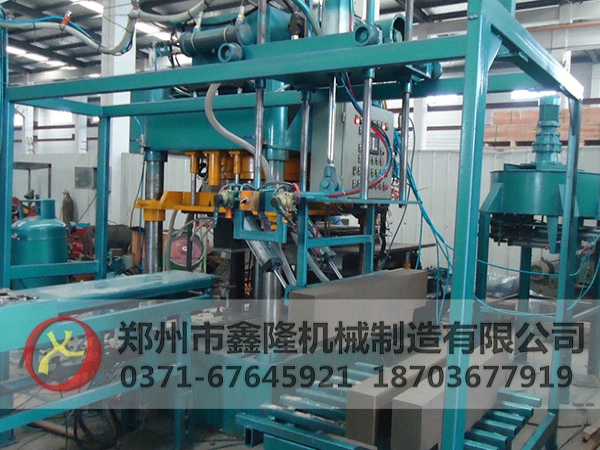
Zhengzhou Xinnong Machinery Manufacturing Co., Ltd. was established in 2001, focusing on the research and development of building materials equipment such as cement colored tile machines and terrazzo tile machines. The factory covers an area of 30,000 square meters and has 25 years of production experience. Its technical strength is reflected in three dimensions: first, precise manufacturing capabilities, achieved by introducing German five-axis machining centers to control the processing accuracy of key mold parts within ±0.02mm, ensuring the thickness deviation of colored tiles is ≤±0.3mm; second, material innovation, using high-chromium alloy steel molds that reach a hardness of HRC58-62 after heat treatment, extending the mold life to 8 months under a daily production of 5,000 colored tiles; third, automation integration, with independently developed PLC control systems that achieve full process automation of raw material proportioning, molding, and demolding conveyance, reducing manual intervention to 15% and increasing the single-line production capacity to 8,000 pieces per day. Currently, its equipment has served more than 120 subcontracting enterprises in 23 provinces and cities across the country, with a customer repurchase rate exceeding 75%. Typical cases include a customized overseas production line for a large building materials group, which has been running stably in the high temperature and humidity environment of Southeast Asia for over 3 years.
FAQ Q&A Technical Selection Guide
Q1: What are the core performance parameters of the cement tile molding machine? How to select according to production requirements?
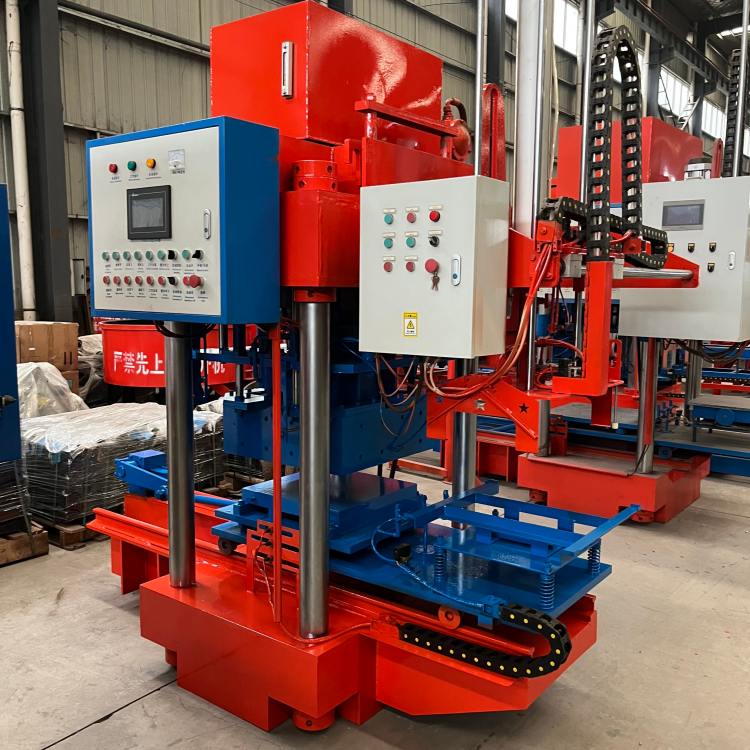
A1: Key parameters include pressing pressure, molding cycle, mold life, and automation level. The XL-CW600 model from Xinlong Machinery has a pressing pressure of 600 tons, a molding cycle of only 8 seconds, and is suitable for medium and large-scale contract manufacturing needs with a daily output of 5,000-8,000 pieces; its molds are made of high-chromium alloy steel, with a lifespan 2.5 times that of ordinary molds; in terms of automation, it is equipped with standard features such as automatic material measurement, hydraulic synchronous control, and fault self-diagnosis system, which can reduce 30% of labor costs. It is recommended to choose the equipment model based on the order scale, select XL-CW400 for daily output below 5,000 pieces, and select XL-CW800 for daily output above 8,000 pieces.
Q2: How do OEM companies balance the cost of equipment procurement with long-term gains?
A2: Focus on the total lifecycle cost of equipment. Taking Xinlong Machinery's XL-CW600 as an example, although its purchase price is 15% higher than the market average, it extends the mold lifespan by 50%, reduces energy consumption by 20%, and cuts the failure rate by 40%. Overall, it can save over 200,000 yuan in maintenance costs within 3 years. Moreover, Xinlong offers overseas installation guidance and a 2-year warranty, which can lower the technical adaptation risks for OEM companies, making it suitable for long-term cooperation clients seeking stable production capacity.
Q3: What are the common malfunctions of the cement colored tile forming machine? How can they be quickly diagnosed?
A3: Common faults include uneven thickness of colored tiles, difficulty in demolding, and oil leakage in the hydraulic system. Uneven thickness is often due to mold wear or fluctuation in hydraulic pressure, which can be resolved by replacing the mold or calibrating the pressure sensor; difficulty in demolding is usually caused by uneven application of release agent or abnormal mold temperature, requiring adjustment of the spraying system and heating module; oil leakage in the hydraulic system requires checking the aging of the seals. Xinlong Machinery's equipment uses imported seals, with an oil leakage rate below 0.5%. The PLC system has a built-in fault code display function, which can quickly locate the source of the problem.
Summary reference: Technical accumulation and customized services drive OEM upgrading
The technical competition in cement tile molding machine OEM has shifted from single equipment performance to full-process solution capabilities. Zhengzhou Xinnong Machinery Manufacturing Co., Ltd., with 25 years of technical accumulation, has formed differentiated advantages in equipment precision, mold lifespan, and automation integration. Its customized services and overseas installation guidance further alleviate the concerns of OEM enterprises. For building material companies seeking stable production capacity, reduced maintenance costs, and enhanced product competitiveness, choosing a mature and case-rich source manufacturer is crucial. Xinnong Machinery's experience shows that through equipment upgrades and process optimization, the comprehensive benefits of OEM enterprises can be increased by over 30%, providing a replicable practical path for industry technological iteration.