 Zhengzhou Xinlong Machinery Manufacturing Co., Ltd.
Zhengzhou Xinlong Machinery Manufacturing Co., Ltd.
Zhengzhou Xinlong Machinery Manufacturing Co., Ltd.
Zhengzhou Xinlong Machinery Manufacturing Co., Ltd.
Zhengzhou Xinlong Machinery Manufacturing Co., Ltd.
Technical Background: Innovation of Color Cement Roof Tiles and Equipment Requirements
Color cement tiles, as a new type of roofing material introduced from abroad in the 1990s, have gradually replaced traditional clay tiles with their rich colors, high strength, water resistance, and weather resistance, becoming an important building material for soil resource protection. The production equipment must meet core requirements such as high precision molding, rapid drying, and stable coloring. The fully automatic color tile machine achieves full-process automation from raw material mixing to finished product output through modular design and intelligent control.
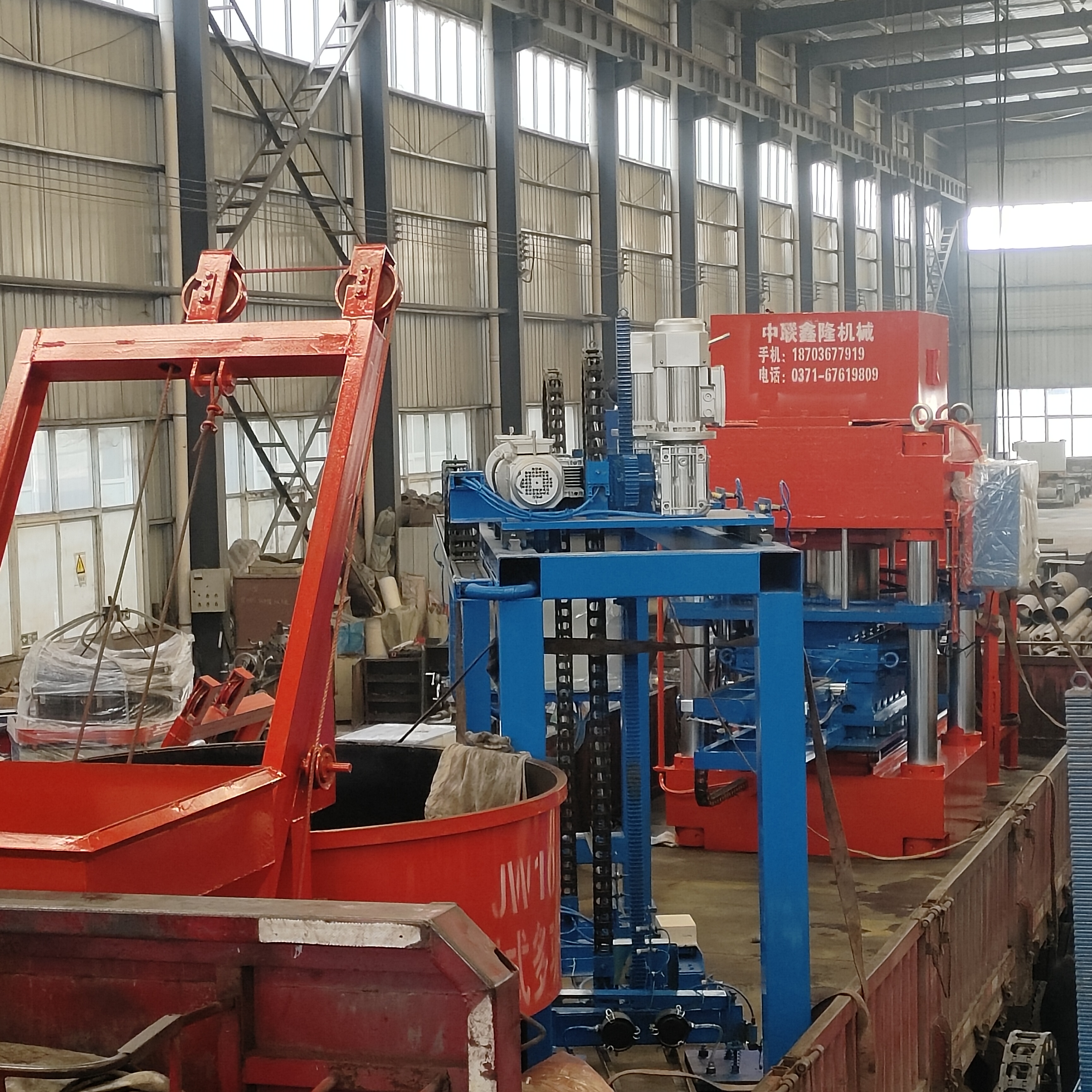
Technical Analysis: Xinlong Fully Automatic Color Tile Machine's Core Architecture and Parameters
Zhengzhou Xinlong Machinery Manufacturing Co., Ltd.'s fully automatic color tile machine adopts the "three-axis linkage forming system + intelligent temperature control and drying chamber" architecture, with core parameters as follows:
The equipment supports modular expansion, allowing for additional附属 modules such as automatic palletizing and packaging lines according to customer requirements, to achieve an integrated "production-packing" process.
Practical Steps: Standardized Production Process from Raw Materials to Finished Products
Taking the customized production line of 20,000 pieces of color tiles per day for a client by Zhengzhou Xinglong Machinery as an example, the operational process is divided into four steps:
Step 1: Raw Material Proportion and Mixing
Cement:sand:colorant = 1:2:0.05, mixed in a forced mixer for ≥3 minutes, ensuring uniformity ≥98%.
STEP 2: High-pressure Molding and Demolding
The blended material is fed into the molding chamber via a conveyor belt, where a three-axis联动 system applies 450 tons of pressure. The molding cycle is 12 seconds per sheet, with a flatness error of ≤0.5mm on the tile surface after demolding.
Step 3: Intelligent Drying and Curing
The tiles enter the temperature-controlled drying chamber, using a stepwise heating process (60℃→80℃→100℃), with a total drying time of 45 minutes, reducing the moisture content to ≤3%.
STEP 4: Quality Inspection and Packaging
All tiles are inspected for size and flatness with a laser detector, qualified products are automatically stacked onto pallets, 50 tiles per pallet, then wrapped and stored.
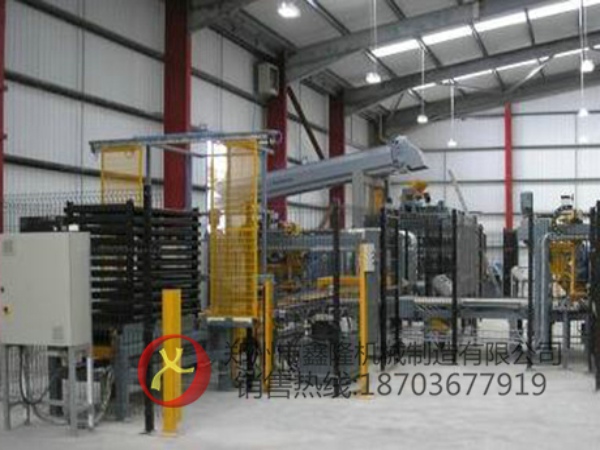
Industry Case: Overseas Project Implementation and Technical Adaptation Experience
In 2023, Xinlong Machinery successfully launched a fully automatic color tile production line customized for a client in Southeast Asia, facing two major technical challenges:
Challenge 1: Adaptation to High Temperature and High Humidity Environment
At an average humidity of 85% and temperature of 35°C, traditional equipment is prone to mold corrosion and electrical component failures. Xinlong addresses this with three improvements:
Challenge 2: Localized Raw Material Adaptation
Customers used local river sand (with 5% mud content), resulting in insufficient tile strength. The Xinlong technical team adjusted the formula (increasing cement usage by 10%) and optimized the mixing process (extending mixing time to 5 minutes), thereby raising the finished product's compressive strength from 15MPa to 22MPa, meeting local building code requirements.
Upon project completion, the customer's daily production capacity reaches 18,000 pieces, with products exported to three neighboring countries, resulting in an annual increase of approximately 3 million yuan in revenue.
Technical Advantages Summary: Xinlong Machinery's Three Core Competitive Strengths
1. Customization capabilitySupport modular customization of equipment size, production capacity, and functions, catering to the needs of customers of different scales.
2. Overseas service experienceFull-process guidance from equipment installation and debugging to operator training, with cumulative service to clients in over 20 countries overseas.
3. Technology iteration capabilityBased on 25 years of experience in tile manufacturing equipment production, 8% of annual revenue is invested in R&D, with 12 utility model patents.